

Tech
Activists Are Using ‘Fortnite’ to Fight Back Against ICE

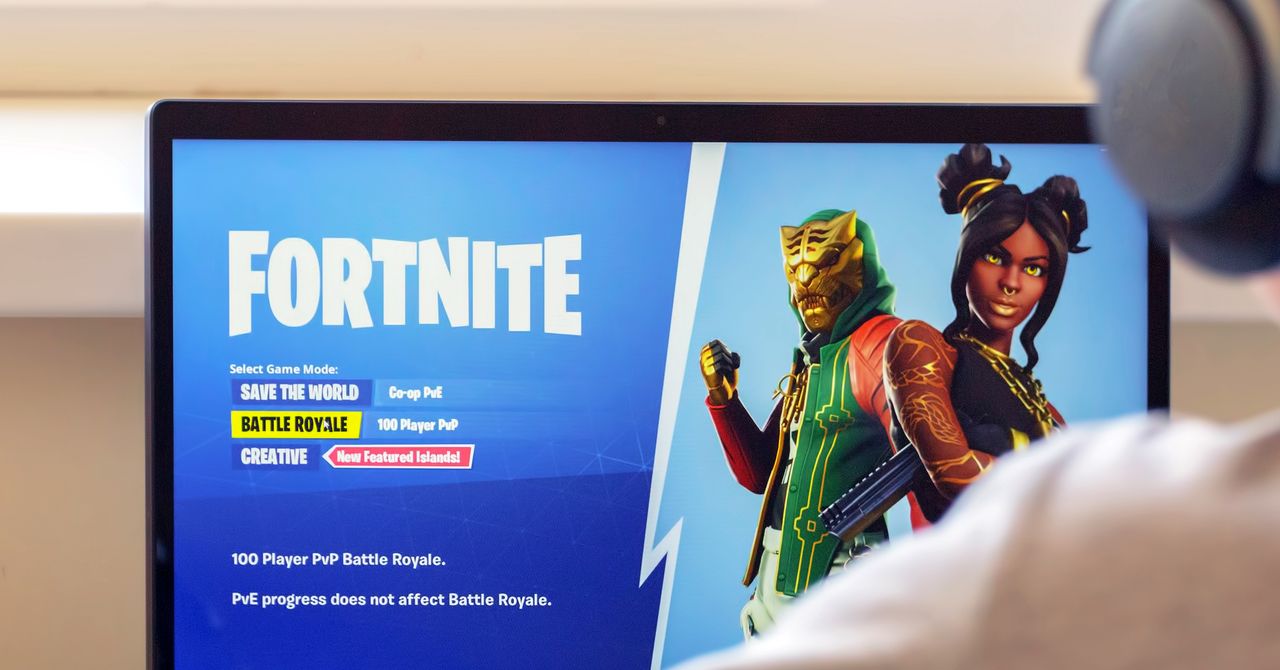
SteveTheGamer55 is live on YouTube. He’s streaming a session to his 4.6 million subscribers of GTA 5 RP, a Grand Theft Auto 5 mod that allows people to role-play with other players. “Really wanna show you guys some real-life scenarios,” he says, offering a little background on his character, a man headed to his job while on a work visa.
His character doesn’t get far before an SUV swings onto the sidewalk in front of him; masked ICE agents spill out of the vehicle. “Stop right there,” one of the uniformed players says. It isn’t long before SteveTheGamer55 is surrounded by agents. He hands over his ID while bystander players yell at the agents and demand his release. “Why are you harassing people?” one says, before the worker is finally let go. Later in SteveTheGamer55’s play session, he stands in front of a large iron gate reminiscent of those in ICE detention centers seen in cities like Chicago. More in-game ICE agents have gathered. He records from his phone. Just in front of him, a player in a red suit demands to see a warrant for his client.
The “special event” held on November 20, where players took on different roles that reflect real-life ICE raids, was the first initiative by New Save Collective, a baker’s dozen of gamers with backgrounds in activism and organizing, whose goal is to educate gamers and teach people about their rights when dealing with ICE in real-world situations. On November 21, at 7:30 pm ET, gamers will gather in Epic’s massively popular battle royale, Fortnite, to hold a closed scavenger hunt that will serve as a more casual educational opportunity. The group is working with several immigration advocacy groups, as well as collaborating with content creators, to spread their message online.
Online gaming spaces have long appealed to the right as a place to push conservative or even extremist ideologies. The US military has been open about its attempts to use games as a recruitment tool, and immigration authorities are no different. In October, the Department of Homeland Security posted an image aping marketing for the Halo series. “Finishing this fight,” the agency’s official account tweeted—a reference to Halo 3’s tagline—alongside an image with the text “Destroy the Flood” slapped over a blurry depiction of the game’s supersoldiers; the Flood are Halo’s alien antagonists. DHS has also riffed off of Pokémon’s “gotta catch ’em all” tagline, going as far as to post a video of ICE agents destroying property and arresting people, interspersed with the show’s opening.
A spokesperson previously told The Hill that the DHS “will reach people where they are with content they can relate to and understand, whether that be Halo, Pokémon, The Lord of The Rings, or any other medium.” But where movements like Gamergate peddled in harassment, hatred, and exclusion, New Save Collective’s goal is to foster a community that is kind, authentic, and oriented towards doing good.
“Most of us are immigrants, or children of immigrants, or children of refugees,” says one organizer who goes by PitaBreadFace online. (The organizer requested WIRED not use his name out of safety concerns.) “We’re here at this stage in the political climate to cultivate some belonging, but also move people towards a shared purpose that everyone seems pretty hungry for.”








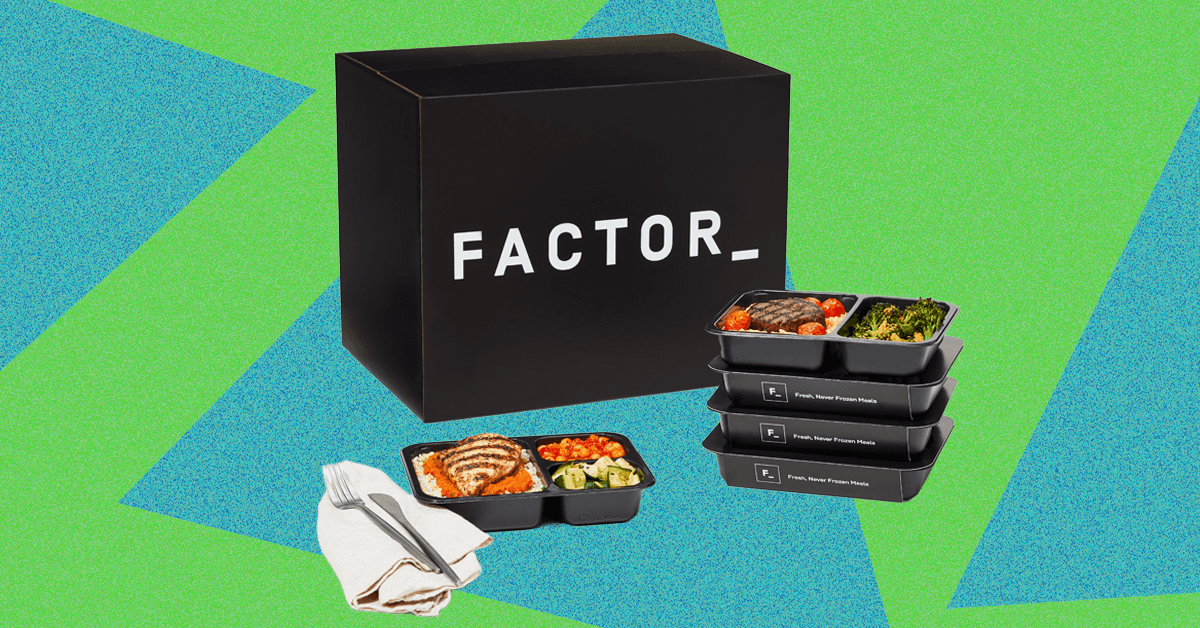
I should probably add the disclaimer that I like to cook, was a professional chef for many years, and my family of five rarely eats anything other than home cooked meals. But I get it. Many people are looking for a way to eat healthier in the midst of busy schedules, and maybe have never learned how to cook, or want to follow some specific diet like keto that requires a lot of research, planning, and effort.
In those situations I can see the appeal of a solution like Factor. Dial in what you want, it shows up, you microwave it, eat, and you’re on your way without caving and ordering pizza for the third time this week.
While Factor’s meals are generally enjoyable and reasonably tasty—for whatever reason, the dishes tending toward Mexican food seemed to be better than the rest—there’s just no denying that eating food out of segmented plastic tray is, um, uninspiring. At the very least, put your heated results on a real plate. It’ll taste better that way. Trust me, there’s a reason your plate is carefully arranged when it reaches your table at the fancy restaurant. Aesthetics matter.
Photograph: Scott Gilbertson
Factor’s proteins, especially the meats, were the highlight of most of the meals. Options I tried included a meatball and pasta dish with green beans, a bunless burger, shrimp pasta with some zucchini, a faux grits meal (cauliflower grits), and a chicken taco bowl. In every case, the protein was quite tasty, the sauces were a mixed bag, while the vegetables fared less well in the whole, cook it, pack it, ship it, reheat it process. Green beans were especially what I could call “grim”, rather than the “vibrant and fresh” that I suspect Factor was going for.
But you need to step back from the aesthetic experience and remember the context in which these meals exist. This is not fine dining or even a home cooked meal, but a healthy alternative to frozen microwavable meals high in artificial ingredients and often with unnecessary added sugars. When you remember that, Factor start to look not only better, but downright appealing.

At the beginning of the year, The Cut kicked off a brief discourse cycle by declaring a new lifestyle trend: “friction-maxxing.”
The idea, in a nutshell, is that people have overconvenienced themselves with apps, AI, and other means of near-instant gratification—and would be better off with increased friction in their daily lives, which is to say those mundane challenges that ask some minor effort of them.
Whatever your feelings on that philosophy, the use of “maxxing” as a suffix assumed to be familiar or at least intelligible to most readers of a mainstream news outlet is evidence of another trend: the assimilation of incel terminology across the broader internet. The online ecosystem of incels, or “involuntarily celibate” men, is saturated with this sort of clinical jargon; its aggrieved participants insulate, isolate, and identify themselves through in-group codespeak that is meant to baffle and repel outsiders. So how did non-incels (“normies,” as incels would label them) end up adopting and recontextualizing these loaded words?
Slang, no matter its origins, has a viral nature. It tends to break containment and mutate. The buzzword “woke,” as it pertains to our current politics, comes from African American Vernacular English and once referred to an awareness of racial and social injustice—this usage dates to the middle of the 20th century, preceding even the civil rights movement. But the culture wars of this century have turned “woke” into a favorite pejorative of right-wingers, who wield it as a catchall term for anything that threatens their ideology, such as Black pilots or gender-neutral pronouns.
Back in 2014, the eruption of the Gamergate harassment campaign set the stage for a different linguistic realignment. An organized backlash to women working in the video game industry, and eventually any sort of diversity or progressivism within the medium, it exposed a vein of reactionary anger that would gain a fuller voice during Donald Trump’s 2016 presidential campaign. This was a period when many in the digital mainstream got their first taste of the trollish nihilism and invective that fuels toxic message boards such as 4chan and gave rise to a network of anti-feminist manosphere sites collectively known as the “PSL” community: PUAHate (a board for venting about pickup artists, it was shut down soon after the 2014 Isla Vista killing spree carried out by Elliot Rodger, who frequented the forum), SlutHate (a straightforward misogyny hub), and Lookism (where incels viciously critique each other’s appearance).
Lookism, named for the idea that prejudice against the less attractive is as common and pernicious as sexism or racism, is the only forum of the PSL trifecta that survives today, and while we don’t know who coined the “maxxing” idiom, it’s the likeliest source for the first verb with this construction. “Looksmaxxing,” which borrows from the role-playing game concept of “min-maxing,” or elevating a character’s strengths while limiting weaknesses, became the preferred expression for attempts to improve one’s appearance in pursuit of sex. This could mean something as simple as a style makeover or as extreme as “bonesmashing,” a supposed technique of achieving a more defined jaw by tapping it with a hammer.
If the 2000s introduced people to pickup lingo like “game” and “negging,” the 2010s ushered in language that extended the Darwinian vision of the dating pool as a cutthroat and strictly hierarchical marketplace. “AMOG,” an initialism for “alpha male of the group,” gave us “mogging,” a display where one man flexes his physical superiority over a rival. An ideally masculine specimen might also be recognized as a “Chad,” who allegedly enjoys his pick of attractive partners, while a Chad among Chads is, of course, a “Gigachad.” Women were disparaged as “female humanoids,” then “femoids,” and finally just “foids.”

In San Francisco, it feels like OpenClaw is everywhere. Even, potentially, some places it’s not designed to be. According to posts on social media, people appear to be using the viral AI tool to scrape websites and access information, even when those sites have taken explicit anti-bot measures.
One of the ways they are allegedly doing this is through an open source tool called Scrapling, which is designed to bypass anti-bot systems like Cloudflare Turnstile. While Scrapling, which was built with Python, works with multiple types of AI agents, OpenClaw users appear to be particularly fond of the software. On Monday, viral posts promoting Scrapling as a tool for OpenClaw users started to spread on X. Since its release, Scrapling has been downloaded over 200,000 times.
“No bot detection. No selector maintenance. No Cloudflare nightmares,” reads one viral post this week about the open source tool. “OpenClaw tells Scrapling what to extract. Scrapling handles the stealth.”
Cloudflare is not enthused. The company already blocked previous versions of Scrapling, since users of the open source software kept trying to get around anti-scraping protections. This week, the company was working on a patch for Scrapling’s most recent iteration. “We make changes, and then they make changes,” says Dane Knecht, chief technology officer at Cloudflare. He says the company’s trove of website data and its ability to track trends has given it the upper hand.
“We already had a signal that they’re starting to get a higher ability to get around us,” says Knecht. “The team of security operations engineers had already been working on a new set of mediations.”
Large language models were trained on the corpus of the internet—and the process involved a lot of scraping. In some sense, Scrapling users are following in the footsteps of the original model builders, but on a more individualized scale.
Over the past few years, website owners have attempted to put up additional anti-bot protections, either to block software like Scrapling or to find a way to make money off of the bots trying to access their sites. In turn, Cloudflare has been working overtime to keep blocking increasingly powerful bots attempting to get around these protections.
In July 2024, Cloudflare started to offer its customers additional tools that block AI crawlers, unless the bots pay for access. In less than the span of a year, the company claims to have blocked 416 billion unsolicited scraping attempts.
“I Didn’t Know What I was Getting Into”
As Scrapling gained traction in recent days, crypto enthusiasts capitalized on the attention by launching a $Scrapling memecoin. Karim Shoair, who claims to be the sole developer of Scrapling, posted about the memecoin on X (those posts have since been deleted). After the price skyrocketed for around five hours, $Scrapling quickly fell off a cliff as users sold off their stakes. “Bunch of fucking scammers,” reads one comment on the Pump.Fun site that hosts the coin.
“I didn’t know what I was getting into when people made that coin and I endorsed it,” says Shoair, in a direct message with WIRED. “But once I knew, I didn’t want any association with it and the money I withdrew before will go to charity, I won’t benefit from it in anyway. Or maybe just leave it to be wasted.”
In the fallout of this event, the unofficial GitHub Projects Community account, which has over 300,000 followers on X, deleted its posts from this week highlighting Scrapling’s open source software, and appeared to distance itself from the project. “We do not support, promote, or engage in crypto assets, token offerings, trading activity, or crypto-based fundraising,” it said in a post late Monday night.
Putting the crypto forays aside, most software leaders continue to see agents and autonomous AI tools as the future of the web. Even Knecht from Cloudflare, whose work includes blocking bots from nonconsensual scraping, wants to build toward a world where humans and agents benefit from online data and the wishes of website owners are respected. “I see a path forward for an internet that is both friendly to agents and humans,” he says.
This is an edition of Will Knight’s AI Lab newsletter. Read previous newsletters here.


Europe growth to stay steady amid investment push in 2026: Natixis

Factor Offers High Protein Meal Delivery Options

Cristiano Ronaldo purchases 25% stake in Spanish club Almeria

-

 Entertainment1 week ago
Queen Camilla reveals her sister’s connection to Princess Diana
-

 Politics1 week ago
Ramadan moon sighted in Saudi Arabia, other Gulf countries
-

 Entertainment1 week ago
Robert Duvall, known for his roles in "The Godfather" and "Apocalypse Now," dies at 95
-

 Politics1 week ago
Tarique Rahman Takes Oath as Bangladesh’s Prime Minister Following Decisive BNP Triumph
-
 Business1 week ago
Tax Saving FD: This Simple Investment Can Help You Earn And Save More
-

 Fashion1 week ago
Philippines expands logistics network to address supply chain issues
-

 Entertainment1 week ago
5 surprising facts about Mardi Gras you may not know
-
 Business1 week ago
Air India and Lufthansa Group sign MoU to expand India-Europe flight network