

Business
ADB increases Pakistan engagement to $3.67b in 2025 | The Express Tribune

Expands focus beyond infrastructure financing to fiscal reforms, women’s economic inclusion, critical minerals
The Asian Development Bank (ADB) increased its financial commitments to Pakistan in 2025, approving $3.672 billion, which is 22 per cent higher than the $2.995 billion recorded in the previous year. The expansion reflects the bank’s growing engagement in new sectors, including Pakistan’s mineral resources industry.
According to ADB’s Annual Report 2025, the institution also provided $1.485 billion in new support to Pakistan’s public sector during the year, marking a rise of around one-third compared to $1.113 billion in 2024. A large share of these funds was extended under ordinary capital resources on commercial terms.
The bank highlighted a policy-backed guarantee mechanism in Pakistan designed to reduce lending risk for commercial banks and encourage financing for small and medium-sized enterprises. Through this mechanism, around $1 billion in private sector financing was mobilised.
ADB also supported Pakistan’s mineral development strategy by approving financing for a copper-gold mining project, aimed at strengthening global supply chains for critical minerals. The bank said it is also assisting in developing links between mineral extraction and manufacturing industries.
In addition, ADB is providing advisory assistance to Pakistan for preparing frameworks related to digital skills development, while also supporting investments aimed at improving girls’ participation in science, technology, engineering and mathematics (STEM) education.
Also Read: Construction of M6: NHA, ADB sign agreement
The report noted that Pakistan continues to face significant fiscal constraints that limit public investment in essential services. In response, ADB approved an $800 million programme consisting of a $300 million policy-based loan and up to $500 million in guarantees. This package is expected to help Pakistan raise an additional $1 billion in financing.
In education, ADB approved funding for at least 1,700 STEM laboratories across schools, with half of them planned for girls’ institutions, alongside a $100 million loan and a $7 million grant.
Globally, ADB’s total commitments from its own resources reached $29.3 billion in 2025, reflecting a 20 per cent increase from the previous year. The bank also reported strong private sector engagement, with $5.5 billion directed towards private sector development.
Across the region, South Asia received $9.7 billion, making it the largest recipient, followed by Southeast Asia, Central and West Asia, East Asia, and the Pacific.
ADB said it undertook major institutional reforms during the year, including changes to its charter to expand lending capacity by 50 per cent without requiring additional capital from shareholders. It also revised its energy policy, improved procurement systems, and introduced a new framework to support critical minerals value chains linked to clean energy and digital industries.
The bank said these reforms are intended to make its financing more flexible, faster, and better aligned with development needs across Asia and the Pacific.
Read More: ADB says budget gaps delayed loan
The bank also stressed gender disparities in Pakistan’s economy, estimating a financing gap of around 37 per cent for women-led enterprises. To address this, it committed $350 million to expand access to credit and support women entrepreneurs, with an estimated two million women expected to benefit.
In education, ADB approved funding for at least 1,700 STEM laboratories across schools, half of which will be established in girls’ institutions to promote participation in science and technology fields.
Regionally, South Asia remained the largest recipient of ADB funding with $9.7 billion in commitments, ahead of Southeast Asia and Central and West Asia.
The bank also reported $5.5 billion in private sector development commitments, reflecting its increasing focus on blended finance and risk-sharing instruments to mobilise commercial capital.
ADB implemented several institutional reforms during 2025, including amendments to its charter to expand lending capacity by 50 per cent without a general capital increase. It also revised its energy policy, streamlined procurement processes, and introduced a new framework for critical minerals development.
For Pakistan, the report suggests growing access not only to concessional financing but also to private capital mobilisation tools and risk-sharing mechanisms as the country continues to address fiscal and structural challenges.
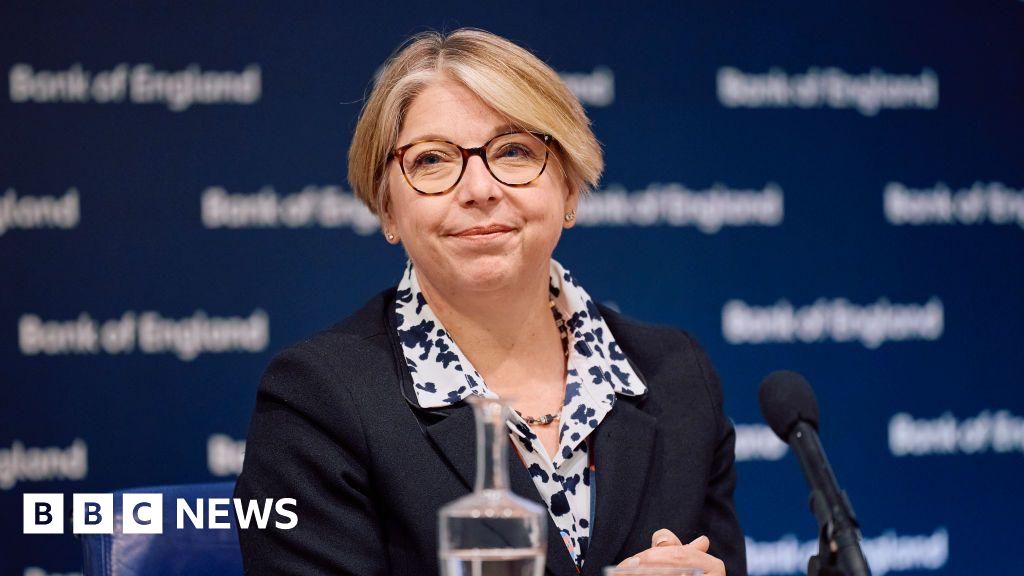
It is unusual for a senior figure at the Bank to be so forthright on market movements.
Source link

People walk past a Nike store in New York City, on April 2, 2025.
Kylie Cooper | Reuters
Nike announced a new round of layoffs Thursday affecting approximately 1,400 employees across the organization, mostly concentrated in its technology department.
In a note from COO Venkatesh Alagirisamy, the company said the layoffs were part of Nike’s broader “Win Now” turnaround strategy aiming to reshape its technology team, modernize its Air manufacturing, move some of its Converse Footwear operations and integrate its materials supply chain work into its footwear and apparel supply chain teams.
“Collectively, these changes will result in a reduction of approximately 1,400 roles in global operations, with the majority in technology,” Alagirisamy wrote. “These reductions are very hard for the teammates directly affected and for the teams around them, too.”
A Nike spokesperson said the layoffs are about better positioning the organization for the current pace of sports and accelerating its growth. The layoffs affect employees across North America, Asia and Europe and represent less than 2% of the company’s total global head count.
“This is not a new direction,” Alagirisamy wrote. “It is the next phase of the work already underway.”
Affected employees will be notified beginning Thursday, Nike added.
CEO Elliott Hill has been working to turn Nike around after years of slumping sales. While Hill has made some initial progress, it’s come with some bumps in the road.
Nike announced 775 job cuts in January, primarily at its U.S.-based distribution centers, due to the company’s work in accelerating its use of automation. At the time, the company said the cuts are part of Nike’s goal to return to “long-term, profitable growth.”
Those layoffs came on top of a round of cuts last summer that affected less than 1% of Nike’s corporate staff as part of the company’s efforts to realign the business.
In its third fiscal quarter earnings report last month, the retailer warned that sales will continue to fall for the rest of the year, primarily led by an anticipated 20% decline in China during the current quarter.
— CNBC’s Jessica Golden contributed to this report.

A key reason for the layoffs is Meta’s increased spending in other areas of the company, including AI, for which it will this year spend $135bn (£100bn). This is roughly equal to the amount it has spent on AI in the previous three years combined, according to a person who viewed the memo.


US Special Forces Soldier Arrested for Polymarket Bets on Maduro Raid
Global stock markets are too high and set to fall, says Bank of England deputy

Newly Deciphered Sabotage Malware May Have Targeted Iran’s Nuclear Program—and Predates Stuxnet

-

 Fashion1 week ago
France’s LVMH Q1 revenue falls 6%, shows resilience amid Iran war
-

 Entertainment1 week ago
Is Claude down? Here’s why users are seeing errors
-

 Sports1 week ago
PSL 11: Peshawar Zalmi win toss, opt to field first against Quetta Gladiators
-

 Tech1 week ago
The Deepfake Nudes Crisis in Schools Is Much Worse Than You Thought
-
 Business1 week ago
Standard Life buys rival in £2b deal to create savings giant
-

 Tech1 week ago
CYBERUK ’26: UK lagging on legal protections for cyber pros | Computer Weekly
-

 Fashion1 week ago
Raymond unveils luxury Chairman’s Collection Store in Mumbai
-
 Business1 week ago
PepsiCo earnings beat estimates as North American food business improves