

Politics
Afghanistan earthquake death toll tops 2,200, survivors face aid crunch

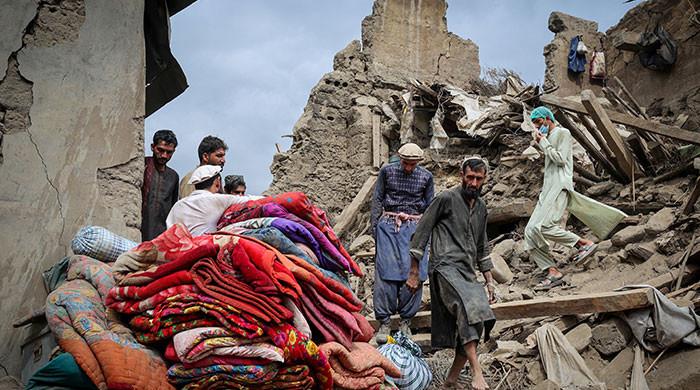
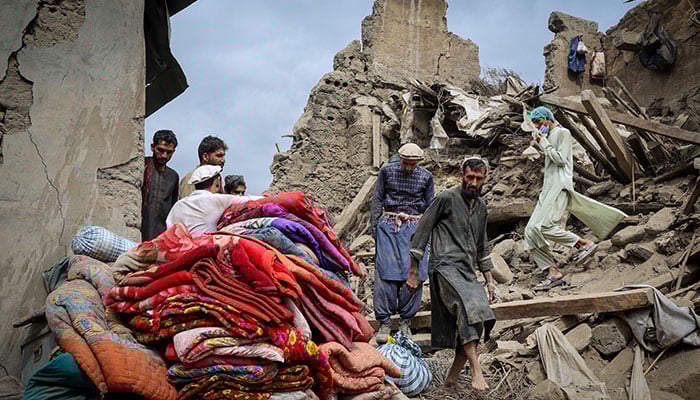
- At least 2,205 killed, 3,640 injured in Afghanistan quakes.
- Another 12 killed in Nangarhar and Laghman.
- “Rescue efforts still ongoing”, says deputy spokesperson.
The death toll from the powerful earthquake that struck eastern Afghanistan at the weekend rose sharply to more than 2,200 on Thursday, according to a new toll, making it the deadliest in decades to hit the country.
The vast majority of those killed in the magnitude-6.0 earthquake that jolted the mountainous region bordering Pakistan late on Sunday were in Kunar province, where 2,205 people died and 3,640 were injured, according to a Taliban government toll.
Another 12 people were killed and hundreds injured in the neighbouring provinces of Nangarhar and Laghman. The toll had been expected to rise as volunteers and rescuers were still pulling bodies from the rubble.
“Hundreds of bodies have been recovered from destroyed houses during search and rescue operations,” deputy government spokesman Hamdullah Fitrat wrote on X on Thursday, announcing the new toll, adding that “rescue efforts are still ongoing”.
Limited access to the hardest hit areas of mountainous Kunar province has delayed rescue and relief efforts, with rockfalls from repeated aftershocks obstructing already precarious roads etched onto the side of cliffs.
Various countries have flown in aid, but hundreds of villagers in the hard-hit Nurgal district were still stranded in the open air, squeezing multiple families under pieces of tarp pulled from the rubble and unsure of where they would get a morsel to eat.
A fight broke out over food when some finally reached the field in Mazar Dara where hundreds of people were camped out, little aid having reached them.
“Yesterday, some people brought some food, everyone flooded on them, people are starving, we haven´t had anything to eat for a long time,” Zahir Khan Safi, 48, told AFP.
‘Every hour counts’
Poor infrastructure in the impoverished country, still fragile from four decades of war, has also stymied the emergency response.
The World Health Organisation (WHO) warned that local healthcare services were “under immense strain”, with shortages of trauma supplies, medicines and staff.
The agency has appealed for $4 million to deliver lifesaving health interventions and expand mobile health services and supply distribution.
“Every hour counts,” said WHO emergency team lead in Afghanistan Jamshed Tanoli. “Hospitals are struggling, families are grieving and survivors have lost everything.”
The loss of US foreign aid to the country in January this year has exacerbated the rapid depletion of emergency stockpiles and logistical resources.
NGOs and the UN have warned that the earthquake creates a crisis within a crisis, with cash-strapped Afghanistan already contending with overlapping humanitarian disasters.
Filippo Grandi, head of the UN’s refugee agency, said the quake had “affected more than 500,000 people” in eastern Afghanistan.
The country is contending with endemic poverty, severe drought, and the influx of millions of Afghans forced back to the country by neighbours Pakistan and Iran since the Taliban’s 2021 takeover.
Even as Afghanistan reeled from its latest disaster, Pakistan began a new push to expel Afghans, with more than 6,300 people crossing the Torkham border point in quake-hit Nangarhar province on Tuesday.
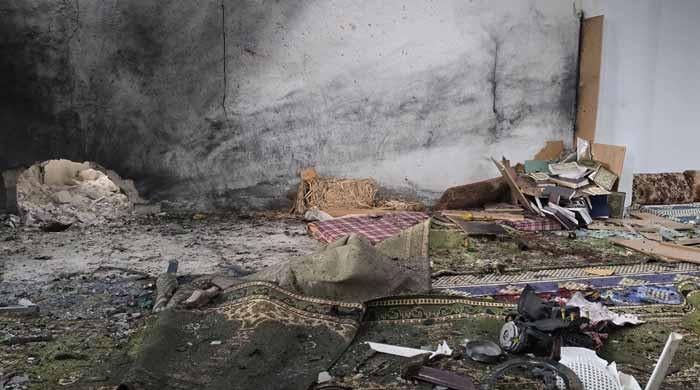
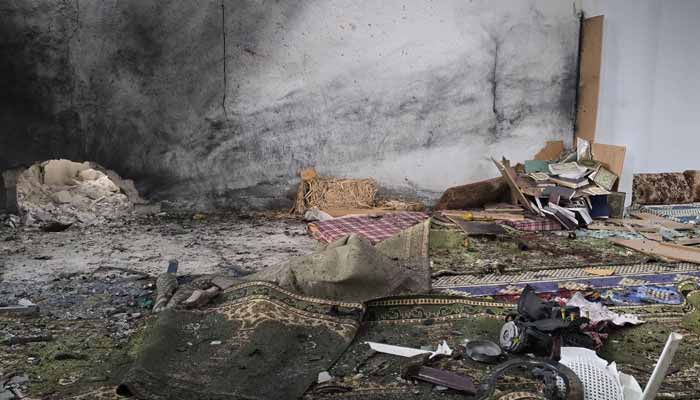
- Syrian interior ministry says 21 others were wounded in explosion
- Local official says blast took place during Friday noon prayers
- Black smoke covered part of mosque, with carpets scattered nearby.
A deadly explosion hit a mosque in a predominantly Alawite area of Syria’s Homs on Friday, said authorities who reported at least six people killed.
“A terrorist explosion targeted the Ali Bin Abi Talib Mosque during Friday prayers in Al-Khadri Street in the Wadi al-Dahab neighbourhood of Homs,” the interior ministry said in a statement, adding that six people were killed and 21 others wounded.
Homs was the scene of heavy sectarian violence during Syria’s civil war.
Syria’s state news agency Sana, which also reported the blast, said its cause and nature were being investigated.
According to the Britain-based Syrian Observatory for Human Rights monitor, it was not immediately clear whether the blast “was caused by a suicide attack or an explosive device”.
A local security source in Homs told AFP on condition of anonymity that the explosion may have been caused by “an explosive device placed inside the mosque”.
A resident of the area, requesting anonymity out of fear for his safety, told AFP people “heard a loud explosion, followed by chaos and panic in the neighbourhood”.
“No one dares to leave their house, and we are hearing ambulance sirens,” he added.
Sana published photos from inside the mosque, one of which showed a hole in a wall.
Black smoke covered part of the mosque, with carpets and books scattered nearby.
Since Assad’s ouster in 2024, the Observatory and ordinary Syrians in Homs have reported kidnappings and killings targeting members of the minority community.
Syria’s coastal areas saw the massacre of Alawite civilians in March, with authorities accusing armed Assad supporters of sparking the violence by attacking security forces.
A national commission of inquiry said at least 1,426 members of the minority community were killed at the time, while the Syrian Observatory for Human Rights monitor put the toll at more than 1,700.


SEOUL: South Korean prosecutors on Friday sought a 10-year prison sentence for ex-president Yoon Suk Yeol, for offences linked to his attempt to impose martial law last year.
Yoon briefly suspended civilian rule in South Korea for the first time in more than four decades on December 3, 2024, prompting massive protests and a showdown in parliament.
Armed soldiers were deployed to parliament under the decree, but the order lasted only around six hours as it was swiftly voted down by opposition MPs, who scaled fences to enter the building. They later impeached Yoon over the martial law declaration.
Since being removed from office in April by the Constitutional Court, he has faced multiple trials for actions linked to his martial law declaration.
The former president was indicted in May for abuse of power over his martial law declaration.
Prosecutors sought a 10-year prison term on Friday for charges including obstruction of justice, after Yoon allegedly excluded cabinet members from a martial law meeting and in January blocked investigators from detaining him.
A Seoul court is expected to deliver a verdict in the case next month, according to Yonhap news agency.
Yoon said this month his decision to declare martial law had been justified in the fight against “pro-China, pro-North Korea, and traitorous activities”.
His three other trials include allegations of leading an insurrection, for which he could face the death penalty if found guilty.
Yoon was the second South Korean president to be removed from office, and the third to be impeached by parliament.

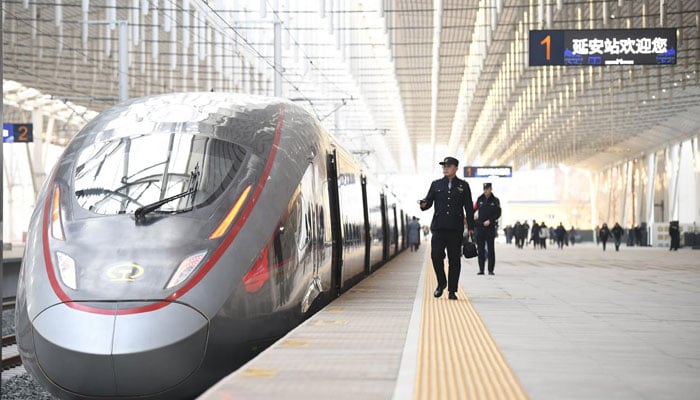
BEIJING: China’s sprawling high-speed rail network passed 50,000 kilometres (31,000 miles) in total operating distance with the opening of a new line on Friday, state media reported.
The country has the world’s largest rail network — one-fifth longer than the circumference of the earth.
The trip begins in the city of Xi’an — home to China’s famed Terracotta Warriors — and ends in Yan’an to its north, state broadcaster CCTV said. Both cities are in northern China’s Shaanxi province.
Some homes were demolished, and displaced residents would receive 5,000 yuan ($700) per household to relocate, local authorities said in 2020 when construction began.
China’s rail network has expanded by around 32% compared to 2020, state-owned China Railway added Friday in a statement.
The Xi’an-Yan’an line spans a total of 299 kilometres and the shortest trip takes 68 minutes, CCTV said.
The C9309 train runs at 350 kilometres (217 miles) per hour, outpacing Japan’s Shinkansen, which has a top speed of 320 kilometres (200 miles) per hour.
Beijing has also been financing railways in other Asian countries under its Belt and Road Initiative, which funds infrastructure projects globally.


Our guide to every Week 17 NFL game: Matchup previews, predictions and what’s at stake

Noah Schnapp drops bombshell claim about THIS scene from ‘Stranger Things’ volume 2

ASEAN cuts 2025 growth outlook to 4.5% amid uneven momentum

-

 Fashion1 week ago
Indonesia’s thrift surge fuels waste and textile industry woes
-

 Tech1 week ago
T-Mobile Business Internet and Phone Deals
-
 Business1 week ago
BP names new boss as current CEO leaves after less than two years
-

 Sports1 week ago
PKF summons meeting after Pakistani player represents India in kabaddi tournament
-

 Entertainment1 week ago
India streamlines visa rules in boost for Chinese professionals
-

 Sports1 week ago
UWCL grades for all 18 teams: Leuven get A+; Barça an A-, PSG fail
-
Sports6 days ago
Alabama turned Oklahoma’s College Football Playoff dream into a nightmare
-

 Entertainment1 week ago
Radiation fears rise after cracks found in $2 billion Chernobyl shield