

Fashion
After France, Italy squares up to Shein

By
AFP
Published
November 7, 2025
After its troubles in France, Shein faces more opposition in Italy, where the e-commerce giant is wooing shoppers in fashion capital Milan- but where the government and industry are mobilising.
“The textile sector is under attack,” Luca Sburlati, head of Italian fashion trade body Confindustria Moda, told AFP. “Hundreds of thousands of packages arrive in our homes every day. We must react.”
Italy is known for its high-end fashion, the home of global brands including Gucci and Prada, and the industry makes up around five percent of gross domestic product (GDP).
But cheap and cheerful clothes are as popular in Italy as the rest of Europe, including bought through Shein’s ultra-competitive platform.
Founded in China and now based in Singapore, Shein last month staged its first Italian catwalk show in Milan. The same week, the government hosted urgent talks on the impact of “ultra-fast fashion”.
Adolfo Urso, the minister for the “Made in Italy” brand, warned of “an “invasion of low-cost foreign products that harm our producers and put consumers at risk.”
The clothes industry is expected to present a new strategic plan for Italian fashion next week.
At the European Union level, the industry wants an end to the exemption from customs duties for packages worth under 150 euros ($173), following a similar charge in the US.
Critics warn of the environmental impact of clothes so cheap they can be worn once and thrown away, while Shein has also come under scrutiny for conditions at its textile factories.
This week, Italy’s government brought into law a European Union directive that seeks to improve transparency in sales, particularly on the environmental impact of products. Shein has already been sanctioned in this area in Italy and France.
The French government has said it was suspending the platform after outrage over its sale of childlike sex dolls. At the same time, nearly 8,000 people queued for the opening of Shein’s first permanent store, located in Paris’s BHV department store.
In style-conscious Milan, the platform is also hugely popular. “In Milan, you can’t go out if you’re not stylish,” Mattia Trebino told AFP at Shein’s fashion show last month.
The 24-year-old, who wore a faux-crocodile skin jacket, said he receives about four Shein packages every month. “These clothes, you can only wear them once or twice at most. But they’re really cheap,” he said.
Shein’s autumn/winter collection was inspired in part by 1980s Milan, featuring three-piece-suits and faux fur coats.
“The idea was to show that everyone can find their style at Shein- and to respond to our critics,” Luca Raveillon, the show’s French artistic director, told AFP. Gesturing to the collections, he said: “Look, it’s beautiful. It’s good quality, it fits perfectly. “We look great in it, and we can express ourselves with what we wear”- while keeping costs low, as “life is getting expensive”.
Alessia Tresoldi, a 27-year-old Italian influencer sat in the front row, shared images of the show with her one million Instagram followers. Shein “looks at what’s happening on the street”, she told AFP, and described the show as “amazing”.
The website offers a 100% polyester ‘fur’ coat from the show in 15 different colours, starting at 28 euros with free shipping. Boosted by such low prices, European consumers buy 60% more clothing than they did in 2000, and keep it for half as long, according to an October report by consultants The European House-Ambrosetti.
The study’s author, Carlo Cici, said the European fashion industry must innovate more to stand out. “Consumers are very interested in sustainability but aren’t willing to pay for it,” he wrote.
Copyright © 2025 AFP. All rights reserved. All information displayed in this section (dispatches, photographs, logos) are protected by intellectual property rights owned by Agence France-Presse. As a consequence you may not copy, reproduce, modify, transmit, publish, display or in any way commercially exploit any of the contents of this section without the prior written consent of Agence France-Presses.






The pivot is urgent because the old model is under pressure. April **** looked strong: Ready-Made Garment (RMG) exports rose **.** per cent year on year to $*.** billion. But the ten-month picture is weaker. From July-April FY****–**, apparel exports stood at $**.** billion, down *.** per cent. Knitwear fell *.** per cent to $**.** billion; woven fell *.** per cent to $**.** billion. The rebound is real, but so is the drag underneath.
AWARE is the sharpest EU-facing signal: blockchain-backed product data for Digital Product Passport (DPP) readiness. Open Supply Hub adds the factory-identity layer, pushing production information into an open platform. GIZ brings the longer reform spine, from May **** to February ****, covering energy efficiency, circularity, chemical management, renewable-energy skills and textile-waste transparency.
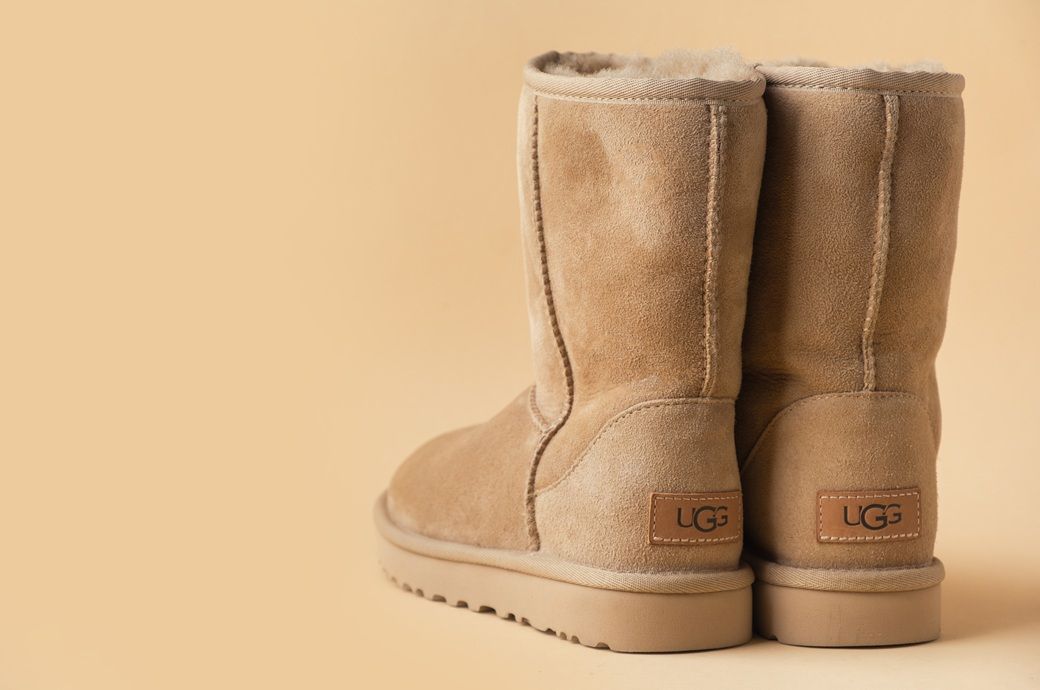
Kenneth Straka, Senior Product Development Manager at Deckers Outdoor Corporation, said that Deckers places strong emphasis on sustainability, noting that founder John Luke often reminded the team that the French word for sustainability is durability. This idea aligned with discussions at the Global Fashion Summit, where the theme centred on “Building Resilient Futures” in the sustainable and circular economy.
Durability has helped UGG become one of the most sought-after boot brands and a key sales driver for Deckers, alongside its sportswear brand Hoka. “One of the things we think about in terms of circularity is making products that last a long time and remain with consumers throughout their lives. We want products that consumers can wear for ** or ** years,” Straka said in an interview with Fibre*Fashion on the sidelines of the Global Fashion Summit in Copenhagen.
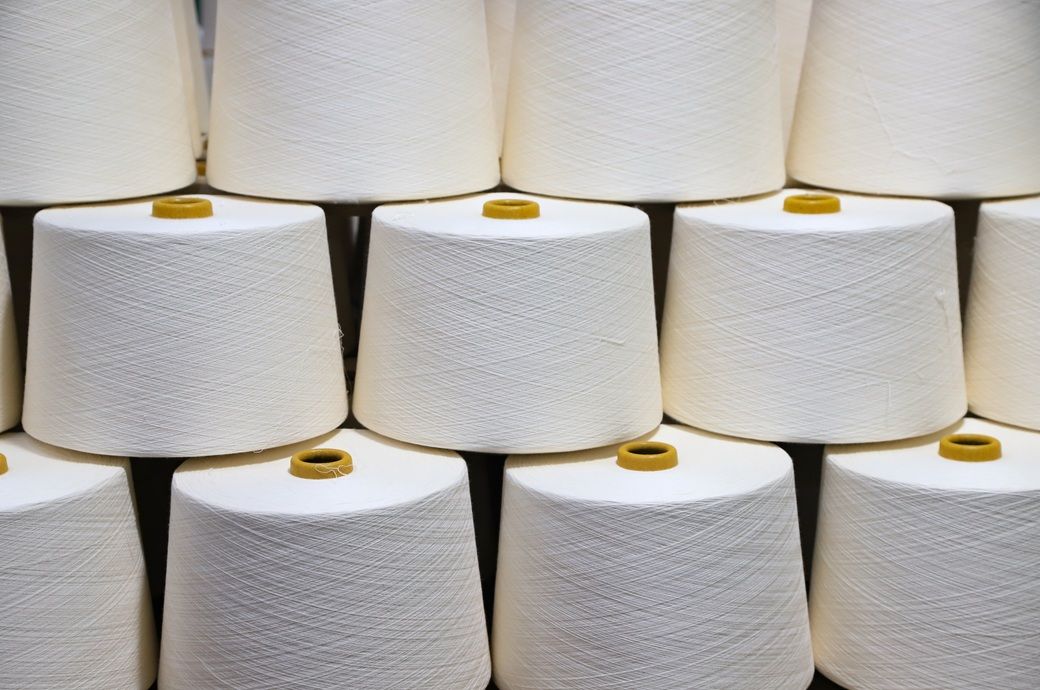
In the Tiruppur market, cotton yarn prices increased by ****;*–* per kg in this week despite sluggish local demand. Prices were quoted higher because of limited supply from spinning mills. A trader from the Tiruppur market told Fibre*Fashion, “Domestic demand remained limited, but spinning mills are not relying solely on the domestic market for cotton yarn sales. They are focusing more on exports, where demand and prices remain attractive. Mills have raised yarn prices following higher ICE cotton prices and the CCI’s increase in auction base prices, although ICE cotton has witnessed a sharp decline over the past two days.”
In Tiruppur, knitting cotton yarn prices were noted as: ** count combed cotton yarn at ****;***–*** (~$*.**–*.**) per kg (excluding GST), ** count combed cotton yarn at ****;***–*** (~$*.**–*.**) per kg, ** count combed cotton yarn at ****;***–*** (~$*.**–*.**) per kg, ** count carded cotton yarn at ****;***–*** (~$*.**–*.**) per kg, ** count carded cotton yarn at ****;***–*** (~$*.**–*.**) per kg, and ** count carded cotton yarn at ****;***–*** (~$*.**–*.**) per kg.


The border as lifeline

Bangladesh apparel reset: Compliance edge or energy trap?

Military jets’ crew members safely eject after Idaho air-show collision

-

 Entertainment5 days ago
Conan O’Brien hat tricks as Oscar host
-

 Tech1 week ago
I Tried the Best Captioning Smart Glasses, and Only One Leads the Pack
-

 Tech1 week ago
Could Contact-Tracing Apps Help With the Hantavirus? Not Really
-

 Fashion5 days ago
Italy’s Zegna Group’s Q1 growth boosted by strong organic performance
-

 Sports1 week ago
Bobby Cox, legendary Atlanta Braves manager who led 1995 World Series champions, dead at 84
-

 Entertainment1 week ago
Martin Short: Facing tragedy with joy
-

 Entertainment1 week ago
Tom Brady gets back at Kevin Hart during Netflix roast
-

 Entertainment1 week ago
Martha Stewart: How to make an omelet