

Entertainment
After provinces, Centre lifts austerity-driven business-hour curbs until May 31

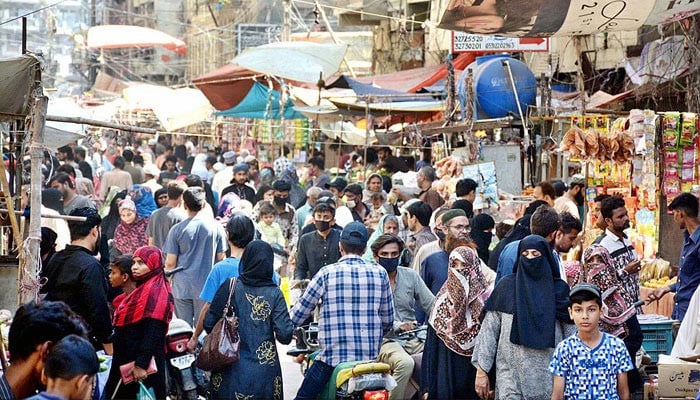
- Shops and malls exempt from closure timings.
- Punjab, Sindh already eased business restrictions earlier.
- Energy conservation curbs imposed earlier now relaxed.
ISLAMABAD: Prime Minister Shehbaz Sharif on Monday approved the exemption of business closure timings across the country until May 31, effectively allowing commercial centres to operate without the previously imposed restrictions.
According to a notification issued by the Cabinet Division, all shops, departmental stores, bazaars, markets and shopping malls will remain open on all days of the week without restriction on closing hours.
The exemption also applies to bakeries, tandoors, restaurants and grocery stores, which have been allowed to continue operations beyond the earlier fixed timings.
The decision comes after provincial governments had already relaxed business-hour restrictions. The Punjab government had earlier extended relaxed operating hours for markets and commercial centres until June 1, while suspending the mandatory 8pm closure rule.
Similarly, the Sindh government had on May 16 announced relief for traders and citizens, exempting markets, shopping malls, restaurants, hotels and marriage halls from fixed closing times in a bid to support economic activity.
Meanwhile, the Khyber Pakhtunkhwa and Balochistan governments also followed suit, announcing the end of smart lockdown measures across the province and lifting restrictions on market timings and business hours.
Business hours were curtailed across the country last month as part of energy conservation measures introduced amid a sharp increase in domestic fuel prices, triggered by the conflict in the Middle East.
The measures, which formed part of the federal government’s broader austerity and fuel-conservation plan, were aimed at reducing energy consumption following the surge in fuel prices.

The 2026 ACM Awards are officially in the books, celebrating the artists who delivered country music’s biggest moments this year.
The 61st Academy of Country Music Awards aired live from Las Vegas’ MGM Grand Garden Arena on Sunday, May 17, with Shania Twain hosting the star-studded event.
While Megan Moroney entered the night with the most nominations at nine, it was Ella Langley who emerged as the evening’s undeniable breakout star, sweeping all seven of her nominations, while Cody Johnson took home the night’s top honours, Entertainer of the Year and Male Artist of the year.
The ceremony featured performances from some of the genre’s biggest names, including Miranda Lambert, Lainey Wilson, Kacey Musgraves, Blake Shelton and Riley Green.
Here’s the complete winners list from the 2026 ACM Awards:
ENTERTAINER OF THE YEAR
- Luke Combs
- Jelly Roll
- Cody Johnson — WINNER
- Megan Moroney
- Chris Stapleton
- Morgan Wallen
- Lainey Wilson
FEMALE ARTIST OF THE YEAR
- Kelsea Ballerini
- Miranda Lambert
- Ella Langley — WINNER
- Megan Moroney
- Lainey Wilson
MALE ARTIST OF THE YEAR
- Luke Combs
- Riley Green
- Cody Johnson — WINNER
- Chris Stapleton
- Zach Top
GROUP OF THE YEAR
- 49 Winchester
- Flatland Cavalry
- Old Dominion
- Rascal Flatts
- The Red Clay Strays — WINNER
DUO OF THE YEAR
- Brooks & Dunn — WINNER
- Brothers Osborne
- Dan + Shay
- Muscadine Bloodline
- Thelma & James
NEW FEMALE ARTIST OF THE YEAR
- Avery Anna — WINNER
- Mackenzie Carpenter
- Dasha
- Caroline Jones
- Emily Ann Roberts
NEW MALE ARTIST OF THE YEAR
- Gavin Adcock
- Vincent Mason
- Shaboozey
- Hudson Westbrook
- Tucker Wetmore — WINNER
ALBUM OF THE YEAR [Awarded to Artist(s)/Producer(s)/Record Company–Label(s)]
- Ain’t In It for My Health — Zach Top
- Producer: Carson Chamberlain
- Label: Leo33
- Cherry Valley — Carter Faith
- Producer: Tofer Brown
- Label: Gatsby Records / MCA
- Don’t Mind If I Do (Deluxe) — Riley Green
- Producers: Dann Huff, Michael Knox
- Label: Nashville Harbor Records & Entertainment
- I’m the Problem — Morgan Wallen
- Producers: Joey Moi, Charlie Handsome, Jacob Durrett
- Label: Big Loud Records
- Parker McCollum — WINNER
- Producers: Frank Liddell, Eric Masse
- Label: MCA
SONG OF THE YEAR [Awarded to Songwriter(s)/Publisher(s)/Artist(s)]
- “A Song to Sing” — Miranda Lambert & Chris Stapleton
- Songwriters: Chris Stapleton, Miranda Lambert, Jenee Fleenor, Jesse Frasure
- Publishers: I Wrote These Songs; Pink Dog Publishing; Songs for the Munch Music; Songs of Influence; Sony/ATV Tree Publishing; Warner-Tamerlane Publishing Corp
- “Am I Okay?” — Megan Moroney
- Songwriters: Megan Moroney, Luke Laird, Jessie Jo Dillon
- Publishers: Big Ass Pile of Dimes Music; Big Music Machine
- “Choosin’ Texas” — WINNER
- Artist: Ella Langley
- Songwriters: Ella Langley, Luke Dick, Miranda Lambert, Joybeth Taylor
- Publishers: Bada Bing & Bada Langley Publishing; Little Louder Songs; Sony Music Publishing
- “I Never Lie” — Zach Top
- Songwriters: Zach Top, Carson Chamberlain, Tim Nichols
- Publishers: Music and Magazine Publishing; Rio Bravo Music Inc; Sony/ATV Tree Publishing; Too Broke to Quit Music; Zach Top Music
- “Somewhere Over Laredo” — Lainey Wilson
- Songwriters: Lainey Wilson, Trannie Anderson, Dallas Wilson, Andy Albert, Harold Arlen, Yip Harburg
- Publishers: Concord Sounds; Dtown Boogie Music; Emi Feist Catalog Inc; Songs Of Riser House; Songs Of Wild Cat Well Music; Sony/ATV Countryside; Story Farmer; Tacklebox Music Publishing
SINGLE OF THE YEAR [Awarded to Artist(s)/Producer(s)/Record Company–Label(s)]
- “6 Months Later” — Megan Moroney
- Producer: Kristian Bush
- Label: Sony Music Nashville / Columbia Records
- “Choosin’ Texas” — WINNER
- Artist: Ella Langley
- Producers: Ella Langley, Miranda Lambert, Ben West
- Label: SAWGOD / Columbia Records
- “I Never Lie” — Zach Top
- Producer: Carson Chamberlain
- Label: Leo33
- “Somewhere Over Laredo” — Lainey Wilson
- Producer: Jay Joyce
- Label: BBR Music Group / BMG Nashville / Broken Bow Records
- “The Fall” — Cody Johnson
- Producer: Trent Willmon
- Label: CoJo Music / Warner Records Nashville
MUSIC EVENT OF THE YEAR [Awarded to Artist(s)/Producer(s)/Record Company–Label(s)]
- “A Song to Sing” — Miranda Lambert & Chris Stapleton
- Producer: Dave Cobb
- Label: Republic Records
- “Amen” — Shaboozey & Jelly Roll
- Producers: Danny Majic, Nevin Sastry, Sean Cook
- Label: Empire
- “Don’t Mind If I Do” — WINNER
- Artists: Riley Green feat. Ella Langley
- Producers: Dann Huff, Michael Knox
- Label: Nashville Harbor Records & Entertainment
- “Trailblazer” — Reba McEntire, Miranda Lambert, Lainey Wilson
- Producers: Tony Brown, Reba McEntire
- Label: MCA
- “You Had to Be There” — Megan Moroney & Kenny Chesney
- Producer: Kristian Bush
- Label: Sony Music Nashville / Columbia Records
VISUAL MEDIA OF THE YEAR [Awarded to Producer(s)/Director(s)/Artist(s)]
- “6 Months Later” — Megan Moroney
- Producers: Christen Pinkston, Wesley Stebbins-Perry
- Directors: CeCe Dawson, Megan Moroney
- “A Song to Sing” — Miranda Lambert & Chris Stapleton
- Producer: James Stratakis
- Directors: Alexa King Stone, Stephen Kinigopoulos
- “Cuckoo” — WINNER
- Artist: Stephen Wilson Jr.
- Producer: Tim Cofield
- Director: Tim Cofield
- “Somewhere Over Laredo” — Lainey Wilson
- Producer: Katie Babbage
- Director: TK McKamy
- “The Fall” — Cody Johnson
- Producers: Christen Pinkston, Wesley Stebbins-Perry
- Director: Dustin Haney
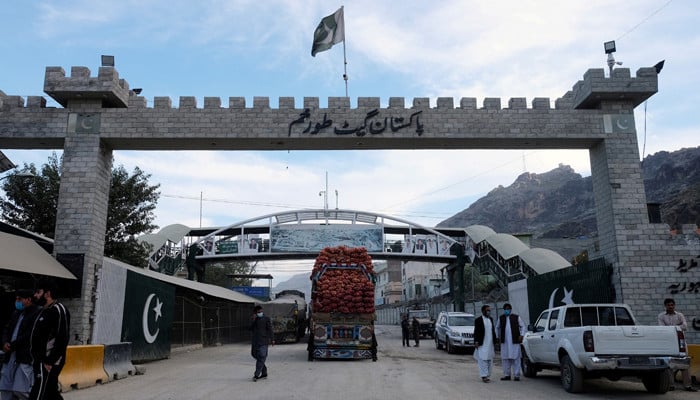
In October 2025, Pakistan closed all major western crossings with Afghanistan. Pakistan stated that the closures were necessary because of escalating tensions and TTP-linked attacks originating from Afghan territory. The current regime does not indicate a return to normal movement in the near future.
The immediate costs of the closure have been borne by traders, transporters, labourers, workers and borderland communities who depend on cross-border movement for both economic and social reasons.
Cross-border trade between Pakistan and Afghanistan is central to the borderland economy. It begins before the customs gate, in social connections, reputation, family ties, language, credit and preexisting business relationships. Much of this trade is mediated by trading networks and brokers, whose credibility depends on trust. For people living in Pakistan and Afghanistan, the border is more than a political line between the two countries; it is a long-standing socioeconomic space.
Anthropologically speaking, areas near borders comprise communities with ties to both countries – the country in which they reside and the country on the other side of the line where they have ethnic, linguistic and kinship ties. The official line between Pakistan and Afghanistan has been shaped by centuries of connection; thus, trade in the region is not simply a matter of goods passing through official channels. Much of it is also conducted on credit, given the region’s lack of formal banking and credit systems.
Policies regarding the borderlands of Pakistan and Afghanistan extensively employ concepts such as regulation, security, closure and control. For border populations, however, the frontier is not only about security but also a locally embedded economy of subsistence and mobility. It provides jobs for truck drivers, workers, warehouse staff, loaders, retailers and customs officers. The closure of the border not only affects trade figures but also disrupts the incomes, debts, mobility, and everyday planning of traders, transport workers and borderland households.
Representatives of the business community have often cited an earlier high point of around $2.7 billion in Pakistan-Afghanistan trade, though this should be treated as a business-community estimate, as published figures vary widely. A 2018 report in ‘Profit’ stated that bilateral trade had fallen from $2.7 billion to $1.2 billion in around 18 months, while other reports placed the earlier peak closer to $2.5 billion. Since then, trade has declined significantly. According to Afghanistan’s Ministry of Commerce, reported by Pajhwok, trade between Afghanistan and Pakistan in 2024 stood at $2.461 billion and in 2025 at $1.766 billion.
The Pakistan Trade Development Authority’s December 2025 report shows that Pakistan’s exports to Afghanistan fell from $754 million in July–December 2024–25 to $336 million in July–December 2025–26. Imports from Afghanistan also declined from $419 million to $239 million during the same period. This means that Pakistan’s recorded goods trade with Afghanistan fell from approximately $1.173 billion to $575 million in the first half of 2025–26.
My fieldwork with traders and transporters shows that many traders involved in the Pak-Afghan trade had homes and strong networks in Kabul. These networks gave traders from Khyber and Peshawar an advantage because they could supply goods to Afghan traders on credit due to the trust between them. My fieldwork with transporters in Karachi reinforces the same point about the importance of these networks.
After the border closure, profit margins fell sharply, in some cases by more than 50 per cent. The livelihood chain attached to even one truck is far wider than that of the driver alone, as thousands of households depend on the trucking economy indirectly through people like drivers, assistants, loading bay staff, mechanics, tyre dealers, service stations, roadhouses, warehouses, customs clearance agents, brokers and small traders. The effect of a complete stop of truck traffic for a certain period of time does not end with the transport companies. This will have a flow-on effect on the entire employment structure of the industry.
Today, many traders in Peshawar and Karachi remember a time when journeys to and from the frontier were easier and more familiar. They had homes, relatives, land – and contact networks in Kabul, Jalalabad and Kandahar. For the people of this region, the border has always been a shared space for passage, trade, kinship, and interdependence between the tribal areas and the border districts of Balochistan and neighbouring Afghanistan.
This is precisely what the current policy fails to recognise. The government cannot expect to keep borders safe by creating uncertainty in legitimate trade. While frequent closures may be justified on security grounds, in practice, they punish those who have invested time and money in legal trade to earn a living: drivers, workers, petty traders, brokers and families living near the border. In addition, closing legitimate lines of communication creates an environment that leads to the development of informal channels and increases capital outflow.
Trade and security must be addressed separately. This does not mean weakening regulations; it means recognising that lawful trade cannot survive repeated closures and uncertainty. Pakistan’s approach to Afghanistan should be more economy-centred, but it remains heavily security-centred. A viable frontier economy will require clear guidelines for opening borders, improved customs rules, payment systems and consultations with chambers, transport trade unions, customs brokers and traders from border areas.
Pakistan can manage the Pak-Afghan border more effectively if it does not see it only as a site of state control but also as a conduit for exchange, movement and community linkages.
Border communities should not be treated merely as objects of security policy and left to bear the costs of border closure. They should be recognised as economic actors whose participation is critical for durable border management and security. Policies should keep formal trade viable rather than forcing it outside of regulated systems.
The writer is a policy analyst and researcher. He is the author of ‘Pakistan’s Tribal Borderlands’ and can be reached at: [email protected]
Disclaimer: The viewpoints expressed in this piece are the writer’s own and don’t necessarily reflect Geo.tv’s editorial policy.
Originally published in The News

Pete Davidson’s friends have leaped to his defence after his ex-girlfriend, Elsie Hewitt, publicly claimed she was raising their infant daughter on her own.
Following news of the couple’s recent split, the actress posted a video on TikTok whispering that she has to work to make money and is doing it all by herself, which she described as hard.
However, an insider close to the former couple has hit back at the claims, telling Page Six that the allegations are completely untrue and that the comedian is actually paying for absolutely everything.
According to the source, the Bupkis star is currently covering the rent, general living expenses, and health insurance for both Hewitt and their daughter, Scottie Rose, who was born on 12 December.
The insider explained that those who know the pair are completely baffled by the posts, asserting that Davidson’s main priority is ensuring his family is looked after.
Despite the breakdown of the relationship and their personal disagreements, friends insist that the Saturday Night Live alum remains fully committed to being a good father.
The drama unfolded over the weekend when the Industry actress took to social media to ask for help.
Alongside her TikTok video, Hewitt shared a since-deleted Instagram Story looking for an assistant or nanny to act as her right-hand person, specifying that she would only look at applicants who provided a resume.
The public posts quickly divided fans online, with some labelling Davidson a deadbeat dad while others defended him by pointing out that he is involved in his daughter’s life and has to work as well.

In response to the backlash, Davidson’s inner circle maintains that he has rearranged his entire schedule and done everything possible to be there both physically and financially.
They emphasize that all the comic wants is for Hewitt to be happy and in a good position.
Though the pair have officially called it quits, Davidson’s camp is adamant that he is going above and beyond to be a supportive co-parent, despite the picture being painted on social media.


EU green mandates and the Vietnam T&A industry

After provinces, Centre lifts austerity-driven business-hour curbs until May 31

Vietnam’s flat apparel exports hide the real trade signal

-

 Entertainment5 days ago
Conan O’Brien hat tricks as Oscar host
-

 Tech1 week ago
Could Contact-Tracing Apps Help With the Hantavirus? Not Really
-

 Fashion5 days ago
Italy’s Zegna Group’s Q1 growth boosted by strong organic performance
-

 Sports1 week ago
Bobby Cox, legendary Atlanta Braves manager who led 1995 World Series champions, dead at 84
-

 Entertainment1 week ago
Tom Brady gets back at Kevin Hart during Netflix roast
-

 Entertainment1 week ago
Martin Short: Facing tragedy with joy
-

 Entertainment1 week ago
Martha Stewart: How to make an omelet
-

 Sports1 week ago
Jacob Fatu unleashes vicious assault on Roman Reigns after World Heavyweight Championship loss at WWE Backlash