

Business
AI could boost UK economy by 10% in 5 years, says Microsoft boss

Zoe KleinmanTechnology editor
 Getty Images
Microsoft says its new $30bn (£22bn) investment in the UK’s AI sector – its largest outside of the US – should significantly boost Britain’s economy in the next few years.
The package forms a major part of a £31bn agreement made between the UK government and various other US tech giants, including Nvidia and Google, to invest in British-based infrastructure to support AI technology, largely in the form of data centres.
Microsoft will also now be involved in the creation of a powerful new supercomputer in Loughton, Essex.
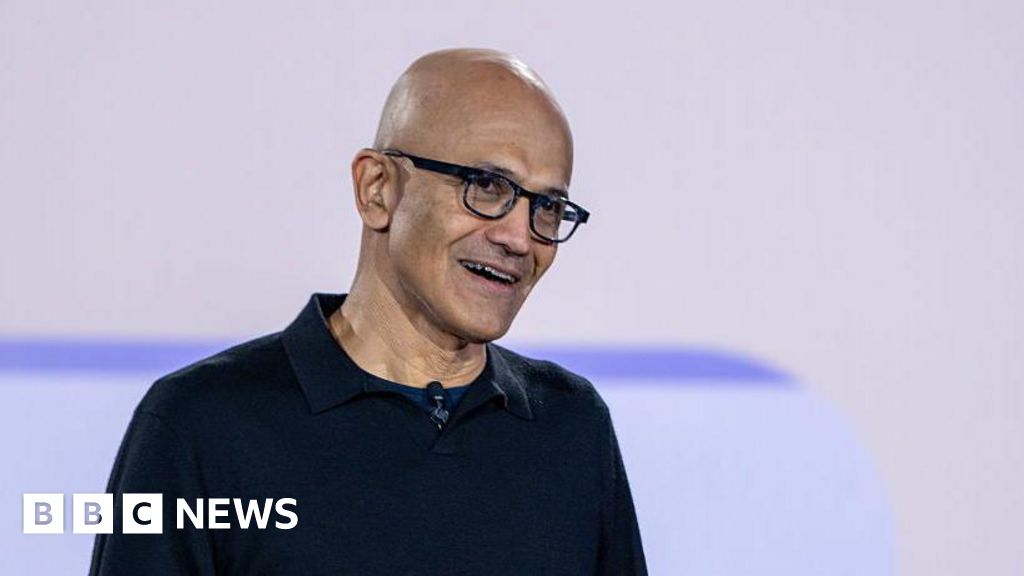
Speaking exclusively to the BBC Microsoft CEO Satya Nadella told the BBC of the tech’s potential impact on economic growth.”
“It may happen faster, so our hope is not ten years but maybe five”.
“Whenever anyone gets excited about AI, I want to see it ultimately in the economic growth and the GDP growth.”
Prime Minister Sir Keir Starmer said the US-UK deal marked “a generational step change in our relationship with the US”.
He added that the agreement was “creating highly skilled jobs, putting more money in people’s pockets and ensuring this partnership benefits every corner of the United Kingdom.”
The UK economy has remained stubbornly sluggish in recent months.
Nadella compared the economic benefits of the meteoric rise of AI with the impact of the personal computer when it became common in the workplace, about ten years after it first started scaling in the 1990s.
But there are also growing mutterings that AI is a very lucrative bubble that is about to burst. Nadella conceded that “all tech things are about booms and busts and bubbles” and warned that AI should not be over-hyped or under-hyped but also said the newborn tech would still bring about new products, new systems and new infrastructure.
He acknowledged that its energy consumption remains “very high” but argued that its potential benefits, especially in the fields of healthcare, public services, and business productivity, were worthwhile. He added that investing in data centres was “effectively” also investing in modernising the power grid but did not say that money would be shared directly with the UK’s power supplier, the National Grid.
The campaign group Foxglove has warned that the UK could end up “footing the bill for the colossal amounts of power the giants need”.
The supercomputer, to be built in Loughton, Essex, was already announced by the government in January, but Microsoft has now come on board to the project.
Big tech comes to town
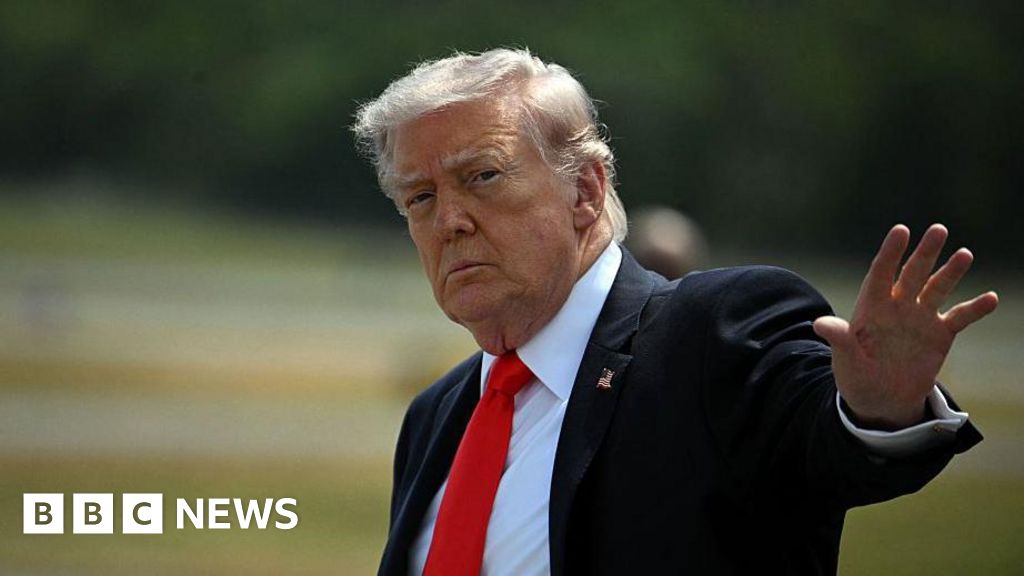
Mr Nadella, revealed the investment as Donald Trump has arrived in the UK on a three-day state visit.
The UK and US have signed a “Tech Prosperity Deal” as part of the visit, with an aim of strengthening ties on AI, quantum computing and nuclear power.
Google has promised £5bn for AI research and infrastructure over the next two years.
Nvidia also pledged to develop AI in the UK, which will help fuel innovation, economic growth and jobs, a spokesperson for the chip giant told the BBC.
The company said that along with its partners it will invest up to £11bn in the UK, in what it called the largest AI infrastructure rollout in the country’s history.
UK Chancellor Rachel Reeves also opened a £735m data centre as part of the investment on Tuesday in Hertfordshire.
There are some concerns that accepting so much money from US investors will mean the UK relies too much on foreign technology.
In July, Trump made clear his intentions were for the US to win global the AI race.
One of the ways it stated it would do this was to “export American AI to allies and partners.”
The UK government has signed number of deals with US technology companies, including an agreement to use OpenAI services in the public sector and a £400m contract to use Google Cloud services in the Ministry of Defence.
Satya Nadella said he thought the agreement defined “the next phase of globalisation” and argued that having access to foreign tech services leveraged digital sovereignty rather than threatened it.
On the growing issue of AI taking over jobs, Nadella said Microsoft also had to “change with the changes in technology”, having laid off thousands of staff this year despite record sales and profits. He described it as “the hard process of renewal”.
AI growth zone in north-east England
The government also said there was “potential for more than 5,000 jobs and billions in private investment” in north-east England, which has been designated as a new “AI growth zone“.
Last year, the government announced a £10bn investment into a data centre to be built near Blyth, Northumberland.
It has now announced another data centre project dubbed Stargate UK from OpenAI, chipmaker Nvidia, semiconductor company Arm and Nscale.
That will be based at Cobalt Park in Northumberland.
OpenAI boss Sam Altman said Stargate UK would “help accelerate scientific breakthroughs, improve productivity, and drive economic growth.”
However the UK version is a fraction of the firm’s US-based Stargate project, which OpenAI launched in January with a commitment to invest $500 billion over the next four years building new AI infrastructure for itself.
So far, reaction to the agreement has been broadly positive, but it is clear that there are many challenges ahead for the UK if it is to fulfil its intended potential.
The Tony Blair Institute described the news as a “breakthrough moment” but added that Britain had some work to do: “reforming planning rules, accelerating the delivery of clean energy projects, and building the necessary digital infrastructure for powering the country’s tech-enabled growth agenda,” said Dr Keegan McBride, the Tony Blair Institute for Global Change’s emerging tech and geopolitics expert.
Matthew Sinclair, UK director of the Computer & Communications Industry Association, hailed the agreement as “a powerful demonstration of the scale of the AI opportunity for the UK economy.”
But the Conservative Party highlighted that other big international companies such as the pharmaceutical giant Merck have recently cancelled or delayed their UK expansion plans.
Satya Nadella spoke to the BBC News in between board meetings, shortly before jumping on a flight to join Donald Trump as he arrives in the UK on a three-day state visit. Nadella will be among other tech leaders, including OpenAI’s Sam Altman and Nvidia’s Jensen Huang, attending the Royal state banquet on Wednesday.
He said he would use Microsoft’s AI tool Copilot to help him decide what to wear.
“I was very surprised that there was a very different dress protocol, which I’m really not sure that I’m ready for,” he said.


Heineken has announced a substantial investment exceeding £44 million into hundreds of its pubs across the UK, a move expected to create approximately 850 jobs.
The Dutch brewing giant’s Star Pubs operation, which manages 2,350 sites nationwide, is undertaking this significant financial commitment despite a challenging period for the pub sector.
The industry has faced considerable pressure over the past year, grappling with escalating labour costs and increases in national insurance contributions.
Concurrently, consumer spending has been constrained by concerns over inflation and rising unemployment, further impacting pub revenues. However, pubs did receive additional business rates support from the government last month, aimed at alleviating some of these financial burdens.
Lawson Mountstevens, managing director of Star Pubs, indicated that the investment strategy is partly designed to bolster revenues and help the group navigate the recent “sustained increases in running costs”.
This year, £44.5 million will be allocated to upgrades for 647 pubs. A notable 108 of these venues are earmarked for particularly significant cash injections, with each transformation costing at least £145,000.
Heineken clarified that while the majority of its pubs are group-owned, they are independently operated by local licensees. A key focus for this investment, particularly in the lead-up to the 2026 football World Cup, will be on sports-focused venues.
The pub firm and brewer has a history of significant investment in British pubs, having pumped £328 million into the sector since 2018. Work has already commenced at 52 locations, including eight projects dedicated to reopening boarded-up pubs that have endured lengthy closures.
Mr Mountstevens also urged the government to reduce the tax burden on pubs, arguing it would ease cost pressures and foster further job creation within the industry.
He stated: “We can only do so much; the root-and-branch reform of business rates that the industry has been calling for over many years is urgently required, as well as a lowering of the burden of taxation on pubs, including VAT and beer duty.”
He concluded with a direct appeal: “We are calling on the Government to support us in bringing out the best in the Great British pub.”
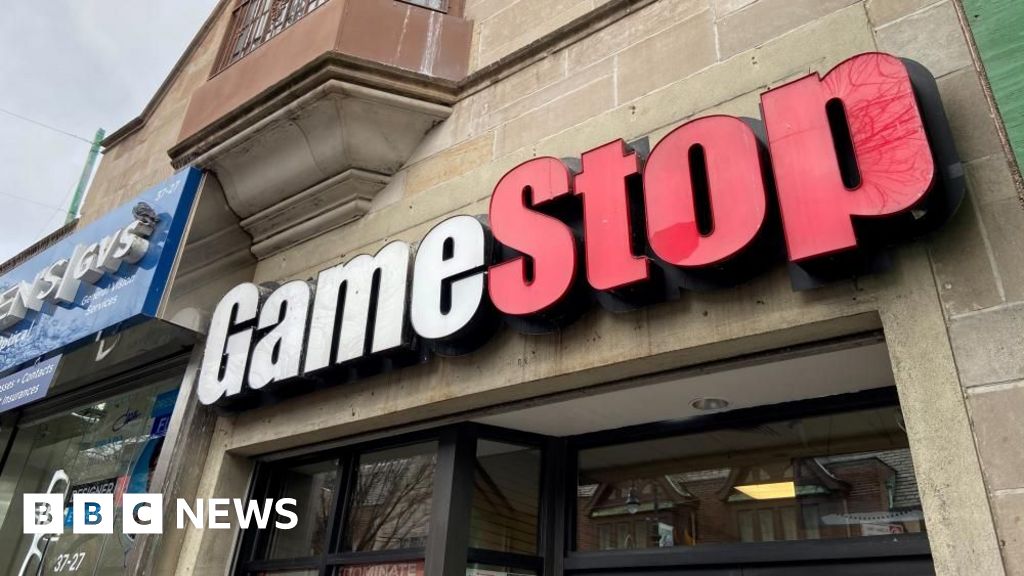
GameStop’s boss Ryan Cohen says he sees potential to make eBay a much bigger rival to Amazon.
Source link
It comes as the US said on Monday it will begin to help “guide” vessels out of the Strait of Hormuz.
Source link


Greg Brockman Defends $30B OpenAI Stake: ‘Blood, Sweat, and Tears’

Met Gala 2026 “Costume Art” red carpet pictures from New York City

Jack Brooksbank opts for intimate celebration as new baby brings fresh focus

-
 Tech1 week ago
A Brain Implant for Depression Is About to Be Tested in Humans
-

 Tech1 week ago
Almost 90% of women leave tech industry within 10 years | Computer Weekly
-
 Business1 week ago
Pakistan’s oil market is fuelling the crisis | The Express Tribune
-
 Business1 week ago
‘I had £20,000 stolen and had to fight a 13-month fraud reporting rule to get it back’
-

 Sports7 days ago
Pro wrestling star Steph De Lander reveals how colleague’s advice helped lead her to title triumph at ACW
-

 Entertainment1 week ago
Melania Trump says ABC should ‘take a stand’ on late-night host Kimmel
-
 Tech7 days ago
This Ambitious Laptop Doesn’t Leave Much Room for Your Hands
-

 Entertainment1 week ago
Norway joins Type 26 Frigate Programme to boost NATO naval power