

Tech
AI Is Eliminating Jobs for Younger Workers

Economists at Stanford University have found the strongest evidence yet that artificial intelligence is starting to eliminate certain jobs. But the story isn’t that simple: While younger workers are being replaced by AI in some industries, more experienced workers are seeing new opportunities emerge.
Erik Brynjolfsson, a professor at Stanford University, Ruyu Chen, a research scientist, and Bharat Chandar, a postgraduate student, examined data from ADP, the largest payroll provider in the US, from late 2022, when ChatGPT debuted, to mid-2025.
The researchers discovered several strong signals in the data—most notably that the adoption of generative AI coincided with a decrease in job opportunities for younger workers in sectors previously identified as particularly vulnerable to AI-powered automation (think customer service and software development). In these industries, they found a 16 percent decline in employment for workers aged 22 to 25.
The new study reveals a nuanced picture of AI’s impact on labor. While advances in artificial intelligence have often been accompanied by dire predictions about jobs being eliminated—there hasn’t been much data to back it up. Relative unemployment for young graduates, for instance, began dropping around 2009, well before the current AI wave. And areas that might seem vulnerable to AI, such as translation, have actually seen an increase in jobs in recent years.
“It’s always hard to know [what’s happening] if you’re only looking at a particular company or hearing anecdotes,” Brynjolfsson says. “So we wanted to look at it much more systematically.”
By combing through payroll data, the Stanford team found that AI’s impact has more to do with a worker’s experience and expertise than the type of work they do. More experienced employees in industries where generative AI is being adopted were insulated from job displacement, with opportunities either remaining flat or slightly growing. The finding backs up what some software developers previously told me about AI’s impact on their industry—namely that rote, repetitive work, like writing code to connect to an API, has become easier to automate. The Stanford study also indicates that AI is eliminating jobs but not lowering wages, at least so far.
The researchers considered potentially confounding factors including the Covid pandemic, the rise of remote work, and recent tech sector layoffs. They found that AI has an impact even when accounting for these factors.
Brynjolfsson says the study offers a lesson on how to maximize the benefits of AI across the economy. He has long suggested that the government could change the tax system so that it does not reward companies that replace labor with automation. He also suggests AI companies develop systems that prioritize human-machine collaboration.
Brynjolfsson and another Stanford scientist, Andrew Haupt, argued in a paper in June that AI companies should develop new “centaur” AI benchmarks that measure human-AI collaboration, to incentivize more focus on augmentation rather than automation. “I think there’s still a lot of tasks where humans and machines can outperform [AI on its own],” Brynjolfsson says.
Some experts believe that more collaboration between humans and AI could be a feature of the future labor market. Matt Beane, an associate professor at UC Santa Barbara who studies AI-driven automation, says he expects the AI boom to create demand for augmentable work—as managing the output of AI becomes increasingly important. “We’ll automate as much as we can,” Beane says. “But that doesn’t mean there won’t be a growing mountain of augmentable work left for humans.”
AI is advancing quickly though, and Brynjolfsson warns that the impact on younger workers could spread to those with more experience. “What we need to do is create a dashboard early-warning system to help us track this in real time,” he says. “This is a very consequential technology.”
This is an edition of Will Knight’s AI Lab newsletter. Read previous newsletters here.








I tried the battery version, which does require you recharge it every couple of weeks, but the wired-in version is the top recommendation on our guide to the Best Video Doorbells.
A Better Birdhouse
I had a new-to-me problem this spring: bird invasion. A little bird made a nest in my front-door wreath without us noticing. One evening, my sister opened the door, and the bird flew out of the nest and straight into our house. After a 30-minute battle to get it outside again (and keep my cat from eating it), it wasn’t until we saw the bird fly off the door again the next day that we realized it was calling our home its home, too.
If this is a common problem at your house, our resident bird-gear tester Kat Merck has a solution: a smart nesting box. Birdfy makes a few different smart bird feeders we like for bird-watching, and the Nest Duo is a birdhouse that lets you watch the birds while they nest inside of it. It’s a slim, attractive box that will add to your front yard’s style while also packing two solar-powered cameras (one facing the entrance, one focused inside) so you can bird-watch from multiple angles. It comes with different hole sizes to appeal to different species, metal predator guards to prevent chewing around the hole, and a remote control to reset or recharge the camera without disturbing your feathered neighbors.
Stylish Smart Lights

Govee
Outdoor Clear Bulb String Lights
I’ve liked Govee’s smart outdoor string lights before, usually for my holiday decor, and have previously recommended something similar with a bistro-light-like look that happened to be smart. These clear bulb string lights are part of Govee’s current lineup and have a contemporary twist with a triangle in the center instead of the wire filament. These are a fun option for outdoor lights you can enjoy on warm nights, and they can do every color and shade of white without looking as bulky as permanent outdoor lights. (Added bonus, these lights are also Matter compatible!)
Fresh Bulbs

Cync
Smart LED Light Bulb, PAR38
If you have light fixtures you want to remote-control, add an outdoor smart bulb. There are tons to choose from, and you can usually find one from any brand you already have at home. The only downside is that outdoor-rated smart bulbs are usually 4.75-inch-diameter PAR38-style bulbs, so they’re best for downward-facing floodlights on your porch or balcony. They’ll likely be too big to fit in a wall fixture as a replacement for a normal-sized bulb. Don’t just grab any smart bulb—not all are outdoor-rated. Check for mentions of outdoor use and waterproof ratings to make sure they’re safe to use. I’m a big fan of Cync bulbs, and the brand has an outdoor version of the Cync Full Color bulbs I like to use indoors. You’ll be able to add fun colors as well as shades of white, so you can turn the porch a spooky orange or red for Halloween, pink for Valentine’s Day, or the colors of your favorite sports team on game day.
Remote-Controlled Garage
If your garage is the centerpiece of your home’s curb appeal, you can control it as easily as a smart door by adding a smart controller. You can do two different styles: I have the Chamberlain MyQ professionally installed smart garage opener, which means the device that controls my garage has these smarts built into it (plus a camera, but I find it doesn’t work great with how far the device is from my Wi-Fi router), or you can get a smart garage controller that can add smart features onto an existing garage door. Both let you check whether the garage is open or closed and operate it remotely, and you can add a video keypad that doubles as a video doorbell and can let you open or close the garage without your phone.
Smart Shades
The front of my home faces west, so it’s absolutely baking at the end of the day. What I need to add are some of our favorite smart shades to automate closing the shades on that side of the house at the right time of day. These also give your home a nice, cohesive look and immediate, controllable privacy from the outside world. WIRED reviewer Simon Hill recommends the SmartWings shades as his top picks, and Lutron’s Caseta shades if you’re looking for a more upgraded look.
Invisible Swaps
Looking to add some smarts without touching your existing setup? These switch-ups can make your front door and yard smart without being visible.
Power up with unlimited access to WIRED. Get best-in-class reporting and exclusive subscriber content that’s too important to ignore. Subscribe Today.

April might be springtime in the northern hemisphere, but some of the best streaming services seem to think it’s the perfect time for a dry run of spooky season. How else to explain the arrival of some exquisitely dark slices of horror, like 28 Days Later: The Bone Temple arriving on Netflix, Weapons coming to Prime Video, or Shelby Oaks landing on Hulu? If you prefer your off-season Halloween viewing to be in the vein of campy B movies rather than serious scares though, horror specialist Shudder has you covered with Deathstalker, a gloriously cheesy reboot of a near-forgotten ’80s series.
Reality is often scarier than fiction though, as shown by Louis Theroux’s Inside the Manosphere—his first documentary film with Netflix, exploring the dark side of social media and the world of toxic male influencers. (Be sure to read our interview with the filmmaker.) And if the thought of that leaves you wanting something a bit more wholesome to watch, thankfully Zootopia 2 has popped up on Disney+—and there’s even a rabbit in that, for some appropriately springtime imagery.
Here are WIRED’s picks of the best movies to watch right now.
28 Years Later: The Bone Temple
The fourth film in the long-running postapocalyptic horror series switches focus from rampaging rage zombies to a more dangerous threat: humans. OK, OK, “people are the real monsters” isn’t a hot take for the genre, but The Bone Temple offers a unique twist, with 28 Years Later survivor Spike (Alfie Williams) trapped in the company of a murderous gang led by deranged satanist “Sir Lord” Jimmy Crystal (Sinners’ Jack O’Connell). The villain is modeled on disgraced British TV presenter Jimmy Savile, whose sexual abuse crimes hadn’t been revealed by the time of the initial outbreak in 28 Days Later, adding a dash of real-world terror.
As the group stalks what remains of the English countryside, Spike’s only hope might be Dr. Ian Kelson (Ralph Fiennes), whose experiments on curing alpha zombie Samson (Chi Lewis-Parry) might hold humanity’s last hope. Although best watched back to back with its predecessor for the full, horrifying picture, director Nia DaCosta’s chapter stands on its own—and earns bonus points for one of the best uses of Iron Maiden’s “Number of the Beast” in film history.
Louis Theroux: Inside the Manosphere
It’s the silence that does the trick; British documentarian Louis Theroux always knows when not to speak and instead let his subject expose themselves for the world to see. It’s a masterful technique whether Theroux is investigating the Westboro Baptist Church or UFO conspiracy theorists, but it is rarely put to better use than in his latest outing: exploring the online “manosphere” subculture of self-appointed “alphas” offering toxic advice on how to be a “real man.” Speaking with key figures in the loosely defined movement, Theroux’s mild-mannered approach often leaves them to do most of the talking, exposing shockingly misogynistic and extremist views. Even more distressing? The quiet revelation that for many of them their performative masculinity is all just one big grift, and how they rationalize the harm they cause in pursuit of a payout. Depressing but compelling viewing—not all men, but definitely all of these men.
Crime 101
Jewel thief Mike (Chris Hemsworth) is the best in the business, a meticulous planner who pulls off his heists without leaving a shred of evidence—much to the consternation of LAPD detective Lou Lubesnick (Mark Ruffalo), who doesn’t even know exactly who he’s hunting for a string of thefts. Elsewhere in the City of Angels, Sharon (Halle Berry) is an underappreciated VP at an insurance firm, frustrated at being passed over for promotion for years. She’s the perfect insider to help Mike orchestrate an elaborate $11 million diamond heist. But as Lou uncovers evidence connecting to Mike’s past, and the chaotic, violent biker Ormon (Barry Keoghan) aims to take the score for himself, even the most masterful planning can’t prevent everything spiraling dangerously out of control.
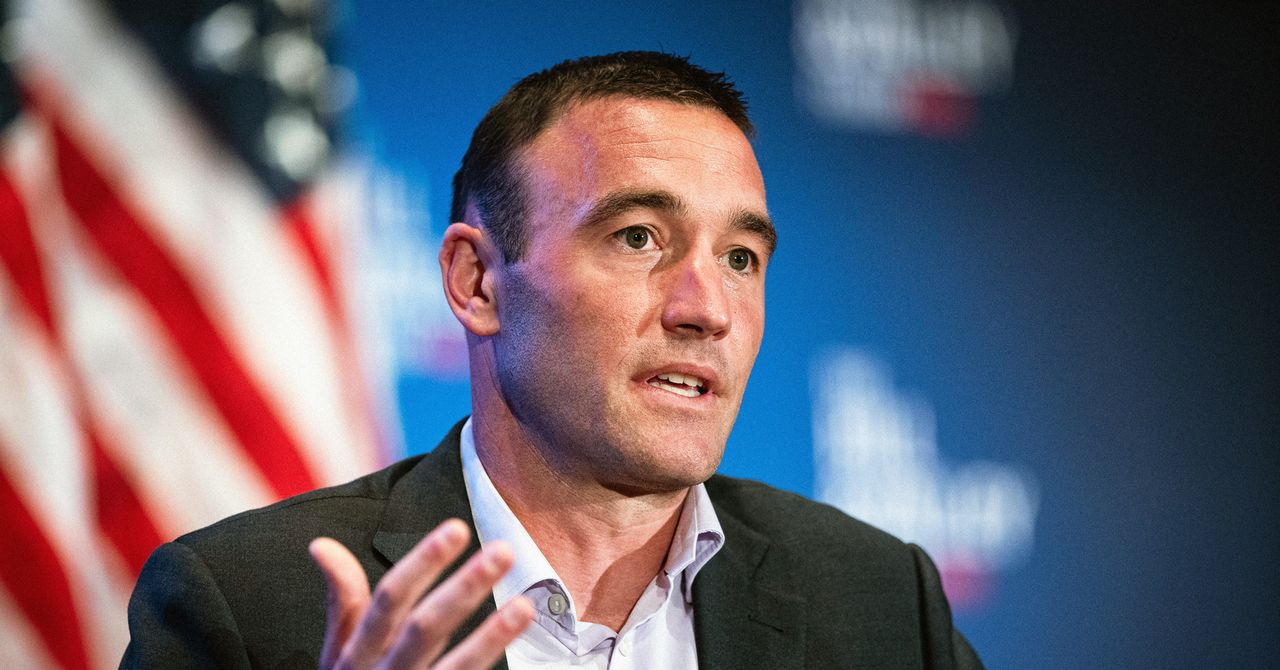
Kevin Weil, OpenAI’s former chief product officer who was recently tapped to build a new AI workspace for scientists, Prism, is leaving the company, WIRED has confirmed. Weil was previously an early executive leading product at Instagram.
OpenAI is also sunsetting Prism, which the company launched as a web app in January this year to give scientists a better way to work with AI. The company is folding the roughly 10-person team behind it into Thibault Sottiaux’s Codex team. An OpenAI spokesperson confirmed the changes, and tells WIRED this is part of the company’s effort to unify its business and product strategy. OpenAI has broader ambitions to turn Codex, its AI coding application, into an “everything app.”
Weil, who joined OpenAI in June 2024, announced last September that he would be starting a new initiative inside of the company called “OpenAI for Science.” Now, OpenAI is dispersing those employees throughout the company’s product, research, and infrastructure teams. An OpenAI spokesperson reiterated the company’s commitment to accelerating scientific discovery, and says it’s one of the clearest ways AI can benefit humanity.
OpenAI is currently trying to refocus the company around a few key areas, such as enterprise offerings and coding. Last month, OpenAI’s CEO of AGI deployment Fidji Simo told staff that the company needs to simplify its product offerings. The push to divert resources to more consequential efforts resulted in OpenAI discontinuing its Sora video-generation app.
This is a developing story. Please check back for updates.

Scams have grown more sophisticated, but people are fighting back

Netflix star targeted by imposters after suspicious social media activity

Everything to know about venue, guest list, dress, more

-

 Politics1 week ago
Indian airlines hit hardest after Dubai limits foreign flights until May 31
-

 Entertainment6 days ago
Palace left in shock as Prince William cancels grand ceremony
-

 Politics1 week ago
Chinese, Taiwanese will unite, Xi tells Taiwan opposition leader
-

 Sports6 days ago
The case for Man United’s Fernandes as Premier League’s best
-

 Entertainment1 week ago
Dua Lipa hits major career high ahead of wedding with Callum Turner
-
 Business1 week ago
The FAA wants gamers to apply for air traffic control jobs
-
 Business6 days ago
UK could adopt EU single market rules under new legislation
-

 Sports1 week ago
Lamar Jackson hits back at critics with faithful message on social media