

Tech
AI-ready companies turning network pilots into profit | Computer Weekly


While the AI genie is out of the bottle for organisations for all sizes, only 13% of businesses are fully prepared for it, with those ready as much as four times more likely to move pilots into production and 50% more likely to see measurable value, according to a study by Cisco.
The data comes from the Cisco AI readiness index 2025, a global study, now in its third year, based on a double-blind survey of 8,000 senior IT and business leaders responsible for AI strategy at organisations with more than 500 employees across 26 industries across 30 markets.
Cisco added that the combination of foresight and foundation is delivering real, tangible results at a time when two major forces are starting to reshape the landscape: AI agents, which raise the bar for scale, security and governance; and AI infrastructure debt, the early warning signs of hidden bottlenecks that threaten to erode long-term value.
Regarding AI agents, the survey found ambition was outpacing readiness. Overall, 83% of organisations planned to deploy AI agents, and nearly 40% expected them to work alongside employees within a year. But the study discovered that, for majority of these companies, AI agents were exposing weak foundations – that is, systems that can barely handle reactive, task-based AI, let alone AI systems that act autonomously and learn continuously. More than half (54%) of respondents said their networks can’t scale for complexity or data volume and just 15% describe their networks as flexible or adaptable.
AI infrastructure debt was called the modern evolution of technical and digital debt that once held back digital transformation. Moreover, the survey regarded it as “the silent accumulation of compromises, deferred upgrades, and underfunded architecture that erodes the value of AI over time”. Some 62% of firms expect workloads to rise by over 30% within three years, 64% struggle to centralise data, only 26% said that they have robust GPU capacity and fewer than one in three could detect or prevent AI-specific threats.
Among the topline results from the report were that “small but consistent” group of companies surveyed – falling into the category of pacesetters, and making up about 13% of organisations for the past three years – were outperforming their peers across every measure of AI value.
Cisco noted that the pacesetters’ sustained advantage indicated a new form of resilience: a disciplined, system-level approach that balances strategic drivers with the data and network infrastructure needed to keep pace with AI’s accelerating evolution. It added that such firms were already architecting for the future, with 98% designing their networks for the growth, scale and complexity of AI, compared with 46% overall.
The research outlined a pattern among companies delivering real returns: they make AI part of the business, not a side project; they build infrastructure that’s ready to grow; they move pilots into production; they measure what matters; and they turn security into strength.
Virtually all pacesetters (99%) were found to have a defined AI roadmap (vs 58% overall), and 91% (vs 35%) had a change-management plan. Budgets match intent, with 79% making AI the top investment priority (vs 24%), and 96% with short- and long-term funding strategies (vs 43%). The study noted that such firms architect for the always-on AI era. Some 71% of pacesetters said that their networks were fully flexible and can scale instantly for any AI project (vs 15% overall), and 77% are investing in new datacentre capacity within the next 12 months (vs 43%).
Just over three-fifths had what was defined as a “mature, repeatable” innovation process for generating and scaling AI use cases (versus 13% overall), and three-quarters (77%) had already finalised those use cases (versus 18%). Some 95% track the impact of their AI investments – three times higher than others – and 71% were confident their use cases will generate new revenue streams, more than double the overall average. Meanwhile, 87% were highly aware of AI-specific threats (versus 42% overall), 62% integrated AI into their security and identity systems (versus 29%), and 75% were fully equipped to control and secure AI agents (versus 31%).
The result of this approach, said Cisco, was that pacesetters achieve more widespread results than their peers because of this approach, with 90% reporting gains in profitability, productivity and innovation, compared with around 60% overall.
Commenting on the results from the survey, Cisco president and chief product officer Jeetu Patel stated that the AI readiness index makes one thing clear: AI doesn’t fail – readiness fails, adding: “The most AI-ready organisations – the pacesetters from our research – prove it. They’re four times more likely to move pilots into production and 50% more likely to realise measurable value. So, with more than 80% of organisations we surveyed about to deploy AI agents, these new findings confirm readiness, discipline and action are key to unlocking value.”
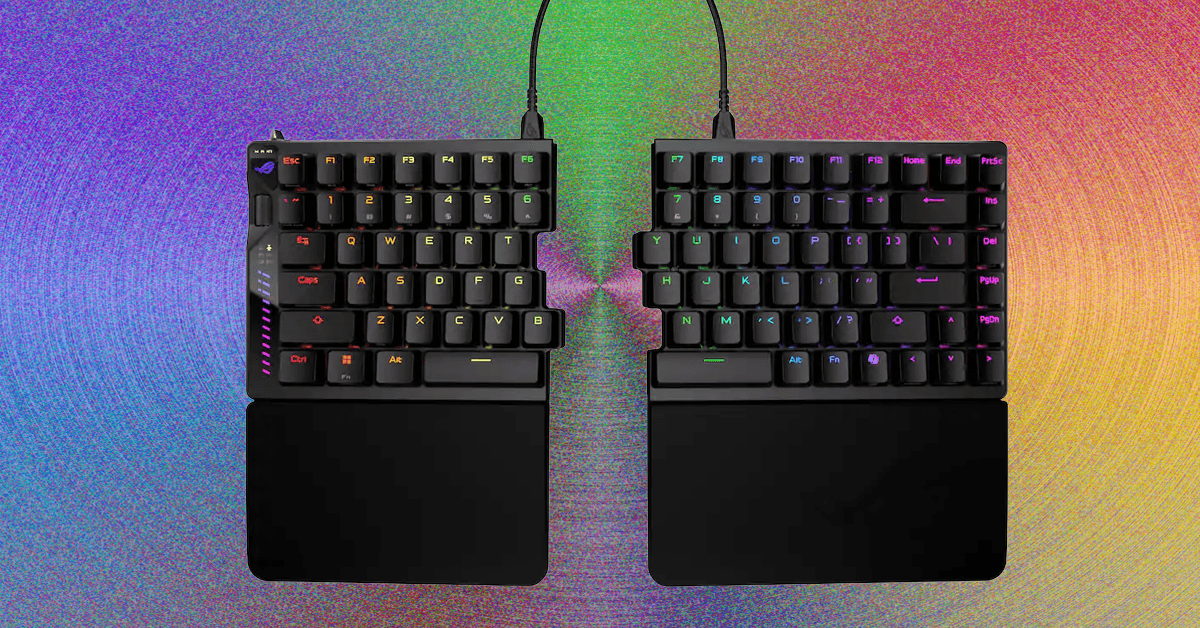
The wheel on the left side has options to adjust actuation distance, rapid-trigger sensitivity, and RGB brightness. You can also adjust volume and media playback, and turn it into a scroll wheel. The LED matrix below it is designed to display adjustments to actuation distance but feels a bit awkward: Each 0.1 mm of adjustment fills its own bar, and it only uses the bottom nine bars, so the screen will roll over four times when adjusting (the top three bars, with dots next to them, illuminate to show how many times the screen has rolled over during the adjustment). The saving grace of this is that, when adjusting the actuation distance, you can press down any switch to see a visualization of how far you’re pressing it, then tweak the actuation distance to match.
Alongside all of this, the Falcata (and, by extension, the Falchion) now has an aftermarket switch option: TTC Gold magnetic switches. While this is still only two switches, it’s an improvement over the singular switch option of most Hall effect keyboards.
Split Apart
Photograph: Henri Robbins
The internal assembly of this keyboard is straightforward yet interesting. Instead of a standard tray mount, where the PCB and plate bolt directly into the bottom half of the shell, the Falcata is more comparable to a bottom-mount. The PCB screws into the plate from underneath, and the plate is screwed onto the bottom half of the case along the edges. While the difference between the two mounting methods is minimal, it does improve typing experience by eliminating the “dead zones” caused by a post in the middle of the keyboard, along with slightly isolating typing from the case (which creates fewer vibrations when typing).
The top and bottom halves can easily be split apart by removing the screws on the plate (no breakable plastic clips here!), but on the left half, four cables connect the top and bottom halves of the keyboard, all of which need to be disconnected before fully separating the two sections. Once this is done, the internal silicone sound-dampening can easily be removed. The foam dampening, however, was adhered strongly enough that removing it left chunks of foam stuck to the PCB, making it impossible to readhere without using new adhesive. This wasn’t a huge issue, since the foam could simply be placed into the keyboard, but it is still frustrating to see when most manufacturers have figured this out.

Don’t call them hearing aids. They’re hearpieces, intended as a blurring of the lines between hearing aid and earbuds—or “earpieces” in the parlance of Lizn, a Danish operation.
The company was founded in 2015, and it haltingly developed its launch product through the 2010s, only to scrap it in 2020 when, according to Lizn’s history page, the hearing aid/earbud combo idea didn’t work out. But the company is seemingly nothing if not persistent, and four years later, a new Lizn was born. The revamped Hearpieces finally made it to US shores in the last couple of weeks.
Half Domes
Photograph: Chris Null
Lizn Hearpieces are the company’s only product, and their inspiration from the pro audio world is instantly palpable. Out of the box, these look nothing like any other hearing aids on the market, with a bulbous design that, while self-contained within the ear, is far from unobtrusive—particularly if you opt for the graphite or ruby red color scheme. (I received the relatively innocuous sand-hued devices.)
At 4.58 grams per bud, they’re as heavy as they look; within the in-the-ear space, few other models are more weighty, including the Kingwell Melodia and Apple AirPods Pro 3. The units come with four sets of ear tips in different sizes; the default mediums worked well for me.
The bigger issue isn’t how the tip of the device fits into your ear, though; it’s how the rest of the unit does. Lizn Hearpieces need to be delicately twisted into the ear canal so that one edge of the unit fits snugly behind the tragus, filling the concha. My ears may be tighter than others, but I found this no easy feat, as the device is so large that I really had to work at it to wedge it into place. As you might have guessed, over time, this became rather painful, especially because the unit has no hardware controls. All functions are performed by various combinations of taps on the outside of either of the Hearpieces, and the more I smacked the side of my head, the more uncomfortable things got.

The AI radar 2026 study from Boston Consulting Group (BCG) has reported that artificial intelligence (AI) investment is set to double in 2026 compared with 2025. The study, based on a survey of 2,400 business executives, of which 640 are CEOs, found that almost every chief executive polled (94%) is committed to continuing investments even if returns take time to materialise.
In fact, almost all (90%) of the CEOs polled believe AI agents will deliver a measurable return on investment (ROI) by 2026.
The study found that over two-thirds (72%) of CEOs now act as the primary decision-maker for AI in their organisation, taking responsibility from CIOs, who were previously the main lead in AI projects.
Christoph Schweizer, CEO of BCG, said: “Corporate investment in AI is here to stay. 94% of our survey respondents say they will continue to invest in 2026, even if it takes time to see the return. They intend to spend 1.7% of revenue on AI comprehensively. That is more than twice of what it was a year ago.”
BCG’s research suggests that companies leading the way in AI deployments are investing 60% of their AI budgets on agentic AI (AI agents). “We tell CEOs that they need to make AI a key priority,” he said. “The way they own it, the way they talk about it, the way they bring their organisation along. They need to spend time on deepening their own AI literacy.”
BCG recommends that CEOs understand the tools, the technology, and keep in touch with technology suppliers and partners. “Ultimately, you need to know what you talk about so that you can bring your organisation along and steer for maximum return,” added Schweizer.
With regards to the adoption of agentic AI, BCG found that more than 30% of the CEOs investing in AI during 2026 said they would be building agents to deploy in the work environment. Vladimir Lukic, global leader of BCG’s Technology and Digital Advantage, said: “AI agents will truly be something that will unlock organisations and deliver a return on investment within 2026.”
Sylvain Duranton, head of BCG X, said the research highlights differences in CEOs’ AI confidence in different regions. BCG reported that UK businesses are less likely than global peers to make large-scale investments in AI in 2026.
The study found that only 24% of UK companies plan to invest more than $50m in AI, compared with much higher shares in countries leading the AI race, such as Greater China (68%), Japan (53%), the European Union (38%) and the Middle East (41%). BCG also reported that British CEOs are the most sceptical of AI’s potential return on investment and less involved in decision-making on AI.
Discussing the regional differences, Duranton said: “CEOs in the East, in India, in China, in Japan, the Middle East and Africa tend to be highly confident that AI is going to be a positive return on investment move. In the global West – Europe, the US and the UK – there’s a bit more caution.”
In his experience, many Asian companies have huge confidence and boldness in moving forward with AI. However, many European and US firms operate in a different way. “There’s some more skepticism in their workforce,” said Duranton. “There potentially is some more regulation that they deal with.”
Firms leading the way with AI deployments, which BCG categorise as “trailblazers”, tend to focus heavily on upskilling the workforce. Jessica Apotheker, chief marketing officer and managing director at BCG, said: “Trailblazers are putting 60% of their AI budget behind upskilling and retraining their workforce. So, they’re really wanting to go deep in the organisation, changing the way people work, putting people behind this new technology.”
BCG reported that in these organisations, 70% of the workforce has been upskilled or reskilled on AI.

Want to go to the national championship game? Got (at least) $2,700?

Pro-Iran protests held in Indian-occupied Ladakh

Burberry celebrates Year of the Horse 2026 with Shanghai campaign

-

 Politics1 week ago
UK says provided assistance in US-led tanker seizure
-

 Entertainment1 week ago
Does new US food pyramid put too much steak on your plate?
-

 Entertainment1 week ago
Why did Nick Reiner’s lawyer Alan Jackson withdraw from case?
-
 Business1 week ago
Trump moves to ban home purchases by institutional investors
-

 Sports1 week ago
PGA of America CEO steps down after one year to take care of mother and mother-in-law
-

 Sports4 days ago
Clock is ticking for Frank at Spurs, with dwindling evidence he deserves extra time
-
 Business1 week ago
Bulls dominate as KSE-100 breaks past 186,000 mark – SUCH TV
-
Sports6 days ago
Commanders go young, promote David Blough to be offensive coordinator