

Business
AI shopping could drive $263 billion in holiday sales. Walmart and Target are racing to get in


Holiday shopping has always felt like a “chore” for Amrita Bhasin.
Between deciding what to buy, comparing prices and checking reviews, the 24-year-old retail tech CEO said she spent more than 15 hours each year buying gifts for her friends and family, a process that took the joy out of giving.
But this year, Bhasin said she did all of her shopping in a fraction of the time and even had a little “fun” — all thanks to her new personal assistant: ChatGPT.
“I feel like I’ve got that physical store associate that I’m talking to, so I feel like I’m getting better recommendations. I actually think my tendency to buy is higher because of ChatGPT,” Bhasin, based in Menlo Park, California, told CNBC. “It has really changed the game.”
Bhasin is one of the many shoppers turning to AI platforms like OpenAI’s ChatGPT, Google‘s Gemini and Perplexity this holiday season to help them buy gifts for their loved ones, and maybe a few for themselves, too. Whether consumers use them to get gift ideas or compare prices, AI platforms are poised to reshape the shopping experience and drive billions in revenue this holiday season as it becomes harder to get discovered on traditional search platforms.
In a report published last month, Salesforce said it expects AI to drive a staggering $263 billion in global online holiday sales this year, representing 21% of all holiday orders.
Though estimates vary widely, surveys conducted by Visa, Zeta Global and other organizations found that between 40% and 83% of consumers plan to use AI for shopping this holiday season. Meanwhile, AI traffic to U.S. retail sites surged 760% between Nov. 1 and Dec. 1, according to Adobe.
While AI shopping is in its early stages, initial reads on how shoppers are interacting with it show the opportunity it can bring for retailers. Shoppers arriving on retail websites from generative AI platforms are 30% more likely to buy something and about 14% more engaged than those coming from non-AI sources, meaning they’re spending more time on the site and are less likely to leave immediately, Adobe found.
These AI-fueled shopping visits now generate 8% more revenue per session, the firm found. AI tools can also help shoppers spot deals and aid lesser-known brands in getting discovered — about half of the gifts Bhasin bought this year came from brands she’d never shopped before.
“It’s where consumers are going, because they’re just asking questions around, like, ‘Hey, where can I find the best gift under $20 for my niece that cares about these things?'” said Kimberly Shenk, the founder and CEO of Novi, a tech firm that helps brands adjust to AI shopping.
The surge in AI shopping has led retailers big and small to rethink their strategies to ensure they’re showing up where customers expect them to be. Walmart and Amazon have each launched their own AI shopping assistants, and others, including Walmart, Target and Etsy, have partnered with OpenAI so customers can search for items or buy products without leaving ChatGPT.
Apparel retailer PacSun said it hopes to join OpenAI’s platform and in the meantime is reformatting its website so its teen-friendly clothes will show up in AI searches. Others are changing their budgets, directing funds away from SEO, or search engine optimization, and into AEO, or answer engine optimization, and hiring outside firms to help them navigate the shift.
Shenk said her company has seen a “major surge in demand” from retailers and brands that have started to see a steep decline in traffic from social media ads and search engines.
“I’ve heard so many brands talking about their paid advertising in Meta and all these different places really just not performing and ultimately seeing a ton of that transition over to AI mode in Google, ChatGPT, Perplexity,” Shenk said. “I think people were caught off guard … so brands are really scrambling to figure out, ‘How do I know if I’m visible? I have no idea if I’m even showing up. I have no idea how I’m showing up, but I’m seeing all my traffic drop off, and I got to figure that out. Now.'”
Brands are walking a tightrope. They have to adjust to consumers who are using AI to discover products, but still be present through traditional channels for those who prefer old-fashioned shopping. While AI companies and retailers themselves have made massive investments in the chatbot shopping experience, some consumers also say it doesn’t yet measure up to searching for gifts themselves.
Walmart, Target and others join the AI race
As more shoppers start their gift searches on AI chatbots, some of the country’s biggest retailers, including Walmart, Target and Etsy, have announced their own strategies to try to attract customers through AI assistants.
Walmart announced a deal in October with OpenAI that will enable shoppers to both find and buy items without leaving ChatGPT. Yet the big-box retailer hasn’t shared a launch date.
Etsy and many Shopify merchants, including Glossier, have also signed deals with OpenAI for its Instant Checkout feature, which will initially allow customers in the U.S. to make single-item purchases. Instant Checkout launched with Etsy in late September, and ChatGPT has begun to roll out a few Shopify merchants, including Skims, Vuori and Spanx, an OpenAI spokesperson said.
Target announced a deal last month to allow customers to shop Target’s app within ChatGPT. The beta feature enables shoppers to purchase multiple items in a single transaction, including groceries, and choose if they want delivery or curbside pickup.
On the other hand, Amazon — an online retail behemoth where many shoppers begin their product search — has taken the opposite approach. It has moved to block external AI chatbots, including those developed by OpenAI, Google and Meta, from crawling its website to try to stop them from pulling in product listings as part of their answers.
Amazon has gone a step further by sending a cease-and-desist letter to Perplexity AI to try to prevent users of its AI browser, Comet, from purchasing its items. The startup described Amazon’s legal threat as “bullying.”
Along with their different strategies with outside tech companies, Amazon, Walmart and Target are among the retailers who have built their own AI-powered chatbots in the hopes of reeling in curious shoppers during the holiday season and beyond.
On Walmart’s app, customers are greeted by a yellow smiley-faced agent called Sparky that can answer questions and recommend products. Amazon has a shopping assistant called Rufus. And Target has an AI-powered tool, Target Gift Finder, for the second holiday season in a row.
On Walmart’s earnings call in November, CEO Doug McMillon said agentic AI will be one of the growth drivers for the retailer’s e-commerce business. He said the technology will “help people save time and have more fun shopping.”
Walmart has added other capabilities for Sparky, such as recommended shopping lists for parties. Incoming CEO John Furner also said the assistant will eventually be able to remind customers about items they may want to reorder.
Tracy Poulliot, senior vice president of shopping experiences for Walmart U.S., told CNBC that “customers are really starting to rely on these GenAI assistants to take on more of a problem-solving approach than your traditional item-by-item search experience.”
So far, Target said, thousands of customer have used its Gift Finder, with common searches about sports, beauty and wellness, cooking and apparel gifts. In a statement, the company said it had early insights that the tool was driving higher engagement and larger shopping carts than the year prior.
Prat Vemana, Target’s chief information and product officer, said the retailer is already seeing changes in how customers are looking for items on its website and app. About 25% of its customer searches are descriptive and conversational in phrasing, rather than keyword-based, he said.
How retailers are overhauling digital marketing
Shopping research feature in ChatGPT.
Courtesy: ChatGPT
Since the dawn of online search, SEO has guided online marketing strategies and evolved into a game of stuffing relevant keywords into the back end of product listings to ensure they pop up on Google.
For example, if a shopper was looking for a new green sweater, Googling “green sweater” would bring up a slew of product matches from retailers, with some links appearing higher than others if they were sponsored.
“You pay somebody and you spend money, you get yourself listed on top,” said Shirley Gao, the chief digital and information officer at PacSun. “Now [with AI], there’s no way you can pay anybody. This is very authentic.”
When searching for products on an AI platform, a consumer might write a few sentences, explaining the event they need the product for and sharing their preferences, location, body type and size.
The AI platform then hunts for credible information to ensure it’s a product worth buying. It looks for keywords, but also other data like reviews, credible media reports and information about the item’s materials.
OpenAI’s ChatGPT ranks results based on what best matches the shopper’s request, not based on ads, paid placement or whether a company has a business deal with OpenAI, a spokesperson said. Retailers who are partners with ChatGPT provide OpenAI with direct product feeds, which help make sure listings are more up-to-date. In some cases, they are integrated to allow for Instant Checkout in the chat.
ChatGPT decides how to rank merchants who sell the same product by considering factors including availability, price, quality, whether a merchant is the primary seller and whether Instant Checkout is enabled, the company spokesperson said.
Brands CNBC spoke with said this evolution is forcing them to rethink their entire media, content and e-commerce strategies. SEO still matters — but the information they’re putting on the back end of their websites is evolving.
Gao said her team has been reformatting PacSun’s website so it’s easier for AI platforms to read it, including through new gift and style guide pages. She said those product listings share more details like item specifications and customer feedback.
In an interview with CNBC, Target’s Vemana said the retailer historically tracked how it showed up in customers’ online searches. Now, he said, it wants to make sure it shows up better in AI chatbots’ search results.
To increase visibility, he said, Target is providing richer descriptions of its merchandise, such as listing unique features like sustainable fabrics or explaining how a product fits into a trend or theme.
A shopper at a Target store ahead of Black Friday in Jersey City, New Jersey, US, on Tuesday, Nov. 25, 2025.
Michael Nagle | Bloomberg | Getty Images
Michael Wieder, a Brooklyn-based dad who co-founded baby and toddler goods retailer Lalo, said he and his team have spent time considering the questions people could be putting into AI platforms and ensuring product listings answer them.
For example, instead of keyword stuffing product listings with basic attributes like the material, size and color of the item, his team has been putting in more detailed information like “good for small spaces,” “great for apartment living” or “best gifts for kids under one year old.”
“I’m looking for the best gift for a child that is, you know, this age that lives in this place,” Wieder said in an interview. “We’re taking it a step further in how we construct the infrastructure of our website and the content that lives within our website.”
Ethique Beauty, which sells shampoo and conditioner bars in retailers like Ulta Beauty, Wegmans and Whole Foods, has “completely changed” its approach to search, leading to a 90% increase in traffic from AI platforms in the past six months, CEO Erica Cocilova said in an interview.
“When you’re thinking about what you need as a consumer, your shopping doesn’t necessarily start with products,” Cocilova said. “People are searching for things like, ‘I need scalp health,’ right? Or ‘my scalp is flaky. I’m struggling with oily scalp. My hair is too dry.’ They’re looking for solutions.”
Cocilova and her team combed through the business’s customer service FAQs, talked to shoppers, examined reviews and scoured the internet to get a better idea of what shampoo customers sought. Then, they added more information to product listings, including brand certifications and details about the company’s supply chain.
They also took the biggest questions consumers had — like “how to sleep with curly hair” — and created blog posts answering them.
“Any hair brand could be talking about that, but we talk about it in a way that’s got super dense, rich content and then ties it back to how our products are different and address the needs for curls,” Cocilova said.
The changes have led more shoppers to Ethique’s products through its own website and its partners, and the company has enjoyed a boost in sales. Even so, the shift to optimizing for AI search has required a steep investment in both internal staff and consulting relative to SEO, a cost other businesses have also had to take on as they try to stay relevant.
“What I would say is the return is better, because the person that ends up on your site, or any site, to shop is just that much more educated,” she said. “They’re not getting to your site and having to do as much research, right? They’re there to shop.”
When AI falls short
Though AI platforms are pointing many shoppers in the right direction, not every tool hits the mark. When CNBC asked Target’s Gift Finder for ideas based on personalized scenarios, the chatbot answered with links to gift guides and repeated itself instead of delivering specific product recommendations.
Through a company spokesperson, Target said the chatbot’s results include “a variety of gift recommendation items grouped by category.” He said the company’s tool is learning from the customer interactions and that Target is regularly updating its algorithms
While AI platforms can be effective when people need to do product research or are looking for something highly specific, some consumers prefer the traditional shopping experience.
Diana Tan, a 39-year-old startup founder based in Seattle, asked ChatGPT to help her build a capsule wardrobe earlier this year and provided a slew of information about her body type, preferences and budget. Instead of a curated set of options, she said she was repeatedly served boring basics like black shirts, gray pants and black turtlenecks.
“It just became almost like talking to a demented grandmother, where you’re just constantly trying to remind it, ‘Okay, I really want something that is in this price range. No, this is too expensive. Please stop sending me this,'” Tan said.
“And then they’ll come at me like, ‘Here’s a black turtleneck again.’ Okay. No. Please stop sending me black turtlenecks. I really didn’t want this the first time.”
Ultimately, Tan gave up.
“I think it takes the joy out of shopping,” she said. “So much of shopping is still very much just browsing. … After a while, I’m like, well, you know, it’s actually more fun and more interesting for me to just go to Nordstrom Rack, or, like, anywhere else, and just look for what I actually want.”



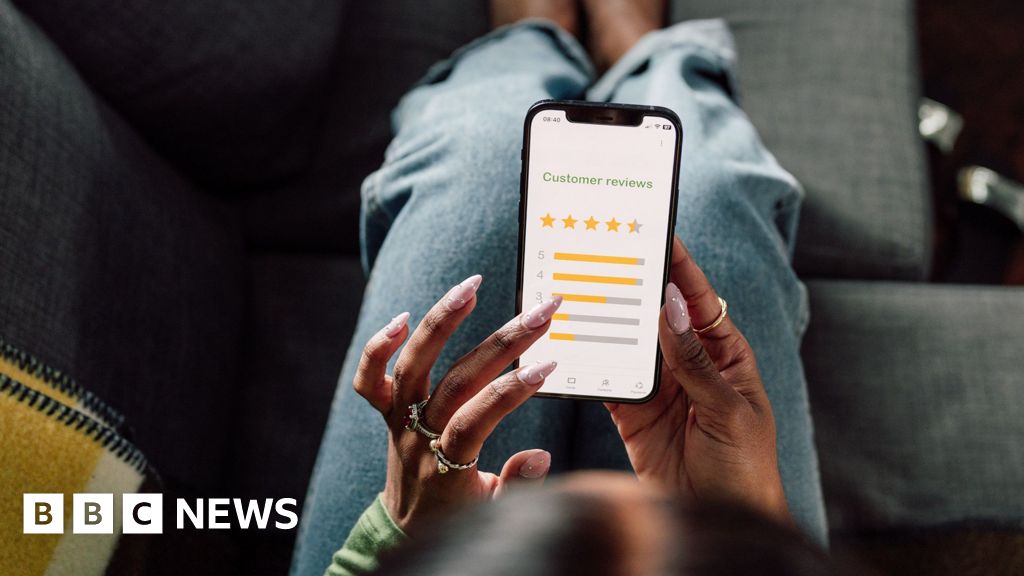
The UK’s competition watchdog says it is looking at five firms in its investigation into misleading online reviews.
Source link
Business
Gold price today (March 25, 2026): How much 24K and 22K gold cost in Delhi, Mumbai & more- Check rates – The Times of India

Gold futures traded higher on the Multi Commodity Exchange (MCX) on Friday with key contracts registering gains of up to 1.6 per cent amid firm buying interest and supportive global cues.The April 2026 gold contract rose by Rs 2,290, or 1.64 per cent, to trade at Rs 1,41,783 per 10 grams. The contract moved between an intraday low of Rs 1,40,287 and a high of Rs 1,42,800. The June 2026 contract, which saw higher trading activity, gained Rs 1,921, or 1.35 per cent, to Rs 1,44,435 per 10 grams. During the session, it touched a low of Rs 1,43,652 and a high of Rs 1,45,773. Meanwhile, the August 2026 contract advanced by Rs 1,480, or 1.02 per cent, to Rs 1,47,100 per 10 grams, with an intraday range of Rs 1,47,040 to Rs 1,48,600.Here is how gold prices stand across major cities today:
Gold price in Delhi today
Gold prices in the national capital declined, with 24K gold quoted at Rs 14,486 per gram, down Rs 218, while 22K gold slipped Rs 200 to Rs 13,280 per gram.
Gold price in Mumbai today
Mumbai bullion markets also saw a drop, with 24K gold priced at Rs 14,471 per gram, down Rs 218, and 22K gold at Rs 13,265 per gram, lower by Rs 200.
Gold price in Chennai today
Chennai recorded a sharper decline, with 24K gold selling at Rs 14,651 per gram, down Rs 262, while 22K gold dropped Rs 240 to Rs 13,430 per gram.
Gold price in Kolkata today
In Kolkata, 24K gold was quoted at Rs 14,471 per gram, down Rs 218, while 22K gold stood at Rs 13,265 per gram, lower by Rs 200.
Gold price in Hyderabad today
Hyderabad markets reflected a similar trend, with 24K gold priced at Rs 14,471 per gram, down Rs 218, and 22K gold at Rs 13,265 per gram, slipping Rs 200.
Gold price in Bangalore today
In Bangalore, 24K gold was quoted at Rs 14,471 per gram, down Rs 218, while 22K gold was selling at Rs 13,265 per gram, lower by Rs 200.
Gold price in Ahmedabad today
Ahmedabad bullion markets showed declines, with 24K gold at Rs 14,476 per gram, down Rs 218, while 22K gold fell Rs 200 to Rs 13,270 per gram.
Gold price in Lucknow today
In Lucknow, 24K gold was priced at Rs 14,486 per gram, down Rs 218, while 22K gold moved lower by Rs 200 to Rs 13,280 per gram.
Gold price in Patna today
Patna markets also recorded weaker rates, with 24K gold quoted at Rs 14,476 per gram, down Rs 218, and 22K gold at Rs 13,270 per gram, lower by Rs 200.
Gold price in Jaipur today
In Jaipur, 24K gold was quoted at Rs 14,486 per gram, down Rs 218, while 22K gold stood at Rs 13,280 per gram, down Rs 200.

A key survey indicates growing doubt among shoppers over prospects for the UK economy in the next year.
Source link


NCAA men’s tournament: Rick Pitino’s case for best men’s college basketball coach ever
Gold price today (March 25, 2026): How much 24K and 22K gold cost in Delhi, Mumbai & more- Check rates – The Times of India
JustEat and Autotrader among firms investigated in fake reviews probe

-

 Entertainment1 week ago
Val Kilmer revived 1 year after death through AI
-
 Fashion1 week ago
US’ G-III Apparel’s FY26 sales fall 7% to $2.96 bn
-

 Sports1 week ago
March Madness 2026 – How to watch in SA, start time, schedule, TV channel for NCAA championship basketball tournament
-
 Business1 week ago
Brits cashing in jewellery as gold price hits record high
-

 Fashion6 days ago
China’s textile & apparel exports surge 17% to $50 bn in Jan-Feb 2026
-
 Business1 week ago
Video: The Effects of High Oil Prices
-
 Business6 days ago
Flipkart group CFO to leave co amid IPO plans – The Times of India
-

 Sports7 days ago
Rating Adidas’ 2026 World Cup away shirts: Argentina, Spain, Mexico and more