

Fashion
Amazon to pay $2.5 billion to settle legal case over misleading Prime subscriptions


Published
September 27, 2025
Amazon has agreed to make a one-off $2.5 billion payment to settle the U.S. court case in which the online retail giant was accused of deceiving tens of millions of consumers into subscribing to its Prime service.
Under the agreement reached between Amazon and the U.S. consumer protection authority (FTC), the Seattle-based company will pay $1.5 billion to compensate affected subscribers, while a further $1 billion will be paid to the US Treasury as a penalty.
“Today, the FTC (…) has won a monumental and unprecedented victory for the millions of Americans weary of deceptive subscriptions that seem impossible to cancel,” said FTC Commissioner Andrew N. Ferguson in a statement.
“Amazon and our executives have always respected the law, and this agreement allows us to move forward and focus on innovation to serve our customers,” the company said in a statement, which, through this agreement, avoids a conviction or any admission of the allegations.
In 2024, Amazon was the leading fashion retailer in the United States, capturing 16.2% of the U.S. apparel market. A category that, along with high-tech, is among the marketplace’s flagship offerings. In France, Amazon is the third-biggest clothing retailer by volume, across all channels, behind Vinted and Kiabi, according to the new consumer barometer from the Institut Français de la Mode.
“Dark patterns” to fool customers
This case is part of a series of recent lawsuits brought in the U.S. under both Democratic and Republican administrations to curb the unchecked dominance of several major technology companies, such as Google and Apple, after years of governmental leniency. With regard to Prime, the FTC brought this action in 2023, accusing Amazon of knowingly deploying manipulative interfaces, known as “dark patterns”, so that, at the point of purchase, consumers would also subscribe to the Prime service for $139 per year.
This paid subscription offers a number of additional services, including free, fast delivery, discounts in certain supermarkets and access to Amazon’s video platform. The company faced two main allegations: that it gained subscribers without their explicit consent, by making it very difficult to click the right buttons to refuse the subscription, and that it created a deliberately complex cancellation system, internally nicknamed “Iliad”, after Homer’s poem about the long and difficult Trojan War.
Amazon promises change
Amazon was also accused of charging its customers before disclosing the full terms and conditions of the subscription. The case began on Monday with a jury trial in federal court in Seattle, presided over by Judge John Chun. Judge Chun is also overseeing another case brought by the FTC against Amazon, this time alleging an illegal monopoly. This other case will go to trial in 2027.
Under the terms of the agreement reached on Thursday, Amazon has committed to obtaining explicit consent before any subscription or charge, and to simplifying cancellation procedures, under a protocol it must follow for ten years. Amazon has consistently disputed the allegations, saying it has improved its sign-up and cancellation processes. Last week, Judge Chun also found that Amazon had violated an online shopper protection law by collecting billing data from Prime subscribers before explaining the terms of use.
The FTC based its case in part on the ROSCA Act, which came into force in 2010 and prohibits charging for online services that are activated by default, without clearly stating the terms, without obtaining explicit customer consent, and without providing simple cancellation procedures.
(with AFP)
This article is an automatic translation.
Click here to read the original article.
Copyright © 2025 FashionNetwork.com All rights reserved.











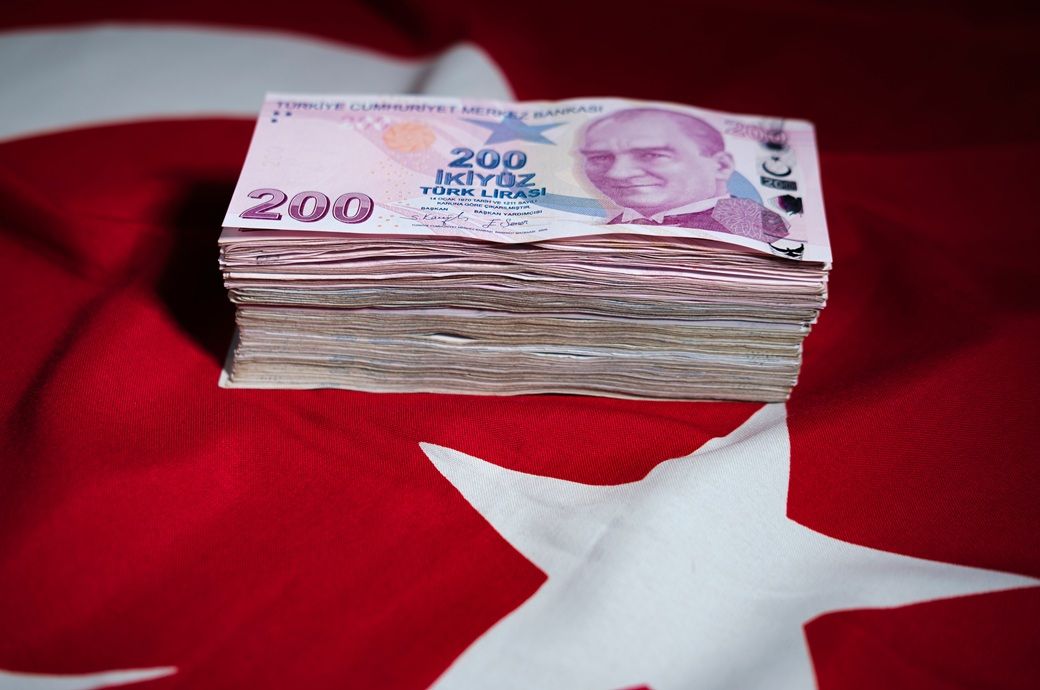
Current account excluding gold and energy indicated net deficit of $3.9 billion, while goods saw a deficit of $9.5 billion.
Turkiye recorded a current account deficit (CAD) of $9.6 billion in March, the country’s central bank said.
Treasury and Finance Minister Mehmet Simsek said the CAD is expected to widen this year, due to high energy and non-energy commodity prices.
Simsek said the deterioration is likely to remain temporary and manageable, thanks to stronger macroeconomic fundamentals and policy gains.
According to annualised data, current account deficit recorded as $39.7 billion (2.6 per cent of gross domestic product) in March, while the goods deficit recorded as $77.8 billion.
Simsek said the deterioration is likely to remain temporary and manageable thanks to stronger macroeconomic fundamentals and policy gains, domestic media outlets reported.
Turkiye is heavily reliant on imported energy, whose prices spiralled due to the Middle East conflict.
Simsek said elevated global commodity prices would put pressure on the external balance, but emphasised that the government’s economic programme had improved resilience against such shocks.
He said foreign direct investment (FDI) inflows totalled $1 billion in March, bringing annualised foreign direct investment to $12.6 billion.
The new investment incentive package under discussion in parliament now is expected to strengthen the country’s financing structure and support long-term capital inflows, he added.
Fibre2Fashion News Desk (DS)

During the first quarter of ****, the UK’s imports of textile fabrics eased down *.** to £*,*** million (~$*,*** million), against £*,*** million in January-March **** but slightly higher from £*,*** million in the fourth quarter of ****. Its imports of fibre were noted at £** million (~$***.** million) steady as £** million in Q*, **** but slightly lower than £** million in Q*, ****.
During the third month of this year, the country’s clothing imports declined *.** per cent to £*.*** billion (~$*.*** billion), compared with £*.*** billion in March ****. But the inbound shipment was slightly higher month on month compared with £*.*** billion in February ****.

Higher rents, utility bills and fuel prices are eating away at already thin profit margins, it found.
High inflation is cutting deep into Bangladesh consumer spending, with weak demand turning one of the biggest concerns for businesses, DCCI said.
Higher rents, utility bills and fuel prices are eating away at already thin profit margins.
DCCI’s economic position index revealed that consumers have sharply reduced spending as the cost of living continues to rise.
SMEs are feeling the pressure the most.
The chamber’s economic position index (EPI) revealed that consumers have sharply reduced spending as the cost of living continues to rise, putting pressure on retailers, transport operators and other service providers.
Small and medium enterprises (SMEs) are feeling the pressure the most as they struggle to manage higher operating costs without losing customers.
Businesses also cited difficulties in obtaining bank loans, while delays in licensing and other regulatory procedures are adding to costs.
The DCCI report identified a shortage of skilled workers, particularly in technical and customer service roles, as another challenge for the sector.
The country’s inflation rose to 9.04 per cent in April from 8.71 per cent in March, according to official statistics.
Fibre2Fashion News Desk (DS)


Turkiye’s current account deficit expected to widen in 2026: Minister

UK’s clothing imports fall 3% in Q1, sharply lower than Q4 2025
RBI sees no signs of excess credit risk, keeps countercyclical capital buffer inactive

-

 Entertainment6 days ago
Conan O’Brien hat tricks as Oscar host
-

 Tech1 week ago
Could Contact-Tracing Apps Help With the Hantavirus? Not Really
-

 Fashion5 days ago
Italy’s Zegna Group’s Q1 growth boosted by strong organic performance
-

 Sports1 week ago
Bobby Cox, legendary Atlanta Braves manager who led 1995 World Series champions, dead at 84
-

 Entertainment1 week ago
Martin Short: Facing tragedy with joy
-

 Entertainment1 week ago
Tom Brady gets back at Kevin Hart during Netflix roast
-

 Sports1 week ago
Jacob Fatu unleashes vicious assault on Roman Reigns after World Heavyweight Championship loss at WWE Backlash
-

 Entertainment1 week ago
Martha Stewart: How to make an omelet