Connect with us

Politics

An Old Master’s secret ingredient? Egg yolk, new study suggests

Published

on

An Old Master’s secret ingredient? Egg yolk, new study suggests


Editor’s Note: Sign up for CNN’s Wonder Theory science newsletter. Explore the universe with news on fascinating discoveries, scientific advancements and more.


CNN
 — 

“Old Masters” such as Leonardo da Vinci, Sandro Botticelli and Rembrandt may have used proteins, especially egg yolk, in their oil paintings, according to a new study.

Trace quantities of protein residue have long been detected in classic oil paintings, though they were often ascribed to contamination. A new study published Tuesday in the journal Nature Communications found the inclusion was likely intentional — and sheds light on the technical knowledge of the Old Masters, the most skilled European painters of the 16th, 17th, or early 18th century, and the way they prepared their paints.

“There are very few written sources about this and no scientific work has been done before to investigate the subject in such depth,” said study author Ophélie Ranquet of the Institute of Mechanical Process Engineering and Mechanics at the Karlsruhe Institute of Technology in Germany, in a phone interview. “Our results show that even with a very small amount of egg yolk, you can achieve an amazing change of properties in the oil paint, demonstrating how it might have been beneficial for the artists.”

Simply adding some egg yolk to their works, it turns out, could have long-lasting effects that went beyond just aesthetics.

Compared with the medium formulated by ancient Egyptians called tempera — which combines egg yolk with powdered pigments and water — oil paint creates more intense colors, allows for very smooth color transitions and dries far less quickly, so it can be used for several days after its preparation. However, oil paint, which uses linseed or safflower oil instead of water, also has drawbacks, including being more susceptible to color darkening and damage caused by exposure to light.

Because making paint was an artisanal and experimental process, it is possible that the Old Masters might have added egg yolk, a familiar ingredient, to the newer type of paint, which first showed up in the seventh century in Central Asia before spreading to Northern Europe in the Middle Ages and Italy during the Renaissance. In the study, the researchers recreated the process of paint-making by using four ingredients — egg yolk, distilled water, linseed oil and pigment — to mix two historically popular and significant colors, lead white and ultramarine blue.

“The addition of egg yolk is beneficial because it can tune the properties of these paints in a drastic way,” Ranquet said, “For example by showing aging differently: It takes a longer time for the paint to oxidize, because of the antioxidants contained in the yolk.”

The chemical reactions between the oil, the pigment and the proteins in the yolk directly affect the paint’s behavior and viscosity. “For example, the lead white pigment is quite sensitive to humidity, but if you coat it with a protein layer, it makes it a lot more resistant to it, making the paint quite easy to apply,” Ranquet said.

“On the other hand, if you wanted something stiffer without having to add a lot of pigment, with a bit of egg yolk you can create a high impasto paint,” she added, referring to a painting technique where the paint is laid out in a stroke thick enough that the brushstrokes are still visible. Using less pigment would have been desirable centuries ago, when certain pigments — such as lapis lazuli, which was used to make ultramarine blue — were more expensive than gold, according to Ranquet.
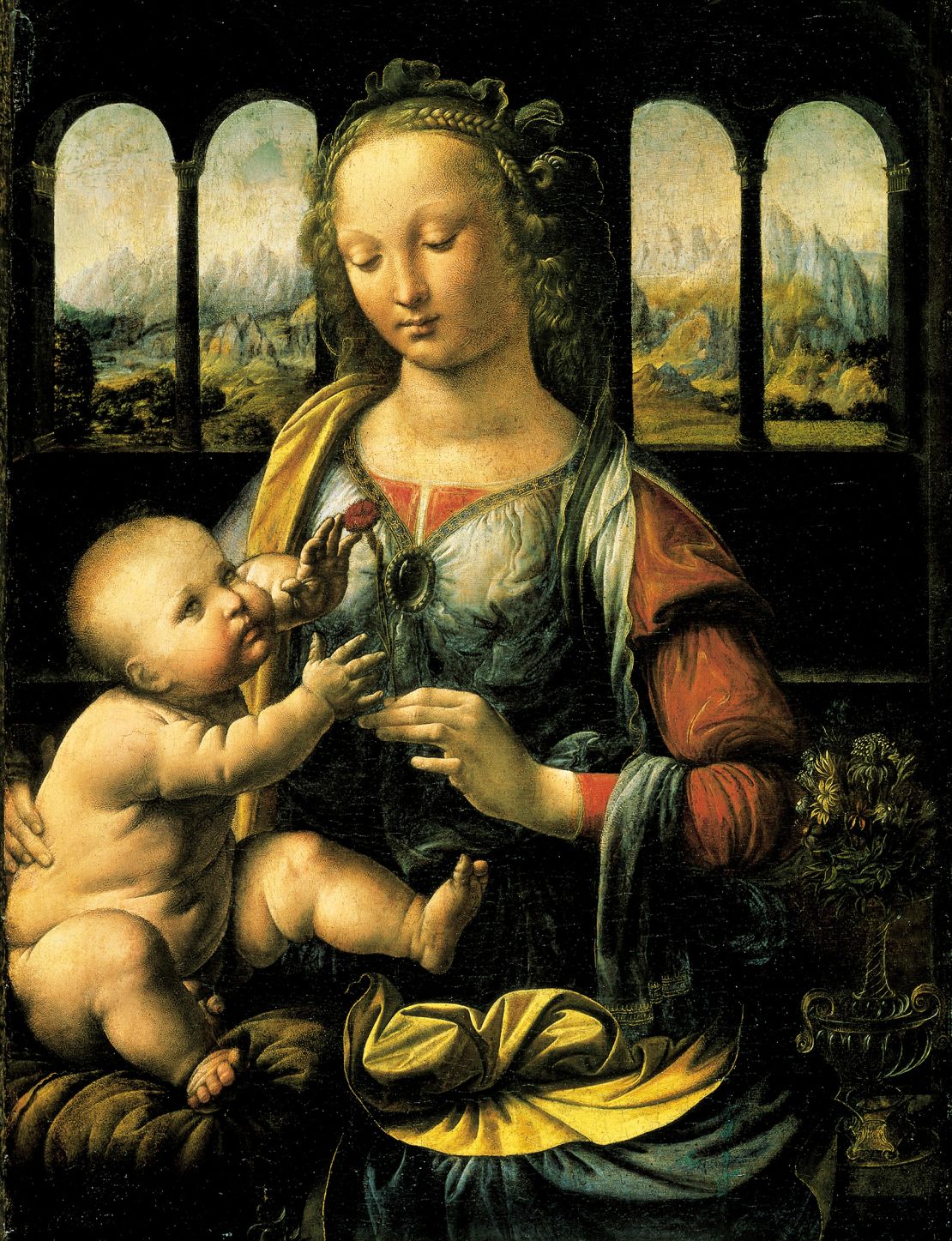
A direct evidence of the effect of egg yolk in oil paint, or lack thereof, can be seen in Leonardo da Vinci’s “Madonna of the Carnation,” one of the paintings observed during the study. Currently on display at the Alte Pinakothek in Munich, Germany, the work shows evident wrinkling on the face of Mary and the child.

“Oil paint starts to dry from the surface down, which is why it wrinkles,” Ranquet said.

One reason for wrinkling may be an insufficient quantity of pigments in the paint, and the study has shown that this effect could be avoided with the addition of egg yolk: “That’s quite amazing because you have the same quantity of pigment in your paint, but the presence of the egg yolk changes everything.”

Because wrinkling occurs within days, it’s likely that Leonardo and other Old Masters might have caught onto this particular effect, as well as additional beneficial properties of egg yolk in oil paint, including resistance to humidity. The “Madonna of Carnation” is one of Leonardo’s earliest paintings, created at a time when he might have been still trying to master the then newly popular medium of oil paint.

New understanding of the classics

Another painting observed during the study was “The Lamentation Over the Dead Christ,” by Botticelli, also on display at the Alte Pinakothek. The work is mostly made with tempera, but oil paint has been used for the background and some secondary elements.

“We knew that some parts of the paintings show brushstrokes that are typical for what we call an oil painting, and yet we detected the presence of proteins,” Ranquet said. “Because it’s a very small quantity and they are difficult to detect, this might be dismissed as contamination: In workshops, artists used many different things, and maybe the eggs were just from the tempera.”

However, because adding egg yolk had such desirable effects on oil paint, the presence of proteins in the work might be an indication of deliberate use instead, the study suggested. Ranquet hopes that these preliminary findings might attract more curiosity toward this understudied topic.

Maria Perla Colombini, a professor of analytical chemistry at the University of Pisa in Italy, who was not involved in the study, agreed. “This exciting paper provides a new scenario for the understanding of old painting techniques,” she said in an email.

“The research group, reporting results from molecular level up to a macroscopic scale, contributes to a new knowledge in the use of egg yolk and oil binders. They are not more looking at simply identifying the materials used by Old Masters but explain how they could produce wonderful and glittering effects by employing and mixing the few available natural materials. They try to discover the secrets of old recipes of which little or nothing is written,” she added.

“This new knowledge contributes not only to a better conservation and preservation of artworks but also to a better comprehension of art history.”


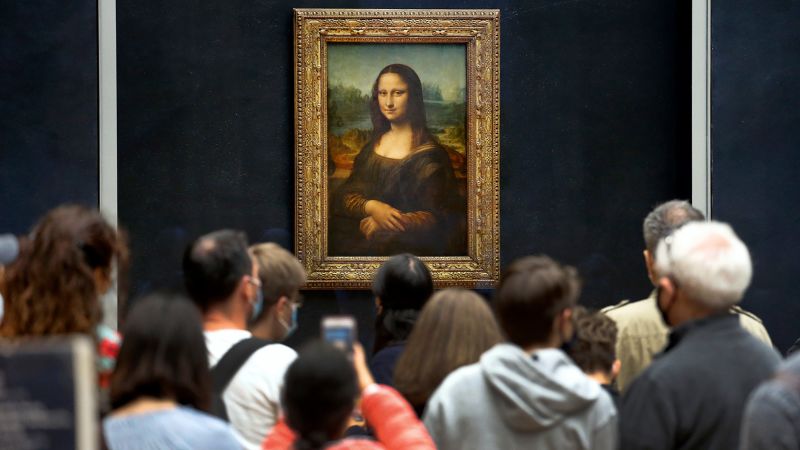
Top image: The “Mona Lisa” by Leonardo Da Vinci


Source link

Continue Reading
Click to comment

Leave a Reply

Your email address will not be published. Required fields are marked *

Politics

British MP Tulip Siddiq handed two-year prison sentence in Bangladesh graft case

Published

on

British MP Tulip Siddiq handed two-year prison sentence in Bangladesh graft case


MP Tulip Siddiq attends a news conference in London, Britain October 11, 2019. — Reuters
  • Ex-Bangladesh PM Sheikh Hasina, sister Rehana also sentenced.
  • Case relates to illegal allocation of a plot of land: local media.
  • Prosecutors highlight political influence, collusion abuse of power.

DHAKA: A Bangladesh court sentenced British parliamentarian and former minister Tulip Siddiq to two years in jail in a corruption case involving the alleged illegal allocation of a plot of land, local media reported.

The verdict was delivered in absentia as Siddiq, her aunt and former Bangladesh Prime Minister Sheikh Hasina, and Hasina’s sister Sheikh Rehana — all co-accused in the case — were not present in court.

Hasina was sentenced to five years in jail and Rehana to seven, the local media reports said.

Hasina, who fled to neighbouring India in August 2024 at the height of an uprising against her government, was sentenced to death last month over her government’s violent crackdown on demonstrators during the protests.

Last week, she was handed a combined 21-year prison sentence in other corruption cases.

Prosecutors said that the land was unlawfully allocated through political influence and collusion with senior officials, accusing the three powerful defendants of abusing their authority to secure the plot, measuring roughly 13,610 square feet, during Hasina’s tenure as prime minister.

Most of the 17 accused were absent when the judgement was pronounced.

Siddiq, who resigned in January as the UK’s minister responsible for financial services and anti-corruption efforts following scrutiny over her financial ties to Hasina, has previously dismissed the allegations as a “politically motivated smear”.

Britain does not currently have an extradition treaty with Bangladesh.


Source link

Continue Reading

Politics

Elon Musk reveals partner’s half-Indian roots, son’s middle name ‘Sekhar’

Published

on

Elon Musk reveals partner’s half-Indian roots, son’s middle name ‘Sekhar’


SpaceX owner and Tesla CEO Elon Musk speaks at the E3 gaming convention in Los Angeles, California, US, June 13, 2019. — Reuters

Tesla and SpaceX CEO Elon Musk has said his partner, Neuralink executive Shivon Zilis, is half-Indian and that one of their sons has the middle name “Sekhar” after Indian-American physicist and Nobel laureate Subrahmanyan Chandrasekhar.

Speaking on Zerodha founder Nikhil Kamath’s “WTF is?” podcast, Musk said: “I’m not sure if you know this, but my partner Shivon is half Indian,” adding: “One of my sons with her, his middle name is Sekhar after Chandrasekhar.”

Musk also spoke about Zilis’s background when asked where she grew up, saying she was given up for adoption as a baby and raised in Canada. “She grew up in Canada. She was given up for adoption when she was a baby. I think her father was like an exchange student at the university or something like that… I’m not sure the exact details,” he said.

Zilis joined Musk’s AI company, Neuralink, in 2017 and is currently the Director of Operations and Special Projects. She has a Bachelor of Arts in Economics and Philosophy from Yale University. Zilis has four children with Musk — twins Strider and Azure, daughter Arcadia and son Seldon Lycurgus.

Earlier this year, in March, it emerged that Musk had another child, his 14th, with Zilis. 

“Discussed with Elon and, in light of beautiful Arcadia’s birthday, we felt it was better to also just share directly about our wonderful and incredible son Seldon Lycurgus,” Zilis said in a post on X, without saying when the child was born. Musk responded with a heart. 

Her announcement came two weeks after conservative influencer Ashley St Clair said that she also recently had a child with Musk.

Appearing on the latest episode of Kamath’s podcast, Musk also said that America has “been an immense beneficiary of talent from India, but that seems to be changing now”. 

His comments come at a time when the American dream for thousands of Indians is turning sour due to rising US visa restrictions and policy unpredictability.


— With additional input from Reuters


Source link

Continue Reading

Politics

Trump says US freeze on asylum decisions will last ‘a long time’

Published

on

Trump says US freeze on asylum decisions will last ‘a long time’


US President Donald Trump speaks to reporters as White House Press Secretary Karoline Leavitt stands by aboard Air Force One on his return to Washington, DC, March 9, 2025. — Reuters
  • Freeze applies to 19 countries already under US travel restrictions.
  • Lakanwal, ex-CIA-backed fighter, charged with first-degree murder.
  • Officials blame weak Joe Biden-era airlift vetting for shooter’s entry.

US President Donald Trump said Sunday his administration intends to maintain a pause on asylum decisions for “a long time” after an Afghan national allegedly shot two National Guard members near the White House, killing one of them.

When asked to specify how long it would last, Trump said he had “no time limit” in mind for the measure, which the Department of Homeland Security says is linked to a list of 19 countries already facing US travel restrictions.

“We don’t want those people,” Trump continued. “You know why we don’t want them? Because many have been no good, and they shouldn’t be in our country.”

The Trump administration issued the pause in the aftermath of the shooting in Washington on November 26, which left 20-year-old Sarah Beckstrom dead and another guard critically wounded.

A 29-year-old Afghan national, Rahmanullah Lakanwal, has been arrested and charged with first-degree murder in connection with the incident.

Lakanwal had been part of a CIA-backed “partner force” fighting the Taliban in Afghanistan, and entered the United States as part of a resettlement program following the American military withdrawal from Afghanistan in 2021.

Lakanwal had been granted asylum in April 2025, under the Trump administration, but officials have blamed what they called lax vetting by the government of Trump’s predecessor, Joe Biden, for his admission to US soil during the Afghan airlift.

Trump wrote after the shooting that he planned to “permanently pause migration from all Third World Countries to allow the US system to fully recover.”

Asked which nationalities would be affected, the Department of Homeland Security pointed AFP to a list of 19 countries — including Afghanistan, Cuba, Haiti, Iran and Myanmar — which since June have all faced travel restrictions to the United States. 

Radicalised in US

Authorities believe the Lakanwal was not radicalised until after he came to the United States, Homeland Security Secretary Kristi Noem said on Sunday.

Speaking on NBC’s “Meet the Press” and ABC’s “This Week,” Noem said authorities think the alleged shooter was already living in Washington state when he became radicalised. Investigators are seeking more information from family members and others, Noem said.

Noem’s comments suggest Lakanwal, who was part of a CIA-backed unit in Afghanistan, may have embraced extremism after arriving in the United States.

“We believe he was radicalised since he’s been here in this country,” Noem told NBC News. “We do believe it was through connections in his home community and state, and we’re going to continue to talk to those who interacted with him, who were his family members.”

Noem said officials have received “some participation” so far from people who knew Lakanwal and warned the US would pursue anyone connected to the shooting.

“Anyone who has the information on this needs to know that we will be coming after you, and we will bring you to justice,” Noem said.

After Wednesday’s attack, the Trump administration took steps to clamp down on some legal immigration, including a freeze on the processing of all asylum applications.

Noem said on Sunday, immigration officials would consider deporting people with active asylum cases if it was warranted.

“We are going to go through every single person that has a pending asylum claim,” she said.


Source link

Continue Reading

Trending