

Business
Analysts think Trump would block a Comcast-WBD deal. Comcast says M&A is ‘viable’


Brian Roberts, chairman and CEO of Comcast, attends the annual Allen & Co. Media and Technology Conference in Sun Valley, Idaho, July 9, 2025.
David A. Grogan | CNBC
Comcast clued investors in to its potential M&A aspirations on Thursday. In short, executives think a deal could get done, despite recent naysaying.
Comcast is among the interested parties in a potential deal for Warner Bros. Discovery. WBD — the owner of TNT Sports, CNN, HBO, Warner Bros. studio and other media assets — officially put itself up for sale after “receiving interest from multiple parties,” WBD CEO David Zaslav said in a statement last week.
Several pundits and analysts have posited that Comcast has little to no chance to do a deal from a regulatory perspective, given President Donald Trump’s pointed words for Comcast CEO and controlling shareholder Brian Roberts. Others say the path forward may not be doomed.
On Thursday, alongside the company’s third-quarter earnings report, soon-to-be co-CEO Mike Cavanagh shed some light on how executives view the situation, without specifically naming Warner Bros. Discovery as a potential tie-up.
“I think more things are viable than maybe some of the public commentary that’s out there,” Cavanagh said Thursday.
Trump in April called Comcast and Roberts “a disgrace to the integrity of Broadcasting” in a post on his social media platform, Truth Social. Trump has also called Roberts a “lowlife” and has referred to Comcast as “Concast.”
Some equity research analysts have predicted that the Trump administration would block a Comcast acquisition of Warner Bros. Discovery. WBD is still moving toward a planned separation into two publicly traded entities while it expands its strategic review.
Paramount is trying to buy the whole company, before it could split, and WBD has thus far rejected three separate offers from the David Ellison-run company.
“It is almost certain that the Trump DOJ would not allow CMSCA to buy WBD and the result would be decided in court,” New Street Research analyst Blair Levin wrote in a note to clients, citing Trump’s public comments about Roberts.
“We along with our cable colleagues believe [Comcast’s] political standing in this administration is very low and believe CMCSA would think long and hard about whether a deal is worth the long, arduous process of creating enough goodwill to close the deal,” wrote Raymond James analyst Ric Prentiss.
Structuring a spin-merge
Cavanagh reminded investors Thursday that just because the company takes a look at assets that are up for sale in the media industry, it doesn’t necessarily mean a deal, or even an offer, could materialize.
“I think we’ve said repeatedly, and I’ll say it again, that the bar is very high for us to pursue any M&A transactions, given how strongly we feel about the businesses we have, the strategies we’re pursuing and the opportunities we have ahead of us,” Cavanagh told investors.
Comcast’s NBCUniversal is in the process of spinning off its portfolio of cable networks, including CNBC, into a new entity called Versant.
Assuming an offer for WBD or other media assets were to come together, it would have to make strategic sense for the future NBCUniversal, which will be led by the broadcast TV network NBC and streaming service Peacock.
Many of NBCUniversal’s moves to date have been to boost Peacock’s place in the streaming ecosystem. The company reported Thursday that Peacock had 41 million customers as of the end of last month, a subscriber base that has remained flat throughout the year.
Cavanagh noted the company would be looking for media assets that complement its post-spin NBCUniversal business.
“So in this case, it would be streaming assets and studio assets, since there are no other parks assets out there,” he said.
Warner Bros. Discovery’s planned split would separate out exactly those businesses: streaming and studios in one company, which would also house streamer HBO Max, and its global networks into another.
While Paramount’s interest is in the entirety of Warner Bros. Discovery, negating a split, other prospective bidders have considered acquiring just some of the assets, CNBC has reported.
Cavanagh said, “In light of that, what we’d be looking for and what we’re going to look like post-Versant spin,” a deal isn’t as far-fetched as some view it.
In a hypothetical situation in which Comcast were to also spin off NBCUniversal, which is currently slated to remain with the company following the Versant transaction, and merge it with WBD, LightShed analyst Rich Greenfield predicted that deal could get through regulators.
Wolfe Research’s Peter Supino proposed a plan under which NBCUniversal would issue new stock to WBD at an exchange ratio, eliminating Roberts’ voting control over the new company, and appoint a chairman and CEO “not named Roberts.” That combination could lead to a deal, he wrote in a note to clients.
“The primary problems facing a Comcast bid — financing and politics — might be solvable,” Supino wrote.
While Comcast may shy away from pursuing a transaction that could be blocked by the Trump DOJ, even that may not be a dealbreaker.
In the first Trump term, his DOJ blocked AT&T’s acquisition of Time Warner, an earlier iteration of Warner Bros. Discovery. In June 2018, a U.S. District Court judge approved the $85.4 billion sale, ruling the government failed to prove the deal would harm consumers.
If it pleases the president
Some Comcast executives think the regulatory concerns are either overblown or, at least, far too early to ascertain, according to people familiar with the matter, who have knowledge of Comcast’s strategy but spoke on the condition of anonymity to discuss internal thinking. There’s some evidence suggesting Comcast’s executives may have a point.
A Comcast spokesperson declined to comment for this article.
Skydance Media received long-awaited Federal Communications Commission approval for its merger with Paramount after the CBS parent agreed to a $16 million settlement with Trump over a “60 Minutes” episode.
While a deal for WBD won’t require FCC review, because Warner Bros. Discovery doesn’t own a broadcaster, a takeover of this size — WBD’s market capitalization is about $53 billion plus another $30 billion in debt — could still draw the scrutiny of Trump’s Department of Justice.
Trump’s reputation as a dealmaker suggests Comcast may be able to avoid any interference by endearing itself to the president.
Comcast is one of 37 companies donating to Trump’s efforts to build a $300 million ballroom for the White House through the Trust for the National Mall.
Trump’s public dislike toward Roberts and Comcast may be bloviation linked to Trump’s assertions that MSNBC, currently owned by NBCUniversal, is left-leaning. It’s unclear if Trump explicitly cares about Comcast or NBCUniversal owning any of the WBD assets other than CNN, which Trump has also routinely criticized.
If his primary issue with Comcast buying WBD is CNN, a divestiture or deal without the network could circumvent those issues. MSNBC will also be spun out into the Versant portfolio.
While Roberts will still be a shareholder of Versant, MSNBC will no longer be a part of Comcast once Versant becomes its own publicly traded company at the start of 2026.
Disclosure: Comcast is the parent company of NBCUniversal, which owns CNBC. Versant would become the new parent company of CNBC upon Comcast’s planned spinoff of Versant.






Business
India’s $5 trillion economy push: How ‘C+1’ strategy could turn country into world’s factory

New Delhi: India is preparing for a major economic transformation. The Union Budget 2026-27 lays out measures that could make the country the top choice for global manufacturing using the popular ‘China +1’ (C+1) strategy. This comes as international companies rethink supply chains after COVID-19 disruptions, rising trade tariffs and geopolitical tensions.
India has positioned itself as the backup factory for the world that is ready to absorb international demand in case of any crisis in China or Taiwan.
The government has offered tax breaks for cell phone, laptop, and semiconductor makers, making India more attractive to foreign investors. Reducing bureaucratic hurdles for global firms, the budget also strengthens the National Single Window System to simplify business procedures. The message is clear: India is ready to step in as a global manufacturing hub, ensuring supply continuity for the world.
The expressway to a $5 trillion economy
China presently dominates about 40% of global manufacturing. Its factories supply critical products worldwide, but 2026 is expected to be a turning point. Expanding influence and economic opacity have made global companies seek alternatives.
India has leveraged this moment, offering a comprehensive incentive package for foreign manufacturers. Analysts call it more than policy; it is a blueprint to become a $5 trillion economy and reclaim India’s historic position as a global industrial leader.
Why the world needs India now
The COVID-19 pandemic exposed the dangers of over-reliance on a single supplier. When China halted medical exports, nations realised the need for diversified supply chains. Major companies such as Apple and Samsung now see India as a dependable alternative.
China’s aging workforce and rising labour costs further enhance India’s appeal. With 65% of its population under 35, India offers a vast, skilled and affordable workforce for decades. The geopolitical uncertainty surrounding Taiwan, which produces 90% of advanced chips, has also created demand for a secure manufacturing backup. India is stepping in to fill that gap.
How India stands to gain from China’s challenges
India’s budget, 2026-27, slashes import duties on cell phone and laptop components, turning the country into a hub for component manufacturing, not just assembly. Electronics exports are projected to cross $120 billion by 2025.
The government has also launched a Rs 1.5 lakh crore semiconductor mission, attracting companies like Tata and Micron to establish advanced chip plants in India. In the chemical sector, stricter environmental regulations in China have shut down several plants, benefiting Indian companies such as Privi Specialty and Aarti Industries, which are now filling gaps in global supply chains.
Incentives for companies
The Production Linked Incentive (PLI) scheme promises cash rewards for output, covering over 14 sectors. This is India’s answer to Chinese subsidies. From land acquisition to electricity connections, the National Single Window System now enables businesses to clear all approvals through a single portal.
Infrastructure investment has also received a massive boost, with Rs 11.11 lakh crore allocated under PM GatiShakti. New ports and dedicated freight corridors are being built to ensure that exports from India reach the world faster and cheaper than ever before.
India’s moves points to a strategic shift in global manufacturing. By rolling out the red carpet for foreign companies and investing heavily in infrastructure, technology and policy reforms, the country is poised to become the go-to destination for global supply chains. The C+1 formula is not only a concept; it is a roadmap to turn India into the next industrial superpower and a $5 trillion economy.

At a time when global markets are witnessing high volatility due to geopolitical uncertainties, the hike in securities transaction tax (STT) on derivatives trades hit investor sentiment on Dalal Street on the Budget day. This in turn led to a sharp sell-off that pulled the sensex down by nearly 1,500 points—its biggest points loss on a Budget day—to close at 80,773 points. The sell-off also left investors poorer by Rs 9.4 lakh crore, the biggest Budget day loss in BSE’s market capitalisation.The day’s trading was marked by high volatility. The sensex rallied over 400 points as FM started her speech, fell about 1,100 points after the STT hike proposal was announced, partially recovered by mid-session to trade 600 points down on the day and then sold-off to close below the 81K mark for the first time in four months.On the NSE, Nifty too treaded a similar path to close 495 points (2%) lower at 24,825 points. Fund managers and market players feel the day’s sell-off was overdone, compounded by the absence of most institutional players since it was a Sunday. “The market’s reaction (to the hike in STT rates) was a bit overdone, although the decision itself was unexpected,” said Taher Badshah, President & Chief Investment Officer, Invesco Mutual Fund. “I think markets should settle down in 2-3 days.” Badshah said the Budget was in line with govt’s set path of the past few years, showing a conservative approach to setting targets.“The revenue and expenditure targets for FY27 are achievable. And since the rate of inflation is lower now, the nominal GDP growth rate of 10% may turn out to be on the higher side as inflation normalises during the year,” the top fund manager said. In Sunday’s market, of the 30 sensex stocks, 26 closed in the red. Among index constituents, Reliance Industries, SBI and ICICI Bank contributed the most to the day’s loss. Buying in software services majors Infosys and TCS cushioned the slide. In all, 2,444 stocks closed in the red compared to 1,699 that closed in the green, BSE data showed.STT hike aimed at curbing F&O speculation The decision to raise securities transaction tax (STT) for trading in equity derivatives means trading futures & options (F&O) will be more expensive from April 1. STT on futures trading rises from 0.02% to 0.05% now, and on options premium and exercise of options to 0.15% from 0.1% and 0.125% respectively. This could more than double statutory costs of trading F&O contracts.While the move is to curb excessive speculation by retail traders who mostly suffer losses, investors sold stocks of those companies that derive a large portion of their turnover from this segment. Stock price of Angel One crashed nearly 9%, BSE crashed 8.1%, Billionbrains Garage Ventures that runs the Groww trading platform, lost 5.1% and Nuvama Wealth Management lost 7.3%. STT hike follows a Sebi survey that showed that 91% of the retail investors lost money in the F&O market with average loss per investor surpassing Rs 1 lakh per year. Institutional and some high net worth players took home most of the profits from the segment.18% GST on brokerage for FPIs removedThe Budget proposed to do away with 18% GST charged on the brokerage that foreign portfolio investors pay in India. Among the host of changes to the GST laws that the finance minister proposed, one was abolishing clause (b) of sub-section (8) of section 13 of the Integrated Goods and Services Tax Act, 2017. This is being “omitted so as to provide that the place of supply for ‘intermediary services’ will be determined as per the default provision under section 13(2) of the IGST Act,” the Budget proposal said.

Buying property from an NRI? Worried about obtaining TAN? Not anymore. To relax the compliance burden, the Budget has proposed that resident individuals and HUFs need not have a Tax Deduction and Collection Account Number (TAN) if they are purchasing a property from a non-resident Indian (NRI). The amendment will take effect from Oct 1, 2026.Under the proposed framework, resident individuals or HUFs can report the tax deducted at source (TDS) by quoting PAN, as is done when the transactions are between two residents. Presently, if a person buys an immovable property from a resident seller, the person is not required to obtain TAN to deduct tax at source. However, where the seller of the immovable property is a non-resident, the buyer is required to obtain TAN to deduct tax at source.Ameet Patel, partner at Manohar Chowdhry & Associates, said this used to be a detailed process. “At present, if a resident were to purchase an immovable property from an NRI, there is no separate relaxation regarding compliance with TDS responsibilities. As a result, in such cases, the buyer needs to obtain a TAN, register on the portal, and then deduct TDS u/s. 195, and pay to the govt. Under section 195, as with all other regular TDS sections, a quarterly e-TDS statement is required. A buyer would need professional help for all this.”Hinesh Doshi, CA, welcomed the move. “There used to be an unnecessary compliance burden due to this. While the process to obtain TAN is simple, people used to obtain TAN for just one transaction. So, this is a good riddance.”


Grammy Awards winners list for 2026: Live updates
India’s $5 trillion economy push: How ‘C+1’ strategy could turn country into world’s factory

Former UK minister Mandelson quits Labour after new Epstein revelations: reports

-

 Sports5 days ago
PSL 11: Local players’ category renewals unveiled ahead of auction
-

 Entertainment5 days ago
Claire Danes reveals how she reacted to pregnancy at 44
-

 Fashion1 week ago
Spain’s apparel imports up 7.10% in Jan-Oct as sourcing realigns
-
 Business6 days ago
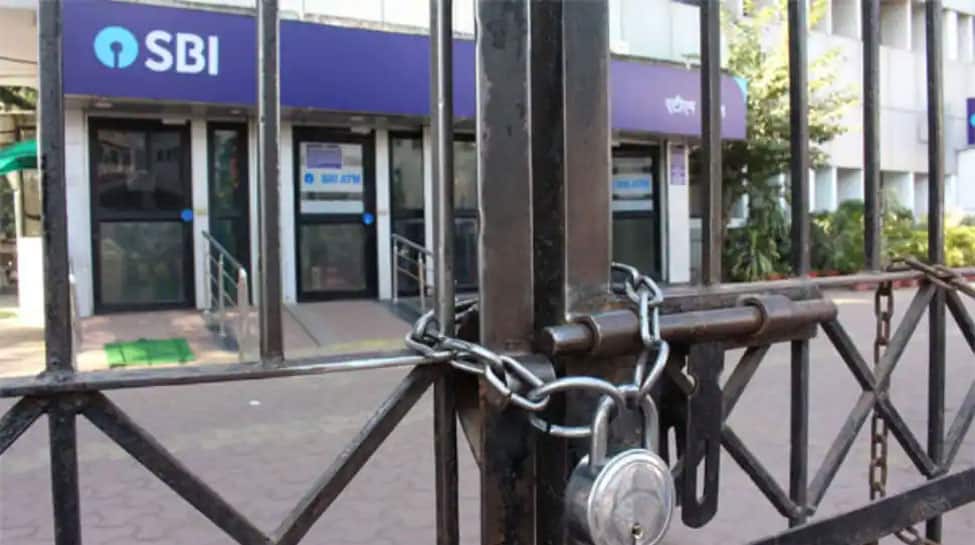
Banking services disrupted as bank employees go on nationwide strike demanding five-day work week
-

 Tech1 week ago
ICE Asks Companies About ‘Ad Tech and Big Data’ Tools It Could Use in Investigations
-

 Sports5 days ago
College football’s top 100 games of the 2025 season
-

 Politics1 week ago
Fresh protests after man shot dead in Minneapolis operation
-

 Fashion1 week ago
Australian wool prices climb again as exporters drive demand