

Entertainment
Anderson Cooper to say goodbye to ‘60 minutes’ after issues at company

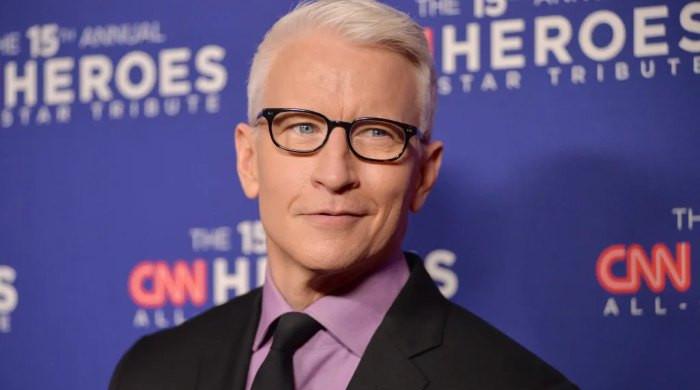
Anderson Cooper is preparing to step away from 60 Minutes after nearly 20 years as a correspondent, marking a significant moment for the long-running CBS News broadcast amid ongoing turmoil within the company.
The veteran journalist, who has balanced his role on the Sunday night news magazine alongside his full-time work at CNN, has chosen not to renew his agreement with CBS News, according to people familiar with the decision.
His final segment, a profile of documentary filmmaker Ken Burns, aired on Sunday.
In a statement, Anderson Cooper said the decision was deeply personal.
“Being a correspondent at 60 Minutes has been one of the great honours of my career. I got to tell amazing stories, and work with some of the best producers, editors, and camera crews in the business.
For nearly twenty years, I’ve been able to balance my jobs at CNN and CBS, but I have little kids now and I want to spend as much time with them as possible, while they still want to spend time with me.”
Cooper joined 60 Minutes during the 2006–2007 season, becoming one of the few journalists to hold prominent roles on both network and cable television.
Over the years, his reporting for the programme earned multiple Emmy Awards, including stories on jazz prodigy Joey Alexander and African prison inmates whose music went on to win a Grammy.
While Cooper recently signed a new deal to remain at CNN, where his work includes Anderson Cooper 360°, the long-form series The Whole Story and the podcast All There Is, his departure from 60 Minutes comes at a difficult time for CBS News.
The programme has been caught up in wider corporate and editorial disputes linked to Paramount Global’s sale to Skydance.
Last year, 60 Minutes became central to a legal fight after Donald Trump sued the show over edits made to an interview with Kamala Harris.
Although CBS News lawyers viewed the case as without merit, Paramount ultimately agreed to a $16 million settlement, which was seen internally as necessary to avoid regulatory hurdles.
During this period, executive producer Bill Owens resigned, followed later by Wendy McMahon, the head of the news division.
Editorial tensions continued more recently when a report on deportations to El Salvador was pulled after being promoted.
The correspondent involved criticised the move as political rather than editorial. The segment eventually aired weeks later with added context, but without comment from a Trump administration official.
The changes have unfolded under the leadership of Bari Weiss, the current editor-in-chief of CBS News, whose efforts to reshape the division have drawn criticism from some staff and contributed to unease within the newsroom.
In a statement acknowledging Cooper’s exit, CBS News said: “For more than two decades, Anderson Cooper has taken 60 Minutes viewers on journeys to faraway places, told us unforgettable stories, reported consequential investigations and interviewed many prominent figures.
We’re grateful to him for dedicating so much of his life to this broadcast, and understand the importance of spending more time with family. 60 Minutes will be here if he ever wants to return.”
Cooper appeared briefly on the programme during its Last Minute segment on Sunday, and while it is unclear whether that will be his final on-air moment this season, his departure removes one of the show’s most recognisable faces.
For now, Cooper remains firmly anchored at CNN, while 60 Minutes continues to navigate a period of uncertainty behind the scenes.
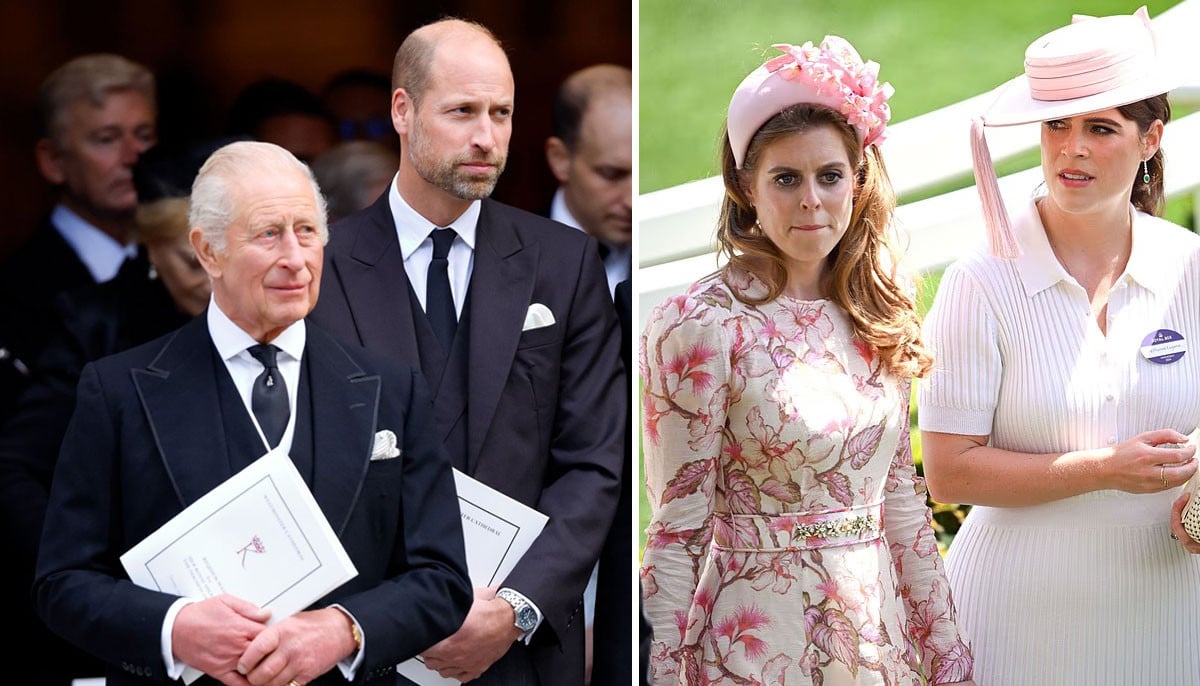
King Charles’ latest decision for Princess Beatrice and Princess Eugenie confused and revealed the power shift behind Palace walls.
Earlier, it was reported that the sisters had been asked not to join the royals at this year’s Royal Ascot event.
They were also marked Easter with their own families away from the spotlight.
But sources revealed that the daughters of the York household will make an appearance at the racecourse despite the heat of the Epstein scandal.
Royal author Andrew Lownie believes that King Charles has been sending “mixed signals” in Beatrice and Eugenie’s ongoing saga.
As per the Mirror, he said, “They’re banned from Royal Ascot, they’re banned from Easter, then suddenly they are now coming to Ascot.”
Quoting another royal commentator, Tom Skyes, Mr Lownie pointed out that the decision to let Beatrice and Eugenie come to Royal Ascot showcased the “dominating” side of Prince William.
It has been said that the Prince and Princess of Wales won’t skip Easter, but they are not big fans of Ascot.
Mr Lownie explained, “Tom Sykes has pointed out that the Easter ban shows the waning power of the King in the face of an increasingly dominant William.”
He added, “This may well be the case, but if it is, then isn’t he repeating the mistakes of his father and grandmother?”
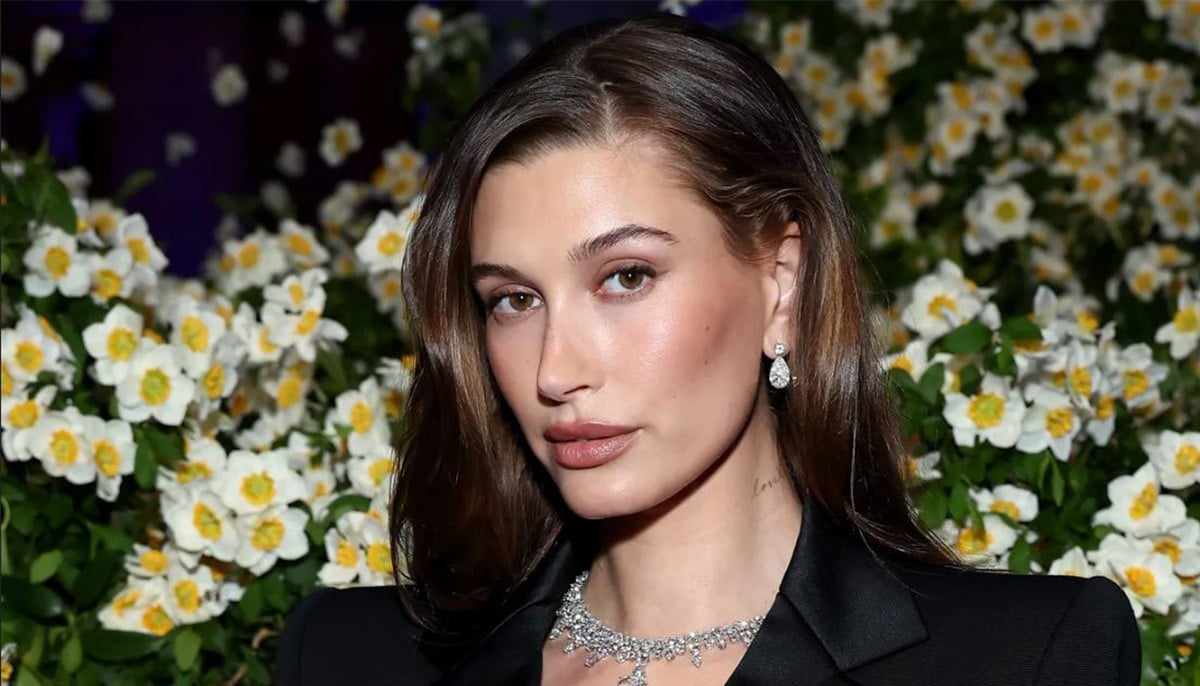
Hailey Bieber is embracing her new chapter as a mother with a wink to pop culture.
The model and entrepreneur took to Instagram Sunday, April 5, to share a carousel.
She captioned it as “not regular mom, cool mom”, a cheeky nod to the iconic Mean Girls line.
The photo dump gave fans a closer look at Hailey’s life as a mom.
She posed in chic, relaxed outfits while cradling her baby.
The post also featured candid snaps with husband Justin Bieber and sprinkled in lifestyle shots that balanced warmth with her signature cool-girl edge.
One particularly sweet moment showed Justin watching his Never Say Never movie with their son Jack Blues.
The post quickly racked up millions of likes, with friends and fans flooding the comments section.
Lauren Perez declared “The coolest mom!”, while Kirsty Godso dropped heart emojis.
Jessica Seccadio added strings of heart-eyes.
Fans chimed in with affectionate notes like “Linda mamãe” (“beautiful mom”) and “Hermosos los 3 los amo” (“Beautiful, the three of you, I love you”).
However, Hailey’s “cool mom” moment came at the heels of fresh backlash.

In another post, fans accused her of copying ideas from other brands and even mimicking the look of a Harper’s Bazaar Arabia magazine cover.
While some dismissed the criticism as exaggerated, others argued that Hailey has faced similar accusations before including claims she echoed Selena Gomez’s speech word-for-word
Hailey’s playful embrace of motherhood shows how she continues to captivate fans with her personal milestones,
But the backlash reflects the double-edged nature of her influence: Every move she makes can become iconic, yet it also leaves her vulnerable to claims of imitation.
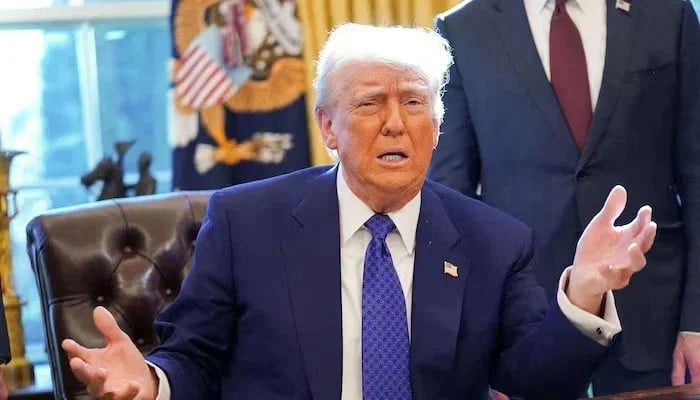
From its inception, the American presidency has bound immense destructive capacity to the temperament of a single individual. It is an office that fuses authority with impulse by placing a military juggernaut in the hands of an individual.
Alice Roosevelt distilled this dynamic with biting precision. She quipped that her father (President Roosevelt) wished “to be the corpse at every funeral, the bride at every wedding and the baby at every christening”. Beneath the wit lay the indictment of an untethered ego.
Today, that strain of vanity has been eclipsed by Donald Trump. Ego is no longer a trait; it is doctrine. It has converted statecraft into spectacle, where personal whims masquerade as reality and contradiction is insubordination. What emerges is not just volatility but a corrosive force that destabilises the very architecture of international order.
This pathology is not confined to one geography. In South Asia, Narendra Modi’s initiation of the failed Operation Sindhoor reflected the same instinct that conjured crises to manifest power. Between nuclear rivals, such theatrics are reckless. They place millions within the blast radius of a narcissist’s need to appear unassailable.
Traversing further, clinical insight offers clarity. Mary Trump is a psychologist and Donald Trump’s niece. She describes a “monstrous ego” having reduced the Oval Office to an arena of impulse and domination. She describes the cabinet not as an ensemble of peers but as a congregation of “weaker, more craven and just as desperate” enablers. Loyalty is measured by the willingness to echo.
Governance, inevitably, mutates into spectacle. Its logic is laid bare in self-inscribed tokens of power like Trump’s commemorative gold coins and his signatures emblazoning future currency notes. Contagious, it results in loyalists curating the same iconography. Kash Patel’s personalised sneakers with his and the FBI initials to Pete Hegseth’s conspicuous tattoos; governance morphs into an orbit of narcissism.
The most dangerous manifestation of this dogma is what psychologists term narcissistic injury. It is when reality refuses to submit. In ordinary individuals, the damage is contained. In a president, it detonates outward. Slights are magnified and setbacks personalised. Decision-making degrades into reflex. Actions are calibrated to preserve ego and become increasingly indifferent to consequences.
The purge within the Pentagon is the clearest expression of this pathology – a punitive action to cauterise wounded pride. In such moments, governance ceases to be an instrument of statecraft and becomes an apparatus of psychological self-preservation. Senior commanders are not removed for failure but for resisting one.
Downed aircraft, missing crew members and an adversary unwilling to conform vindicate professional reluctance. The prospect of captured personnel threatens to transform a setback into a spectacle. In such a moment, restraint becomes impossible.
Escalation is no longer a choice but a compulsion, a violent necessity to overwrite failure with force. What follows is not a strategy but an ever more dangerous raising of the stakes to salvage pride. This is the true logic of an egocracy.
In such conditions, truth inevitably becomes malleable. It is distorted, diluted or outrightly discarded. The pattern is not new. The claims of WMDs that initiated the 2003 Iraq invasion were totally fabricated. The tragic reality that saw over a million perish was a stark testament to what happens when deception is weaponised in the service of self-justification.
This paradigm is starkly visible again in the narratives enabling the Gaza genocide and the strikes on Iran. Curated intelligence reports and ever-shifting justifications make a mockery of established facts. Reality is no longer a constraint; it is an inconvenience to be managed.
In ‘The Second Coming’, Yeats captured the birth of disorder: “What rough beast, its hour come round at last, slouches towards Bethlehem to be born?” In his vision, the disintegration of order did not herald a new one but the emergence of something unrestrained and primal. The destruction wrought by narcissism is far more insidious. It does not emerge from chaos; it engineers it. Conflict and disorder become an assertion of the self.
History offers a harsher mirror. Roman Emperor Caligula governed through spectacle and fear. He was known for his cruelty in prolonging his victims’ sufferings. Through their entire ordeal, he had these words of Roman tragedian Lucius Accius on his lips – oderint dum metuant – let them hate, so long as they fear me. It captures the essence of power stripped of legitimacy and sustained only through dread.
In the modern era, such a mindset carries unprecedented stakes. The fusion of personal volatility with nuclear capability renders miscalculation existential. John Kennedy warned about such a world enforced by America’s war machine. He called it “peace of the grave or security of the slave” – subjugation or annihilation.
This is the calamitous binary that we see invoked from Gaza to Iran. The world remains riveted with Iran. Gaza, with its ongoing sufferings, has become a sidelined tragedy. In one case, resistance commands attention; in the other, endurance slips from view.
The chilling distillation is that prudence has been subsumed by an unbounded ego. It simply cannot retreat, concede and most dangerously, it cannot stop. This is the ultimate manifestation of the Imperium of Ego.
The writer explores the forces which shape power, belief and society. He can be reached at: [email protected]
Disclaimer: The viewpoints expressed in this piece are the writer’s own and don’t necessarily reflect Geo.tv’s editorial policy.
Originally published in The News


Aurobindo Pharma gets board nod for Rs 800 crore share buyback plan – The Times of India

FY27 Indian growth to be 6.7% if avg crude price $90/bbl: Care Ratings

King Charles, Prince William ‘row’ over Beatrice, Eugenie unfolds

-

 Sports1 week ago
USMNT handed reality check by Doku, Belgium ahead of World Cup
-

 Sports1 week ago
2026 NCAA men’s hockey tournament: Schedule, results
-
Uncategorized4 days ago
[CinePlex360] Please moderate: “Trump signals p
-
Uncategorized7 days ago
[CinePlex360] Please moderate: “Further tariff
-

 Entertainment3 days ago
Joe Jonas shares candid glimpse into parenthood with Sophie Turner
-

 Tech3 days ago
Our Favorite iPad Is $50 Off
-
 Entertainment1 week ago
The Avett Brothers’ bassist explains why he wrote a book about John Quincy Adams
-
 Sports1 week ago
Man City show why they are worthy WSL title winners as tired United wilt