

Business
Andrew fixed palace visit for firm with £1.4m deal with ex-wife

Billy Kenber,politics investigations correspondent and
Phil Kemp,political reporter
 Getty Images
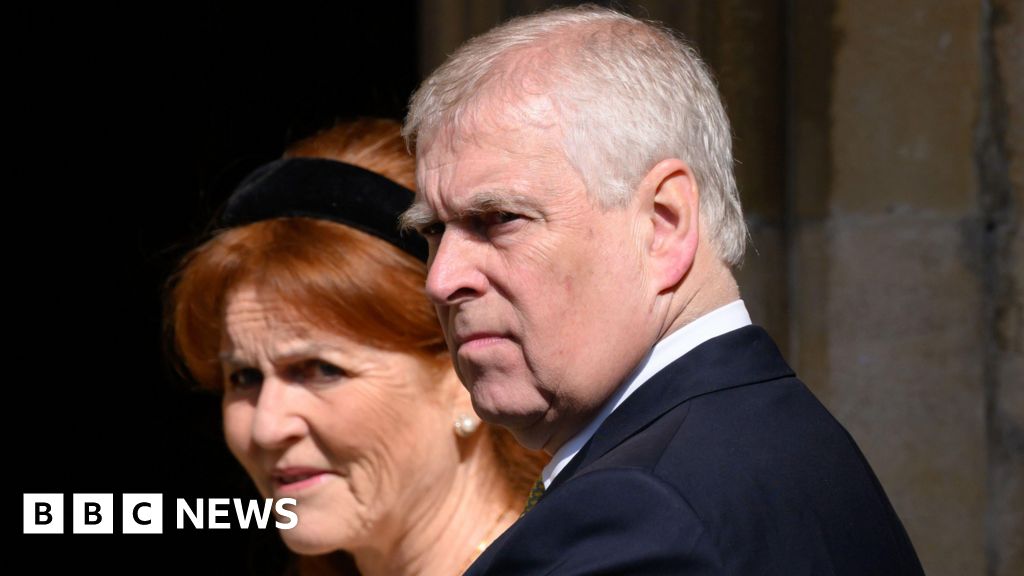
Andrew Mountbatten Windsor arranged a private tour of Buckingham Palace while the late Queen was in residence, for businessmen from a cryptocurrency mining firm which agreed to pay his ex-wife up to £1.4m, the BBC can reveal.
Jay Bloom and his colleague Michael Evers were driven through the palace gates in the former prince’s own car after being collected from their five-star Knightsbridge hotel for the visit in June 2019.
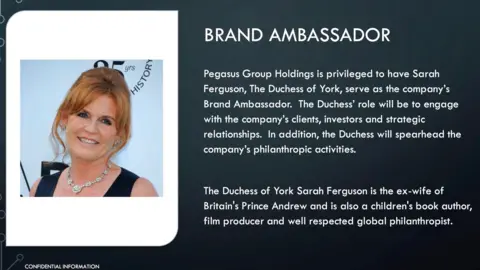
Their company, Pegasus Group Holdings, which Mr Bloom co-founded, employed Sarah Ferguson as a “brand ambassador” for a crypto-mining scheme which would lose investors millions when it failed less than a year later.
Mr Bloom, an entrepreneur who had previously set up a failed Mafia-themed museum in Las Vegas, and Mr Evers, a former actor, were met by a greeter and escorted inside the palace.
Mr Evers told the BBC they then met the Queen, although Mr Bloom disputed this.
Both Mr Evers and Mr Bloom were invited by the then-prince to his Pitch@Palace event – a Dragons’ Den-style business pitching competition – at nearby St James’s Palace later that day, and they dined that evening with Andrew, Ms Ferguson and their daughter Princess Beatrice.
Ms Ferguson was working with Pegasus Group Holdings at the time of the palace visit, while she was Duchess of York, to promote plans to use thousands of solar power generators to mine Bitcoin at a remote site in the Arizona desert.
But the project ultimately failed with only 615 of the planned 16,000 generators acquired and just $33,779 (about £25,000) in cryptocurrency mined.
In April 2021, some investors took legal action, claiming millions of dollars of investor funds were unaccounted for. A tribunal awarded the investors $4.1m, but Mr Bloom is seeking permission to appeal.
The revelations add to growing questions about how Andrew and his former wife have funded their lifestyle, as well as long-standing concerns about their business connections and that the then-prince may have used his royal titles and connections for private gain.
On Thursday evening, Buckingham Palace announced that it was starting the formal process of stripping Andrew of his royal titles and that he would be losing his Windsor mansion, following intense criticism of his links with the billionaire paedophile Jeffrey Epstein.
Andrew and Ms Ferguson did not respond to a detailed list of questions about their involvement with Mr Bloom and the crypto-mining venture.

 Facebook
Sarah Ferguson was paid more than £200,000 for her work for the company and a leaked contract reveals she was in line for a separate bonus worth £1.2m.
She also received a stake in the business, which proposed using solar generators to reduce the cost of the energy-intensive computer calculations needed to generate or “mine” the digital currency Bitcoin.
Her contract stipulated that she required first-class travel, five-star hotels and the services of a professional hairdresser and make-up artist for the maximum of four “networking events” she would attend on the company’s behalf.
It said she did not “hold herself out as an expert on the solar industry” and therefore accepted no responsibility for “industry-related information or commercial assessments” used as the basis for her statements promoting the company.
A royal friendship
Sarah Ferguson first met the Las Vegas businessman Jay Bloom in May 2018 when she was at a convention in the city to promote one of her children’s books.
The pair struck up a friendship and business relationship.
Pegasus documents would subsequently describe her role as to “engage with the company’s clients, investors and strategic relationships” as well as involvement with the company’s planned “philanthropic activities”.
For Mr Bloom, it was an introduction to royal circles which would lead to visits to Buckingham Palace and St James’s Palace, a tour of Ms Ferguson and Andrew’s home, the Royal Lodge in Windsor, and dinners with her and her family in at least four different countries.
Eight years before the duchess signed up to be a brand ambassador for Pegasus, Mr Bloom had hit the Las Vegas headlines, accused of missing payments and deceiving investors in connection with a “mob experience” exhibition in the city. Mr Bloom denied wrongdoing, fought investors’ lawsuits and vowed to repay them.
He now had a new company, Pegasus, and ambitions to build a hotel and casino in Greece.
It was there in July 2018, while considering investing in the company, that Michael Evers, a former actor and reality TV star who had made money from cryptocurrency investments, first met Ms Ferguson.
The hotel and casino did not get built, but Mr Bloom had soon pivoted Pegasus to a new idea, one that was inspired by seeing a mobile solar power generator in use at the Las Vegas motor speedway in early 2019, according to filings in the later legal action brought by investors.
Mr Bloom and his co-founders hit upon a plan to use vast banks of these units to power a crypto-mining operation. The endeavour, the company estimated, would generate millions of dollars a month.
In March 2019, Ms Ferguson had dinner with Mr Bloom in Los Angeles. They had lunch at the Beverly Hills Hotel a few days later as she helped him try to close a deal for Pegasus. One of her daughters stopped by during the meal.
Mr Evers was now working for Pegasus as well as being an investor. He said he and Mr Bloom were regularly in London over the following months as they explored taking Pegasus public on the AIM market – part of the London Stock Exchange for growing companies.
 Facebook
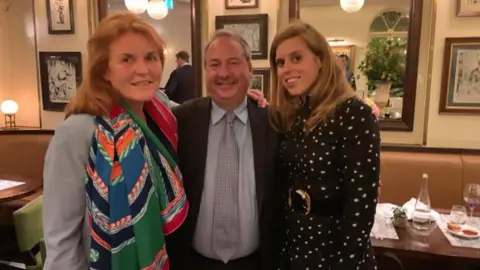
He said he got to know Ms Ferguson and her family and “through all that, I met Prince Andrew [and] Princess Beatrice and a lot of their family” who he described as “really great people, really friendly”.
“We were there once a month for a week to two weeks at a time and every time the relationships just kind of grew stronger and stronger and they started offering tours of different places, I guess like behind the scenes or I don’t know what you’d call it,” Mr Evers said. “And just wanting to introduce us to more and more people.”
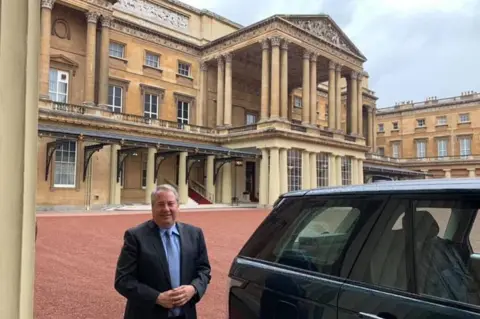
As well as a tour of the Royal Lodge, Andrew and his ex-wife arranged for the pair to visit Buckingham Palace on a day in June 2019 when it was closed to the public.
They were picked up from their Knightsbridge hotel by an official driver in a dark blue Range Rover used by Andrew and driven through the palace gates in the early afternoon.
Once inside they were taken through to the inner courtyard, where a female greeter was waiting to meet them. A video taken by the men from inside the car captured their arrival.
A former Royal Household employee, who reviewed the footage, told BBC News that it was clear that palace security staff on the gate were expecting the vehicle.
“The ramp was dropped before they came out to speak to the driver,” they said. “That was the reception we’d expect if we were carrying a member of the Royal Family.”
What happened once they went inside is disputed by the two men.
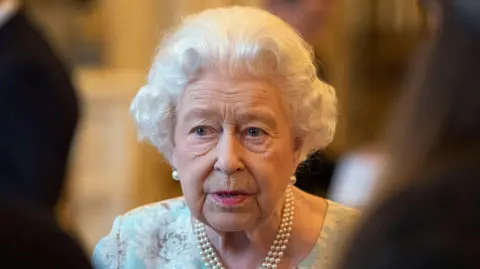
Mr Evers said they had been told in advance that there would be an opportunity to meet the Queen. But once there, he said staff told him he was not allowed to take photos.
“They didn’t want anyone knowing that we were meeting Elizabeth. And it was very, very brief, she was not doing super well, so it was more just like a hello and in passing. No touching or anything,” he said.
He said it wasn’t a formal meeting, “it was just like a quick, ‘hello, goodbye'”.
The Queen was in residence that day, with her published schedule including her regular weekly audience with the prime minister. The Palace was unable to confirm or deny whether the introduction with the two men took place.
Responding to questions by email, Mr Bloom initially said he had decided just to visit the palace as a tourist. He subsequently said the only person he met at the palace was a “staffer”.
 Getty Images
When challenged and presented with evidence from his own social media, which included footage of him being driven into the palace, and comments about spending time with Andrew, and there being “pictures I can post, the pictures I can’t, and then the stuff I couldn’t take pictures of… lol”, Mr Bloom said he had misremembered.
He then admitted that he “was in fact shown to Andrews [sic] office and did thank him for the car and for him and Sarah arranging the tour”.
He denied ever having met or been in the same room as the late Queen.
Mr Bloom made a second visit to Buckingham Palace in July 2019, photos show. On social media he made an apparently joking reference to “meeting HRH”.
Helicopters and guns in the desert
Two months later, Ms Ferguson was one of two celebrity guests – alongside the motivational speaker Tony Robbins, who says he has coached figures such as Serena Williams and Hugh Jackman – at a “ground breaking” for Pegasus’s energy project launch in the Arizona desert.
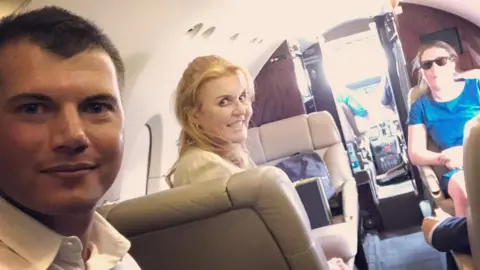
They were flown in, with Mr Bloom, Mr Evers and others, in two black-and-gold helicopters and posed with gold-coloured spades and construction hats at the remote site of what Pegasus promised would become a multi-billion-dollar off-grid data centre.
With armed guards with AR-15 rifles and pistols standing nearby, Mr Bloom introduced Ms Ferguson at a press conference as a “personal friend”.
In the short speech that followed, Ms Ferguson praised the company, saying she was “so proud to be here” and touted the potential philanthropic uses of the technology in Africa.
 Instagram
That October, a month before Andrew’s fateful BBC Newsnight interview where he disastrously attempted to explain his connections to Mr Epstein, Ms Ferguson signed a contract agreeing to provide specific services for Pegasus.
For reasons that remain unexplained, the contract itself was with Alphabet Capital, a British company whose owner, Adrian Gleave, ran a number of caravan and holiday parks.
A High Court ruling in London in 2024 has previously revealed that Ms Ferguson received more than £200,000 for her work for Pegasus from Alphabet Capital.
Andrew has also received money from Alphabet, including £60,500 traced to Mr Gleave and his businesses, according to court documents previously reported by the BBC.
Neither Andrew nor Mr Gleave have explained why this money was paid.
Mr Bloom said he has never heard of Alphabet or Mr Gleave and there was no connection with Pegasus.
Lawsuits and recriminations
A year after investing millions of dollars in the crypto solar scheme, some of its main investors became concerned about progress and began legal proceedings.
In 2023, judges from the Commercial Arbitration Tribunal in the US found in the investors’ favour awarding them millions of dollars.
Jay Bloom has since mounted a number of legal challenges over the award in the Nevada courts.
Mr Bloom told BBC News that Pegasus emphatically disputed “any allegations of misconduct” and said they were “addressing the clearly flawed arbitral findings through established legal processes”.
Andrew and Ms Ferguson did not respond to the BBC’s questions, including whether Ms Ferguson planned to repay money received for her Pegasus work to the company’s investors.
Mr Evers said he regretted being involved with Pegasus. He said Mr Bloom was “working very, very hard to get all the investors paid back” but that he was frustrated to still be owed money himself several years later.
- If you have any information on stories you would like to share with the BBC Politics Investigations team, please get in touch at politicsinvestigations@bbc.co.uk
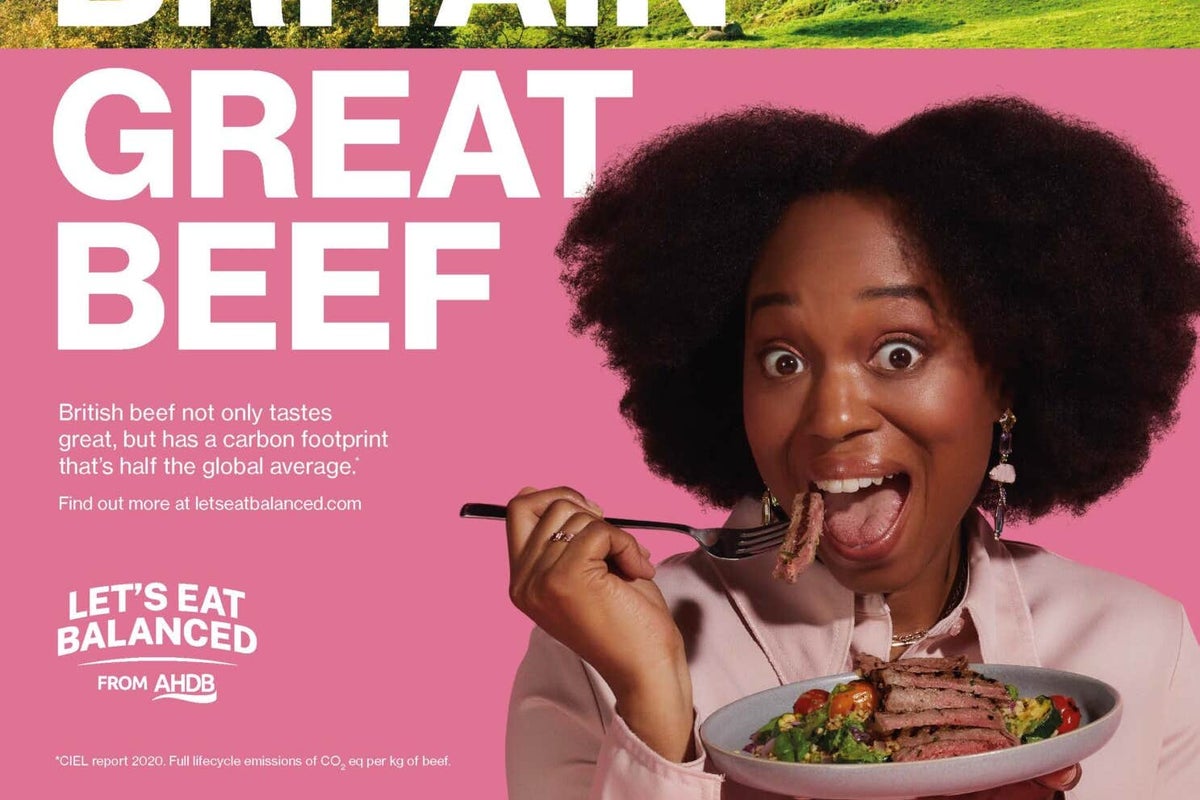
Two ads promoting British beef and milk have been banned after television presenter and environmental campaigner Chris Packham complained that they misled consumers about the products’ carbon footprints.
Both ads for the Agriculture and Horticulture Development Board’s (AHDB) Let’s Eat Balanced campaign used the carbon footprint of British beef and milk to promote the products, firstly stating: “British beef not only tastes great, but has a carbon footprint that’s half the global average*.”
The asterisk linked to text that stated: “Full lifecycle emissions of CO2 eq (carbon dioxide equivalent) per kg of beef.”
The ad for milk stated: “British milk not only tastes good, but is also produced to world-class standards, and has a carbon footprint a third lower than the global average.”
Packham complained to the Advertising Standards Authority (ASA) that the ads, and specifically the carbon footprint claims, were misleading as they did not reflect the full environmental impact of British meat and dairy.
The AHDB said the ads’ mention of carbon emissions would be understood in relation to the environmental impact of beef and milk that occurred between the “cradle-to-retail” stages.
But the ASA said the average consumer “being reasonably well-informed, observant and circumspect” would understand the claims to apply beyond the retail stage and include actions such as cooking and wastage.
The ASA said: “While we acknowledged the potential difficulties in producing post-retail emissions data, the claims in the ads suggested those emissions were included and we therefore expected the evidence provided to also include them.
“We therefore concluded that the evidence presented was insufficient to support the full life-cycle claims in the ads, which was how the average consumer was likely to interpret them.
“We reminded AHDB that environmental claims should be based on the full life cycle unless the ad stated otherwise.”
AHDB’s director of communications and market development, Will Jackson, said: “Let’s Eat Balanced is doing what it was designed to do, providing clear, factual, evidence-led information about British food, nutrition and farming standards.
“Since the investigation began, we have conducted independent consumer research which found that the majority of respondents interpreted these adverts as relating to the production phase only, from farm to retail.
“This research provides important insight into consumer understanding and supports our belief that consumers were not misled by the information we shared in these two specific adverts.”
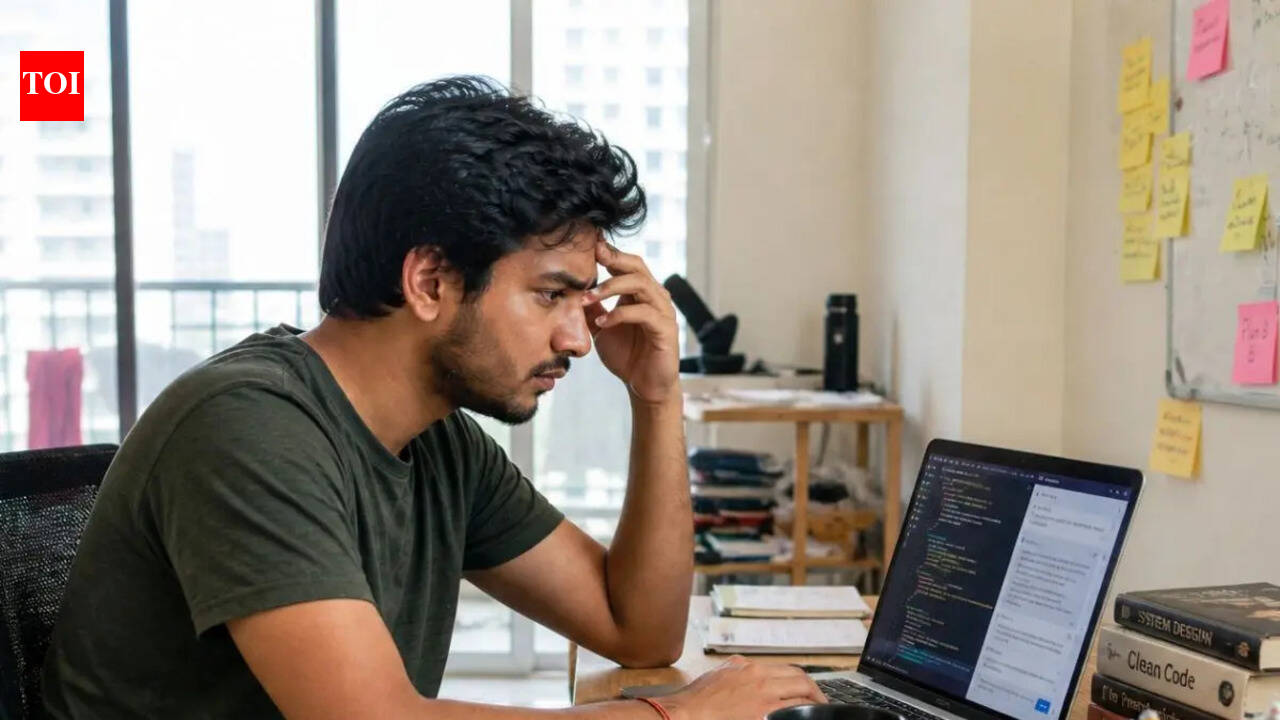
BENGALURU: India’s Gen Z workforce is embracing what experts describe as “portfolio careers” – balancing multiple professional identities and income streams simultaneously. New research from LinkedIn shows that 75% of Gen Z entrepreneurs in India now manage multiple income streams, significantly higher than the 62% among Gen X entrepreneurs. The findings point to a growing preference among younger professionals for flexibility, autonomy and diversified sources of income. “We’re also seeing the rise of the ‘portfolio era’, with more professionals creating multiple income streams and redefining what a career can look like. This shift is making entrepreneurship more accessible than ever before,” said LinkedIn India country manager Kumaresh Pattabiraman.Rather than depending on a single full-time role, many professionals are simultaneously building businesses, freelancing, consulting, creating online content and monetising specialised skills through digital platforms. The trend comes amid a broader rise in entrepreneurial activity in India. LinkedIn recorded a 104% year-on-year increase in members adding “Founder” to their profiles – the highest growth among all global markets.AI is also emerging as a major enabler of this shift. The report found that 85% of Gen Z entrepreneurs consider AI and digital tools important to their business operations.
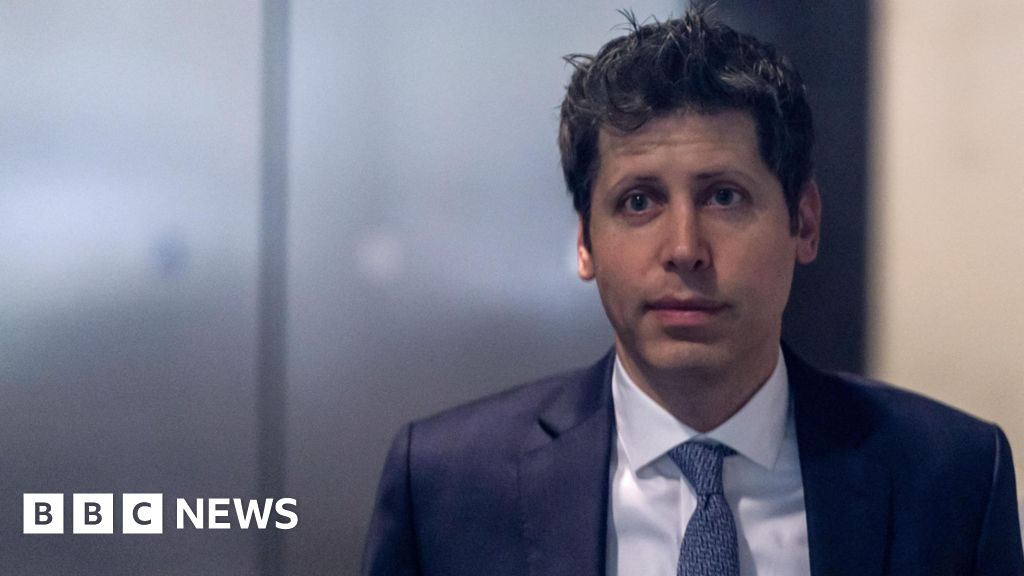
Sam Altman said Elon Musk tried many times for total control of OpenAI, which he’s now suing.
Source link


Will LeBron James retire after current season?

South Korea reviews phased support for Strait of Hormuz security efforts

New Jersey Gov. Mikie Sherrill announces another NJ Transit World Cup ticket cut days after first reduction

-

 Tech1 week ago
DHS Demanded Google Surrender Data on Canadian’s Activity, Location Over Anti-ICE Posts
-
 Business1 week ago
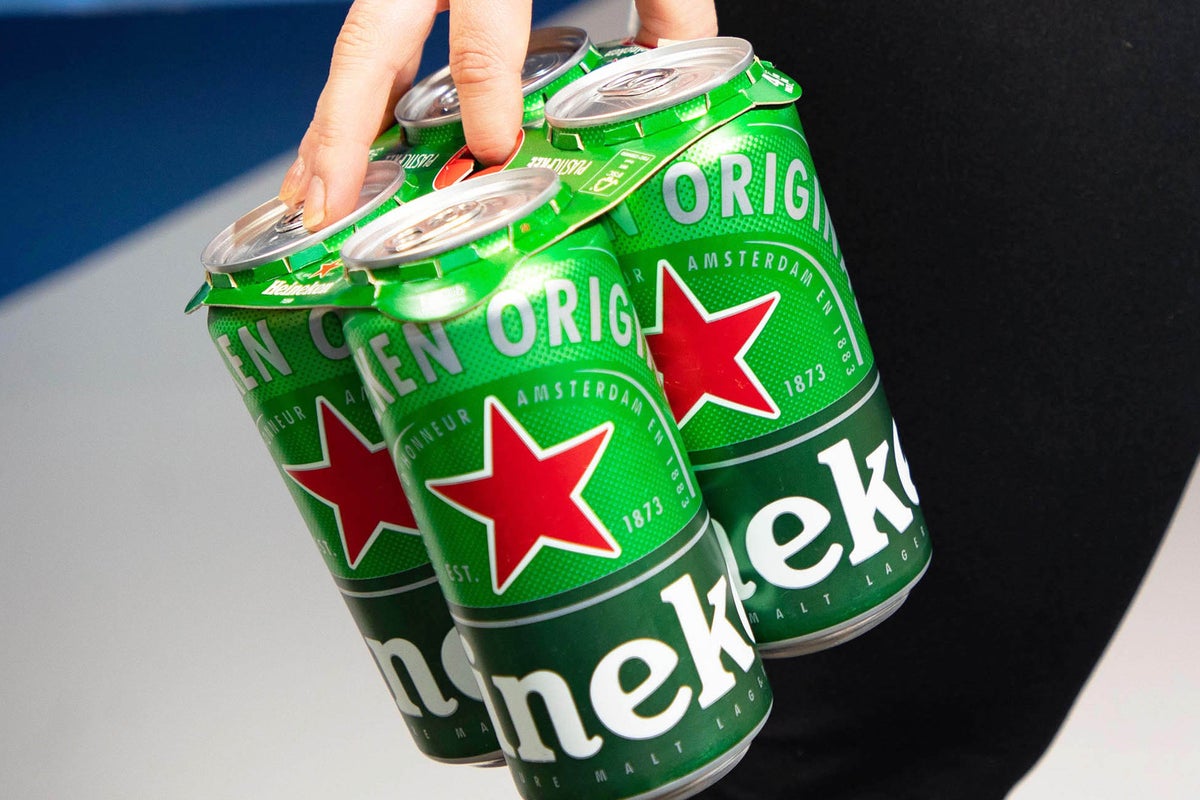
Heineken plans huge investment in hundreds of UK pubs ahead of World Cup
-
 Tech5 days ago
A new frontier: Identity stack evolves for agentic systems | Computer Weekly
-

 Tech4 days ago
‘Orbs,’ ‘Saucers,’ and ‘Flashes’ on the Moon: Pentagon Drops New UFO Files
-
 Business1 week ago
India among most resilient large EMs, better placed for future global shocks; policy reforms & strong buffers help: Moody’s – The Times of India
-
 Fashion5 days ago
New orders in German manufacturing up 5% MoM in Mar 2026: Destatis
-
 Tech5 days ago
What Microsoft Executives Really Thought About OpenAI in 2018
-
 Business1 week ago
US denies Iranian report warship was struck by missiles