

Tech
Apple Pulls China’s Top Gay Dating Apps After Government Order

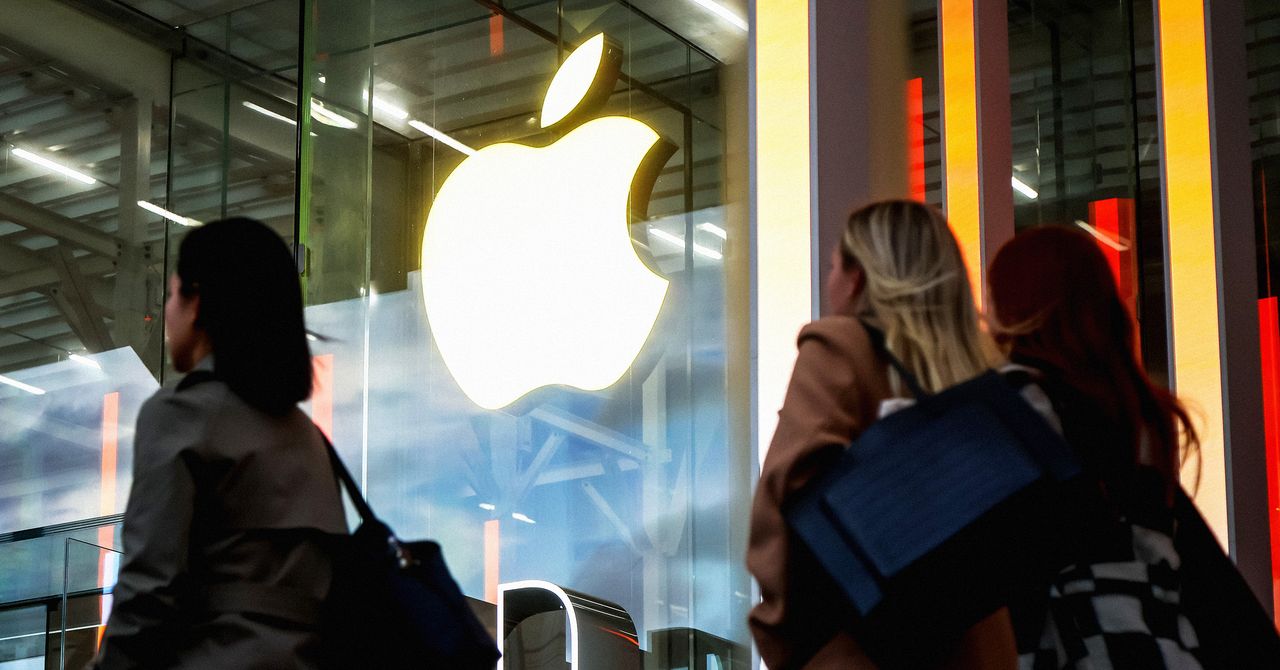
Apple has removed two of the most popular gay dating apps in China from the App Store after receiving an order from China’s main internet regulator and censorship authority, WIRED has learned. The move comes as reports of Blued and Finka disappearing from the iOS App Store and several Android app stores circulated on Chinese social media over the weekend. The apps appear to still be functional for users in the country who already have them downloaded.
“We follow the laws in the countries where we operate. Based on an order from the Cyberspace Administration of China, we have removed these two apps from the China storefront only,” an Apple spokesperson said in an email. Apple clarified that the apps have not been available in other countries for some time. “Earlier this year, the developer of Finka elected to remove the app from storefronts outside of China, and Blued was available only in China.”
Most international LGBTQ+ dating apps are already blocked in China. Grindr was removed from Apple’s Chinese App Store in 2022.
China decriminalized homosexuality in the 1990s, but the government does not recognize same-sex marriage. In recent years, China’s LGBTQ+ community has increasingly come under pressure as the Chinese Communist Party tightens its control over civil society and free expression. Several prominent gay rights organizations in China have shut down, and social media companies now frequently censor LGBTQ+ content and accounts.
The Chinese embassy in Washington, DC did not immediately respond to a request for comment.
In July, Blued abruptly stopped new user registration without giving an explanation, according to Chinese social media posts. For a month, Chinese users who wanted to get on the platform were paying as much as $20 for secondhand Blued accounts on ecommerce websites. But registration resumed in mid-August.
In 2020, BlueCity, the parent company of Blued, went public. It announced that the app had over 49 million registered users and over 6 million monthly active users. The same year, BlueCity said it was acquiring Finka, its main competitor in China, for about $33 million. The company delisted in 2022 and was acquired by Newborn Town, a Hong Kong-listed social media firm. Most of the longtime employees of Blued, including its founder Ma Baoli, left the company after the acquisition, says a former Blued employee who asked not to be named for privacy reasons.











An unknown technical problem caused a number of robotaxis owned by the Chinese tech giant Baidu to freeze on Tuesday in the middle of traffic, trapping some passengers in the vehicles for more than an hour.
In Wuhan, a city in central China where Baidu has deployed hundreds of its Apollo Go self-driving taxis, people on Chinese social media reported witnessing the cars suddenly malfunction and stop operating. Photos and videos shared online show the Baidu cars halted on busy highways, often in the fast lane.
A college student in Wuhan tells WIRED that she was stuck in a Baidu robotaxi with two friends for about 90 minutes on Tuesday. (She asked to be only identified with her last name, He, to protect her privacy.) The student says the car malfunctioned and stopped four or five times during the trip before it eventually parked in front of an intersection in eastern Wuhan. Luckily, it was not a busy road, and the group was not in immediate danger. The screen display in the car asked the passengers to remain in the car with seatbelt on and wait for a company representative to come “in five minutes,” according to a photo He shared with WIRED.
He says it took about 30 minutes to reach a Baidu customer representative on the phone. “They kept saying it would be reported to their superior. But they didn’t explain what caused [the outage] or let us know how long we needed to wait for the staff to come,” He says. But no one ever came, and after another hour of waiting, the three passengers decided to just get out and go home by themselves (the doors weren’t locked).
On Chinese social media, other passengers also complained about being unable to reach Baidu’s customer support. “I tried every way I could think of to call for help using the options the app showed, but the phone line wouldn’t go through, and when I pressed the SOS button it told me it was unavailable. So then what exactly is the SOS for?” wrote one person in a post on RedNote alongside a video showing the button not working. She said she had to force the door to open and get out of the car as traffic halted to a complete stop behind her robotaxi. “Apollo Go, you really owe me an apology,” she wrote.
Baidu didn’t immediately respond to a request for comment. Local police in Wuhan issued a statement around midnight in China that said the situation was “likely caused by a system malfunction,” but the incident is still under investigation. No one was injured and all passengers have exited the vehicles, the police added. It’s unclear how many of Baidu’s robotaxis may have been impacted.
One dash cam recording posted to RedNote shows a car passing 16 Apollo Go vehicles parked on the road in the span of 90 minutes. On several occasions, the video shows the driver narrowly avoiding hitting the robotaxis by braking or changing lanes at the last minute.
Others were apparently not as fortunate. In another RedNote post, a man claimed he crashed into one of the malfunctioning Baidu vehicles. The man wrote in the caption that he was driving over 40 mph on a highway when the car in front of him suddenly changed lanes to avoid the stopped robotaxi. He couldn’t react fast enough and ended up running into the self-driving car. Photos of the man’s orange SUV being towed away show that the car’s front-right fender was completely torn off, and other parts appeared to have sustained major damage.

Tired of the stale, fetid air looming over your apartment like a cloud? Check out the Coway Airmega Mighty, an already wallet-friendly home air purifier that’s even cheaper right now as part of the Amazon Big Spring Sale. It’s currently marked down to just $154, a $76 discount from its typical price, but you’ll want to move quickly if you’re interested, as the deal is only available for a limited time.
Despite its low price tag and squat stature, the Airmega Mighty is capable of cleaning a substantial amount of space. At full bore, it can handle a 361-square-foot space, although you’ll get the best performance, and save your ears, if you’re closer to a 200-square-foot room. If you don’t want it running constantly, there are built-in timers to automatically shut off after 1, 4, or 8 hours, or you can use Eco Mode, which will run until the Might doesn’t sense any dirty air for half an hour.
That’s right, the Airmega Mighty has a built-in air quality sensor, and it reflects the current state of the air quality using a colored light with three levels. It uses those readings to automatically adjust the fan speed and timing settings on the fly, as well as giving you a peak into how bad the air you’re breathing right now is for you. While it lacks integration with smart home setups like Google Home, it makes up for it by handling all of its own business without Wi-Fi or extra apps on your phone.
While the Coway Airmega Mighty is available in three colors, only the black and silver model is currently discounted, so you’ll have to pay full price if it doesn’t match your living room’s color scheme. We’ve put in the work testing every air purifier we could get our hands on, so make sure to check out the full guide if you’re trying to clean up your space. The Coway is discounted as part of Amazon’s Big Spring Sale, and we’ve got the best deals from products we’ve tested gathered in one place if you want to save some bucks.
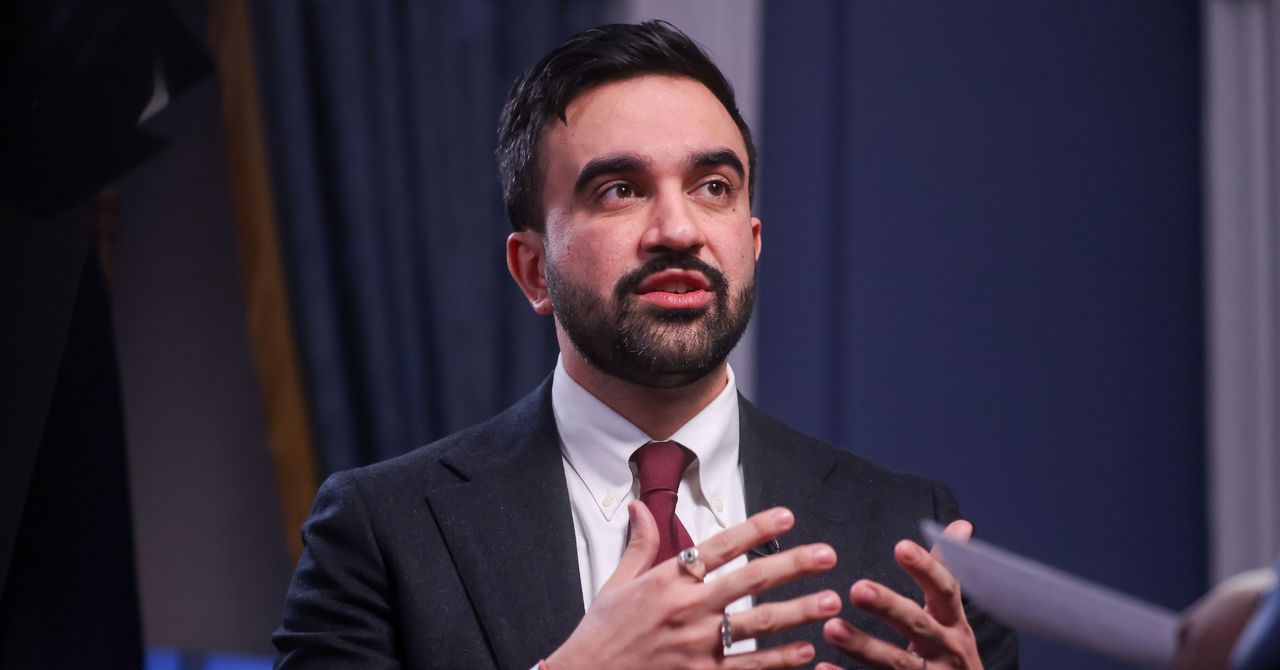
New York City mayor Zohran Mamdani, who rode a social media-fueled campaign to Gracie Mansion, is reversing an Eric Adams–era directive barring TikTok from government-owned devices. Local agencies will now be able to post about their projects on the app, though with new guardrails to protect city networks.
“The Mamdani administration is committed to using every tool in our toolbox to communicate with New Yorkers,” says the email to agencies, obtained by WIRED. “At a moment when people are turning to city government for information about free services, emergency situations, upcoming events, and more, we want to open up new avenues of communication with the public and help deliver the information New Yorkers need.”
In August 2023, then-mayor Adams barred the use of TikTok on government devices, joining the ranks of other state and federal agencies that at the time deemed the app a major security risk. Adams spokesperson Jonah Allon said then that the city’s Cyber Command office had decided that TikTok, which was owned by the Chinese-based company ByteDance, “posed a security threat to the city’s technical networks and directed its removal from city-owned devices.”
The directive resulted in a number of popular city-run accounts shutting down, including accounts for the NYC Departments of Sanitation and Parks and Recreation. As of Tuesday morning, the accounts’ bios read, “This account was operated by NYC until August 2023. It’s no longer monitored.”
Now, these TikTok accounts will be allowed to reopen with a few new rules aimed at protecting the security of NYC’s networks and devices while allowing agencies to communicate with citizens on the popular app. In order to use TikTok, agencies will be required to use separate, government-issued devices for the app that “cannot contain sensitive or restricted data, and they cannot be used for email, internal systems, or privileged access,” according to the email to agencies. Agencies will designate specific staff from media and press offices to run the TikTok accounts with city government emails, not personal ones.
“In a fragmented media landscape, more and more people—especially younger people—are looking beyond the four corners of their television screen to stay informed,” Mamdani said in a statement to WIRED. “Our responsibility is simple: Meet people where they are. That means stepping outside our comfort zones and communicating in ways that reflect how New Yorkers actually live, work, and connect.”
Mamdani’s rule reversal comes after his November election that relied heavily on social media to conduct voter outreach. Mamdani leveraged TikTok to recruit volunteers and amplify his policy platform. Over his first few months in office, Mamdani has continued to leverage social media platforms, publishing a variety of public-service announcements related to city-run programs.
Ahead of dangerous winter weather in January, Mamdani published a video to the official @nycmayor account on Instagram asking New Yorkers to sign up for the city’s free emergency communications program, NotifyNYC. The program netted more than 32,000 new subscribers in the four days after the video was released, according to stats provided by Mamdani’s office. Last year, New York City Emergency Management ran a $240,000 advertising round for NotifyNYC, acquiring around 48,000 new subscribers. Mamdani also created a handful of videos asking New Yorkers to join a Department of Sanitation snow-shoveling program. Around 5,000 people signed up, tripling the number previously enrolled in the program.
The situation has also changed for the app. In January 2026, TikTok finalized a deal with the Trump administration to form a new US-based version of the company run by American investors, including Oracle. The consortium of American investors staved off a nationwide ban of the app.


Iran war: Asia stocks jump after Trump suggests conflict could end in weeks

Italy miss out on third straight WC in shootout loss to Bosnia

Household energy bill drop ‘short-lived respite’ amid fears of July hike

-

 Politics1 week ago
Afghanistan announces release of detained US citizen
-

 Sports1 week ago
Broadcast industry CEO says consolidation is ‘essential’ to compete for NFL soaring media rights prices
-

 Tech1 week ago
Can a Home Appliance Fix the Problem of Soft-Plastic Waste?
-
 Business1 week ago
Property Play: Home flippers see smallest profits since the Great Recession, real estate data firm says
-

 Entertainment1 week ago
UN warns migratory freshwater fish numbers are spiralling
-
 Business1 week ago
Gold prices soar in Pakistan – SUCH TV
-

 Fashion1 week ago
ICE cotton slips on weaker crude, profit booking
-
 Business1 week ago
More women are entering wealth management, but few are in advisory roles, study finds