

Politics
Araghchi discusses Pakistan-mediated Iran-US diplomacy with Saudi, Egyptian FMs

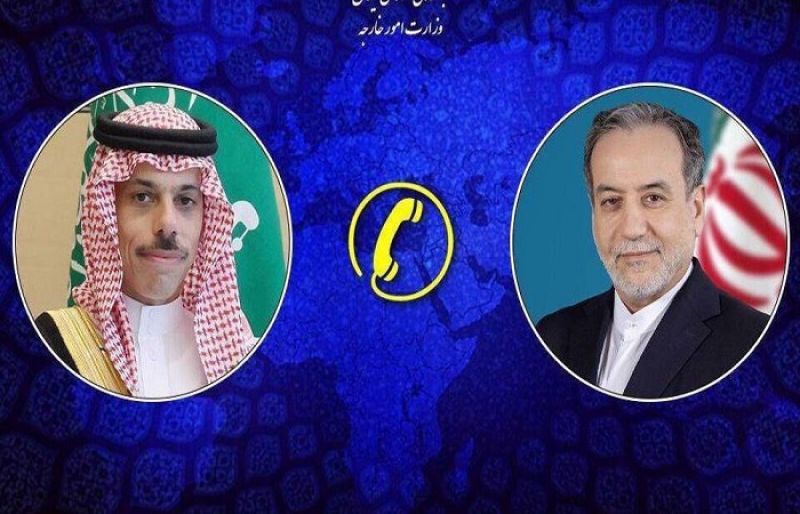
Iranian Foreign Minister Abbas Araghchi has discussed the most important developments on the Pakistan-mediated diplomatic process between Iran and the United States, as well as key regional issues, with his Saudi and Egyptian counterparts.
Araghchi held separate phone calls with Saudi Foreign Minister Faisal bin Farhan Al Saud and Egyptian Foreign Minister Badr Ahmed Mohamed Abdelatty on Monday.
The call between the top Iranian and Saudi diplomats marked their second contact in 24 hours.
Araghchi and Abdelatty, the Egyptian foreign minister, also discussed the latest developments in the region.
On Sunday, the Iranian foreign minister exchanged views with his Qatari and Dutch counterparts on key regional issues.
The phone calls came a day after Iran sent Pakistan its response to a US proposal for ending the war, but US President Donald Trump rejected it as “totally unacceptable.”
The criminal US-Israeli aggression against Iran began on February 28 with airstrikes that assassinated senior Iranian officials and commanders, including the Leader of the Islamic Revolution, Ayatollah Seyyed Ali Khamenei.
In response, the Iranian Armed Forces launched decisive daily missile and drone operations targeting locations in the Israeli-occupied territories, as well as US military bases and assets across the region.
Iran also retaliated by closing the Strait of Hormuz, which resulted in a significant increase in the price of oil and its by-products.
On April 8, forty days into the war, a Pakistan-brokered temporary ceasefire between Iran and the US took effect.
Negotiations followed in Islamabad but stopped short of an agreement due to Washington’s maximalist demands and insistence on unreasonable positions.
Since then, Iran has refused to rejoin the process unless the US lifts an illegal blockade it has imposed on Iranian vessels and ports.
Tehran has also asserted that as long as the blockade remains in place, it has no intention of reopening the Strait of Hormuz.
- Trump dismisses Tehran’s proposal as “stupid”.
- Says he didn’t even finish reading Iran’s response.
- Iran willing to give US “the nuclear dust”: Trump.
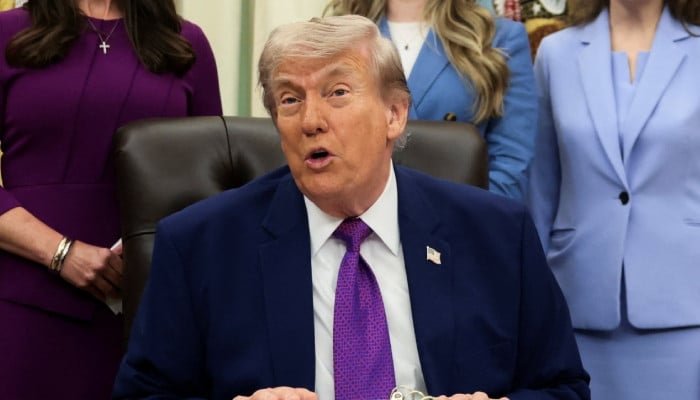
US President Donald Trump on Monday said that a ceasefire with Iran was “on life support” after he rejected Tehran’s response to a US peace proposal, fuelling concerns of a resumption of hostilities in the 10-week-old conflict that has killed thousands and halted vital energy flows.
Days after Washington floated a proposal aimed at reopening negotiations, Iran on Sunday released a response focused on ending the war on all fronts, including Lebanon, where US ally Israel is fighting Iran-backed Hezbollah.
The response had been swiftly rejected by Trump.
Asked where the Pakistan-brokered ceasefire stands, Trump told reporters: “I would call it the weakest right now, after reading that piece of garbage they sent us. I didn’t even finish reading it.”
In its response, Tehran also demanded compensation for war damage, emphasised its sovereignty over the Strait of Hormuz, and called on the US to end its naval blockade, guarantee no further attacks, lift sanctions and remove a ban on Iranian oil sales.
The US had proposed an end to fighting before starting talks on more contentious issues, including Iran’s nuclear programme.
Tehran defended its stance on Monday.
“Our demand is legitimate: demanding an end to the war, lifting the (US) blockade and piracy, and releasing Iranian assets that have been unjustly frozen in banks due to US pressure,” Foreign Ministry spokesperson Esmaeil Baghaei said.
“Safe passage through the Strait of Hormuz and establishing security in the region and Lebanon were other demands of Iran, which are considered a generous and responsible offer.”
Brent crude oil futures traded 2.7% higher at around $104 a barrel, as the deadlock left the Strait of Hormuz largely closed.
Before the war began on February 28, the narrow waterway carried one-fifth of the world’s oil and liquefied natural gas, and has since become a central pressure point in the conflict.
Disruption caused by the near-closure of the strait has forced oil producers to cut exports, and Opec oil output dropped further in April to the lowest in more than two decades, a Reuters survey showed on Monday.
Trickle of shipping through Hormuz
Traffic through the Strait of Hormuz is at a trickle compared with before the war. Shipping data on Kpler and LSEG showed that three tankers laden with crude exited the waterway last week, with trackers switched off to avoid Iranian attack.
Sporadic flare-ups around the strait in recent days have tested a ceasefire that has paused all-out warfare since it took effect in early April.
In the United States, surveys show the war is unpopular with voters facing sharply higher gasoline prices less than six months before nationwide elections that will determine whether Trump’s Republican Party retains control of Congress.
Washington has also struggled to build international support, with Nato allies refusing to send ships to reopen the waterway without a full peace deal and an internationally mandated mission.
Hakan Fidan, the foreign minister of Turkiye, which has been liaising closely with the US, Iran and mediator Pakistan since the start of the war, will hold talks in Qatar on Tuesday on the conflict and on ensuring navigational safety in the strait, a Turkish diplomatic source said.
Trump to discuss Iran in Beijing
The next diplomatic or military steps remain unclear. Trump is expected to arrive in Beijing on Wednesday, where Iran is set to be among the topics discussed with Chinese President Xi Jinping.
Trump has been leaning on China to use its influence to push Tehran towards a deal with Washington.
Iran’s Foreign Ministry spokesperson Baghaei suggested China could instead use the visit to push back against US objectives in the Gulf.
“Our Chinese friends know very well how to use these opportunities to warn about the consequences of the US’s illegal and bullying actions on regional peace and security,” he said.
Addressing whether combat operations against Iran were over, Trump said in remarks aired on Sunday: “They are defeated, but that doesn’t mean they’re done.”
Israeli Prime Minister Benjamin Netanyahu said the war was not over because there was “more work to be done” to remove enriched uranium from Iran, dismantle enrichment facilities and address its alleged proxy forces and ballistic missile capabilities.
Netanyahu told CBS News‘ “60 Minutes” that the preferred route was diplomacy, but he did not rule out the use of force.
Clashes have also continued in southern Lebanon between Israel and Hezbollah, despite a US-brokered ceasefire announced on April 16.
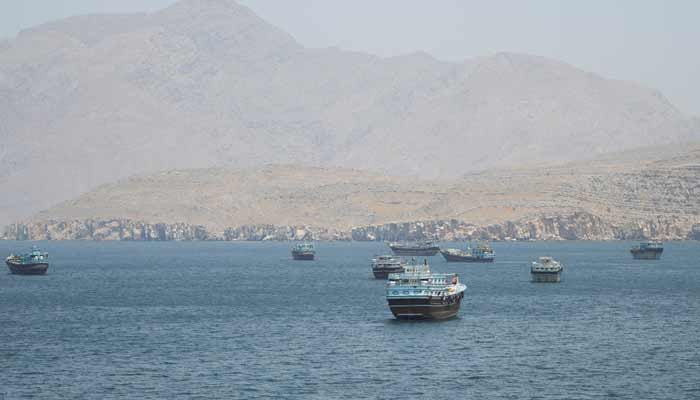
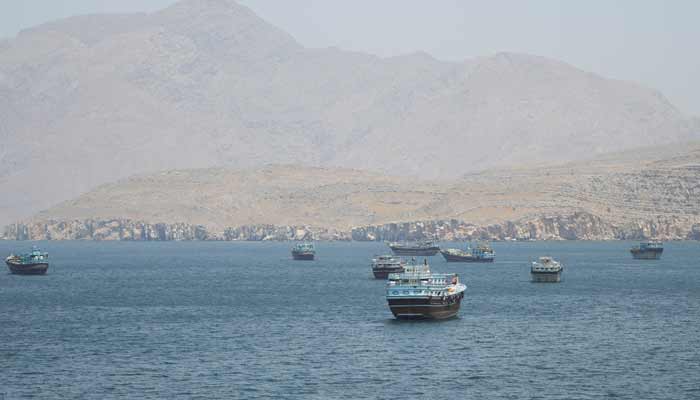
Tens of millions of people could face hunger and starvation if fertilisers are not soon allowed through the Strait of Hormuz, the head of a UN task force aimed at averting a looming humanitarian crisis told AFP on Monday.
Iran has had the strategic waterway — through which a third of the world’s fertilisers normally pass — in a chokehold for months in retaliation for the war launched by the United States and Israel on February 28, disrupting a trade critical for farmers around the world in a race against the end of planting seasons.
“We have a few weeks ahead of us to prevent what will likely be a massive humanitarian crisis,” Jorge Moreira da Silva, executive director of the United Nations Office for Project Services (UNOPS) and leader of the task force, told AFP in an interview in Paris.
“We may witness a crisis that will force 45 million more people into hunger and starvation.”
The UN secretary general created the task force in March to spearhead a mechanism to allow fertilisers and related raw materials such as ammonia, sulphur and urea through the strait.
For weeks, Moreira da Silva has been working to convince the belligerent parties to allow even a few ships through, and has met with “more than 100 countries” to rally UN member state support around the mechanism.
A growing number of countries are showing support for the plan, he said, but the United States and Iran, as well as Gulf countries — who are key fertiliser producers, are not yet fully on board.
While the ultimate hope is for a “lasting peace” deal in the region and “freedom of navigation for all commodities” through the strait, “the problem is the planting season can’t wait”, Moreira da Silva said, with some ending in African nations within weeks.
Global focus has been on the economic impacts of the throttled oil and gas trade, but the United Nations has been sounding the alarm of the threat the blockade poses to the world’s food security, with countries in Africa and Asia likely to be particularly hard hit.
‘Political will’
Moreira da Silva said the United Nations could have the mechanism up and running in seven days but even if the strait were to reopen now, it would take three to four months to return to normality.
“It’s just a matter of time. If we don’t stop the origin of the crisis soon, we will have to deal with the consequences through humanitarian aid.”
While food prices have not exploded yet, Moreira da Silva said, there has been a “massive increase” in fertiliser costs, which experts say would likely lead to a drop in agriculture productivity and send food prices soaring.
Moreira da Silva said moving just an average of five vessels a day of fertilisers and related raw materials through the strait would head off the crisis for farmers.
What’s missing, he said, is “the political will”.
“We can’t procrastinate on what is possible to do, and what is urgent to do— which is let the fertilisers cross the strait and, through that, minimise the risk of massive food insecurity at the global level.”


- Allen pleads not guilty to attempted assassination, related charges.
- Defence seeks disqualification of Trump officials present at dinner.
- Allen allegedly sought to attack Trump at White House press gala.
WASHINGTON: The man accused of attempting to assassinate US President Donald Trump at a White House reporters’ gala last month pleaded not guilty to all charges on Monday.
Cole Allen, 31, of California, did not speak in court as his attorney Tezira Abe entered the plea on his behalf. The charges include attempted assassination of the president, assault on a federal officer and firearms offences.
Prosecutors allege Allen fired a shotgun at a US Secret Service agent and stormed a security checkpoint in a foiled attack on Trump and other members of his administration at the White House Correspondents’ Dinner.
Allen allegedly travelled to Washington by train, carrying a shotgun, pistol and knives, and booked a room in the Washington Hilton where the April 25 dinner took place.
Allen wore an orange jumpsuit and was shackled at the waist during the brief court proceeding. It was his first appearance in Washington federal court before the judge who will preside over the remainder of the case, US District Judge Trevor McFadden.
A different judge last week apologised to Allen for his treatment in a local Washington, DC, jail, which included being placed on suicide precautions and isolated from other inmates.
The proceeding previewed the next major legal battle in the case, Allen’s attempt to have acting Attorney General Todd Blanche and US Attorney Jeanine Pirro disqualified from the case because they were present at the dinner and may have been among Allen’s alleged targets.
Allen’s lawyer, Eugene Ohm, said the defence is likely to seek recusal of the entire US Attorney’s Office in Washington, which Pirro leads, because of her friendship with Trump and status as a potential victim.
“It is wholly inappropriate for victims of an alleged event like this to be individually prosecuting the case,” Ohm said.
Prosecutors are set to respond to the defence’s legal filing by May 22. Pirro previously told CNN in an interview that “my ability to prosecute this case has nothing to do with my being there.”


Aaron Rodgers never met with Steelers despite rumor-filled weekend as QB’s decision remains up in air
[CinePlex360] Please moderate: “DOJ Issued Seiz

King Charles and Camilla mingle with Clooneys, Ant and Dec to celebrate 50th anniversary

-
 Politics1 week ago
Iran weighs US reply delivered via Pakistan as Trump signals opposition to deal terms
-

 Fashion1 week ago
US cotton export sales show strong recovery, Upland rise 36%
-

 Tech1 week ago
DHS Demanded Google Surrender Data on Canadian’s Activity, Location Over Anti-ICE Posts
-
 Business1 week ago
Heineken to invest £44.5m in hundreds of pubs creating 850 jobs
-

 Fashion1 week ago
Middle East conflict clouds India’s FY27 GDP forecast of 7-7.4%: Govt
-
 Politics1 week ago
Two women die on migrant boat seeking to reach UK
-

 Entertainment1 week ago
Jelly Roll reacts to daughter Bailee Ann’s major life milestone
-
 Business1 week ago
Heineken plans huge investment in hundreds of UK pubs ahead of World Cup