

Fashion
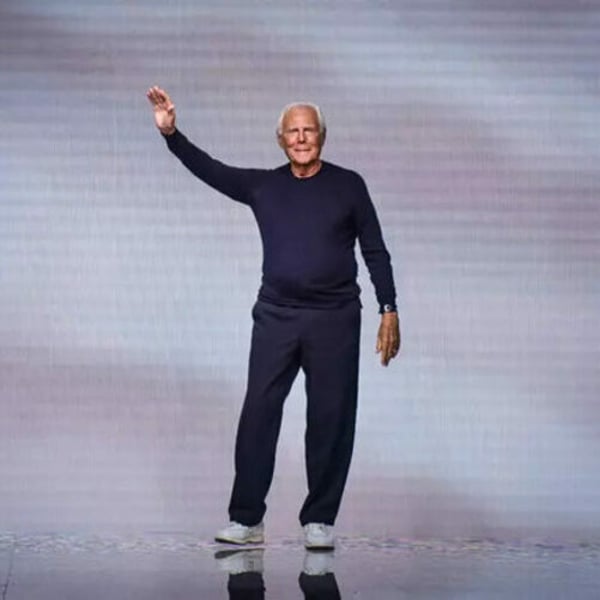
Armani confirms the runway shows and exhibition during fashion week

By
Reuters
Translated by
Nazia BIBI KEENOO
Published
September 10, 2025
The Armani Group confirms the regular conduct of the Emporio Armani and Giorgio Armani fashion shows, which will present the latest collections designed by the designer on the runway. This was announced by the group. The public opening of the exhibition at the Pinacoteca di Brera, originally planned for Wednesday, September 24, remains unchanged.
The smooth running of the fashion shows and the opening of the exhibition, which Giorgio Armani worked on until the end, “testify to the company’s commitment to continue under the sign of dedication, respect, and attention to work, qualities that have always distinguished Mr. Armani and which he himself imparted to all his collaborators over the years.”
Meanwhile, anticipation is growing by the hour for the designer’s will. The timing is not yet defined, but according to available information, the window for reading the last will stretches from today until next Wednesday: any day could be the day.
Handling the procedure is Milanese notary Elena Terrenghi, tasked with initiating the succession process. A summarized abstract of the death certificate is required to open the succession — a document that usually takes up to 15 days to issue — but the timeframe could be shortened given the importance of the case and the interest involved.
Giorgio Armani, who passed away on September 4 at the age of 91, had no children or spouse, and in the absence of “necessary” legitimate heirs according to Italian law, was able to dispose of his estate independently. During his lifetime, the designer had already prepared and secured bylaws for the group, divided into six categories of shares, with a central role entrusted to the Armani Foundation.
The people called by the notary for the reading of the will, barring any surprises, will be his sister Rosanna Armani; his nieces Silvana and Roberta Armani, daughters of his late brother Sergio; and Andrea Camerana, Rosanna’s son. Also included is Leo Dell’Orco, Armani’s life partner and right-hand man. All five already sit on the Group’s board of directors, with Dell’Orco designated as the coordinator of the select committee that will steer the company until the new corporate structure takes effect. Camerana and the Armani cousins represent the family component of the board, alongside other key managers such as Yoox founder Federico Marchetti and Rothschild banker Irving Bellotti.
The bylaws, updated in 2023, provide for a division into six categories of shares, each with differentiated voting and governance rights, but equal economic rights. A shares (30% of the capital) and F shares (10%) will carry decisive weight: the former are worth 1.33 votes each, the latter 3. Thus, while holding only 40% of the capital, shareholders holding categories A and F will control more than 53% of the votes in the assembly and will be able to appoint a majority of the board of directors, including the chairman and CEO.
The Armani Foundation is most likely to be the recipient of the A and F shares, thus centralizing strategic control of the group. Heirs and trusted associates may receive categories B to E, which hold the majority of the capital but not decision-making power alone. In addition to the corporate share, the will is also expected to regulate the allocation of a personal estate estimated at about €10 billion, which includes valuable real estate such as a penthouse in New York, the historic villa in Forte dei Marmi, and the Capannina, acquired by the group in late August — just days before the fashion designer’s passing.
The Capannina itself was one of the places dearest to Armani, where he met the love of his life, Sergio Galeotti, who died prematurely at age 40 in 1985. Meanwhile, the fashion shows scheduled for fashion week in two weeks are confirmed, featuring Emporio Armani and Giorgio Armani, as well as an exhibition dedicated to the 50-year history of the maison at the Pinacoteca di Brera.
This article is an automatic translation.
Click here to read the original article.
© Thomson Reuters 2025 All rights reserved.
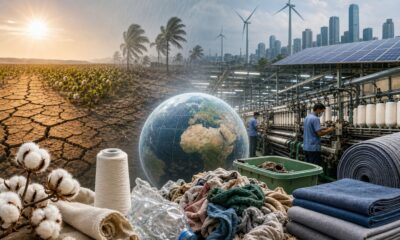








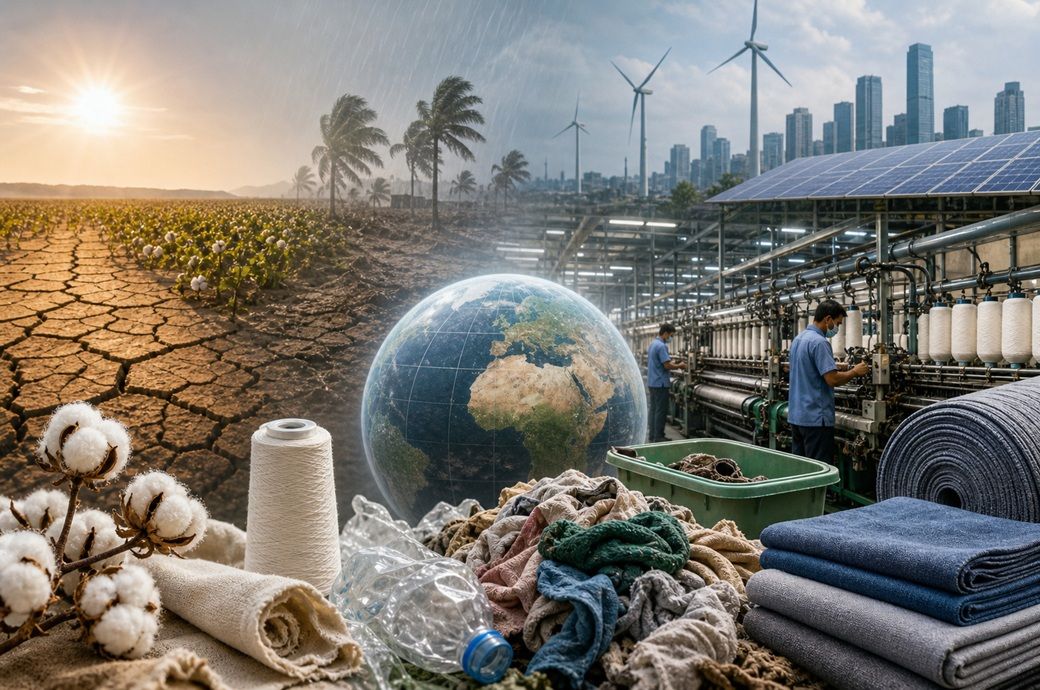
The apparel climate story has moved out of the ESG report and into the cost sheet. In ****–****, climate risk is showing up as cotton quality loss, import dependence, energy volatility, cooling capex, carbon-price exposure and mandatory textile-waste fees. For brands and suppliers, the question is no longer whether climate action is ‘responsible’. It is whether delay will make product margins uncompetitive.
The latest data makes the shift visible. Textile Exchange says global fibre production reached *** million tonnes in **** and could hit *** million tonnes by **** if business continues as usual. Polyester alone now makes up ** per cent of global fibre output, with ** per cent still fossil-based. That scale gives apparel a low-cost material engine, but it also ties the sector to fossil energy, petrochemical volatility and future carbon accounting.
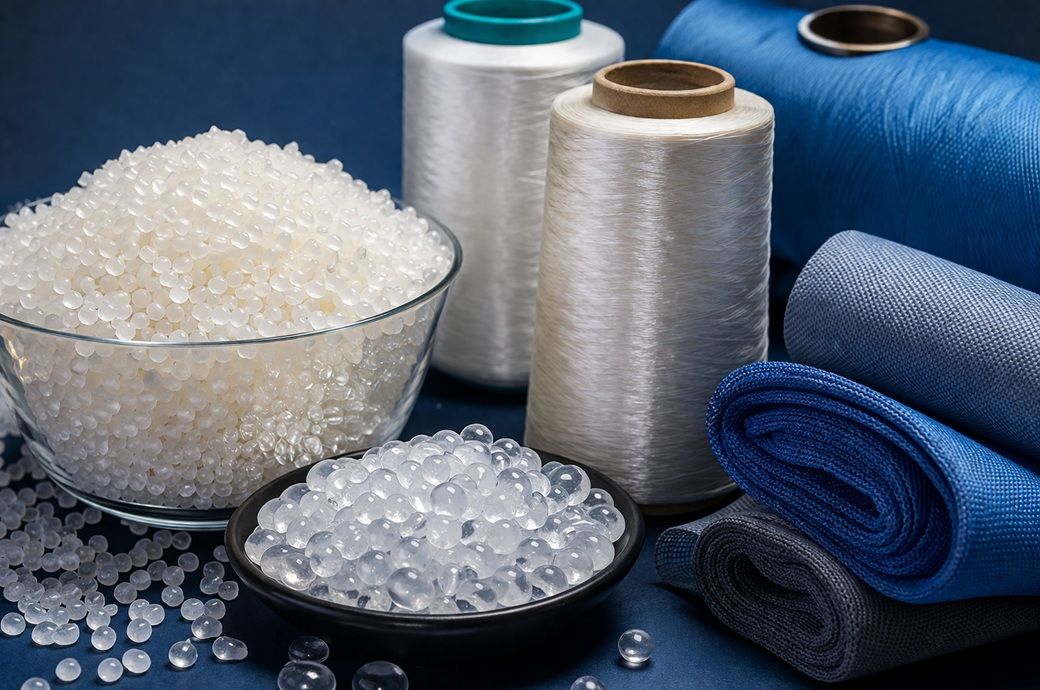
Caprolactam (CPL) prices initially held near $*.**–*.**/kg with minimal movement, while nylon chips saw uptick to ~$*.***/kg (+*.* per cent WoW) driven by short-term restocking. Nylon filament yarn (DTY **D/**F) prices remained stable at ~$*.**–*.**/kg, supported by existing inventory and steady downstream textile operations.
By the second week (April * to April **), benzene stabilised, but caprolactam began to weaken to ~$*.**–*.**/kg (−*.* per cent WoW), signalling the start of broader chain pressure. Nylon chips responded with a mild correction to ~$*.***/kg (−* per cent WoW), while filament yarn prices continued to hold steady due to inventory buffers and ongoing execution of prior textile orders. In the third week (Apr **–**), caprolactam stable to ~$*.*/kg, and chips followed to ~$*.***/kg (Stable WoW).
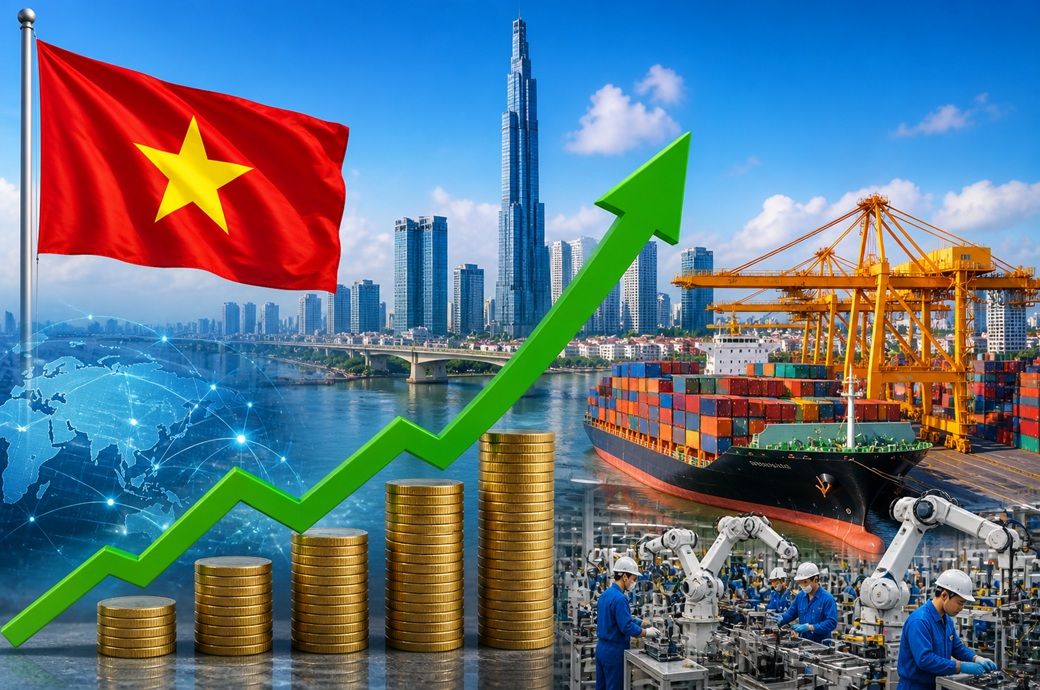
Total registered FDI, including newly registered and adjusted capital, along with foreign investors’ contributions and share purchases, reached $18.24 billion as of April 27, up 32 per cent year on year (YoY), according to the Ministry of Finance’s National Statistics Office (NSO).
Vietnam attracted $18.24 billion in FDI in January–April 2026, up 32 per cent, driven by manufacturing and processing.
Realised FDI hit a five-year high, signalling continued capacity expansion.
Trade surged to $344.17 billion, supported by strong US demand and rising imports from Asia, highlighting deeper global supply chain integration and export momentum.
A total of 1,249 new projects were licensed with combined registered capital of $12.15 billion, reflecting a 3.7 per cent annual increase in project numbers and a 2.2-fold rise in value. Manufacturing and processing dominated, attracting $8.12 billion, or 66.8 per cent of total newly registered capital.
Realised FDI in the January–April period was estimated at $7.40 billion, up 9.8 per cent YoY and marking the highest level for the period in the past five years. Of this, the manufacturing and processing sector disbursed $6.12 billion, accounting for 82.7 per cent. Meanwhile, 316 existing projects registered additional capital of $3.13 billion, representing a sharp 51 per cent decline compared to the same period last year. Combining newly registered and adjusted capital, total FDI into manufacturing and processing reached $10.49 billion, or 68.6 per cent of the total.
Foreign investors carried out 976 capital contribution and share purchase transactions worth $2.96 billion, up 61.9 per cent YoY. Among these, 325 deals increased enterprises’ charter capital by $445.13 million, while 651 share acquisitions without capital increases totalled $2.51 billion. Wholesale and retail trade led these investments, capturing $1.89 billion, or 63.9 per cent.
Among 53 countries and territories with newly licensed projects, Singapore was the largest investor with $6.05 billion, accounting for 49.8 per cent of the total. It was followed by the Republic of Korea with $4.08 billion (33.6 per cent), China with $524.1 million (4.3 per cent), Japan with $462 million (3.8 per cent), Hong Kong (China) with $329.2 million (2.7 per cent), and the Netherlands with $318.5 million (2.6 per cent).
On the trade front, Vietnam’s total trade with the rest of the world was estimated at $344.17 billion in the first four months of 2026, a significant increase from $277.21 billion in the same period last year, the NSO said. In April alone, trade volume reached an estimated $94.32 billion, rising 8 per cent from March and 26.7 per cent YoY.
The United States remained the largest importer of Vietnamese goods, with imports valued at $53.9 billion, while China continued as the top supplier with $69 billion. Imports from traditional markets also surged, with South Korea and ASEAN recording growth rates of 57.8 per cent and 44.3 per cent, respectively.
Fibre2Fashion News Desk (MS)


Longtime entertainment publicist was 82

Spirit starts monthslong process of dismantling airline after biggest collapse in a generation

AS-level Business Studies paper allegedly leaked online

-

 Tech1 week ago
A Brain Implant for Depression Is About to Be Tested in Humans
-

 Sports1 week ago
Pro wrestling star Steph De Lander reveals how colleague’s advice helped lead her to title triumph at ACW
-

 Tech1 week ago
Almost 90% of women leave tech industry within 10 years | Computer Weekly
-
 Business1 week ago
‘I had £20,000 stolen and had to fight a 13-month fraud reporting rule to get it back’
-

 Entertainment1 week ago
Norway joins Type 26 Frigate Programme to boost NATO naval power
-

 Entertainment1 week ago
Melania Trump says ABC should ‘take a stand’ on late-night host Kimmel
-
 Business6 days ago
PSX plunges over 4,800 points | The Express Tribune
-

 Tech1 week ago
This Ambitious Laptop Doesn’t Leave Much Room for Your Hands