

Business
Art Basel Miami sees strong attendance and sales as art market recovers


Art Basel Miami Beach racked up strong sales and attendance last week, as the art market rode a wave of renewed confidence following the strong November auctions in New York.
More than 80,000 collectors and art fans poured into the Miami Convention Center for the annual art show, with several works selling for over $1 million. Collectors from the U.S., Europe, Latin America, the Middle East and Africa visited the more than 280 galleries at the show, along with multiple art fairs and pop-up exhibits throughout Miami.
After nearly three years of declining auction sales and shuttered galleries, dealers and advisors say the market has suddenly sprung back to life. Auction sales in New York last month topped $2 billion, including a record-breaking Gustav Klimt that sold for $236.4 million.
“There has been a decisive change in the market,” Noah Horowitz, CEO of Art Basel, told CNBC. “We’re not out of the woods yet entirely, but there’s buying, there’s activity, there’s energy, and there’s vibrancy. We saw that very, very clearly at the opening of the fair.”
Just as there was little consensus about the cause of the art market’s decline, there are vague and conflicting theories about the rebound. Some say the prospect of lower interest rates is boosting demand. Others say geopolitical tensions have eased as the balance sheets of the wealthy have grown rapidly.
“There’s a lot of wealth in the world right now,” Horowitz said. “We’ve been in a high-interest-rate environment. There’s geopolitical complexity, there’s tariff complexity, but I think at some level, people are done with it. They want to come out, be with each other and rally around art. Art brings people together, and buying art makes people happy.”
Art Basel also attracts vast amounts of wealth. Private banks, wealth management firms, luxury brands, high-end real estate brokers and various other members of the white-glove brigade descended on Miami Beach to cozy up to clients. UBS had the largest presence, as the global lead partner to Art Basel. Its VIP lounge on the floor of the fair (the only one of its kind on the floor) was yet again the hottest ticket in town — hosting a steady stream of dozens of billionaires, top collectors and wealthy families.
“You have almost extreme concentration of wealth in this one room,” said Matthew Newton, head of Art Advisory Americas in Family Office Solutions at UBS. “Some of the world’s most important collectors gather here, and in some cases, are almost competing for our works. It’s a really important moment.”
Along with seasoned collectors, UBS also helps wealthy clients who are new to art learn the basics and get more comfortable buying and selling.
“We have a lot of successful entrepreneurs who sell businesses, build a dream home or homes, and they’re ready to put real art in those,” Newton said. “One of the big pieces of advice is, you have to see as much art as possible. Get out there, see as much as you can, and don’t wait too long to get into it. Like, go ahead and buy something. It helps to have a little skin in the game, and it’s okay to make mistakes early on.”
Newton also advises clients at the fair to view art as an asset rather than an investment.
“Most ultra-high-net-worth collectors are thinking about art as collecting, not necessarily as investment,” he said. “They want to be smart about the purchase. They don’t want to overpay. But that’s really not the first concern. They’re really thinking about it more as something that’s deeply meaningful to them. Frankly, those are the collectors who are more successful over the long term in the financial sense as well.”




Heineken has announced a substantial investment exceeding £44 million into hundreds of its pubs across the UK, a move expected to create approximately 850 jobs.
The Dutch brewing giant’s Star Pubs operation, which manages 2,350 sites nationwide, is undertaking this significant financial commitment despite a challenging period for the pub sector.
The industry has faced considerable pressure over the past year, grappling with escalating labour costs and increases in national insurance contributions.
Concurrently, consumer spending has been constrained by concerns over inflation and rising unemployment, further impacting pub revenues. However, pubs did receive additional business rates support from the government last month, aimed at alleviating some of these financial burdens.
Lawson Mountstevens, managing director of Star Pubs, indicated that the investment strategy is partly designed to bolster revenues and help the group navigate the recent “sustained increases in running costs”.
This year, £44.5 million will be allocated to upgrades for 647 pubs. A notable 108 of these venues are earmarked for particularly significant cash injections, with each transformation costing at least £145,000.
Heineken clarified that while the majority of its pubs are group-owned, they are independently operated by local licensees. A key focus for this investment, particularly in the lead-up to the 2026 football World Cup, will be on sports-focused venues.
The pub firm and brewer has a history of significant investment in British pubs, having pumped £328 million into the sector since 2018. Work has already commenced at 52 locations, including eight projects dedicated to reopening boarded-up pubs that have endured lengthy closures.
Mr Mountstevens also urged the government to reduce the tax burden on pubs, arguing it would ease cost pressures and foster further job creation within the industry.
He stated: “We can only do so much; the root-and-branch reform of business rates that the industry has been calling for over many years is urgently required, as well as a lowering of the burden of taxation on pubs, including VAT and beer duty.”
He concluded with a direct appeal: “We are calling on the Government to support us in bringing out the best in the Great British pub.”
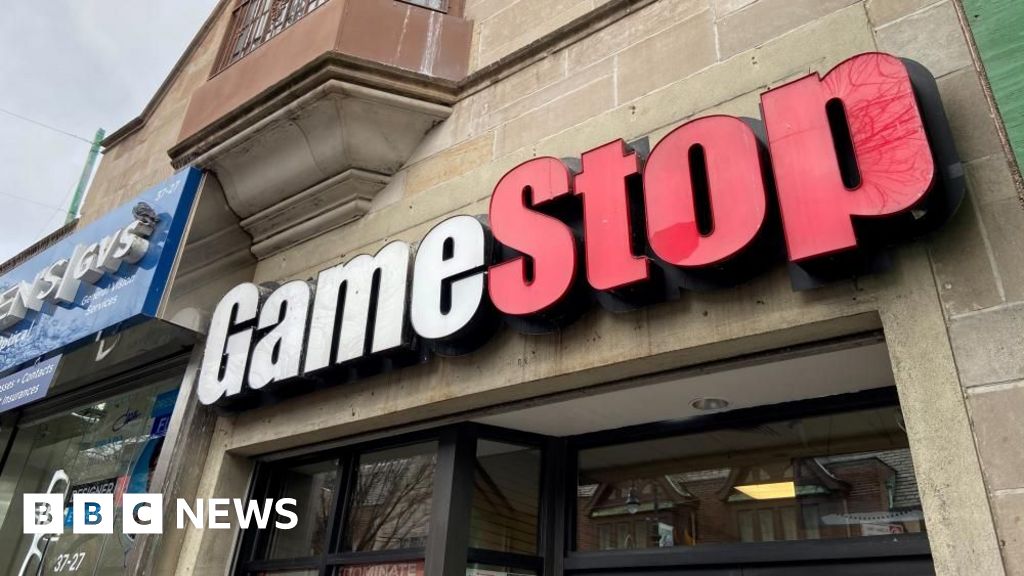
GameStop’s boss Ryan Cohen says he sees potential to make eBay a much bigger rival to Amazon.
Source link
It comes as the US said on Monday it will begin to help “guide” vessels out of the Strait of Hormuz.
Source link


Met Gala 2026 “Costume Art” red carpet pictures from New York City

Tarik Skubal to undergo elbow surgery, sidelining Tigers ace for months ahead of free agency

Jake Paul breaks silence after Olivia Rodrigo’s savage SNL joke

-

 Tech1 week ago
A Brain Implant for Depression Is About to Be Tested in Humans
-

 Tech1 week ago
Almost 90% of women leave tech industry within 10 years | Computer Weekly
-
 Business1 week ago
Pakistan’s oil market is fuelling the crisis | The Express Tribune
-
 Business7 days ago
‘I had £20,000 stolen and had to fight a 13-month fraud reporting rule to get it back’
-

 Sports6 days ago
Pro wrestling star Steph De Lander reveals how colleague’s advice helped lead her to title triumph at ACW
-
 Entertainment1 week ago
Norway joins Type 26 Frigate Programme to boost NATO naval power
-
 Entertainment1 week ago
Melania Trump says ABC should ‘take a stand’ on late-night host Kimmel
-
 Tech7 days ago
This Ambitious Laptop Doesn’t Leave Much Room for Your Hands