

Fashion
As natural resources dwindle, luxury fashion must pursue sustainability says Square Management study


Published
January 11, 2026
Long defined by rarity, artisanal excellence, and desirability, the luxury sector now faces an unprecedented equation: how can it continue to create value without further increasing pressure on natural and social resources? This is the question addressed by the report “Business models for sustainable luxury,” published by the consultancy Square Management, which offers an in-depth analysis of the transformation of luxury business models through the lens of planetary boundaries.
The study’s first finding is that luxury occupies a strategic position in the ecological transition. With global sales of 364 billion euros in 2024 and considerable symbolic weight, it wields significant influence across the creative industries as a whole. Yet this influence plays out against a backdrop of multiple pressures: the growing scarcity of raw materials (gold, leather, cashmere); tighter regulation (the CSRD directive, the AGEC law, the Green Deal); the increasing integration of ESG criteria into financial valuation; evolving consumer expectations; and shifting cultural norms around consumption.
A strategy to be implemented globally
In the face of these shifts, the study shows that marginal adjustments are no longer enough and urges the luxury sector to undertake a profound transformation of its business models. To frame this reconfiguration, the report draws on the circular economy’s “9Rs” framework, which ranks sustainability strategies from the least to the most transformative, from recycling to calling into question overproduction.
The study highlights a wide variety of models already in play. The least ambitious strategies focus on waste-to-energy (Recover) or the recycling of raw materials (Recycle), with examples including Guerlain‘s refillable bottles and Prada‘s Re-Nylon line. More structurally significant are upcycling approaches (Repurpose, Remanufacture, Refurbish), which turn unsold items and dormant stock into creations with high symbolic value: Balenciaga, Jean Paul Gaultier, Coach, and Jeanne Friot exemplify this blend of circularity, creativity, and storytelling.
Reducing production and buying less: two key ideas for sustainability
Repair is a crucial lever. By extending product lifespans, it avoids the most emissions-intensive stages of the life cycle. Maisons such as Hermès, Chanel, and Cartier have made it a pillar of their client relationships, while platforms such as Tilli are helping to structure this practice at scale. Re-use and rental are also fast-growing markets, driven by younger generations: 65% of luxury consumers say they are interested in buying second-hand, according to the “True-Luxury Global Consumer Insights” report (BCG-Altagamma, 2023), a figure that is rising steadily.

The most transformative models are those aimed at reducing production itself, namely Reduce, Refuse (superfluous purchases), and Rethink. On-demand manufacturing, pre-orders or limited production, as practised by Gabriela Hearst or MaisonCléo, help limit unsold stock while reinforcing exclusivity. Some houses go further still, committing to regenerative models: Kering invests in regenerative agriculture, while Chloé embeds social and environmental impact at the heart of every product as a mission-driven company. However, the report emphasises that these transformations face major obstacles.
The limits of the “do less harm” philosophy
Internally, many obstacles are cited to the introduction of circular models: complex logistics, high costs, cognitive resistance, and a cultural attachment to ownership. To overcome these, the study’s authors identify several key factors, including enhanced traceability (notably via blockchain), co-opetition between players to pool costs and, above all, the ability to reframe sustainable luxury symbolically, not as a renunciation, but as a new form of prestige.
The study also highlights a strategic shift: luxury can no longer settle for “doing less harm.” It is now expected to create positive, measurable, and shared value that is compatible with planetary boundaries. A transformation that profoundly redefines the very notion of desirability.
This article is an automatic translation.
Click here to read the original article.
Copyright © 2026 FashionNetwork.com All rights reserved.












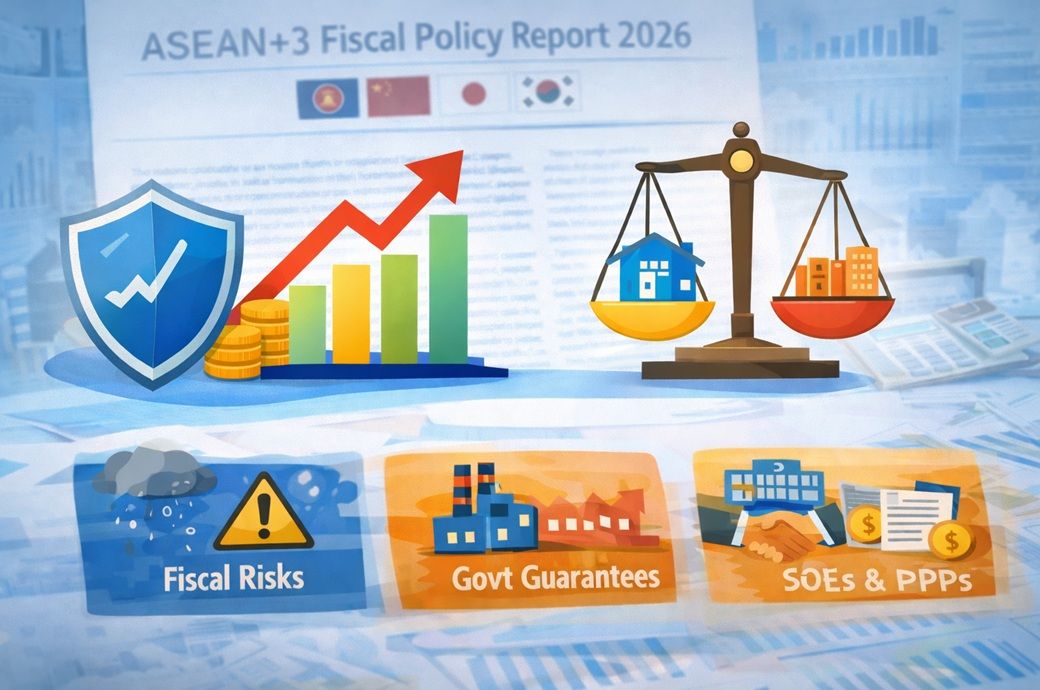
At the same time, growing demands on fiscal policy require governments not only to respond to immediate shocks, but also to support growth, facilitate structural transformation and reduce poverty and inequality over the medium to long term, it noted.
With fiscal positions weakened and policy space narrowed, ASEAN+3 policymakers must safeguard fiscal sustainability and rebuild buffers, the ASEAN+3 Fiscal Policy Report 2026 said.
Governments should also support growth, facilitate structural transformation and reduce poverty and inequality over the medium to long term, it noted.
Particular attention should be given to liabilities outside the budget.
ASEAN+3 comprises members of the Association of Southeast Asian Nations, along with China, South Korea and Japan.
These competing demands are compounded by sluggish revenue growth and rigid budget structures. Addressing these challenges will require stronger fiscal management frameworks, including improvements in risk management, fiscal aggregate management, strategic resource allocation, spending efficiency and revenue mobilisation.
The report also highlights the importance of comprehensive fiscal risk management, urging policymakers to strengthen the identification, assessment and disclosure of fiscal risks.
Particular attention should be given to liabilities outside the budget, including borrowing by off-budget public entities and government arrears.
Systematic monitoring and proactive management of contingent liabilities are essential, especially those related to government guarantees, public-private partnerships, state-owned enterprises and social security obligations, the report remarked.
Enhancing fiscal aggregate management, alongside improving strategic resource allocation and spending efficiency, will be critical to meeting rising expenditure demands in line with national priorities, while safeguarding fiscal sustainability and rebuilding buffers, it added.
The report further encourages policymakers to implement comprehensive and durable revenue-enhancing measures, including strengthening tax administration—particularly through digitalisation—rationalising tax expenditures and advancing structural reforms to major taxes.
Fibre2Fashion News Desk (DS)

The piece of legislation, aimed at addressing long-standing challenges to the enforcement of intellectual property rights (IPR) at US borders, was reported with unanimous, bipartisan support from the House Ways and Means Committee.
AAFA along with 18 other trade bodies recently wrote to Congressional leadership in the US House of Representatives seeking support to move HR 4930 forward in the legislative process.
The piece of legislation, aimed at addressing long-standing challenges to the enforcement of IPR at US borders, was reported with unanimous, bipartisan support from the House Ways and Means Committee.
“We encourage you to move swiftly in bringing the bill to the Floor,” the letter noted.
In fiscal 2023-2024, US Customs & Border Protection (CBP) seized over 32 million counterfeit and pirated items, valued in excess of $5 billion, across more than 300 ports of entry, the letter noted.
“More disconcerting though is the rate at which those figures are increasing. In just the past five years, the number of illicit goods seized by CBP has more than doubled, while the value of those goods has grown by more than 400 per cent,” the letter said.
“The cost of this criminal trafficking cannot be measured in dollars alone though, but in the injuries caused by often dangerous fakes that put consumers’ health and safety at risk, in diminished investments to drive the next wave of innovation by American businesses, in jobs lost
to unfair competition, and increasingly, by the threats such products pose to our national security,” the letter said.
The overwhelming volume of trade passing through U.S. ports, and the speed at which it moves, presents a significant obstacle to effective border enforcement, it noted.
While Congress has expressed a clear desire in recent years for greater partnership between the public and private sectors on these issues, CBP has raised concerns over both the scope of its authority to share information with, and to seek assistance from, its partners in the private sector in carrying out its IP enforcement mission, it said.
HR 4930 clarifies and expands the agency’s authority, offering practical tools to safeguard consumers and legitimate businesses.
“It is essential that CBP has the ability to work with relevant stakeholders throughout the supply chain, both to avoid the siloing of information that has often hindered the agency’s efficiency, and to ensure that the private sector can offer effective and timely assistance on matters of trade enforcement, thereby ensuring that bad actors and trade cheats are held accountable,” the letter added.
The trade associations which signed the letter include Baby Safety Alliance, International AntiCounterfeiting Coalition, International Intellectual Property Association, Personal Care Products Council and Transnational Alliance to Combat Illicit Trade.
Fibre2Fashion News Desk (DS)

This marks the first comprehensive revision in decades, with the last fee increases recorded in 1998 for trademarks, 2016 for designs, and 2018 for patents. The IPO stated that the changes aim to address a 32 per cent rise in inflation since 2016 while supporting continued investment in digital systems and services.
The UK IPO has increased fees for trademarks, designs and patents from April 1, 2026 under new rules, marking the first major revision in years.
The move reflects a 32 per cent rise in inflation since 2016 and aims to support continued investment in digital systems and services, with transitional provisions applicable for certain filings and payments.
The updated fees apply to all applications and payments made on or after April 1, 2026. Transitional provisions have also been outlined for certain cases. For designs, deferred registration requests submitted from April 1 onwards will be subject to the new fees, even if the original application was filed earlier.
For trademarks, applicants using the permitted period of grace may still be eligible to pay the previous fee, provided the application was filed before April 1 and any outstanding payment is completed within the IPO’s deadline.
Separately, UKFT has submitted industry feedback to the IPO regarding the UK’s updated Design Framework, which is expected to be announced later this year.
Fibre2Fashion News Desk (JP)

[CinePlex360] Please moderate: “Brighten Your D

Pakistan to receive $3bn additional support from Saudi Arabia: finance minister
[CinePlex360] Please moderate: “King Charles, Q

-

 Fashion1 week ago
India’s exports face reset as EU links trade to carbon metrics: EY
-

 Entertainment7 days ago
Queen Elizabeth II emotional message for Archie, Lilibet sparks speculation
-

 Tech6 days ago
As the Strait of Hormuz Reopens, Global Shipping Will Take Months to Recover
-

 Entertainment1 week ago
Lamar Odom shocking response to Khloé Kardashian account of his overdose
-

 Tech7 days ago
Azure customers up in arms over ‘full’ UK South region | Computer Weekly
-

 Fashion7 days ago
CII submits 20-pt agenda to Indian govt to back firms hit by Iran war
-

 Tech6 days ago
This AI Button Wearable From Ex-Apple Engineers Looks Like an iPod Shuffle
-

 Fashion1 week ago
ICE cotton hits 11-month high on drought concerns, demand boost