

Fashion
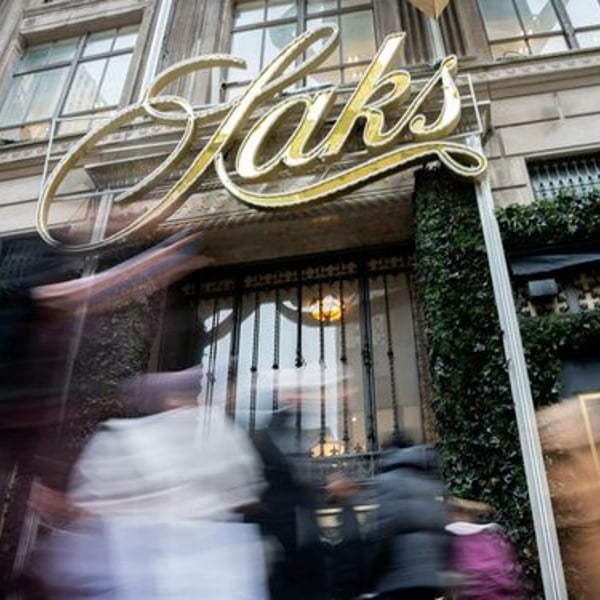
As Saks teeters, department stores bet on shopping experiences

By
Reuters
Published
January 8, 2026
From Paris to New York, department stores are sharpening their focus on curated shopping experiences- ice-skating shows, wine tasting, and architectural tours- to try to win back shoppers.
The push has gained urgency as Saks Global’s mounting troubles highlight the sector’s struggle to stay relevant amid competition from luxury brands’ own boutiques and fast-growing e-commerce platforms. Analysts say the trend is more than cosmetic. It reflects a structural shift in a sector under pressure from changing consumer habits and declining foot traffic.
“In today’s market conditions, selling luxury goods requires an outstanding experience, which works best in outstanding venues,” said Benjamin Sebban, head of retail investment at Knight Frank in Paris.
Qatar-owned Printemps‘ new Manhattan store features paper replicas of French landmarks- a reminder of its Parisian heritage- and hosts exclusive launches and wine tasting.
“This is more than a place to shop- it’s a space to live, linger, and immerse yourself in a new kind of luxury lifestyle,” Printemps America CEO Thierry Prevost told Reuters, highlighting the store’s fine dining restaurant, champagne bar and talks with designers.
In Paris, Galeries Lafayette spent more than 100 million euros ($117 million) restoring its stained-glass cupola, crediting the revamp with lifting visits above pre-pandemic levels. The push aligns with research from consultancy Bain that found experiential sectors like hospitality and fine dining drove luxury market growth between 2023 and 2025.
Success isn’t guaranteed, however. LVMH poured around 750 million euros into refurbishing the art nouveau building of its La Samaritaine department store facing Paris’ Rue de Rivoli. But the store still struggled after its 2021 reopening in comparison with LVMH’s Le Bon Marche Paris store, and the pair were combined in a restructuring last year.
Analysts say department stores are betting that curated events and architectural upgrades can revive their relevance amid tougher trading.
Saks Global, whose bonds are publicly traded, reported a 13% year-on-year drop in second-quarter revenue to $1.6 billion in October and an adjusted core loss of $77 million. CEO Marc Metrick stepped down after the company missed a bond payment, triggering reports it was preparing for bankruptcy.
While analysts cite inventory missteps and acquisition-related debt as key factors, they say Saks’ plight reflects a deeper structural squeeze: department stores are losing ground to mass-market chains offering value and luxury brands’ own boutiques promising exclusivity. “What you’re seeing with Saks is a symptom of a much larger problem,” said UBS analyst Jay Sole.
Bernstein analysts say US department stores should move toward concession-heavy models- providing multi-brand sales staff while letting brands manage operations and inventory. Milan’s Galleria Vittorio Emanuele II offers a template: the city leases prime store spaces through a bidding process, and says values have quadrupled in a decade.
“Multi-brand retailers need to reinvent themselves and go back to their scouting and discovery mission,” said Bernstein analyst Luca Solca.
Some stores are experimenting with partnerships. In November, Parisian retailer BHV hosted the first physical outlet for Chinese budget brand Shein, although the move drew criticism from some competitors and consumers.
“The right answer would be for department stores to build out their own online offering, with their own identity,” Knight Frank’s Sebban said.
Global department store sales are projected to have declined by 4% to 6% in 2025 and to show little recovery through 2030, Bain forecast in November, lagging growth estimates for the luxury sector overall. US retailer Macy’s warned in December of weaker-than-expected holiday-quarter profits due to cutbacks in discretionary spending. London’s Harrods in October reported a 17% decline in underlying operating profit for 2024.
By contrast, e-commerce players are thriving. MyTheresa, owned by LuxExperience, more than doubled quarterly core earnings in November, offering similar products to Saks but with perks like free shipping for orders over $400.
© Thomson Reuters 2026 All rights reserved.











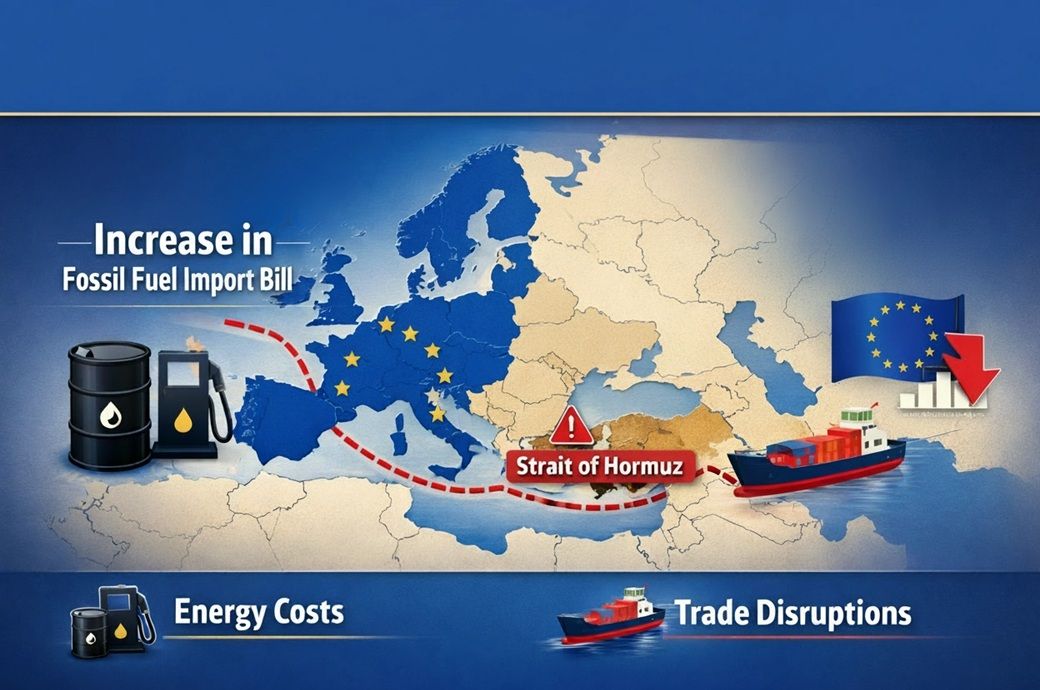
This was mentioned by Commission President Ursula von der Leyen in her recent statement on the impact of the situation in the Middle East on the EU.
Robust intra-EU coordination, measures member states might apply to better protect vulnerable households and sectors from high energy prices, and ways to reduce energy demand are among the measures that the European Commission will present at the European Council meeting in Cyprus soon.
The protection measures should be targeted to vulnerable groups, timely and temporary, Commission president said.
“We are also looking into EU-wide coordination of member states’ gas storage filling, to avoid that many member states go to the market at the same time, so they are competing against each other. We will also coordinate oil stock releases, to achieve the largest possible effect of these releases. And we will ensure that member states’ emergency measures will not impact the Single Market,” her statement said.
“The [protection] measures should be targeted to vulnerable groups, timely—they have to be fast, not in a year but immediately—and temporary—so for a short amount of time you can apply them, but if they are cast in law, you have to make sure that you get out of the measures in a timely manner,” she noted.
This week, the Commission will consult member states on more flexible state aid rules—an important tool—to give members more space for temporary state aid support in the most exposed sectors.
“And my goal is that this temporary state aid framework should be adopted still this month—so that we have the new temporary framework for state aid in April,” she said.
“At the same time, we also need more structural measures to bring down energy prices and give relief to citizens and businesses,” she noted.
She said the only lasting way out of the fossil dependence is to modernise by shifting electricity generation to renewables and nuclear, and by electrifying the economy as rapidly as possible.
She encouraged member states to make better use of existing EU funding like the Cohesion Funds by investing it in grids, storage and batteries.
Fibre2Fashion News Desk (DS)
The March survey showed business confidence dropped 29 points to -29 index points, marking one of the steepest monthly declines on record, with similar falls previously seen only during the Global Financial Crisis and the onset of COVID-19, NAB said in a press release.
Despite the sharp fall in sentiment, business conditions eased only marginally, slipping by 1 point to 6 index points, indicating that economic activity has yet to fully reflect the impact of the external shock.
Australian business confidence plunged in March, falling 29 points to -29, while business conditions remained relatively stable, according to NAB.
Despite strong capacity utilisation, forward orders and capital expenditure weakened, signalling rising uncertainty.
Cost pressures intensified, with purchase costs doubling.
While some regions saw improved conditions, confidence declined nationwide.
The divergence suggests that while businesses are increasingly cautious about the outlook, operational momentum has remained intact so far. Capacity utilisation edged up to 83.1 per cent, staying well above its long-run average, with most industries continuing to operate at elevated levels.
However, forward-looking indicators signalled emerging weakness. Forward orders fell into negative territory, erasing gains made earlier in 2026, while capital expenditure also declined, reflecting rising uncertainty among businesses.
The impact of the geopolitical situation was more pronounced on costs, with purchase cost growth doubling to 3 per cent on a quarterly basis. Product price growth also increased, while labour cost growth remained steady.
Sector-wise, the decline in conditions was broad-based, with transport and utilities. Regionally, conditions improved in some areas such as Western Australia and South Australia, but confidence fell across all regions, highlighting widespread concern.
NAB noted that while the economy entered this period with solid momentum, the sharp deterioration in confidence underscores growing risks to the outlook as geopolitical tensions continue to weigh on business sentiment and future activity.
Fibre2Fashion News Desk (SG)
The company said the agreement marks a key milestone in its transformation journey, reflecting continued support from capital partners.
Saks Global has secured $500 million in exit financing under a restructuring support agreement as it progresses through Chapter 11, targeting emergence by summer.
The company is advancing its reorganisation plan, strengthening brand partnerships and inventory flows, with over 650 brands resuming shipments.
Improved inventory has boosted customer engagement, while it aims for double-digit EBITDA margins.
“Achieving this important milestone underscores the progress we are making on our transformation and reflects our capital partners’ confidence in our go-forward vision,” said Geoffroy van Raemdonck, CEO at Saks Global.
Saks Global is currently engaging with stakeholders on a formal Plan of Reorganisation, expected to be filed in the coming weeks. The retailer aims to emerge from Chapter 11 by summer with a strengthened financial structure, targeting double-digit adjusted EBITDA margins and long-term sustainable growth, the company said in a press release.
The company plans to leverage an integrated retail model, combining optimised physical stores in key luxury markets with distinct e-commerce platforms and remote selling capabilities. It also intends to enhance its curated product offering through stronger brand partnerships and deeper customer insights.
Operationally, Saks Global reported progress since filing for bankruptcy protection. Over 650 brand partners have resumed shipments, unlocking $1.5 billion in retail receipts and covering more than 90 per cent of expected inventory for the first quarter of fiscal 2026. March inventory receipts rose 18 per cent year on year (YoY).
Improved inventory flow has translated into stronger customer engagement, with spend per store visit increasing 6 per cent and online conversion rising 11 per cent. The company also noted gains in full-price selling across its banners, including Saks Fifth Avenue, Neiman Marcus and Bergdorf Goodman.
“As we advance the restructuring process, our focus remains on strengthening brand relationships and delivering personalised luxury experiences,” added van Raemdonck, highlighting confidence in completing the restructuring with sufficient liquidity and positioning the business for future growth.
Fibre2Fashion News Desk (SG)


Who is Johnnie Robbie? Meet West Coast Pro’s women’s champion and rising star on the indie scene

The Deepfake Nudes Crisis in Schools Is Much Worse Than You Thought

Transfer rumors, news: Man United, Liverpool, Chelsea eye Bournemouth striker

-

 Fashion1 week ago
India’s exports face reset as EU links trade to carbon metrics: EY
-

 Entertainment1 week ago
Queen Elizabeth II emotional message for Archie, Lilibet sparks speculation
-

 Tech7 days ago
As the Strait of Hormuz Reopens, Global Shipping Will Take Months to Recover
-

 Entertainment1 week ago
Lamar Odom shocking response to Khloé Kardashian account of his overdose
-

 Tech1 week ago
Azure customers up in arms over ‘full’ UK South region | Computer Weekly
-

 Fashion1 week ago
CII submits 20-pt agenda to Indian govt to back firms hit by Iran war
-

 Tech6 days ago
This AI Button Wearable From Ex-Apple Engineers Looks Like an iPod Shuffle
-

 Fashion1 week ago
ICE cotton hits 11-month high on drought concerns, demand boost