

Business
As Trump’s Tariffs Take Effect, How India Has Toughened Up To Tackle The Challenge

Last Updated:
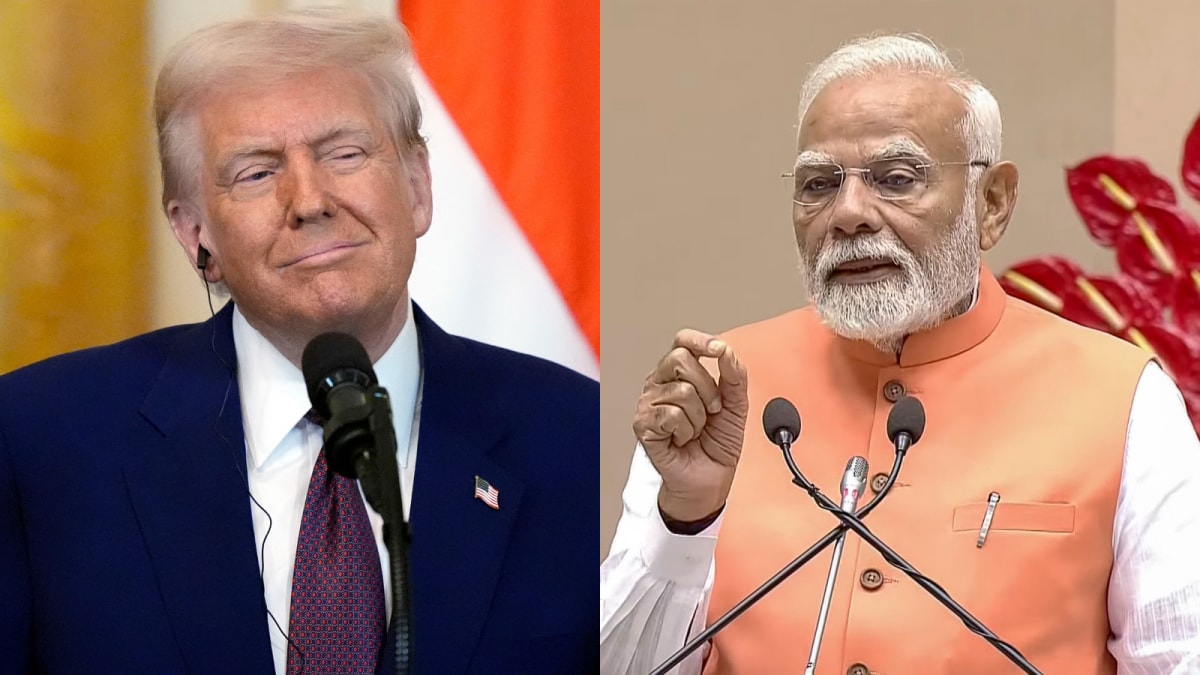
PM Modi has already outlined a new strategy to stand up to the US, vowing no compromise on protecting India’s agro- and labour-intensive sectors in any new trade agreements


India is resilient and prepared to confront challenges in the face of the massive tariffs imposed by President Donald Trump, sources said. File image/PTI
The message from the Narendra Modi government to the world, and particularly to Indian citizens and the United States, is clear: India is resilient and prepared to confront challenges in the face of the massive tariffs imposed by President Donald Trump. Citing its history of emerging stronger from crises like post-nuclear sanctions and the recent Covid-19 pandemic, the government asserts that India’s economic fundamentals remain robust, making it one of the world’s fastest-growing major economies.
This confidence is reflected in the positive assessments from global rating agencies. S&P Global recently upgraded India’s sovereign rating, while Fitch Ratings has affirmed a stable outlook. Both agencies have projected a strong growth trajectory for India, with Fitch forecasting a 6.5% rise in the country’s GDP for the fiscal year ending March 2026.
Despite this reassuring outlook, the government is not complacent, sources said. Recognising the concerns of exporters, particularly small-scale industries involved in sectors like jewellery and textiles, the Reserve Bank of India (RBI) is closely monitoring the situation. RBI governor Sanjay Malhotra has made it clear that the central bank will not be a passive spectator if the high tariffs begin to have a substantial impact on the economy. To mitigate the effects, the RBI could potentially slash the repo rate and expedite the implementation of BASEL 3 norms, which would facilitate credit and improve ratings for exporters and other stakeholders.
In addition to monetary policy, sources said the government is also planning a reworked export package that could offer new incentives, credit lines, and protection for the export sector.
Meanwhile, India is actively diversifying its trade portfolio to counter potential market losses in the US. A significant milestone has been the signing of the India-EFTA (European Free Trade Association) agreement, which includes Norway, Iceland, and Switzerland. This agreement is set to come into effect within a month. Furthermore, negotiations with the European Union (EU) are now at an advanced stage. The government views these agreements as major opportunities, especially given that the combined trade in goods of the UK, EFTA, and EU was approximately $16 trillion in 2024, nearly one-third of the total global trade.
Several concerns have been raised by textile industries that are worried about their future. This is where a new plan is being chalked out. Sources say the government could launch an outreach programme in key textile markets to counter the impact of the 50 per cent tariffs and increase its share of exports in the global market in the coming months, with a focus on Japan, the EU, the UK, and other EFTA countries.
Prime Minister Narendra Modi has already outlined a new strategy to stand up to the US, vowing no compromise on protecting India’s agro– and labour-intensive sectors in any new trade agreements. The government’s two-pronged approach focuses on “Atmanirbharta” (self-reliance) to reduce imports and “Swadeshi” (domestic products) to create a strong market for indigenous manufacturers. The government remains confident that through these measures, India will stand strong and navigate any global economic headwinds successfully.

Pallavi Ghosh has covered politics and Parliament for 15 years, and has reported extensively on Congress, UPA-I and UPA-II, and has now included the Finance Ministry and Niti Aayog in her reportage. She has als…Read More
Pallavi Ghosh has covered politics and Parliament for 15 years, and has reported extensively on Congress, UPA-I and UPA-II, and has now included the Finance Ministry and Niti Aayog in her reportage. She has als… Read More
Read More






Car-sharing firm Zipcar has confirmed it is stopping operations in the UK after launching a consultation late last year.
The move will hit the company’s roughly 650,000 drivers across the country.
On December 1, the US-based company told customers in the UK that it planned to suspend new bookings temporarily at the turn of the year.
The business, which had 71 UK employees at the end of 2024, launched a formal consultation with staff as a result.
On Friday, in a fresh email to customers, the business said it “can now confirm that Zipcar will cease operating in the UK”.
The company added: “In accordance with clause 7.5 of the member terms, please take this as your written notice that we will formally close your account in 30 days’ time.
“It’s not possible to make any new bookings with Zipcar UK at this time, but your account will remain open until February 16.”
It added that customers will be entitled to a pro-rated refund for any remaining periods on current plans or subscriptions, from the start of 2026.
Zipcar said this will be done automatically and will not require any action from users.
Accounts showed that the van and car hire firm saw losses deepen to £5.7 million in 2024 after a decrease in customer trips.
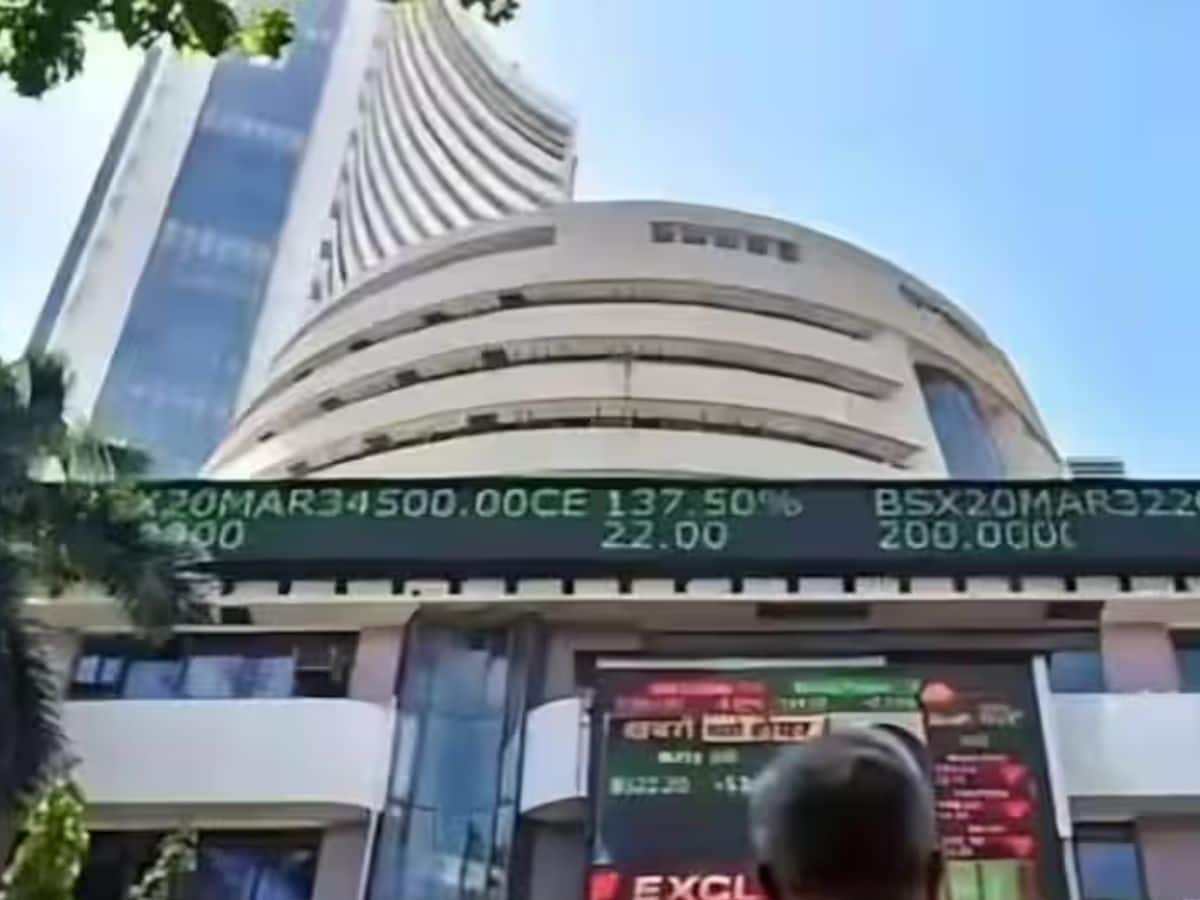
New Delhi: Good news for investors and market watchers! Even though February 1 falls on a Sunday this year, the Indian stock markets will remain open for trading on Budget Day. Both the BSE and NSE announced on January 16 that trading will take place as per normal market hours on February 1 for Budget 2026. This special arrangement ensures that investors can react to Budget announcements in real time, without waiting for the next trading session.
The NSE clarified the special trading arrangement in a circular, stating, “On account of the presentation of the Union Budget, members are requested to note that Exchange shall be conducting live trading session on February 01, 2026, as per the standard market timings (9:15 am-3:30 pm),” said NSE in a circular.
Union Budget 2026 to be presented on February 1 at 11 am
The Union Budget for 2026 will be presented at 11 am on Sunday, February 1, the Lok Sabha Speaker confirmed on January 12. In recent years, February 1 has become the fixed date for the annual Budget presentation, a trend that continued with the 2025 Budget as well. The upcoming Budget will also be a significant milestone for Finance Minister Nirmala Sitharaman, as it will be her ninth consecutive Union Budget, placing her among finance ministers with the longest uninterrupted Budget tenures.
Trading details for Budget Day explained
While most core market segments will remain open during regular trading hours on Budget Day, some services will stay shut. The BSE has clarified that the T+0 settlement session and the auction session meant for settlement defaults will not be operational. At the same time, the NSE confirmed that trading in capital markets and derivatives will continue as usual.
Stock market holiday list remains the same
The stock market holiday calendar for 2026 remains unchanged, with Indian exchanges observing 16 public holidays apart from weekends. The next scheduled market closure this month will be on January 26. In the first half of the year, markets will remain shut on key occasions such as Holi (March 3), Ram Navami (March 26), Mahavir Jayanti (March 31) and Good Friday (April 3). Trading will also be suspended on Ambedkar Jayanti (April 14), Maharashtra Day (May 1) and Bakri Id (May 28).
In the second half of the year, markets will close on Muharram (June 26), Ganesh Chaturthi (September 14), Gandhi Jayanti (October 2), Dussehra (October 20), Diwali Balipratipada (November 10) and Guru Nanak Jayanti (November 24). Christmas, on December 25, will be the final market holiday of 2026.

Last Updated:
While bulk deals may reflect emerging interest in a stock, block deals are usually pre-planned and involve large institutional investors


Market experts say tracking bulk and block deals can offer useful insights into the actions of large investors and institutions. (Representational Photo)
Investors tracking stock market movements often come across terms such as ‘bulk deal’ and ‘block deal’ in daily trading updates. At times, a sharp rise or fall in a stock price can be traced back to these large transactions. Understanding what these deals mean, how they differ, and why they matter can help investors make better sense of market activity.
Bulk Deal
A bulk deal occurs when an investor or institution buys or sells 0.5% or more of a company’s total equity shares in a single trading day. Such transactions take place during normal market hours and are disclosed by the stock exchanges after the market closes.
Bulk deals can have an immediate impact on a stock’s price, as heavy buying or selling often signals strong interest or exit by a large investor. Retail investors sometimes view bulk purchases by institutional players as a vote of confidence in the company.
Block Deal
A block deal is executed through a special trading window provided by the stock exchanges. To qualify as a block deal, the transaction must involve at least 5 lakh shares or be valued at more than Rs 5 crore. These deals are carried out during a specific time slot known as the block deal window, and both the buyer and seller are identified beforehand.
The main objective is to facilitate large transactions without causing excessive volatility in the open market. Unlike bulk deals, block deals are reported to the exchanges immediately.
Differences Between Bulk and Block Deals
Bulk deals are executed during regular trading hours and typically involve relatively smaller quantities compared to block deals. They are disclosed at the end of the trading session. Block deals, on the other hand, are meant for very large transactions, take place in a designated time window, and are reported in real time.
While bulk deals may reflect emerging interest in a stock, block deals are usually pre-planned and involve large institutional investors.
Types of Deals in the Stock Market
There are broadly four types of transactions in the equity market. Regular trading deals involve routine buying and selling by investors on the exchange. Bulk deals refer to large trades crossing the 0.5% threshold of a company’s equity in a day. Block deals are high-value or high-volume transactions conducted through a special window.
Off-market deals involve the transfer of shares outside the exchange platform, such as inter-promoter transfers or strategic stake sales.
What Should Investors Keep in Mind?
Market experts say tracking bulk and block deals can offer useful insights into the actions of large investors and institutions. However, they caution against making investment decisions based solely on these transactions. Investors are advised to also consider a company’s fundamentals, financial performance, management quality and long-term growth prospects.
 Click here to add News18 as your preferred news source on Google.
January 16, 2026, 20:26 IST
Read More


PSL 11 to kick off from March 26, says PCB

Ariana Grande speaks out after fan comment sparks debate

Former USDS Leaders Launch Tech Reform Project to Fix What DOGE Broke

-

 Entertainment1 week ago
Does new US food pyramid put too much steak on your plate?
-

 Politics1 week ago
UK says provided assistance in US-led tanker seizure
-

 Entertainment1 week ago
Why did Nick Reiner’s lawyer Alan Jackson withdraw from case?
-

 Sports6 days ago
Clock is ticking for Frank at Spurs, with dwindling evidence he deserves extra time
-
 Business1 week ago
Trump moves to ban home purchases by institutional investors
-

 Tech4 days ago
New Proposed Legislation Would Let Self-Driving Cars Operate in New York State
-

 Sports1 week ago
PGA of America CEO steps down after one year to take care of mother and mother-in-law
-
Sports7 days ago
Commanders go young, promote David Blough to be offensive coordinator