

Business
Asian stocks today: Markets track Wall Street losses; HSI falls over 240 points, Kospi dips 2.4% – The Times of India

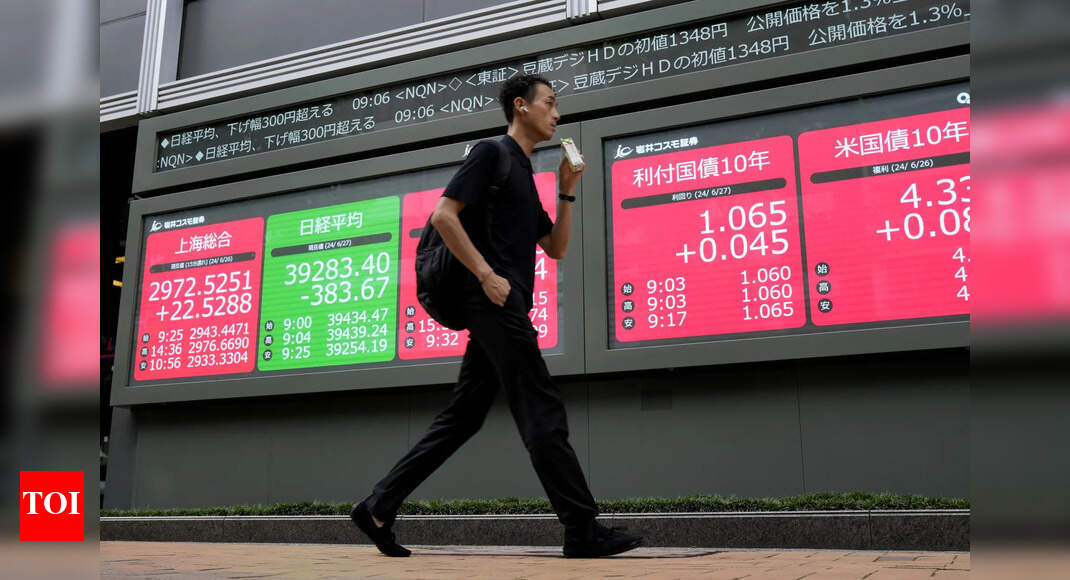
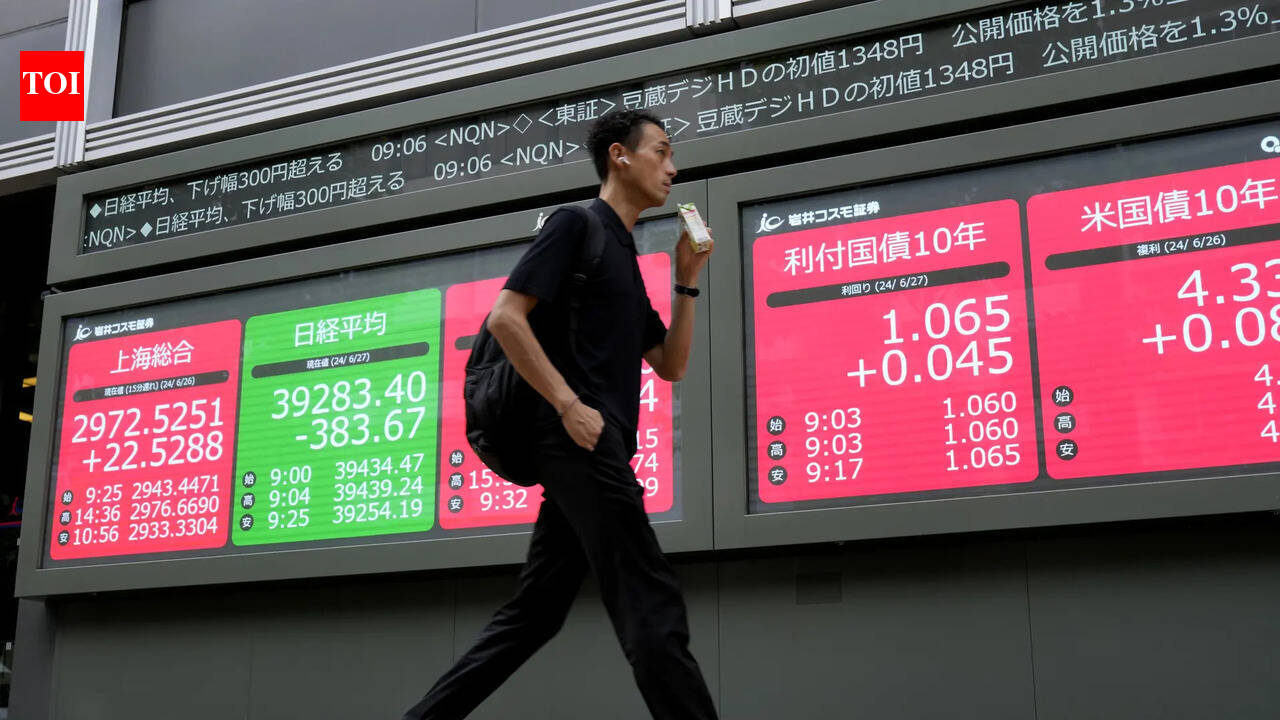
Asian stock markets slipped on Friday as tracking Wall Street losses, as a weak stream of US economic data and uncertainty over future interest rate moves weighed down investor confidence.Hong Kong’s HSI dipped 241 points to 26,244. Kospi reached 3,929, falling 96 points or 2.4%. Japan’s Nikkei also fell 1.7% or 905 points. Shenzhen, meanwhile, inched 24 points, trading at 13,477 at 11:15, AM IST.The latest pressure point for investors came from figures released by the outplacement firm Challenger, Gray & Christmas. Its report showed that US layoff announcements surged to their highest level in 22 years last month. According to the firm, this year has marked the worst period for job cuts since 2020, when the pandemic severely disrupted the labour market.Because of the longest-running US government shutdown, several federal departments remain closed, leaving markets to rely on private data to gauge the state of the economy. Although private hiring data a day earlier suggested an increase in employment, the Challenger report reignited concerns about the labour market and prompted renewed speculation that the Federal Reserve might lower borrowing costs again in December.That expectation was tempered by messaging from Fed officials, who indicated that a further rate cut is not assured. Their comments echoed recent remarks by Fed chair Jerome Powell.Several policymakers highlighted that while stabilising employment is part of the Fed’s mandate, inflation remains a central worry. Cleveland Fed chief Beth Hammack said she continues to be “concerned about high inflation and believe policy should be leaning against it”. In prepared remarks, she added: “To me, comparing the size and persistence of our mandate misses and the risks, inflation is the more pressing concern,” describing policy as “barely restrictive”.Chicago Fed president Austan Goolsbee told CNBC that making policy decisions without full government data due to the shutdown leaves him “even more uneasy.” A policymaker from the St Louis Fed also cautioned that lowering rates now would remove the downward pressure still needed to contain inflation.Asian indices responded to the Wall Street downturn. Tokyo and Seoul both declined more than two percent after recently setting record highs. Hong Kong, Shanghai, Sydney, Taipei and Manila also traded in the red, while Singapore, Wellington and Jakarta managed to edge higher.The weakness followed a rally in recent weeks that pushed several global markets and especially technology stocks, to historic levels. Heavy investment in artificial intelligence and expectations of an easing in US monetary policy helped fuel that rise. Chipmaker Nvidia even crossed a milestone, becoming the world’s first $5 trillion company.




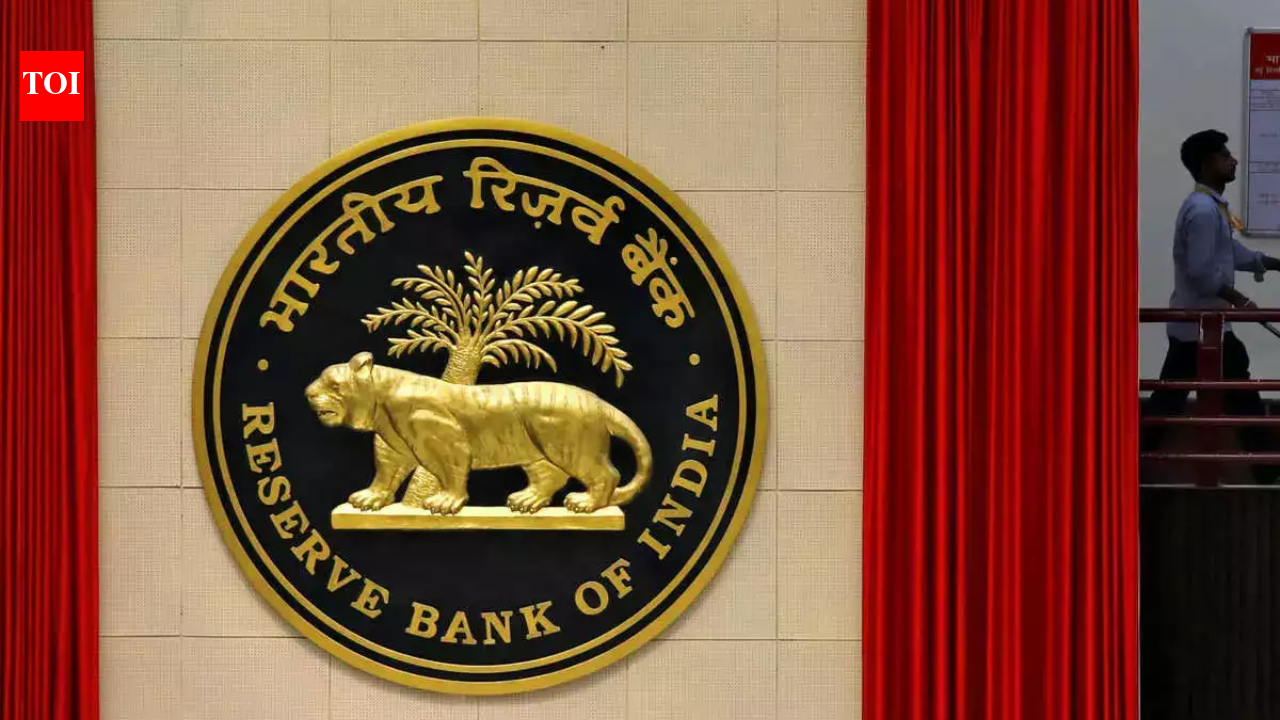
The Reserve Bank of India (RBI) on Monday decided against activating the countercyclical capital buffer (CCyB), indicating that current financial and credit conditions do not warrant an additional capital requirement for banks, PTI reported.The central bank said the decision followed a review and empirical assessment of indicators used under the CCyB framework.“Based on review and empirical analysis of CCyB indicators, it has been decided that it is not necessary to activate CCyB at this point in time,” RBI said in a statement.Under the RBI (Commercial Banks – Prudential Norms on Capital Adequacy) Directions, 2025, the CCyB framework is activated when financial conditions indicate rising systemic risks linked to excessive credit growth.The framework primarily relies on the credit-to-GDP gap as a key indicator, along with supplementary metrics.According to the RBI, the CCyB mechanism is intended to serve two broad objectives.Firstly, it requires a bank to build up a buffer of capital in good times, which may be used to maintain the flow of credit to the real sector in difficult times.Secondly, it achieves the broader macro-prudential goal of restricting the banking sector from indiscriminate lending in the periods of excess credit growth that have often been associated with the building up of system-wide risk.The framework was introduced globally after the 2008 financial crisis as part of measures proposed by the Group of Central Bank Governors and Heads of Supervision (GHOS) under the Basel framework to strengthen financial system resilience.

The company has announced plans to build seven new models in Europe including a small electric hatchback.
Source link
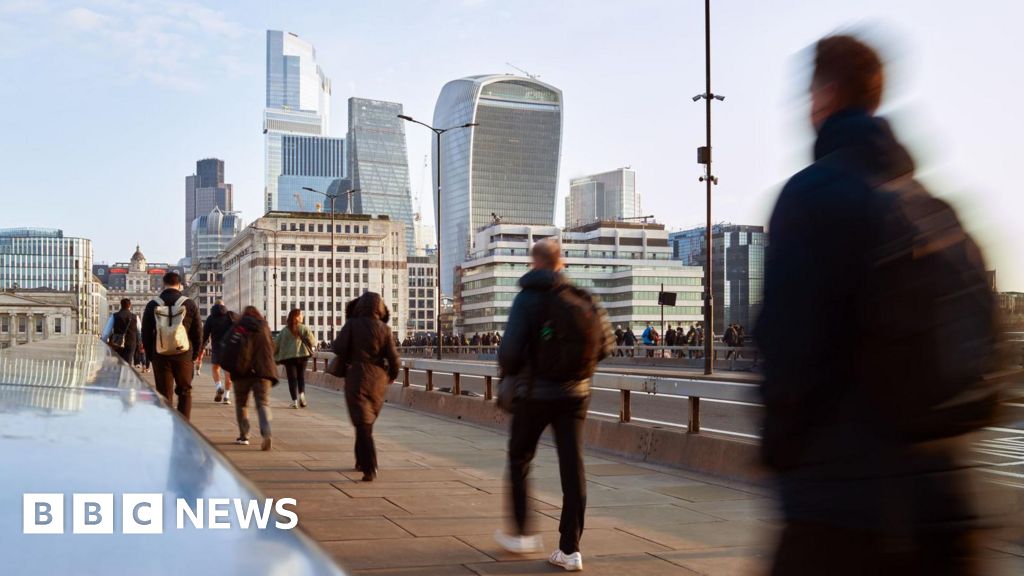
“Today’s policymaking is constrained by a more volatile external environment with more frequent and overlapping shocks, a rising public interest bill, in part reflecting market concerns with countries’ elevated debt, and the long-standing challenge of weak productivity growth,” he said.


Turkiye’s current account deficit expected to widen in 2026: Minister

UK’s clothing imports fall 3% in Q1, sharply lower than Q4 2025
RBI sees no signs of excess credit risk, keeps countercyclical capital buffer inactive

-

 Entertainment6 days ago
Conan O’Brien hat tricks as Oscar host
-

 Tech1 week ago
Could Contact-Tracing Apps Help With the Hantavirus? Not Really
-

 Fashion5 days ago
Italy’s Zegna Group’s Q1 growth boosted by strong organic performance
-

 Sports1 week ago
Bobby Cox, legendary Atlanta Braves manager who led 1995 World Series champions, dead at 84
-

 Entertainment1 week ago
Martin Short: Facing tragedy with joy
-

 Entertainment1 week ago
Tom Brady gets back at Kevin Hart during Netflix roast
-

 Sports1 week ago
Jacob Fatu unleashes vicious assault on Roman Reigns after World Heavyweight Championship loss at WWE Backlash
-

 Entertainment1 week ago
Martha Stewart: How to make an omelet