

Business
Asian stocks today: Markets trade mostly in red on last trading day of 2025; HSI sheds over 200 points, Kospi flat – The Times of India


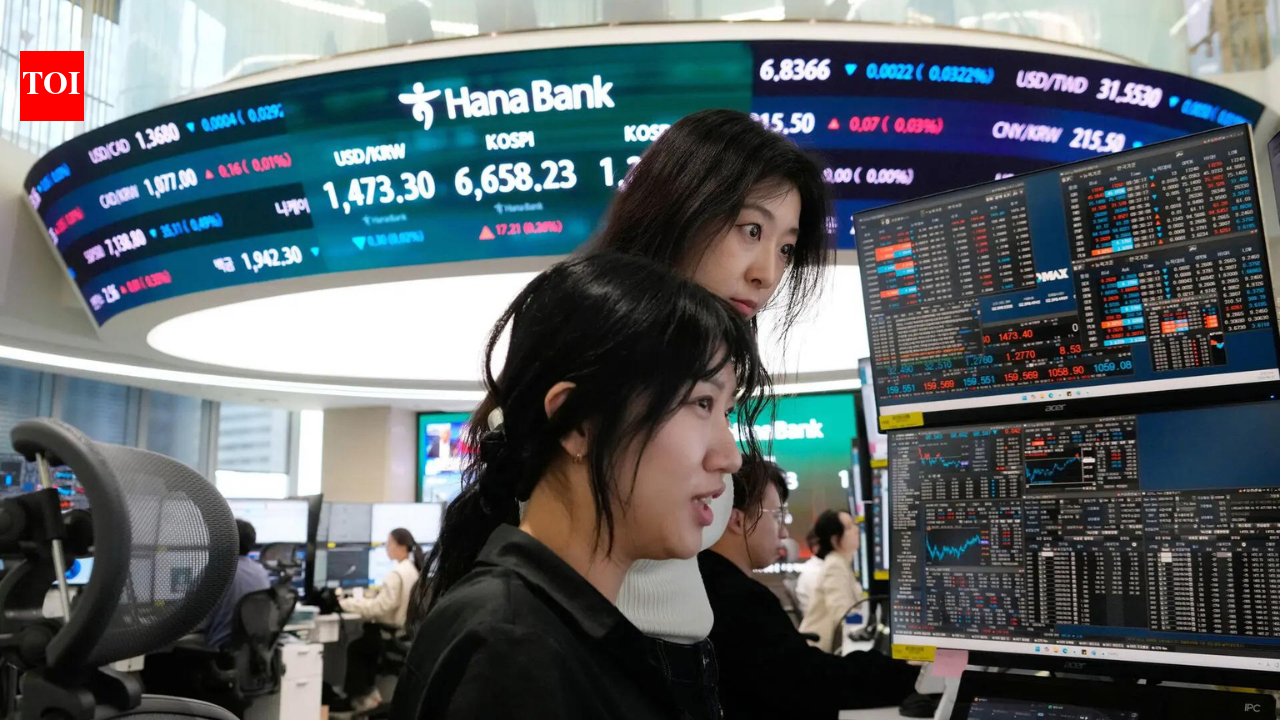
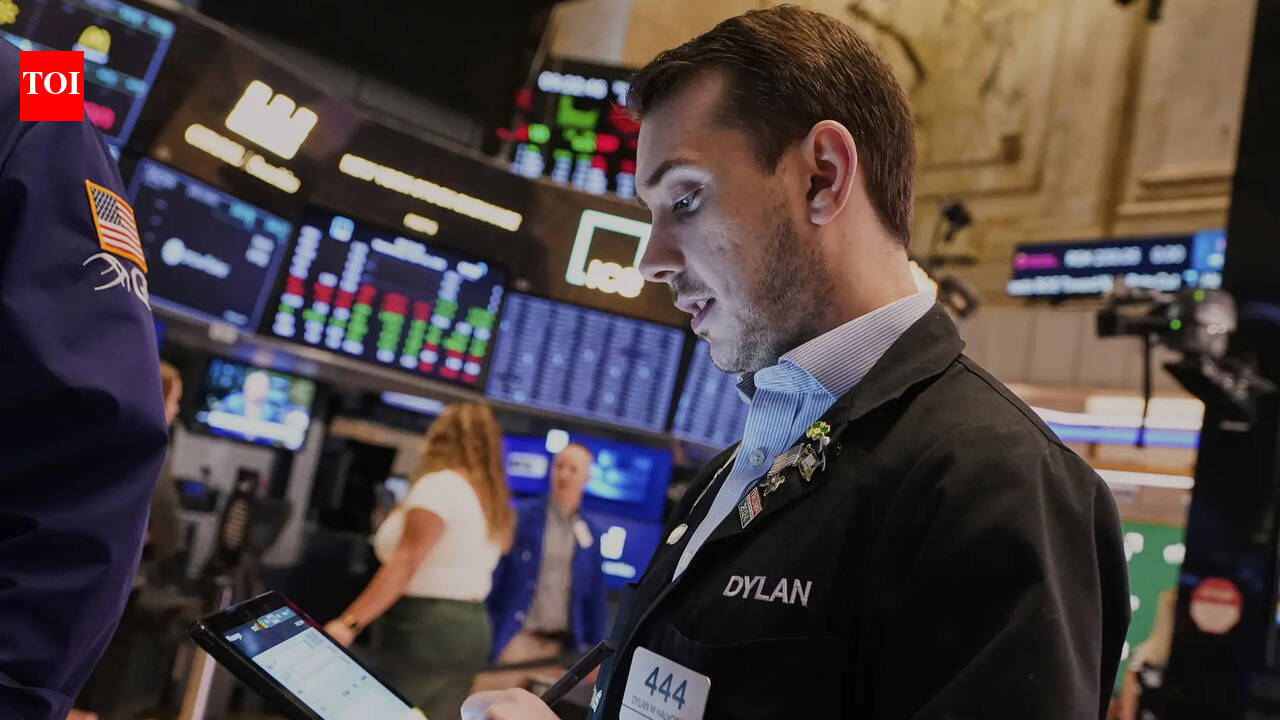
Asian markets slipped mostly into red on Wednesday, the final trading session of 2025, as investors remained cautious ahead of the New Year holiday and took cues from Wall Street losses.In Hong Kong, HSI slipped over 224 points to 25,630. Nikkai was also trading at a loss, shedding 187 points or 0.3%. Shanghai and Shenzhen were also down 0.07% and 0.67% at 10:35 AM IST. South Korea’s Kospi was also down 6 points to trade at 4,214. With the holiday season keeping participation low, trading volumes across the region remained thin. Commodities offered a steadier picture, with precious metals holding their ground after retreating from record levels seen earlier in the week. The uneven performance followed a muted session in the United States, where major Wall Street indices finished slightly lower on Tuesday. Investor unease over stretched valuations in artificial intelligence (AI)-linked stocks continued to weigh on sentiment. Even so, US markets were still set to deliver solid gains for the full year, a trend mirrored across much of Asia. Regional markets benefited from a combination of easing monetary conditions and a powerful rally in technology shares. In China, fresh official data showed factory activity edged up marginally in December, offering a rare positive signal at the close of an otherwise subdued year for the world’s second-largest economy. A key driver of the year’s global market strength has been the US Federal Reserve’s shift towards monetary easing in the latter half of 2025, alongside a flood of investment into AI-related technologies. Minutes from the Fed’s December policy meeting revealed that most officials consider further interest rate cuts appropriate, provided inflation continues to cool as anticipated. Precious metals have been among the most volatile assets in recent days, lifted by their demand as safe-haven investments amid ongoing geopolitical tensions. Gold and silver both touched record highs last week before pulling back.


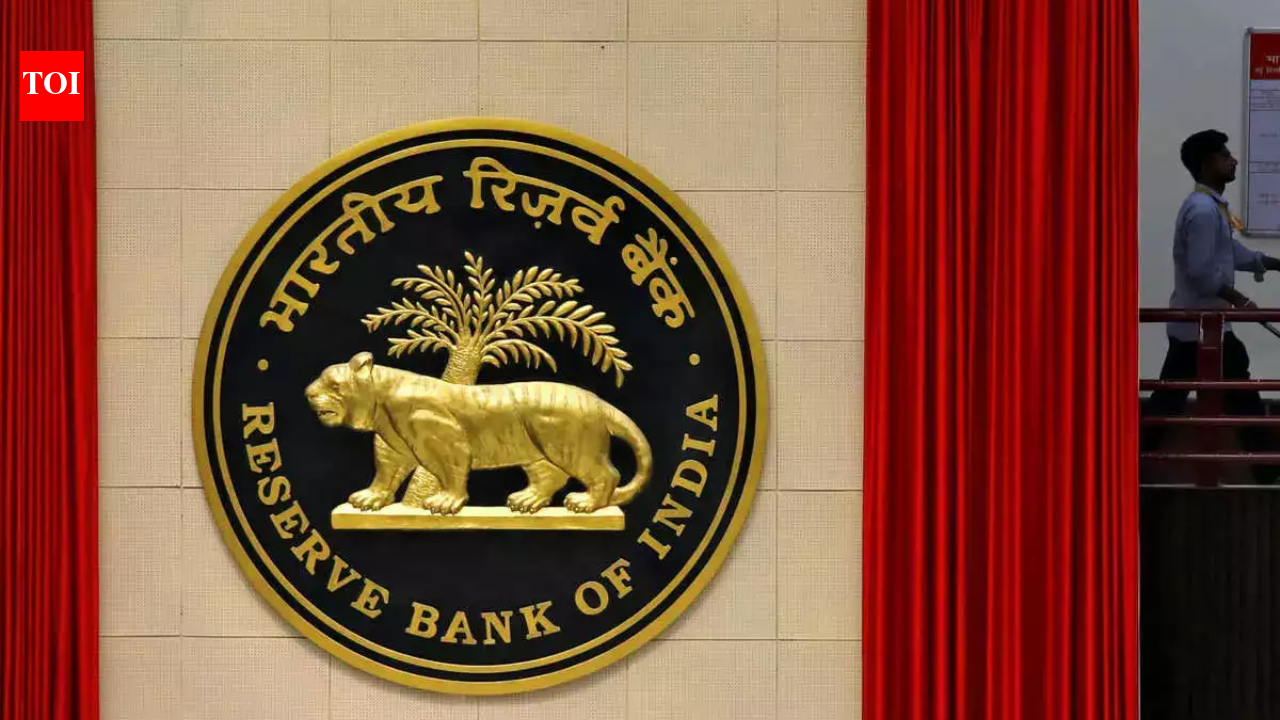
The Reserve Bank of India (RBI) on Monday decided against activating the countercyclical capital buffer (CCyB), indicating that current financial and credit conditions do not warrant an additional capital requirement for banks, PTI reported.The central bank said the decision followed a review and empirical assessment of indicators used under the CCyB framework.“Based on review and empirical analysis of CCyB indicators, it has been decided that it is not necessary to activate CCyB at this point in time,” RBI said in a statement.Under the RBI (Commercial Banks – Prudential Norms on Capital Adequacy) Directions, 2025, the CCyB framework is activated when financial conditions indicate rising systemic risks linked to excessive credit growth.The framework primarily relies on the credit-to-GDP gap as a key indicator, along with supplementary metrics.According to the RBI, the CCyB mechanism is intended to serve two broad objectives.Firstly, it requires a bank to build up a buffer of capital in good times, which may be used to maintain the flow of credit to the real sector in difficult times.Secondly, it achieves the broader macro-prudential goal of restricting the banking sector from indiscriminate lending in the periods of excess credit growth that have often been associated with the building up of system-wide risk.The framework was introduced globally after the 2008 financial crisis as part of measures proposed by the Group of Central Bank Governors and Heads of Supervision (GHOS) under the Basel framework to strengthen financial system resilience.
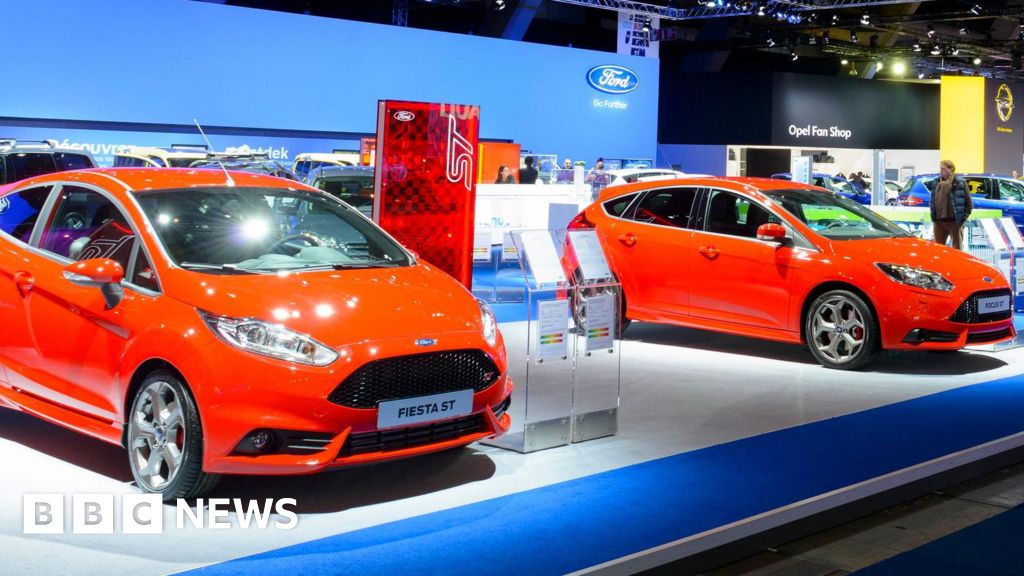
The company has announced plans to build seven new models in Europe including a small electric hatchback.
Source link
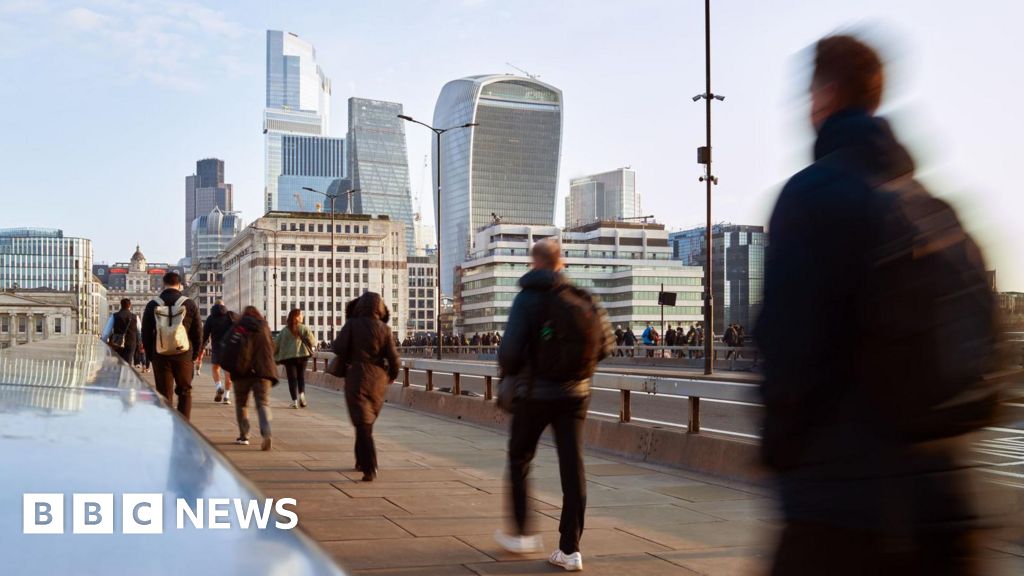
“Today’s policymaking is constrained by a more volatile external environment with more frequent and overlapping shocks, a rising public interest bill, in part reflecting market concerns with countries’ elevated debt, and the long-standing challenge of weak productivity growth,” he said.


Two Americans arrested at Japanese zoo

Turkiye’s current account deficit expected to widen in 2026: Minister

UK’s clothing imports fall 3% in Q1, sharply lower than Q4 2025

-

 Entertainment6 days ago
Conan O’Brien hat tricks as Oscar host
-

 Tech1 week ago
Could Contact-Tracing Apps Help With the Hantavirus? Not Really
-

 Fashion5 days ago
Italy’s Zegna Group’s Q1 growth boosted by strong organic performance
-

 Sports1 week ago
Bobby Cox, legendary Atlanta Braves manager who led 1995 World Series champions, dead at 84
-

 Entertainment1 week ago
Martin Short: Facing tragedy with joy
-

 Entertainment1 week ago
Tom Brady gets back at Kevin Hart during Netflix roast
-

 Sports1 week ago
Jacob Fatu unleashes vicious assault on Roman Reigns after World Heavyweight Championship loss at WWE Backlash
-

 Entertainment1 week ago
Martha Stewart: How to make an omelet