

Tech
AST SpaceMobile hits launch button on satellite expansion | Computer Weekly


AST SpaceMobile has unveiled aggressive plans to expand its space-based communication portfolio, confirming a fully-funded plan to send 45 to 60 satellites into orbit by 2026 to support continuous service in the US, Europe, Japan and other strategic markets, including the US Government.
AST SpaceMobile said it is on a mission to build the first and only space-based cellular broadband network accessible directly by everyday smartphones for commercial and government applications.
This comes just over two years since AST and its partners completed what was claimed at the time to be the first-ever space-based voice call to an unmodified phone, in April 2023. The company claimed another landmark with the initial 4G download above 10Mbps in June 2023, and then the first-ever 5G voice call in September 2023.
In May 2024, it announced a strategic partnership with Verizon, with a commitment of $100m to target 100% coverage of the continental US on premium 850MHz spectrum, with two major US mobile operators to provide direct-to-cellular connectivity.
In January 2025, AST SpaceMobile and comms provider Vodafone Group revealed they had completed the first-ever space-based video call using 4G/5G smartphones over a satellite built to offer a full mobile broadband experience from an area in Wales with no terrestrial mobile coverage.
The company currently has six satellites in orbit – five fully operational and one test satellite – for both commercial and government applications.
In its business update and results for the second quarter to 30 June 2025, the company posted revenues of $1.16bn for the three-month period, up 28% year-on-year. Half-year revenues were $1.874bn, rising by 34% compared with the first six months of the previous financial year. As expected for an expanding business, operating expenses grew on an annual basis in both the quarter (up 18% to $73.95m) and the half year (up 15% to $137.63m.
In terms of highlights for the second quarter, the company noted that it has completed the assembly of microns for phased arrays of eight Block 2 BlueBird satellites and is on target to complete 40 satellites equivalent of microns by early 2026 to support full voice, data and video space-based cellular broadband services.
Furthermore, it has planned orbital launches every one to two months on average in 2025 and 2026, with the goal being to launch 45 to 60 satellites in that time. The company’s FM1 satellite is expected to be ready to ship in August 2025, with a mutually determined launch date thereafter, becoming AST SpaceMobile’s seventh satellite in orbit.
The update also revealed that it is preparing to deploy nationwide intermittent service in the US by the end of 2025, followed by the UK, Japan and Canada in the first quarter of 2026, and has continued expectations for revenue of between $50m and $75m in the second half of 2025 from government and commercial customers.
The firm also expanded its spectrum strategy during the second quarter, with an agreement to acquire 60MHz of global S-Band spectrum priority rights, augmenting its existing 3GPP cellular spectrum strategy to strengthen its position within the wireless ecosystem by further growing subscriber capacity and bringing additional services to targeted markets around the world. It also received court approval for L-Band definitive documentation, providing long-term access to up to 45MHz of L-Band, premium lower mid-band spectrum, in the US and Canada, subject to regulatory approvals.
AST SpaceMobile believes its S-Band and L-Band spectrum strategies further enable a true broadband experience directly from space to everyday smartphones, with up to 120Mbps peak data speeds.
One of the key programmes going forward is advanced commercialisation efforts with the expansion of partnerships, derived from agreements with more than 50 mobile network operators globally, which have nearly three billion subscribers, while receiving additional US Government contract awards.
SatCo, the AST SpaceMobile and Vodafone jointly owned European distribution entity created in March 2025, is said to have received expressions of interest from network operators in 21 of 27 European Union member states for a sovereign direct-to-device mobile broadband satellite service.
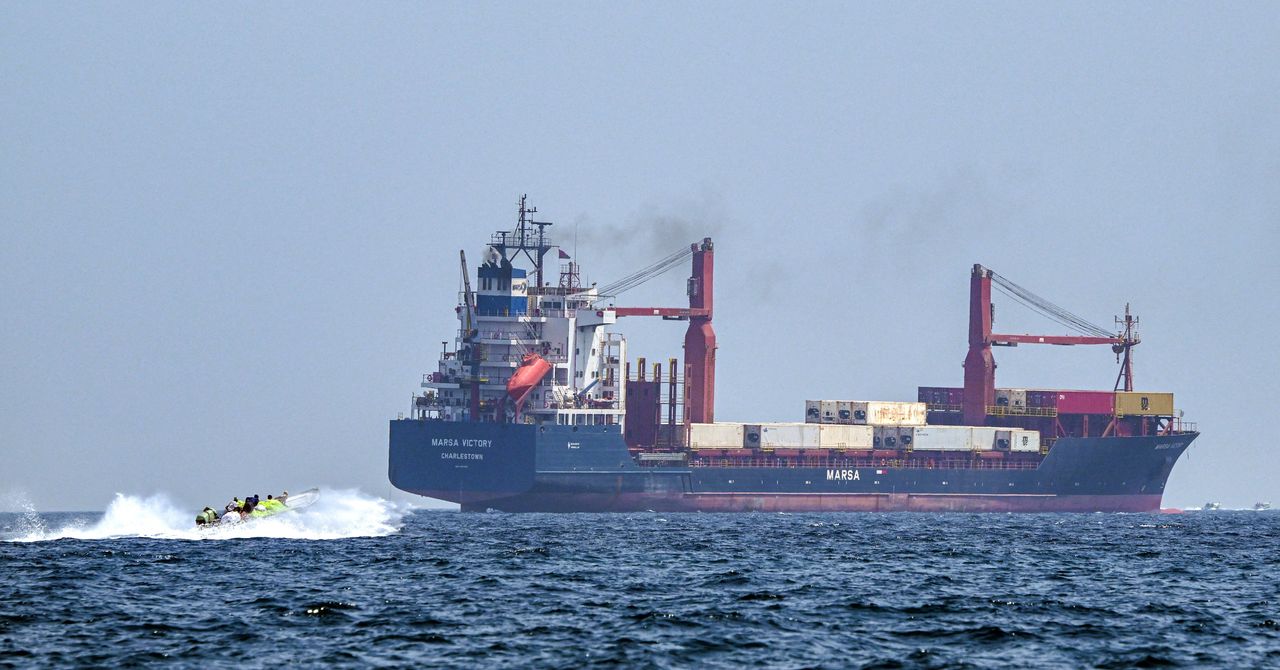
Shipping through the Strait of Hormuz—the narrow but vital oil trade route in the Middle East—has almost ground to a halt since the start of the United States and Israel’s war against Iran. Tankers in the region have faced military strikes and a spike in GPS jamming attacks, a new analysis says.
Since the first US-Israeli strikes against Iran on February 28, more than 1,100 ships operating across the Gulf region have had their GPS or automatic identification system (AIS) communications technology disrupted, says Ami Daniel, the CEO of maritime intelligence firm Windward. Ships have been made to appear as if they were inland on maps, including at a nuclear power plant, the firm says.
The analysis comes as maritime officials have warned of a “critical” risk to ships operating in the region and as the initial conflict has quickly expanded to involve countries across the Middle East. At least three tankers in the region have been damaged in the conflict.
“We’re seeing a lot of GPS jamming,” Daniel says of shipping in the Strait of Hormuz and surrounding areas. The levels of electronic interference are “way above the baseline” of usual interference, he says. “It’s becoming very dangerous to go in and out.”
Over the last few years, attacks against GPS and navigation systems have been on the rise—largely driven by the wars in Ukraine and Gaza. They can impact people’s phones or devices, but also disrupt the safety and navigation systems in planes and ships. The electronic interference largely comes in two forms: jamming and spoofing. During jamming attacks, satellite signals are overwhelmed so that positioning data isn’t available. Whereas spoofing can create false signals that make an object appear incorrectly on a map—for instance, making ships appear as if they are inland at airports.
Inaccurate location data can lead to ships running off course, potentially increasing the chances of them crashing into other tankers, running aground, or causing damaging oil spills. In warzones, electronic interference is often used to try and disrupt the navigation systems of drones or missiles, which can rely on location data to find and hit their targets.
Analysis of shipping data by Windward found that there has been an “escalating” level of electronic interference across Iranian, United Arab Emirates, Qatari, and Omani waters since the initial strikes on February 28. Daniel says that the majority of the activity the company has identified so far has been jamming rather than spoofing. The company’s analysis says it has identified around 21 “new clusters” where ships have had their AIS data jammed in recent days.
“Ships were falsely positioned at airports, a nuclear power plant, and on Iranian land, creating navigation and compliance risks,” a report from the firm says. “AIS signals have also been diverted to the Barakah Nuclear Power Plant and nearby waters, while hundreds of other vessels are creating circle-like patterns off UAE, Qatari, and Omani waters.”
GPS and AIS interference within the Strait of Hormuz and the surrounding area is not new. In June 2025, as Israel and Iran exchanged missile fire, significant jamming in the region was reported.
While almost all commercial air travel has been grounded around the Middle East, there have been signs of electronic interference on aircraft flying ahead of and around the strikes. “There are at least six new spoofing signatures in the Middle East,” says Jeremy Bennington, vice president of positioning, navigation, and timing strategy and innovation at technology firm Spirent Communications. “Hundreds of flights have been impacted. However, that decreased significantly over the weekend as flights have been canceled.”
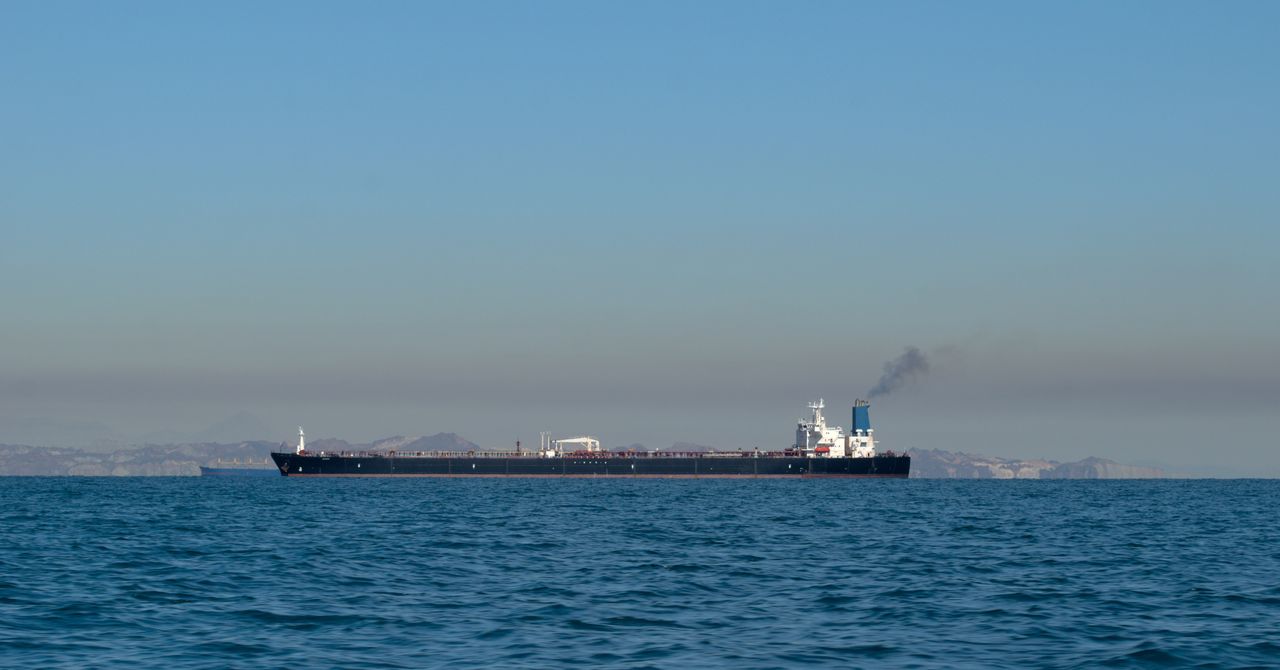
Oil prices surged on Monday following the United States and Israel’s attacks on Iran this weekend, as some analysts predict that it could soon reach over $100 a barrel. Amid escalating attacks on oil and gas infrastructure in the region and stopped traffic in a crucial shipping route, experts tell WIRED that how the White House directs the conflict over the coming week—as well as Iran’s and other oil producers’ responses—will be key in determining just how high prices eventually climb.
The price of Brent crude jumped to almost $80 a barrel—a nearly 13 percent increase over Friday’s prices—when markets opened Sunday evening. The market has been pricing in the risk of the US’s aggressive stance toward Iran for months, says Tyson Slocum, the director of the energy program at the progressive think tank Public Citizen, insulating prices from an even more severe jump. But the disorganized US follow-through to the initial attack—which killed Ayatollah Ali Khamenei, Iran’s supreme leader—is introducing much more uncertainty.
“For all of Trump saying, ‘Hey, you know, we took out Khamenei, we knew exactly where he was,’—apparently we didn’t do the same for Iran’s attack capabilities,” Slocum says. “It seems like our plan was to take out Khamenei and then hope for the best.”
Iran controls the Strait of Hormuz, one of the most important shipping routes in the world. One out of every five barrels of oil travels through the strait. Major members of the Organization of the Petroleum Exporting Countries (OPEC), the world’s dominant oil and gas cartel, rely almost entirely on the strait to get their product out of the region.
“As long as I have been in the oil market, Iran and the closure of the Strait of Hormuz has been kind of the ultimate risk scenario for prices,” says Canadian oil market researcher Rory Johnston. Usually, he says, OPEC would respond to an international crisis that involves oil by increasing production. “But if OPEC’s emergency production is on the other side of the problem area, it doesn’t do as much good.” Johnston compares the region to a garden hose, where a kink in one section can decrease output.
Throughout the weekend, while Iranian officials sent mixed messages on whether the strait is formally closed, traffic through the strait dropped to near zero. Insurance companies have jacked up policies on ships traveling through the strait, while some ships have been hit by drone strikes. What seems to be happening, Johnston says, is more of a “voluntary closure” than an official one.
There are worse scenarios for oil prices that could unfold in the coming days than just the closure of the strait. In September of 2019, drones hit major oil production facilities east of the Saudi Arabian capital of Riyadh. While the Houthi rebel movement in Yemen publicly claimed responsibility for the attack, US officials blamed Iran. The attack temporarily shot oil prices up 15 percent.
On Monday, Saudi officials said that they had closed a major domestic refinery following drone strikes, while a few other oil and gas fields across the region were also shut down. Qatar LNG, the country’s state-run liquefied natural gas producer, said Monday it was shutting down production due to drone strikes, sending gas prices in Europe spiking. Johnston says that continued, serious strikes like these could have a massive impact on prices.
“Going back to the garden hose thing … [that would be] more like taking a gun and blasting off the faucet,” Johnston says.
Clayton Seigle, a senior fellow at the Center for Strategic and International Studies, a think tank based in Washington, DC, agrees. “The more desperate Iran becomes, the greater likelihood for it to use energy as leverage to advance its interests,” he says. “If tankers abandon the Gulf trade in large numbers, and certainly if major oil infrastructure is damaged, we’re likely to see triple-digit crude prices again.”

Apple’s first hardware launch of 2026—not counting the second-generation AirTag it debuted at the end of January—is the next iteration of the price-friendly iPhone: the iPhone 17e. The company announced the handset via an online press release, ahead of its “Special Apple Experience” in New York City this Wednesday.
While last year’s iPhone 16e was widely criticized for its questionable value—it replaced the iPhone “SE” models from yesteryear and jacked the price up from $429 to $599—the newer model in the series has some notable features that were missing in its predecessor, like Apple’s MagSafe technology and the Dynamic Island. The price remains firm at $599 despite the challenging economic environment and the memory shortage.
The iPhone 17e opens for preorder today and will be widely available on March 11.
E for Effort
Apple has stuck with the same 6.1-inch OLED display as the iPhone 16e, down to the same old-school notch design. That means you won’t get the sleek look of the Dynamic Island, which also doubles as a live notifications display. Thankfully, if you’re worried about durability, this iPhone has the same Ceramic Shield 2 front glass protecting the display as its pricier siblings, giving it a nice strength boost from the previous generation.
Apple did not upgrade the screen with its ProMotion refresh rate tech, as it’s stuck at 60 Hz. This capability is the number of times the screen refreshes with images—the higher the better, as your display will appear smoother, with interactions feeling more fluid. It’s something the company has offered in the iPhone Pro models, and finally enabled in 2025 with its entire iPhone 17 range, but you’ll have to upgrade for the luxury. It’s a shame, as most budget Android phones offer 120 Hz as standard, even devices as cheap as $200. That also means the iPhone 17e doesn’t have the option to enable an always-on display.
Arguably, the best upgrade is the addition of MagSafe, the magnetic ring that has been embedded in the back of mainline iPhones since the iPhone 12. Apple confusingly didn’t include it with the iPhone 16e despite a healthy accessory market that would have made the iPhone 16e a little more versatile. While the 16e still had basic wireless charging, with the iPhone 17e, you can take advantage of faster magnetic wireless charging at 15 watts (plus access to MagSafe accessories).
This iPhone is powered by the A19 chipset, which debuted on the iPhone 17, though there’s one less graphics core, so graphics performance is a small step below. That’s in line with what Apple did with the iPhone 16e and the iPhone 16 that came before. Apple didn’t share RAM details yet, but it’s likely that the iPhone 17e has 8 GB of RAM like its predecessor, whereas the rest of the iPhone 17 lineup has 12 GB.
Courtesy of Apple


MLS Power Rankings: Miami surge after comeback win

Billie Eilish crawls into her past with Justin Bieber

Brewdog: Bars close and hundreds lose jobs as beer firm sold in £33m deal

-
 Business6 days ago
Households set for lower energy bills amid price cap shake-up
-

 Entertainment1 week ago
Talking minerals and megawatts
-
 Business6 days ago
Lucid widely misses earnings expectations, forecasts continued EV growth in 2026
-

 Sports1 week ago
Eileen Gu comments on Alysa Liu’s historic gold medal
-

 Entertainment1 week ago
Hailee Steinfeld shares big life update amid excitement for baby’s arrival
-

 Politics1 week ago
Supreme Court ruling angers Trump: Global tariffs to rise from 10% to 15%
-

 Sports1 week ago
South Africa thrash India by 76 runs in T20 World Cup Super 8 – SUCH TV
-
 Business1 week ago
Haryana Govt bars IDFC First Bank, AU Small Finance Bank over alleged Rs 590 crore fraud