

Business
AstraZeneca pauses £200m Cambridge investment

Mitchell LabiakBusiness reporter and
Simon JackBusiness editor
 Getty Images
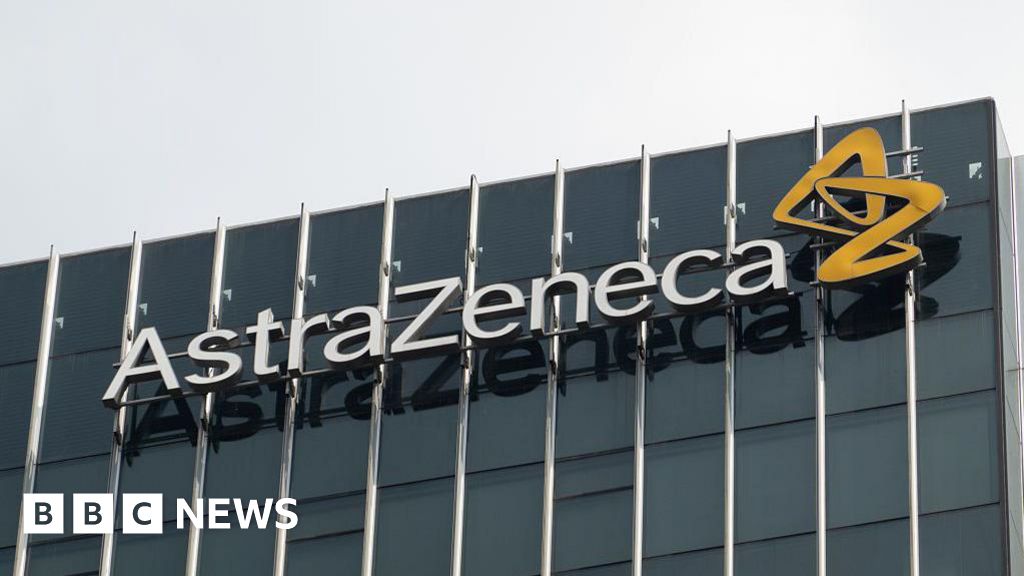
AstraZeneca has paused plans to invest £200m at a Cambridge research site in a fresh blow to the UK pharmaceutical industry.
The project, which was set to create 1,000 jobs, was announced in March 2024 by the previous government alongside another project in Liverpool, which was shelved in January.
Friday’s announcement comes after US pharmaceutical giant Merck scrapped a £1bn UK expansion, blaming a lack of government investment, and as President Donald Trump pressures pharmaceutical firms to invest more in the US.
An AstraZeneca spokesperson said: “We constantly reassess the investment needs of our company and can confirm our expansion in Cambridge is paused.”
Over the last 10 years, UK spending on medicines has fallen from 15% of the NHS budget to 9%, while the rest of the developed world spends between 14% and 20%.
Meanwhile, pharmaceutical companies have been looking to invest in the US following Trump’s threats of sky-high tariffs on drug imports.
In July, AstraZeneca said it would invest $50bn (£36.9bn) in the US on “medicines manufacturing and R&D [research and development]”.
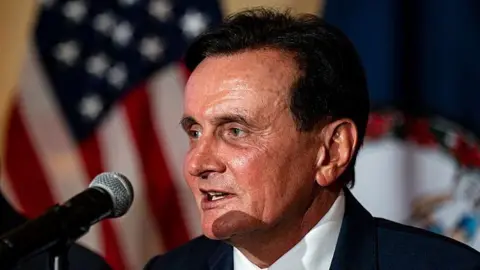
Earlier this week Merck, which had already begun construction on a site in London’s King’s Cross which was due to be completed by 2027, said it no longer planned to occupy it.
The multi-national business, known as MSD in Europe, said it would move its life sciences research to the US and cut UK jobs, blaming successive governments for undervaluing innovative medicines.

 Getty Images
AstraZeneca’s announcement on Friday means none of the £650m UK investment trumpeted by the last government will currently happen.
The paused Cambridge project would have been an expansion of its existing Discovery Centre, which already hosts 2,300 researchers and scientists.
The stoppage comes after it scrapped plans to invest £450m in expanding a vaccine manufacturing plant in Merseyside in January, blaming a reduction in government support.
It said at the time that after “protracted” talks, a number of factors influenced the move, including “the timing and reduction of the final offer compared to the previous government’s proposal”.
Successive UK governments have pointed to life sciences as one of its most successful industries.
Former chancellor Jeremy Hunt said the sector was “crucial for the country’s health, wealth and resilience” while Chancellor Rachel Reeves said AstraZeneca was one of the UK’s “great companies” days before it scrapped its Liverpool expansion.

Virgin Media O2 recorded its highest-ever broadband traffic spike as millions across the UK tuned in to watch Arsenal‘s Uefa Champions League semi-final victory over Atletico Madrid.
Peak downstream traffic on the network surged by 17 per cent compared to an average Tuesday evening, marking an unprecedented event in Virgin Media’s broadband history.
This figure was 4.2 per cent higher than the previous record, established during Liverpool’s Champions League match against Real Madrid last November.
Jeanie York, chief technology officer at Virgin Media O2, commented on the phenomenon: “Live sport is one of the biggest drivers of broadband traffic in the UK and last night’s Champions League semi-final set a record on our network.
“As more people stream the biggest sporting moments from home, reliable, high-capacity connectivity has never been more important.”
Bukayo Saka delivered the decisive goal at the Emirates Stadium on Tuesday night as Arsenal secured a 2-1 aggregate triumph over Atletico Madrid to reach the Champions League final in Budapest on May 30 – their first on Europe’s grandest stage for 20 years.
And although Arsenal have received an official allocation of just 16,824 tickets from UEFA for the final at the 67,000-capacity Puskas Arena, Declan Rice wants the Hungarian capital to be a sea of red for the fixture against either Bayern Munich or Paris St Germain.
He said: “Bring it on, bring it on, I’ll be ready. I want every Arsenal fan out there, 200,000 of you, come out. Let’s try and do it because we’re going to need all the support, all the energy and let’s make it special.”
Mikel Arteta, meanwhile, hailed his “incredible” players for “making history” after securing the win.
Arteta said: “It was an incredible night. We made history again together and I cannot be happier and prouder for everybody that’s involved in this football club.
“The supporters were with us for every ball. They made it special and unique, and I have never felt it like that in this stadium.
“We knew how much it meant to everybody, we put everything on the line, the boys did an incredible job and after 20 years, and the second time in our history, we are back in the Champions League final.”
Business
Airlines spent 56.4% more on jet fuel in month after Iran war started, U.S. government says

A technician prepares to refuel a Delta Airlines aircraft at the Austin-Bergrstrom International Airport on April 10, 2026 in Austin, Texas.
Brandon Bell | Getty Images
U.S. airlines spent 56.4% more on jet fuel in March, the month after the U.S.-Israel strikes on Iran began, than they did in February, U.S. government data released Wednesday shows.
U.S. carriers spent $5.06 billion on fuel in March, up from $3.23 billion in February. It was 30% more than what they paid in March 2025, according to the Department of Transportation.
Airlines have lowered or scrapped their 2026 forecasts altogether because of the spike in fuel, their biggest expense after labor. Some carriers have scaled back growth plans to cut costs and avoid having too much expensive capacity in the markets.
The spike in jet fuel was even sharper and topped $4 a gallon in some markets in April as the war continued and the Strait of Hormuz was effectively closed.
Spirit Airlines collapsed over the weekend, and the carrier said the surge in jet fuel costs foiled its plans to emerge from bankruptcy midyear.
Other major carriers told Wall Street as they reported earnings last month that they expect customers to cover the higher jet fuel costs by early 2027, if not the end of this year.
So far, booking trends show consumers are still traveling, In March, travel agency ticket sales rose 12% from a year ago to $10.4 billion, with the number of domestic trips up 5% and international up 1%, according to the Airlines Reporting Corp.

Novo Nordisk is looking for deals more than ever before, the CEO of the Danish drugmaker said in an interview with CNBC on Wednesday.
“If our ambition is to help hundreds of millions of patients out there, then we need not just the best, but the broadest pipeline in the world,” said Novo Nordisk CEO Mike Doustdar. “So let’s go and see who else basically has assets that are complementary to what we have. And we are quite active with those [business development] talks and acquisitions, and you’ll see more of those as well going forward.”
Novo created the market for GLP-1 weight loss drugs with its weekly shots Ozempic and Wegovy. More recently, the company has faced concerns from analysts about whether Novo’s pipeline is robust enough for it to remain a leader in the increasingly competitive obesity drug space.
Mike Doustdar, chief executive officer of Novo Nordisk A/S, during an interview in New York, US, on Wednesday, Feb. 11, 2026.
Michael Nagle | Bloomberg | Getty Images
Rival Eli Lilly has already overtaken Novo in market share for weekly GLP-1 shots, though Novo has taken an early lead in the new category of GLP-1 pills for weight loss.
Doustdar said he disagrees with the concerns about Novo’s upcoming treatments, arguing the drugmaker has “one of the best pipelines in the industry.” He pointed to Novo’s CagriSema, a drug candidate that targets GLP-1 and amylin, that Novo hopes will be approved at the end of this year, and an experimental amylin-targeting drug called zenagamtide that Novo has accelerated development of, among other assets.
“Of course, there’s a lot of things in my pipeline that right now I have the privy to look into and get excited (about) but not have shared it yet with the world,” he said. “So I am incredibly excited about our pipeline, and I would just say to the investors who are a little bit skeptical, wait and see.”
Doustdar spoke to CNBC after the company said its Wegovy pill performed better than expected in the first quarter, and it raised its full-year profit guidance.


Pentagon to release first batch of UFO, alien files ‘very soon’

Trump’s Team Wants Him to Accept an Iran Deal He’s Already Rejected
Arsenal’s Champions League win over Atleti sparked ‘record broadband traffic spike’

-

 Sports1 week ago
Pro wrestling star Steph De Lander reveals how colleague’s advice helped lead her to title triumph at ACW
-
 Business1 week ago
‘I had £20,000 stolen and had to fight a 13-month fraud reporting rule to get it back’
-
 Business7 days ago
PSX plunges over 4,800 points | The Express Tribune
-

 Tech1 week ago
This Ambitious Laptop Doesn’t Leave Much Room for Your Hands
-

 Tech6 days ago
Almost half of UK businesses hit by cyber attacks | Computer Weekly
-

 Tech6 days ago
Musk v. Altman Kicks Off, DOJ Guts Voting Rights Unit, and Is the AI Job Apocalypse Overhyped?
-
 Business1 week ago
BP profits more than double as oil trading booms amid Iran war
-
Uncategorized1 week ago
[CinePlex360] Some plugins have failed to updat