

Business
Aurangzeb Pushes Pakistan’s Economic and Digital Agenda in Washington Talks – SUCH TV


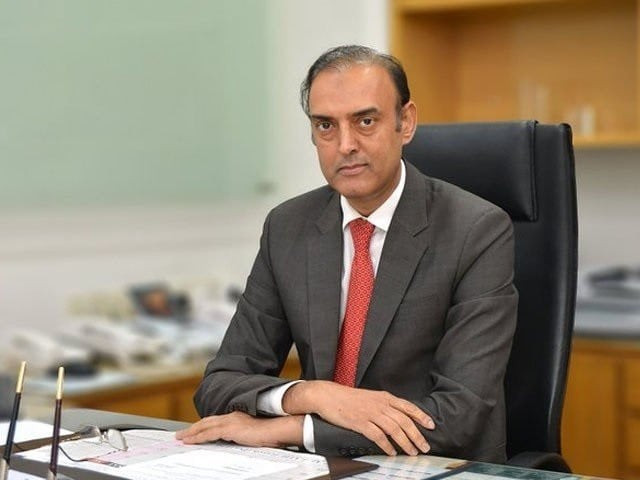
Federal Minister for Finance and Revenue, Senator Muhammad Aurangzeb, held a series of high-level meetings in Washington, DC, focusing on deepening economic cooperation and promoting Pakistan’s digital and financial agenda.
On the sidelines of the IMF–World Bank Annual Meetings, he met World Bank President Ajay Banga, highlighting Pakistan’s PM’s UNGA engagement, flood-response efforts, and post-assessment support.
He also briefed on provincial MoUs under the Country Partnership Framework and sought additional support through the International Development Association (IDA), while discussing reforms in the gas and power sectors for long-term efficiency.
Senator Aurangzeb also met Dr. Adnan Chilwan, Group CEO of Dubai Islamic Bank (DIB), appreciating DIB’s role as the leading arranger of Pakistan’s sovereign Sukuk.
He highlighted the recent IMF Staff Level Agreement (SLA) and international ratings upgrades as indicators of Pakistan’s improving economic outlook.
The minister also discussed ongoing privatisation efforts, including the First Women Bank, and plans to diversify funding across USD, Panda, and Sukuk markets.
The finance minister further met with management teams from Sharjah Islamic Bank and Ajman Bank, thanking them for their support in Pakistan’s recent financial initiatives. He briefed them on the government’s plan to issue its inaugural Panda Bond in China and emphasised coordination with the Debt Management Office (DMO) for further collaboration.
In discussions with Dr. Hajar El Haddaoui, Director General of the Digital Cooperation Organisation (DCO), Senator Aurangzeb highlighted Pakistan’s digital transformation, focusing on IT, payment rails, and digitisation of government payments.
He welcomed DCO’s expansion in Pakistan and stressed capacity building, skills development, and inclusive digital frameworks.
Finally, Aurangzeb met with the TCX Currency Exchange Fund delegation, led by Chief Investment Officer Othman Boukrami, briefing them on Pakistan’s plans to extend debt maturities and access international capital markets through Panda Bonds, Eurobonds, and International Sukuk.
The finance czar assured the TCX team of a detailed follow-up on submitted proposals to enhance future cooperation.
Aurangzeb also met with officials from Fitch Ratings and thanked the agency for upgrading Pakistan’s credit rating to B- with a stable outlook, and expressed satisfaction that all three major international rating agencies were now aligned in their assessments.
He briefed the Fitch team on the recently announced SLA with the IMF and highlighted Pakistan’s progress on key structural reforms in taxation, energy, privatisation, and state-owned enterprises.
He underscored the government’s resolve to expedite the privatisation process to enhance efficiency and fiscal sustainability.
Senator Aurangzeb also apprised the team of the government’s ongoing efforts to issue Panda Bonds in the Chinese market and referred to successful trade and tariff negotiations with the US Administration, which resulted in competitive tariff rates for Pakistan.
The meeting concluded with an interactive exchange, during which the finance minister responded to queries from the Fitch team and reaffirmed Pakistan’s commitment to maintaining macroeconomic stability and sustaining reform momentum.







Last Updated:
Gold is sold at a discount in Dubai due to Middle East conflict disrupting flights. Traders offer up to $30 per ounce less than London prices.




Dubai Gold Selling Cheaper As Iran War Grounds Flights
Gold is being sold at a discount in Dubai as the widening conflict in the Middle East disrupts flights and hampers the movement of bullion from one of the world’s key trading hubs.
According to a Bloomberg report, traders in Dubai are offering discounts of up to $30 per ounce compared to the global benchmark price in London. The unusual price cut comes as shipments remain stranded due to flight disruptions triggered by the escalating conflict involving Iran and Israel.
Dubai is a key global centre for refining and exporting gold to markets across Asia, including India. However, partial airspace restrictions and heightened security risks have slowed the movement of bullion out of the region.
Why Gold Is Being Sold Cheaper
Gold is typically transported in the cargo holds of passenger aircraft. With several flights from the UAE restricted amid regional tensions, traders are struggling to move bullion to international markets.
At the same time, insurance and freight costs have surged, making shipments more expensive and uncertain. Many buyers have therefore stepped back from placing new orders, unwilling to bear high logistics costs without assurance of timely delivery.
To avoid paying prolonged storage and financing costs while shipments remain stuck, some traders are offering gold at discounted prices.
Although transporting bullion by road to airports in neighbouring countries such as Saudi Arabia or Oman is theoretically possible, logistics firms are reluctant due to the risks and complications of moving high-value cargo across land borders during a conflict.
What It Means For India
India, one of the largest buyers of gold shipped from Dubai, could face short-term supply disruptions if the situation continues.
Renisha Chainani, head of research at Augmont Enterprises Ltd., said several cargo shipments have already been delayed, creating temporary tightness in the availability of physical bullion in India.
However, industry experts as reported by Bloomberg say the immediate impact may remain limited as domestic inventories are currently comfortable after heavy imports earlier this year.
Chirag Sheth, principal consultant for South Asia at Metals Focus, said Bloomberg that India has ample stocks for now, but warned that prolonged disruptions could eventually affect supply if the conflict continues for several months.
Meanwhile, global gold prices have surged this year amid geopolitical uncertainty, with spot gold recently trading above $5,000 per ounce.
 Click here to add News18 as your preferred news source on Google.
Follow News18 on Google. Join the fun, play games on News18. Stay updated with all the latest business news, including market trends, stock updates, tax, IPO, banking finance, real estate, savings and investments. To Get in-depth analysis, expert opinions, and real-time updates. Also Download the News18 App to stay updated.
March 08, 2026, 10:03 IST
Read More

Some seven in 10 British adults without a full driving licence say learning to drive is currently unaffordable, according to a survey.
The figure is even higher among younger people, with 76% of 18 to 29-year-olds without a licence saying driving lessons are financially out of reach, the poll for car insurer Prima found.
Overall, 38% said the cost of driving lessons was the biggest deterrent to learning to drive.
Some 32% were put off by the price of buying a car and 15% said the cost of car insurance was the main barrier to learning to drive.
Almost half (45%) said they would consider learning to drive if it became significantly cheaper.
Nick Ielpo, UK country manager at Prima, said: “For a growing number of people, driving is no longer a symbol of freedom – it’s a financial stretch too far.
“Between lessons, buying a car and insuring it, the upfront and ongoing costs are pricing many people out before they even start.”
Find Out Now surveyed 1,134 adults who do not hold a full driving licence between January 21 and 23.

Go Digit General Insurance on Saturday said it has received a demand notice of about Rs 170 crore for short payment of goods and services tax (GST) for nearly five years. The company has received an order copy from the Office of the Commissioner of GST & Central Excise, Chennai South Commissionerate on March 6, confirming GST demand of Rs 154.80 crore levying penalty of Rs 15.48 crore and Interest u/s 50 of CGST Act, 2017 for the period July 2017 to March 2022, the insurer said in a regulatory filing. The company is in the process of evaluating the legal advice on the implications and would file an appeal, it said.

Gold On Sale In Dubai? Here’s Why Prices Have Dropped By $30 Per Ounce

King Charles crucial trip comes to screeching halt amid new conflict

Removing NTBs could boost trade with US: Bangladesh commerce minister

LPGA legend shares her feelings about US women’s Olympic wins: ‘Gets me really emotional’

India Us Trade Deal: Fresh look at India-US trade deal? May be ‘rebalanced’ if circumstances change, says Piyush Goyal – The Times of India

Pakistan’s semi-final qualification scenario after England defeat New Zealand

-
 Sports1 week ago
LPGA legend shares her feelings about US women’s Olympic wins: ‘Gets me really emotional’
-
Business1 week ago
India Us Trade Deal: Fresh look at India-US trade deal? May be ‘rebalanced’ if circumstances change, says Piyush Goyal – The Times of India
-

 Fashion1 week ago
South Korea’s Misto Holdings completes planned leadership transition
-
 Entertainment1 week ago
Pakistan’s semi-final qualification scenario after England defeat New Zealand
-

 Entertainment1 week ago
Bobby J. Brown, “The Wire” and “Law & Order: SUV” actor, dies of smoke inhalation after reported fire
-
 Business1 week ago
CNBC To Merge TV And Digital News Operations, Nearly A Dozen Jobs To Be Cut: Report
-
 Business1 week ago
Greggs to reveal trading amid pressure from cost of living and weight loss drugs
-

 Entertainment1 week ago
What’s new in Pokémon? Every game, update, surprise from 30th anniversary event