

Fashion
Australia holds cash rate at 3.6% as inflation risks rise


The Reserve Bank of Australia has kept the cash rate unchanged at 3.60 per cent, as policymakers weighed a firmer-than-expected economic recovery against signs of a fresh pick-up in inflation. The Monetary Policy Board said the decision was unanimous.
Australia’s central bank has kept the cash rate at 3.60 per cent, citing mixed signals.
Inflation has eased but recently picked up, with some signs of broader price pressures.
Economic momentum has strengthened, while the labour market is softening.
With risks to inflation shifting upward, the Board opted for caution and will closely monitor global and domestic developments.
Inflation has eased significantly from its 2022 peak, but recent data show a renewed rise. The bank noted that part of the increase in underlying inflation appears temporary, and emphasised uncertainty around the monthly CPI series given its relative newness. Even so, there are emerging signals of a more broadly based acceleration in prices that could prove persistent, warranting close monitoring.
Economic momentum has strengthened, with private demand recovering through improved consumption and investment. Effects of earlier rate cuts have yet to fully filter through the economy. However, the bank acknowledged that money market rates and government bond yields have climbed recently, tightening conditions at the margin.
Labour market indicators show a gradual softening, though conditions remain somewhat tight overall. Unemployment has edged higher and employment growth has slowed, but underutilisation is still low and capacity utilisation remains above its long-run average. Many businesses continue to report difficulty sourcing labour. Wage Price Index growth has moderated from its peak, yet broader wage measures remain strong, and unit labour cost growth is still elevated.
The Board highlighted considerable uncertainty in the domestic outlook. The rebound in activity, particularly in the private sector, has been stronger than anticipated and could increase capacity pressures if maintained. Global risks also remain significant, though Australia’s key trading partners have so far experienced limited impact on their growth and trade performance, the Reserve Bank of Australia said in a release.
Given these mixed signals, the Board judged it appropriate to stay cautious while reassessing the persistence of inflationary pressures. It said risks to inflation had recently shifted to the upside, even as a modest further easing in labour market tightness is expected.
The bank reiterated that it will closely watch global and financial market developments, domestic demand trends, and the evolution of inflation and employment conditions. It reaffirmed its commitment to achieving price stability and full employment, stating it will take whatever actions are necessary to fulfil its mandate.
Fibre2Fashion News Desk (HU)









The pivot is urgent because the old model is under pressure. April **** looked strong: Ready-Made Garment (RMG) exports rose **.** per cent year on year to $*.** billion. But the ten-month picture is weaker. From July-April FY****–**, apparel exports stood at $**.** billion, down *.** per cent. Knitwear fell *.** per cent to $**.** billion; woven fell *.** per cent to $**.** billion. The rebound is real, but so is the drag underneath.
AWARE is the sharpest EU-facing signal: blockchain-backed product data for Digital Product Passport (DPP) readiness. Open Supply Hub adds the factory-identity layer, pushing production information into an open platform. GIZ brings the longer reform spine, from May **** to February ****, covering energy efficiency, circularity, chemical management, renewable-energy skills and textile-waste transparency.
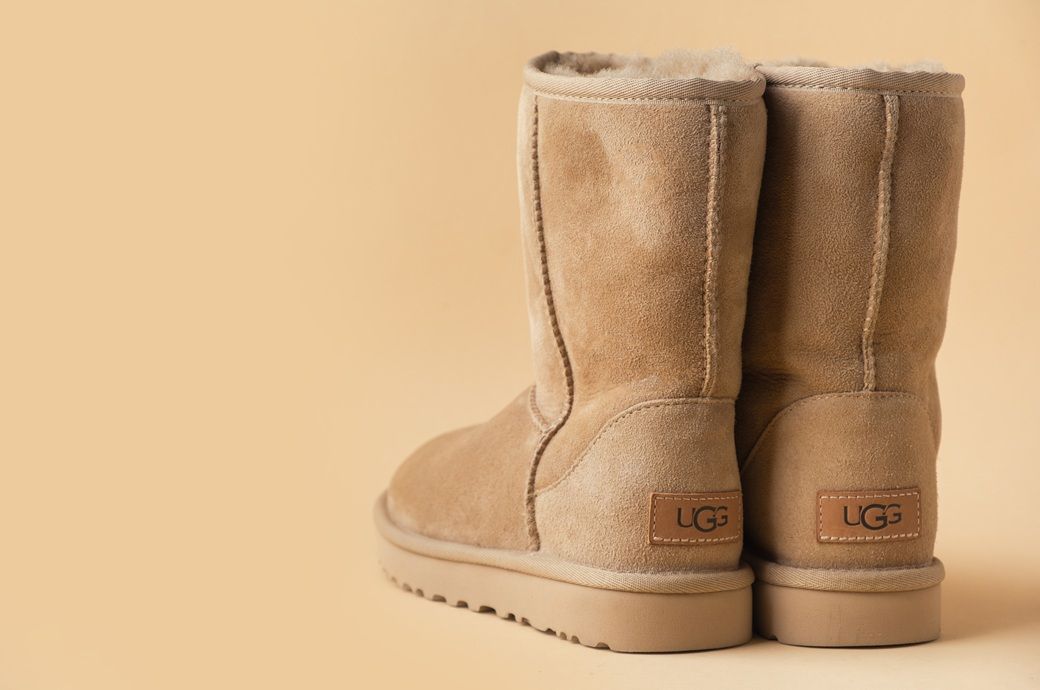
Kenneth Straka, Senior Product Development Manager at Deckers Outdoor Corporation, said that Deckers places strong emphasis on sustainability, noting that founder John Luke often reminded the team that the French word for sustainability is durability. This idea aligned with discussions at the Global Fashion Summit, where the theme centred on “Building Resilient Futures” in the sustainable and circular economy.
Durability has helped UGG become one of the most sought-after boot brands and a key sales driver for Deckers, alongside its sportswear brand Hoka. “One of the things we think about in terms of circularity is making products that last a long time and remain with consumers throughout their lives. We want products that consumers can wear for ** or ** years,” Straka said in an interview with Fibre*Fashion on the sidelines of the Global Fashion Summit in Copenhagen.
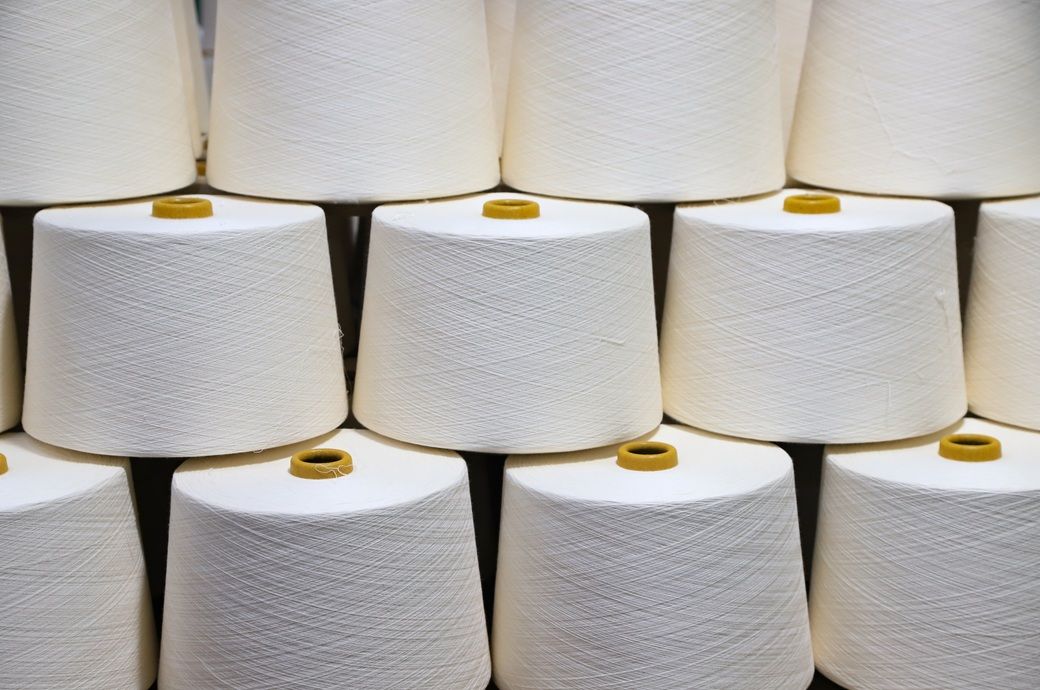
In the Tiruppur market, cotton yarn prices increased by ****;*–* per kg in this week despite sluggish local demand. Prices were quoted higher because of limited supply from spinning mills. A trader from the Tiruppur market told Fibre*Fashion, “Domestic demand remained limited, but spinning mills are not relying solely on the domestic market for cotton yarn sales. They are focusing more on exports, where demand and prices remain attractive. Mills have raised yarn prices following higher ICE cotton prices and the CCI’s increase in auction base prices, although ICE cotton has witnessed a sharp decline over the past two days.”
In Tiruppur, knitting cotton yarn prices were noted as: ** count combed cotton yarn at ****;***–*** (~$*.**–*.**) per kg (excluding GST), ** count combed cotton yarn at ****;***–*** (~$*.**–*.**) per kg, ** count combed cotton yarn at ****;***–*** (~$*.**–*.**) per kg, ** count carded cotton yarn at ****;***–*** (~$*.**–*.**) per kg, ** count carded cotton yarn at ****;***–*** (~$*.**–*.**) per kg, and ** count carded cotton yarn at ****;***–*** (~$*.**–*.**) per kg.


The border as lifeline

Bangladesh apparel reset: Compliance edge or energy trap?

Military jets’ crew members safely eject after Idaho air-show collision

-

 Entertainment5 days ago
Conan O’Brien hat tricks as Oscar host
-

 Tech1 week ago
Could Contact-Tracing Apps Help With the Hantavirus? Not Really
-

 Tech1 week ago
I Tried the Best Captioning Smart Glasses, and Only One Leads the Pack
-

 Fashion5 days ago
Italy’s Zegna Group’s Q1 growth boosted by strong organic performance
-

 Sports1 week ago
Bobby Cox, legendary Atlanta Braves manager who led 1995 World Series champions, dead at 84
-

 Entertainment1 week ago
Martin Short: Facing tragedy with joy
-

 Entertainment1 week ago
Tom Brady gets back at Kevin Hart during Netflix roast
-

 Entertainment1 week ago
Martha Stewart: How to make an omelet