

Fashion
Austria’s Lenzing reports resilient results; outlook remains positive

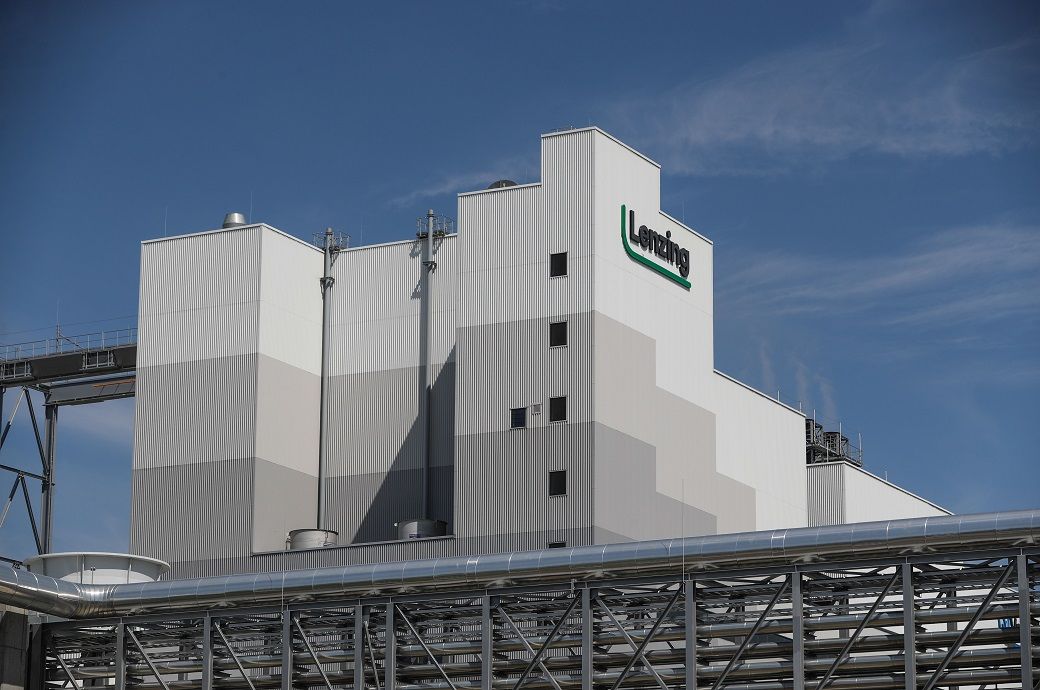
In the first nine months of 2025, Lenzing AG recorded revenue growth and higher EBITDA, but a market-driven volatile third quarter. This performance reflects the effects of ongoing market volatility, tariffs and geopolitical uncertainties. Nevertheless, the medium to long-term outlook remains positive.
Lenzing AG’s revenue rose 0.7 per cent to €1.97 billion (~$2.27 billion) in the first nine months of 2025.
EBITDA grew 29.1 per cent to €340.4 million (~$391.5 million) amid market volatility.
The company is optimising operations, investing over €100 million (~$115 million) in Austrian sites, and reviewing its Indonesia plant to save €45 million (~$51.8 million) annually by 2027.
The revenue generated by Lenzing AG rose by 0.7 percent to EUR 1.97 bn (prior-year period: EUR 1.96 bn) in the first nine months. EBITDA grew by 29.1 percent to EUR 340.4 mn (prior-year period: EUR 263.7 mn), including effects from the sale of surplus emission allowances and the valuation of biological assets. The EBITDA margin improved to 17.3 percent (prior-year period: 13.5 percent). Earnings before interest and tax (EBIT) amounted to EUR 20.6 mn (prior-year period: EUR 38.3 mn), which corresponds to an EBIT margin of 1 percent (prior-year period: 2 percent). This result includes asset impairments of EUR 82.1 mn in Indonesia. Earnings before tax (EBT) amounted to EUR minus 98.7 mn (prior-year period: EUR minus 33.4 mn).
“We see these challenging times also as an opportunity. We are increasingly building on our strengths and are continuing to focus on what we excel at: strong brands, precise execution and bold innovation,” notes Rohit Aggarwal, CEO of Lenzing AG.
Strategic development
Lenzing AG pursues a holistically adapted strategy with a clear focus on value-generating growth. Key pillars of this strategy include enhancing operational efficiency, optimizing production sites, and targeting high-margin premium products such as TENCEL, VEOCEL, and LENZING ECOVERO. Additional growth potential is expected particularly in the fields of hygiene, packaging, filtration, as well as medical and industrial applications.
To sustainably secure this growth and strengthen long-term competitiveness, the company has initiated a strategic review of its production site in Indonesia. The planned measures – including adjustments to administrative functions – are expected to generate additional annual savings of approximately EUR 45 mn by the end of 2027. For the current reporting year, the Management Board anticipates cost savings exceeding EUR 180 mn. Furthermore, the company is investing over EUR 100 mn in its sites in Lenzing and Heiligenkreuz and aims to achieve holistic energy optimization of more than 5 percent across all production locations. Strategic options for the site in Indonesia are being evaluated, including a potential sale.
The Supervisory Board also made personnel decisions during the reporting period: The Managing Board mandate of Christian Skilich, Chief Pulp & Chief Technology Officer, was extended until May 2029. Mathias Breuer, currently Senior Vice President and responsible for the performance program, will become CFO from January 1, 2026, and succeed Nico Reiner, who is due to step down from his position at the end of 2025.
Solid financial position in a difficult environment
Thanks to its strong focus on cash management, Lenzing succeeded in leaving no doubt about its adequate liquidity position during the reporting period. As of September 30, 2025, the company held liquidity cushion of EUR 993 mn. The capital structure was strengthened by a EUR 500 mn hybrid bond and a EUR 545 mn syndicated financing facility. Net financial debt was reduced by 8.5 per cent to EUR 1.4 bn as of the reporting date. With total assets of EUR 4.80 bn, this corresponds to an adjusted equity ratio of 30.7% as of September 30, 2025.
Cash flow from operating activities amounted to EUR 284.6 mn (prior-year period: EUR 319.4 mn). Free cash flow was also positive at EUR 110.9 mn. (prior-year period: EUR 194.0 mn) Furthermore, unlevered free cash flow amounted to EUR 192.1 mn (prior-year period: EUR 228.6 mn).
Capital expenditure amounted to EUR 93.2 mn (prior-year period: EUR 93.3 mn).
Outlook
The global environment remains volatile. The International Monetary Fund (IMF) expects growth of 3.2 percent in 2025, but warns of trade conflicts and financial instability. Consumer sentiment is subdued, and higher tariff costs could further weigh on demand in 2026. Based on the business performance to date and the current market outlook, the Managing Board expects year-on-year growth in EBITDA in 2025. The actual business performance may nevertheless diverge from current expectations depending on geopolitical and economic factors as well as the cyclical nature of the industry. Any assessment of economic development is therefore subject to forecasting risks.
Note: The headline, insights, and image of this press release may have been refined by the Fibre2Fashion staff; the rest of the content remains unchanged.
Fibre2Fashion News Desk (HU)











The increase was driven primarily by higher reinvested earnings and intra-company loans, indicating continued engagement by existing investors with Bangladesh.
Reinvested earnings rose by 318.25 per cent, from $103.79 million in 2024 to $434.10 million in 2025, while intra-company loans increased by 25.68 per cent, from $621.96 million to $781.68 million.
Bangladesh’s net FDI inflows increased by 39.36 per cent last year to $1,770.42 million compared with $1,270.39 million in 2024, the Bangladesh Bank said.
The increase was driven primarily by higher reinvested earnings and intra-company loans.
Reinvested earnings rose by 318.25 per cent, from $103.79 million in 2024 to $434.10 million in 2025, while intra-company loans rose by 25.68 per cent.
Equity capital remained broadly stable, rising by 1.84 per cent, from $544.64 million to $554.64 million in 2025, a release from Bangladesh Investment Development Authority said.
Greenfield project announcements declined by 16 per cent in 2025.
Fibre2Fashion News Desk (DS)
The company’s adjusted EBITDA, excluding Employee Stock Option Plan (ESOP) expenses, rose around 14 per cent YoY to ₹468 crore, while EBITDA margin improved by 20 basis points to around 9.3 per cent. Excluding the reciprocal tariff impact of around ₹36 crore and incremental losses of around ₹13 crore in Bihar and Guatemala, adjusted EBITDA margin stood at around 10.3 per cent.
Pallab Banerjee, managing director, Pearl Global Industries, said: “FY26 marked the company’s second consecutive year of double-digit growth and improved profitability. This performance further solidifies the position of Pearl Global’s diversified operating model and disciplined execution across geographies.”
Pearl Global Industries has reported its highest-ever FY26 revenue of ₹5,025 crore (~$523.93 million), up 11.5 per cent YoY, driven by volume growth and value-added products.
PAT rose 17 per cent to ₹270 crore (~$28.15 million), while Q4 revenue hit ₹1,314 crore (~$137 million).
The company shipped 78.1 million pieces.
Its net worth stands at ₹1,438 crore (~$149.93 million).
He said that geopolitical shifts and Gulf conflicts could lead to energy cost escalation, affecting raw material and logistics costs. However, the company remains prepared to manage these headwinds, supported by its diversified manufacturing base, strong order book, and broad market presence.
The profit after tax (PAT) increased 17 per cent YoY to ₹270 crore (~$28.15 million), the company said in a press release.
On a standalone basis, FY26 revenue stood at ₹1,081 crore, while adjusted EBITDA was ₹67 crore, with EBITDA margin improving by 60 basis points to 6.2 per cent, mainly due to cost restructuring. Standalone PAT rose to ₹69 crore from ₹55 crore in the previous year.
The company’s net worth stood at ₹1,438 crore (~$149.93 million) as of March 31, 2026, compared with ₹1,146 crore a year earlier.
“In FY26, Group delivered another year of resilient performance against a complex geopolitical backdrop. Group achieved, among others, two major milestones this year: revenue crossed INR 5,000 crore mark and installed capacity surpassed 100 million pieces per annum,” said Pulkit Seth, vice-chairman and non-executive director, PGIL.
Seth added that the global apparel industry faced tariff-related disruptions during FY26, with the company’s India operations impacted by tariffs and penal duties imposed by the US. However, he added that Pearl Global leveraged its diversified, multi-country manufacturing presence to mitigate these challenges and deliver double-digit growth.
For the fourth quarter (Q4) of FY26, PGIL posted its highest-ever quarterly revenue of ₹1,314 crore (~$137 million), up 6.9 per cent YoY. Adjusted EBITDA rose 13.7 per cent to ₹135 crore, with margin at 10.3 per cent, the highest EBITDA margin recorded by the company in any quarter. PAT for the quarter stood at ₹81 crore, up 24.6 per cent YoY, PGIL said in a press release.
Standalone revenue during the quarter stood at ₹304 crore, adjusted EBITDA at ₹24 crore, and PAT at ₹14 crore.
PGIL shipped its highest-ever volumes in Q4 FY26 and FY26, at 22 million pieces and 78.1 million pieces respectively. Its annual installed capacity crossed 100 million pieces, reaching around 101 million pieces.
The ongoing capex in Bangladesh is expected to be completed by the first half of FY27 and will add around 6-7 million pieces of capacity during the year.
Fibre2Fashion News Desk (SG)

PTA prices recorded notable declines across key Asian benchmarks, tracking crude oil weakness rooted in evolving geopolitical signals. The correction was broad-based, spanning China, Southeast Asia, and South Korea, while India**;s CIF price held steady reflecting the lag in import contract structures and limited spot availability in the domestic market on the day.
The *** per cent Polyester Yarn market witnessed a slightly negative trend during the assessed period, with mild price corrections observed across both yarn grades in the Asia Free on Board (FOB) China market. Prices for **s (*** per cent polyester yarn) declined from around $*.***/kg to nearly $*.***/kg, registering a decrease of approximately *.** per cent.


A Danish Couple’s Maverick African Research Finds Its Moment in RFK Jr.’s Vaccine Policy

Gartner: How AI will transform managed network services | Computer Weekly

Trump issues dire warning to Iran to accept peace deal

-

 Entertainment5 days ago
Conan O’Brien hat tricks as Oscar host
-

 Tech1 week ago
Could Contact-Tracing Apps Help With the Hantavirus? Not Really
-

 Tech1 week ago
I Tried the Best Captioning Smart Glasses, and Only One Leads the Pack
-

 Fashion5 days ago
Italy’s Zegna Group’s Q1 growth boosted by strong organic performance
-

 Sports1 week ago
Bobby Cox, legendary Atlanta Braves manager who led 1995 World Series champions, dead at 84
-

 Entertainment1 week ago
Martin Short: Facing tragedy with joy
-

 Entertainment1 week ago
Tom Brady gets back at Kevin Hart during Netflix roast
-

 Entertainment1 week ago
Martha Stewart: How to make an omelet