

Business
Auto policy draws flak over import reliance | The Express Tribune

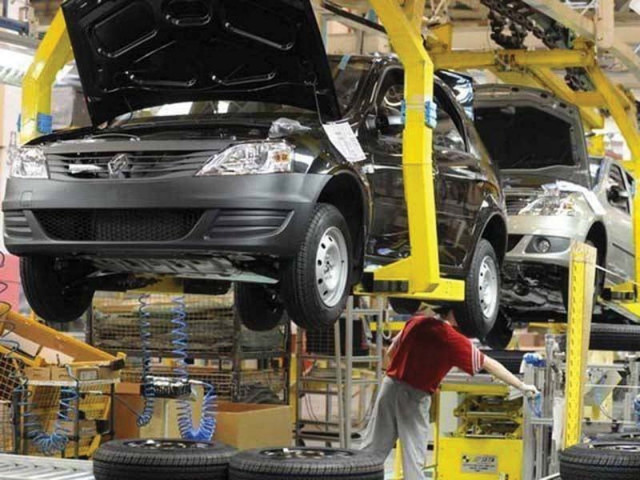
Industry experts warn CKD imports fuel trade deficit as localisation fails to keep pace
The three Japanese carmakers lacked innovation and competitiveness, despite the incentives offered to them in the previous policies, said government officials as they announced the auto policy. PHOTO: FILE
KARACHI:
In the last two auto policies, the government aimed to increase competition in the auto sector by lowering entry barriers through tax incentives, an objective the country has largely achieved.
The sector now stands at a point where it is necessary to push new entrants to begin localising parts of their vehicles so that it becomes productive, creates jobs and adds value, rather than remaining consumption-driven and placing a burden on already strained foreign exchange reserves.
“Pakistan cannot achieve sustainable economic growth while expanding its auto sector on imports instead of localisation,” said Mashood Khan, Director of the Small and Medium Enterprises Development Authority (SMEDA).
Khan said Pakistan’s auto industry is facing a growing structural challenge as the import of completely knocked down (CKD) and semi knocked down (SKD) kits continues to rise, leading towards an import-driven assembly of vehicles. What was intended to promote localisation and technology transfer ultimately led to increased reliance on imported components, which was not the original goal.
This trend is particularly concerning given Pakistan’s limited foreign exchange reserves and narrow export base, where rising imports directly contribute to a widening trade deficit and increased dependence on external financing, he stressed.
Historically, CKD and SKD imports were intended as temporary mechanisms to support the development of domestic manufacturing capacity. However, instead of declining with industrial maturity, imports have steadily increased from 2021-22 to 2025-26.
“This reflects that localisation has not kept pace with industry growth,” said Khan.
Rather than evolving into a value-added manufacturing sector, the industry is increasingly operating as a sub-assembly ecosystem with minimal local content.
A key factor behind this imbalance is the policy framework that allows new entrant OEMs to import CKD and SKD kits at concessional tariff rates with relatively relaxed localisation requirements. These incentives were initially aimed at attracting investment, increasing competition and promoting technology transfer. However, the ground reality suggests otherwise. Many new entrants have established assembly-based operations, importing major components from countries such as China and Korea while contributing limited localisation within Pakistan.
Speaking on the issue, Ali Asghar Jamali, CEO of Indus Motors, said Pakistan remains an attractive and growing auto market with strong future potential, but emphasised that increasing localisation requires a shift in strategy. He noted that the country must develop core upstream industries such as steel, aluminium, plastics and chemicals to support a complete domestic value chain.
He also stressed that a stable long-term policy framework of 15 to 20 years is essential to build investor confidence and encourage global players to bring in capital and technology, which would ultimately support localisation.
Jamali further highlighted that consistency in policies is key to attracting meaningful foreign investment. “When investors see stability and growth potential, they are more willing to invest, and that naturally leads to higher localisation,” he said, adding that localisation and investment must go hand in hand.
Offering a critical perspective, Abdul Rehman Aizaz said previous auto policies introduced in 2016 and 2021 succeeded in attracting new entrants but failed to enforce localisation requirements effectively. As a result, many companies relied on what he described as “screwdriver assembly” – importing semi-assembled units rather than developing local manufacturing capabilities.
He explained that in several cases, vehicles were imported as SKD kits, where major components arrived pre-assembled and were simply fitted together in Pakistan. This limited the role of local vendors and reduced opportunities for domestic value addition. “Even components that could have been assembled locally were brought in as complete sub-assemblies,” he said.
Aizaz noted that these practices continued for more than half a decade, allowing companies to benefit from policy concessions without investing in localisation. He pointed out that cars introduced under such policies often contained as much as 90% to 100% imported components, compared with about 50% in more localised vehicles produced by established players. This imbalance significantly increased the import bill and contributed to foreign exchange outflows.
He further added: “The policy did not deliver meaningful benefits to consumers either.” Despite increased competition, affordable vehicles for middle-income groups remained limited, while small cars continued to be dominated by older models. Some new entrants introduced vehicles that failed to gain traction due to pricing and market mismatch.
At the same time, local auto parts manufacturers faced declining business volumes as imported components replaced domestically produced parts. This, Aizaz said, hindered technological progress and reduced opportunities for SMEs, weakening the overall industrial ecosystem.
Experts also expressed concern over the broader economic implications of rising CKD and SKD imports, noting that the trend has contributed to Pakistan’s widening trade deficit and increased reliance on external financing.
Looking ahead, Aizaz raised concerns about the government’s upcoming electric vehicle (EV) policy, warning that it risks repeating past mistakes. While the policy includes significant incentives and subsidies to promote EV adoption, he argued that it does not adequately address localisation. “If parts continue to be imported at this scale, it will put further pressure on foreign exchange reserves,” he cautioned.
He also highlighted inconsistencies in tax structures, noting that imported components are often taxed at lower rates than locally produced parts, discouraging domestic manufacturing. Additionally, he questioned the classification of certain vehicles, such as plug-in hybrids and range-extended electric vehicles, as EVs despite their continued reliance on internal combustion engines.



Indians sharply cut back on overseas travel spending in March, with remittances for foreign trips dropping by more than $212 million from the previous month, according to Reserve Bank of India data. The fall in outbound travel expenditure came amid rising oil prices linked to the Middle East conflict and persistent pressure on rupee, even as travel remained the single largest component of outward remittances under the Liberalised Remittance Scheme (LRS).In March, travel-related remittances fell to $1.09 billion from $1.3 billion in February and $1.65 billion in January. The decline came at a time when the West Asia conflict pushed oil prices higher and weakened rupee to record lows. Amid the situation, Prime Minister Narendra Modi urged citizens to cut down on foreign travel and adopt measures such as carpooling. Lower overseas travel spending could reduce foreign exchange outflows and help ease pressure on rupee.According to the RBI’s data on outward remittances by resident individuals, travel continued to account for the largest share of money sent abroad under the LRS in March. Total remittances during the month stood at $2.59 billion.The RBI tracks overseas spending across categories including travel, studies abroad, maintenance of close relatives, overseas investments, and property purchases. Under the LRS framework, resident individuals, including minors, can remit up to $250,000 in a financial year for permitted current or capital account transactions.Within the travel segment, the biggest component remained the ‘other travel’ category, which covers holiday spending and international credit card settlements. Indians spent $623.05 million under this category in March, accounting for nearly 57 per cent of total travel-related remittances during the month.Expenditure linked to education travel, including hostel and fee payments, stood at $450.16 million. Business travel, pilgrimage, and overseas medical treatment together accounted for $21.39 million.The data also showed a rise in remittances meant for the maintenance of close relatives abroad. Such transfers increased to $389.78 million in March from $266.18 million in February.At the same time, spending under the ‘studies abroad’ category declined. This category includes payments made for educational services accessed remotely without travelling overseas, such as correspondence courses. Remittances under this head stood at $151.71 million in March, compared to $175.68 million in February and $267.42 million in January.For the financial year 2024-25, Indians remitted a total of $29.56 billion under the LRS. Travel made up the largest portion of this amount at $16.96 billion.The RBI figures further showed that investments by Indians in overseas equity and debt instruments rose significantly to $440.22 million in March from $265.99 million in February.Meanwhile, outward remittances for the purchase of immovable property overseas declined to $38.68 million in March, down from $51.36 million a month earlier.

Gold and silver are expected to take cues from developments in the ongoing US-Iran talks this week, with analysts forecasting a largely steady trend for gold prices while silver may continue to outperform amid geopolitical tensions and elevated crude oil prices.Investors are also likely to track a series of economic indicators from the United States, including GDP data, housing numbers, consumer confidence figures and the Personal Consumption Expenditure (PCE) inflation print, as markets look for signals on the Federal Reserve’s next policy move.“Gold price momentum next week looks sideways, while silver still looks positive as focus will again be on the peace negotiations between the US and Iran to end the war,” said Pranav Mer, Vice President, EBG – Commodity & Currency Research, JM Financial Services Ltd.Trading activity in domestic commodity futures markets will be curtailed on Thursday morning due to Bakri Id.On the MCX, gold futures ended the previous week at Rs 1.58 lakh per 10 grams after posting marginal gains, while silver futures settled lower at Rs 2.71 lakh per kilogram.“Gold traded in a range-bound manner last week, posting marginal gains of around 0.40% on the MCX to close near Rs 1,58,670 per 10 grams,” said Jateen Trivedi, VP Research Analyst – Commodity and Currency, LKP Securities.He noted that crude oil prices witnessed heavy profit booking during the week and corrected nearly 7% from recent highs, easing concerns around inflationary pressure globally.“At the same time, the rupee recovered from weaker levels of 97 against the US dollar to strengthen near 95.70, which limited upside momentum in domestic gold prices despite stable international bullion trends,” Trivedi added.In international trade, Comex gold futures closed the week 1% lower at $4,523.2 per ounce. Silver futures also weakened, slipping nearly 2% to $76.20 per ounce.“Gold prices moved in a consolidative range over the past few sessions, but ended the week with a marginal loss. Prices were steady amid a lack of fresh direction in the market — be it on the economy front or the US-Iran war front,” Mer said.According to analysts, uncertainty surrounding the geopolitical situation has continued to keep markets on edge, particularly as statements from both Washington and Tehran have frequently shifted.On Sunday, US President Donald Trump said that an agreement between the US and Iran aimed at reducing tensions in the Gulf region and reopening the Strait of Hormuz was close to being finalised.Posting on Truth Social, Trump said the deal had been “largely negotiated” and that only final formalities remained.However, Iranian media disputed Trump’s remarks regarding the full reopening of the Strait of Hormuz, stating that Tehran would continue to maintain control over the key waterway.Analysts said the contrasting positions from both sides are likely to keep bullion prices sensitive to any fresh headlines emerging from the region.Meanwhile, market participants are also expected to monitor comments from Federal Reserve officials after Kevin Warsh formally succeeded Jerome Powell as head of the US central bank on Friday during a period of geopolitical tensions, market volatility and persistent inflation pressures.
Business
Stock market this week: Middle East tensions, oil prices, FII flows & more — what will guide Dalal Street

Dalal Street is heading into the new trading week with global uncertainty firmly in focus, as investors keep a close watch on the evolving situation in the Middle East, fluctuations in crude oil prices and the behaviour of foreign investors. Analysts said that sentiment is likely to remain fragile and heavily influenced by developments in negotiations between the United States and Iran, while movements in the rupee, global equities and the US dollar are also expected to shape market direction in the days ahead.Trading activity during the week is also expected to be shaped by the rupee’s movement against the US dollar, while investors continue to assess the impact of global uncertainty on risk appetite. Markets will remain closed on Thursday for Bakri Id.A key trigger for sentiment emerged over the weekend after US Secretary of State Marco Rubio said negotiations between Washington and Tehran had shown some progress, raising expectations that the ongoing conflict in West Asia could move closer to resolution.Ajit Mishra, SVP, Research at Religare Broking Ltd, said investors would closely track developments tied to crude oil, global currencies and bond markets. “This week is expected to remain highly sensitive to global macroeconomic developments and currency movements. Investors will also monitor crude oil prices, developments in US-Iran negotiations, and the trajectory of the US dollar and bond yields, all of which are expected to influence foreign flows and overall risk appetite,” he said.Apart from geopolitical developments, the Reserve Bank’s decision to transfer a record Rs 2.87 lakh crore dividend to the government for the year ended March 2026 is also expected to remain in focus. The announcement comes at a time when rising import costs and supply chain pressures linked to the West Asia conflict continue to weigh on the economy.According to Mishra, market participants are expected to evaluate how the RBI payout could affect liquidity conditions, fiscal flexibility and government spending in the months ahead.Ponmudi R, CEO of Enrich Money, said market behaviour in the coming sessions is expected to remain sensitive to fresh headlines surrounding diplomatic negotiations and oil prices. “Markets are expected to remain volatile and heavily headline-driven in the coming week, with investor attention firmly focused on developments surrounding the US–Iran situation, broader diplomatic negotiations and movements in crude oil prices,” he said.“While hopes of a diplomatic breakthrough and easing geopolitical tensions have improved sentiment modestly, investors continue to remain cautious as uncertainty surrounding the final outcome of the negotiations remains elevated,” Ponmudi added.He further said investors are expected to watch institutional flows, global equity trends, macroeconomic indicators and the rupee for further market cues. “With global uncertainty still elevated, market participants are likely to remain selective and cautious despite the recent improvement in sentiment,” he said.Vinod Nair, Head of Research at Geojit Investments Limited, said markets would require stronger support factors to build a more constructive setup. According to him, a meaningful decline in crude oil prices, steady foreign institutional investor flows and stable Q1FY27 earnings expectations without major downgrades would be important for sustained momentum.In the previous week, the BSE benchmark index rose 177.36 points, or 0.23%, while the NSE Nifty advanced 75.8 points, or 0.32%.


Patti LaBelle on being called a legend: “I have earned it”

Christopher Nolan’s ‘The Odyssey’ trailer sparks major backlash online

2026 NASCAR Odds: Denny Hamlin Favored At Coca-Cola 600, Tyler Reddick Second

-

 Entertainment1 week ago
Where Pete Davidson, Elsie Hewitt stand after breakup: Details revealed
-

 Politics1 week ago
Rising diesel costs from Iran war strain US school budgets
-

 Tech1 week ago
Why Is Your Grill So Dumb? The Best Grills Set Temp Like an Oven
-

 Tech1 week ago
This Solar-Powered Smart Sprinkler Keeps My Lawn Watered Without Any Power Cables
-
 Fashion1 week ago
RMG trade bodies seek policy support from Bangladesh PM
-
 Fashion6 days ago
Nigeria Kwara Garment Factory, KWS Garment Production Village ink pact
-
 Fashion1 week ago
India calls for aligning standards, customs procedures with Africa
-
 Sports1 week ago
Pakistan steady after Das ton | The Express Tribune