

Fashion
Avantex Fashion Pitch 2025 awards GoldenEye, Green Worms

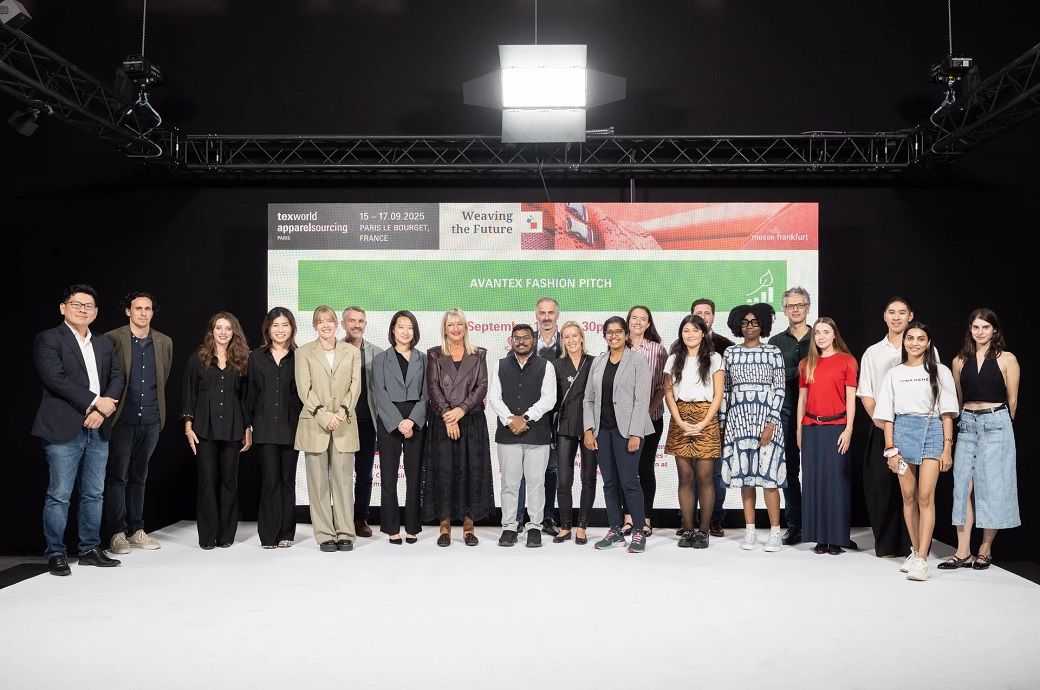
The Avantex Fashion Pitch jury awarded the 2025 prize to GoldenEye Smart Vision for its artificial intelligence-based textile quality control system.
GoldenEye Smart Vision won the 2025 Avantex Fashion Pitch for its AI-based textile quality control system, boosting efficiency and sustainability.
A special prize went to India’s Green Worms for its waste collection and recycling initiative creating jobs for disadvantaged women.
The contest highlighted innovation, digitalisation, and CSR in fashion’s future.
By perfecting the detection of visual defects in fabrics, this digital solution enhances customer satisfaction, optimises production processes and reduces raw material consumption. The jury also chose to award a special prize to Green Worms, an Indian micro-enterprise that has set up a local waste collection and processing system. Recycling waste creates sustainable jobs for women from disadvantaged socio-economic backgrounds.
‘The jury members were impressed by the quality of the designs submitted by the companies selected for this edition,’ said Claudia Franz, Director of Brand Management Apparel Fabrics & Fashion at Messe Frankfurt. ‘By recognising the GoldenEye Smart Vision project and choosing to award a special prize to Green Worms, we are supporting innovative solutions that address today’s major challenges,’ she added.
‘The choice made by the Avantex Fashion Pitch jury reflects the growing role of digitalisation in textile production processes and the ongoing transformation of the fashion world, particularly in terms of CSR issues,’ emphasises Julien Schmoll, Director of Marketing and Communications at Messe Frankfurt France. ‘These are strategic directions that we encourage and welcome,’ he concludes.
GoldenEye Smart Vision will benefit from a stand worth €2,800 (~$3320.3)at Avantex Paris 2026 and €1,000 offered by Messe Frankfurt France, plus €1,000 offered by Texpertise Network, the Messe Frankfurt Group’s textile sector network, a one-year subscription to the VLGE creative solution (worth €30,000), one year of incubation at Foundry offered by IFA Paris (worth €4,500), a keynote speech at the Circular Textile Days event, and an article in Luxiders Magazine.
Green Worms will receive €1,000 from Texpertise Network, the Messe Frankfurt Group’s textile industry network, a marketing package from Circular Textile Days, and a consultation offered by Jayne Simone Estève-Curé.
The final of the 8th edition of the Avantex Fashion Pitch competition, organised by Messe Frankfurt France, rewards the most innovative, sustainable and relevant projects for the future of fashion. Each of the eleven finalists for 2025 – Adirelounge, Ananas Fashion, CQ Studio, Delfi, Garment By, Green Worms, GoldenEye Smart Vision, Myth AI, Sequinova, Meddle, Style Shifter – had five minutes to convince the jury composed of Jayne Simone Estève-Curé, fashion and luxury expert consultant, Yoobin Jung, ventures associate sustainability at Plug and Play Tech Centre, Carol Hilsum, Investor & Tech Leader at Assembly Ventures, Claudia Frantz, Director Brand Management Messe Frankfurt, Rachel de Gooijer, Marketing Manager, Circular Textile Days.
Note: The headline, insights, and image of this press release may have been refined by the Fibre2Fashion staff; the rest of the content remains unchanged.
Fibre2Fashion News Desk (HU)












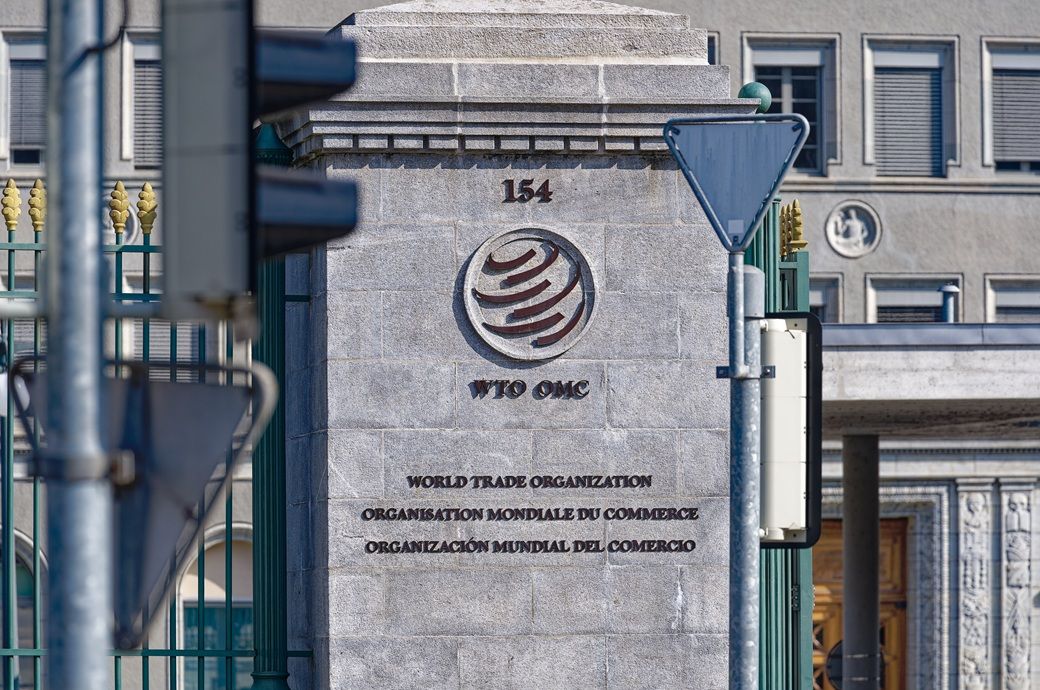
“The WTO needs to change if it intends to have any relevance as the international trading system transitions to focus on reciprocity and balance. The United States, with this report, continues to lead on concrete proposals to promote member-driven reform discussions,” said US Trade Represenative Jamison Greer in a statement.
The US believes WTO members can take a step toward levelling the playing field by strengthening incentives to comply with existing obligations to submit notifications, said a report from the US delegation at the WTO circulated among members.
The report addresses transparency, eligibility for special and differential treatment, plurilateral negotiations, the role of the MFN principle and the Secretariat.
“Our report addresses key issues such as transparency, eligibility for special and differential treatment, plurilateral negotiations, the role of the most favoured nation principle, the role of the Secretariat, and essential security.”
The report builds on an initial paper issued by the United States in December 2025 and is intended to give impetus to reform discussions during and after MC14.
Washington believes that WTO members should seek to restore the purpose of special and differential treatment (SDT) by agreeing to objective criteria for determining eligibility and efforts should focus on finding a more flexible pathway to incorporate plurilateral agreements into the WTO architecture.
Members need to rethink how the most favoured nation (MFN) principle functions in its current form and embark on a frank discussion of the link between MFN and reciprocity, which itself is a bedrock WTO founding principle, the report noted.
Members should ensure the WTO Secretariat serves the interests of the members, and not of the institution or any abstract trading ‘system’, it said.
Fibre2Fashion News Desk (DS)

Shipping schedules have been frequently adjusted recently at Saigon Port’s Hiep Phuoc terminal, reducing operational stability.
Ho Chi Minh City businesses are adjusting production plans, diversifying markets and seeking new supply chains due to disruptions in shipping routes and soaring logistics costs arising out of the Iran war.
Shipping schedules have been frequently adjusted at Saigon Port’s Hiep Phuoc terminal, reducing operational stability.
Cargo turnover has slowed as incoming and outgoing shipments have become uneven.
Cargo turnover has slowed as incoming and outgoing shipments have become uneven, affecting businesses’ cash flow, according to a report by a domestic media outlet.
Vessel calls drop has also reduced workload of port operators, shipping lines, freight forwarders and logistics companies. Port workers engaged in container handling and operations have been directly hit.
Due to a diversified customer base and a significant share of intra-Asia cargo, the port’s throughput remains within controllable levels, said Nguyen Anh Hao, acting director of Hiep Phuoc terminal.
Pham Van Xo, chairman of the city’s Import-Export Association, said longer shipping routes had reduced vessel availability while demand for cargo transport remained high. This resulted in shortages of container space and rising fuel costs, insurance premia and security surcharges.
The situation has hit cash flow of businesses and created pressure to maintain payroll and labour stability.
If the disruptions persist, apart from the logistics sector, major export industries like garments, footwear, wood products, agriculture and seafood may face ripple effects, experts cautioned.
Falling orders or rising costs could force companies to scale down production, directly affecting workers’ income and employment.
Despite the challenges, businesses in Ho Chi Minh City are seeking solutions like diversifying shipping routes, expanding markets and strengthening negotiations with partners.
Fibre2Fashion News Desk (DS)

Fast fashion, particularly products priced below ₹1,000 (~$10.82), dominates their consumption patterns, reflecting a clear preference for affordable purchases, Reedseer said in an article titled ‘Gen Z: Defining Trends, Influencing Spends’ by Mrigank Gutgutia.
India’s Gen Z will drive nearly half of the fashion market by 2030, with $1.3 trillion in spending, according to Reedseer.
Value-conscious and digitally native, they favour affordable fast fashion and are influenced by peers and online content.
Their choices prioritise identity, comfort, and authenticity, while also shaping household purchases.
Having grown up in a digital-first environment, Gen Z consumers exhibit a strong comfort with online platforms, a behaviour further reinforced during the pandemic years. As many enter the workforce, their spending is increasingly directed towards identity-building, with purchasing decisions shaped heavily by peer influence and social validation.
Despite becoming the largest user base on leading fashion e-commerce platforms, Gen Z consumers tend to spend less per transaction than millennials, underscoring their value-conscious approach. At the same time, categories such as men’s accessories and sneakers are witnessing strong growth, indicating evolving consumption patterns across genders.
Comfort and versatility define Gen Z’s fashion choices, with two-thirds preferring semi-formal or casual wear even in professional settings. Beyond personal consumption, this cohort plays a decisive role in shaping household purchasing decisions, particularly for emerging brands, effectively acting as internal influencers within families.
Gen Z prioritises authenticity, inclusivity, and self-expression, with around 52 per cent choosing products that align with their identity, while nearly half discover brands through digital content. This has made influencer-led marketing and creator collaborations central to brand-building efforts.
The article emphasised that successful brands must transition from aspirational messaging to identity-driven positioning, supported by personalisation, community engagement, and cultural relevance. As Gen Z consumers establish long-term preferences in their twenties, brands that succeed in building early affinity are likely to secure sustained competitive advantage in the years ahead.
Fibre2Fashion News Desk (SG)


Three bets and two Eliminator picks for the men’s tournament round of 16

Delay in FSSAI finalising front of pack labelling rules unusual by its own norm – The Times of India

Who’s next at UNC? Potential candidates to replace Hubert Davis, their priorities

-
 Fashion1 week ago
Sales at US apparel, clothing accessories stores up 4% YoY in Jan 2026
-
 Business1 week ago
Peloton is launching bikes and treadmills for gyms, accelerating commercial strategy
-

 Tech1 week ago
Justice Department Says Anthropic Can’t Be Trusted With Warfighting Systems
-
 Business1 week ago
Stocks and pound rise as US rate call approaches
-
 Business1 week ago
Brits cashing in jewellery as gold price hits record high
-

 Entertainment7 days ago
Val Kilmer revived 1 year after death through AI
-

 Sports1 week ago
PCB files complaint over allowing Bangladesh to take review on penultimate ball – SUCH TV
-

 Sports1 week ago
March Madness 2026 – How to watch in SA, start time, schedule, TV channel for NCAA championship basketball tournament