

Fashion
Bangladesh to keep customs houses open during Eid to boost trade


According to a directive issued by the National Board of Revenue (NBR) on March 10, customs houses and excise stations will remain operational on public and weekly holidays on a limited scale, except on Eid day. The decision will allow import and export processing between March 17 and March 23.
Bangladesh will keep customs houses operating on a limited scale during the Eid holidays to ensure uninterrupted trade.
Import and export processing will continue from March 17 to March 23, except on Eid day.
The move aims to prevent supply chain disruptions and support smooth cargo clearance and shipments during the extended holiday period.
The customs commissioners have been instructed to take necessary measures to keep trade-related services functioning during the holiday period. The move is aimed at ensuring that shipment procedures, cargo handling, documentation and clearance processes continue without disruption.
The instruction followed a request from the Bangladesh Garment Manufacturers and Exporters Association (BGMEA), which urged authorities to maintain customs operations during the Eid break to support export-oriented industries and sustain the flow of international trade.
The decision is intended to prevent supply chain disruptions during the extended holiday period and to help exporters and importers maintain production schedules and delivery commitments.
Fibre2Fashion News Desk (JP)










“The Northern Indicator closed 26 cents higher, and the Southern Indicator gained 8 cents. Despite a stronger Australian dollar creating headwinds for exporters, the market remained resilient, with the EMI and Western Market Indicator (WMI) rising by 35 US cents and 25 US cents respectively in US dollar terms,” the Australian Wool Innovation (AWI) Limited said in its Commentary for week 37 of the current Australian wool marketing season.
Australia’s wool market remained firm as strong demand for fine Merino fleece supported price gains despite currency headwinds.
Higher offerings and a slightly lower clearance rate suggest cautious seller participation, while continued premiums for quality wool indicate steady global demand.
Market direction may depend on currency movements and export demand in coming weeks.
Eastern selling centres outperformed Fremantle across most Merino fleece categories, reflecting stronger buyer competition across the larger catalogues. Finer Merino fleece in the eastern markets rose by 30–35 cents, while medium Merino fleece increased by 10–15 cents. In contrast, prices in Fremantle eased slightly, with finer fleece slipping 5–10 cents and medium types falling 10–15 cents, the AWI commentary noted.
Merino cardings led the market, gaining 25–30 cents across all three selling centres. Crossbred wool, however, continued to weaken, declining by around 15–20 cents.
Premiums remained strongest for well-styled fleece with high tensile strength and low vegetable matter content.
A total of 45,476 bales were offered during the week as sellers responded to firm market conditions. The clearance rate eased to 92.8 per cent, indicating some seller resistance to current price levels despite steady demand.
Next week’s national offering is expected to total 42,953 bales, with all three centres returning to the regular Tuesday–Wednesday selling schedule.
Fibre2Fashion News Desk (CG)
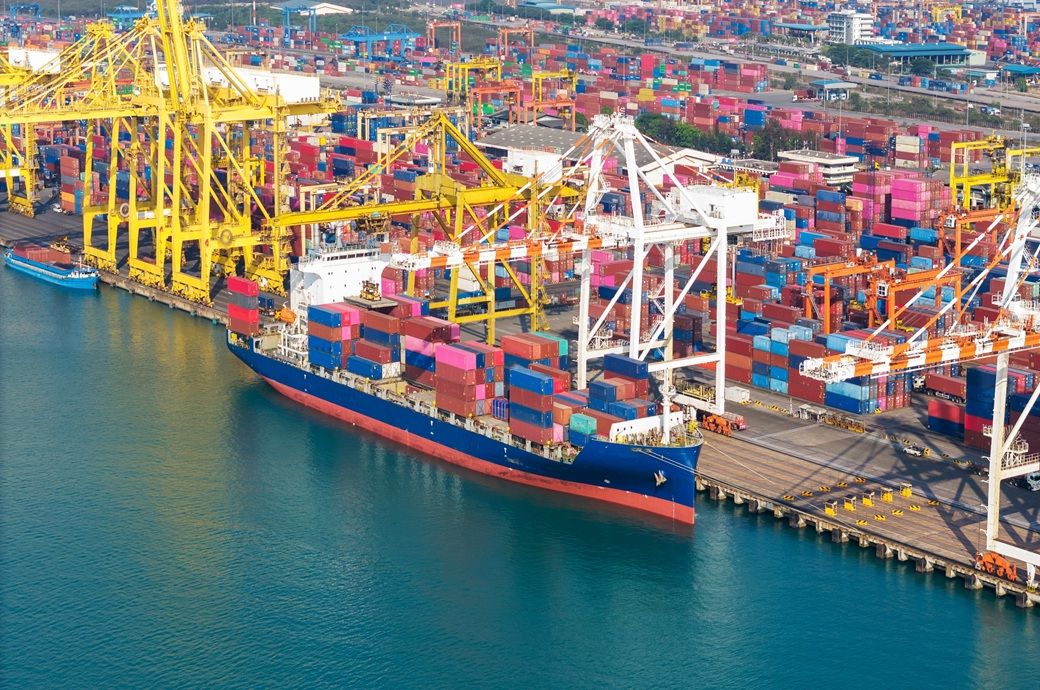
Escalation could interfere with oil and gas shipments passing through the Strait of Hormuz, a critical maritime route, the chamber cautioned.
A prolonged Middle East conflict could push up global fuel prices, raise costs across manufacturing and logistics supply chains, disrupt global trade and affect India’s energy supplies, ASSOCHAM has said.
India, which depends heavily on crude oil imports, may see its current account deficit widen and inflation rise if global oil prices surge, it said.
Energy-intensive industries could face challenges.
India, which depends heavily on crude oil imports, may see its current account deficit widen and inflation rise if global oil prices surge, the industry body said.
“Beyond goods trade, the Gulf is home to a large share of the Indian diaspora, who work in the construction, healthcare, hospitality and tourism industries,” chamber president N K Minda said, drawing attention to remittances from the region.
India imported goods worth about $98.7 billion from the region last year. These included energy, fertilisers and industrial inputs.
Energy-intensive industries could face challenges if disruptions continue, ASSOCHAM noted.
Container shipments and product deliveries across regions are also being delayed.
Fibre2Fashion News Desk (DS)

The target, established in 2021, forms part of the company’s broader strategy to accelerate the transition towards a business model that balances sustainability with long-term growth. The reduction applies to, which include emissions from the company’s own operations such as stores and main offices, Fast Retailing said in a press release.
The company said that GHG emissions from energy use at its stores and major offices fell 90.3 per cent in FY25 compared with the FY19 base year, surpassing the original target. The company attributed the achievement to a combination of energy efficiency measures and expanded use of renewable energy across its operations.
Japan’s Fast Retailing has achieved a 90 per cent reduction in greenhouse gas emissions from its own operations in FY25, four years ahead of its FY30 target.
Emissions fell 90.3 per cent from FY19 levels through energy efficiency and renewable energy use.
The company has also raised its supply chain emissions reduction target to 30 per cent by FY30 and aims to achieve net-zero emissions by 2050.
To lower emissions, Fast Retailing implemented several initiatives to improve energy efficiency at stores and offices. These measures include controlling electricity consumption outside business hours and installing air-conditioning systems that automatically adjust to preset temperatures. The company has also expanded the use of renewable energy and promoted the development of energy-efficient roadside stores as part of its store design strategy.
Alongside operational reductions, the company has also strengthened its climate targets across its supply chain. In November 2025, Fast Retailing raised its scope 3 emissions reduction target—which covers emissions from raw material production, fabric manufacturing and garment sewing for UNIQLO and GU products—from 20 per cent to 30 per cent by FY30, compared with FY19 levels.
As of FY25, emissions from raw materials, fabric and garment production had declined 19.9 per cent, reflecting steady progress towards the revised target.
Fast Retailing is also advancing its renewable energy transition. The share of renewable energy used across its stores and major offices worldwide reached 93.5 per cent in FY25, up from 84.7 per cent in the previous fiscal year, moving the company closer to its goal of 100 per cent renewable energy use by FY30.
The company noted that its climate targets have been approved by the Science Based Targets initiative (SBTi) and align with the level of decarbonisation required to achieve the goals of the Paris Agreement.
Fast Retailing said it will continue working with production partners across its global supply chain to further reduce emissions and advance its long-term objective of achieving net-zero greenhouse gas emissions by 2050.
Fibre2Fashion News Desk (SG)


Men’s 2026 March Madness odds: Duke, Michigan, Arizona among the championship favorites

Trump pleads NATO and China for help to reopen Strait of Hormuz

Firms to get £3,000 for each unemployed 18-24 year-old they hire

-

 Politics1 week ago
India let Iran warship dock the day US sank another off Sri Lanka, say officials
-

 Entertainment1 week ago
Harry Styles kicks off new era with ‘One Night Only’ comeback show
-
 Business1 week ago
Restaurant group changes name after bid to buys pubs across the UK
-
 Business4 days ago
Stock market crash today (March 12, 2026): Nifty50 opens below 23,600; BSE Sensex down over 900 points on continuing US-Iran war – The Times of India
-

 Tech1 week ago
It’s Time to Wrangle Your Messy Wires With Our Handy Guide to Cable Management
-

 Sports1 week ago
Aaron Judge leads Team USA to World Baseball Classic opener win over Brazil
-
 Business1 week ago
Inside the booming business of wellness third spaces and membership clubs
-

 Sports1 week ago
Eight Pakistanis Appointed to ITF and ATF Committees for 2026–2027 – SUCH TV