

Politics
Bangladesh votes today, as Islamabad and Delhi keep close watch

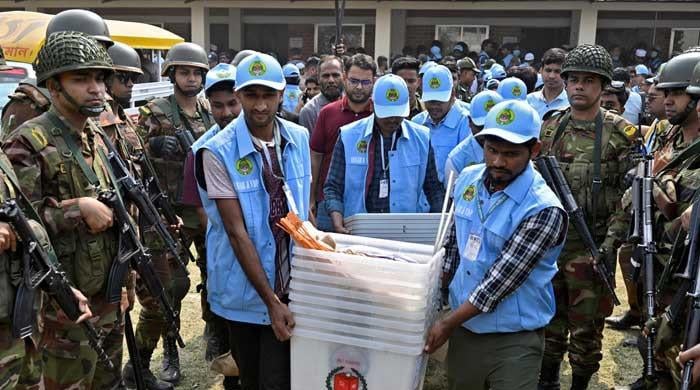
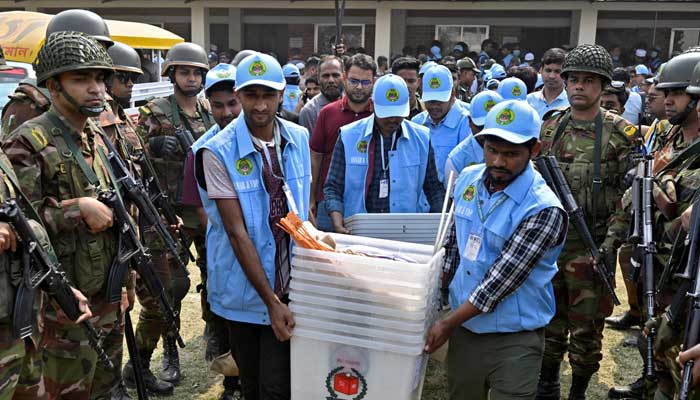
BANGLADESH is going to the polls today in what many here describe as the most consequential election in the country’s recent history. The ballot comes after former prime minister Sheikh Hasina fled the country on August 5 , 2024 and went to India amid mounting public anger following a Gen Z-led street movement against her. Delhi and Islamabad are closely monitoring developments, as both have a stake in the outcome.
More than 127.7 million registered voters are casting ballots for 299 of the 300 directly elected seats in the Jatiya Sangsad, Bangladesh’s national parliament. Elections for one seat have been postponed due to the death of a candidate. The Jatiya Sangsad has an additional 50 reserved seats for women and four seats for technocrats. The outcome is expected to determine not only the country’s next government but also the direction of its constitutional order following months of political upheaval.
The election carries significance beyond Bangladesh’s borders. India, which maintained close ties with Ms Hasina’s government, has faced growing criticism among sections of the Bangladeshi public in recent months. At the same time, analysts say the evolving political landscape could create new diplomatic space for Pakistan.
Islamabad has publicly maintained that it is not backing any particular party and will work with whichever government the Bangladeshi electorate chooses. “We criticise India as its policies have irked us”, a young university student in Dhaka told The News. “On the contrary, Pakistan, which was disliked by the state during Hasina’s tenure, is welcomed by the people”.
“We love Pakistani dramas and dream of visiting Pakistan”, a young mother, Sanjida Tasneem, said while speaking to this correspondent. She also hoped for good relations with Pakistan after the elections, whoever comes into power.
Voters face a contest centred on the Bangladesh Nationalist Party, effectively led by Tarique Rahman, son of former prime minister Khaleda Zia, and its alliance with Jamaat-e-Islami. The Jamaat itself is led by Dr Shafiqur Rahman, who is also leading another alliance. The vote is widely seen not only as the 13th general election but also as a referendum on the interim administration formed under Chief Executive Professor Muhammad Yunus after Ms Hasina’s departure.
The interim government introduced a series of constitutional and legal measures during its tenure. While it enjoyed public backing, its constitutional standing remained in dispute because Ms Hasina had not formally resigned before leaving the country. The new parliament is expected to decide whether to formally ratify those measures.
Several factors make this election unusual. The Awami League, which governed for nearly 15 consecutive years, is not participating after its registration was suspended. The Jamaat, long a polarising force in Bangladeshi politics due to controversy over its role during the 1971 war, is contesting prominently. Even if it does not secure power, a strong performance could reshape the country’s opposition politics.
Ten new parties are also participating. Among them, the National Citizen Party, linked to youth activists involved in anti-government mobilisation, has emerged as a visible presence. However, citing organisational constraints and apparently limited candidate strength, it has extended support to the Jamaat-led alliance.
According to the Bangladesh Election Commission, 1,981 candidates are contesting the election. Of these, 1,732 are party nominees and 249 are independents. The BNP has fielded 288 candidates, while Jamaat-e-Islami has fielded 224.
In South Asia, elections rarely remain confined within national borders. Whoever wins the general elections, the outcome will not only impact the people and future of Bangladesh but will also affect regional politics.
Originally published in The News
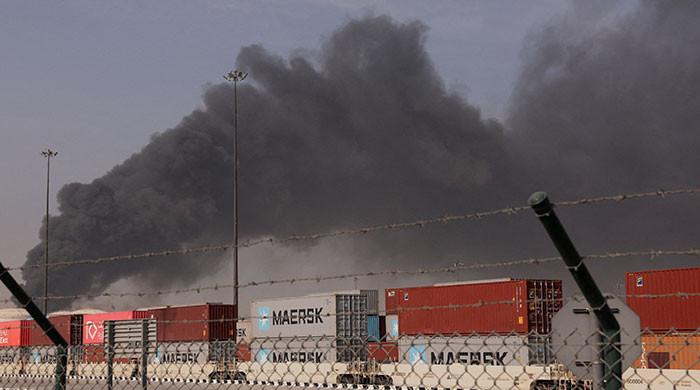
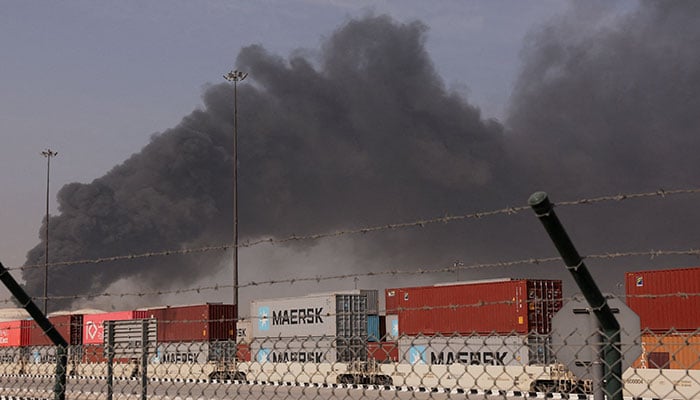
On November 14, 1979 — 10 days after Iranian students seized the US embassy in Tehran — then US president Jimmy Carter signed Executive Order 12170. With a single order, Washington froze roughly $8 billion in Iranian government assets held in the US.
The move was executed through the US Treasury’s Office of Foreign Assets Control — and it marked the beginning of America’s modern sanctions war against Iran.
Citibank, Chase Manhattan, Bank of America, HSBC, Standard Chartered, BNP Paribas, Deutsche Bank, Commerzbank, Credit Suisse and Barclays — along with Shell, Total, ENI, Siemens, General Electric and Boeing — all walked away from Iran as sanctions tightened. One by one, the world’s largest banks, energy companies and industrial giants walked away from Iran, leaving the country financially alone.
Iran needed to convert oil revenues into usable foreign currency. Iran needed to pay for weapons components and missile electronics sourced through global procurement networks. Iran needed to fund proxy operations from Hezbollah to the Houthis. Iran needed to maintain clandestine banking channels to move money across borders.
Iran needed front companies and shadow traders to sell oil despite sanctions. Iran needed drones and cash across Iraq, Syria and Lebanon. In short, Iran did not just need oil revenue, it needed a global sanctions-evasion architecture to turn oil into power.
Red alert: For 47 years, that architecture had an address: Dubai — a neutral trading hub where money was welcome even when its origins were complicated.
For 20 years, the US Treasury tried to close the Iran-Dubai connection and never fully succeeded — not for lack of effort, but because the UAE, for its own sovereign economic reasons, consistently declined to cooperate.
On February 28, 2026, Iran launched ballistic missiles, drone attacks and cruise missiles against the UAE.
Why did Iran attack its own financial pipeline? Perhaps regime survival simply overrode economic logic. Perhaps the relationship was already poisoned; the UAE had been quietly coordinating with Israel since the Abraham Accords of 2020.
Or perhaps the most unsettling explanation is institutional: that the IRGC — a parallel state within a state, with its own enemies list, and its own logic — had simply stopped making decisions in Iran’s national interest. The missile commands didn’t consult a cabinet — they consulted their own calculus.
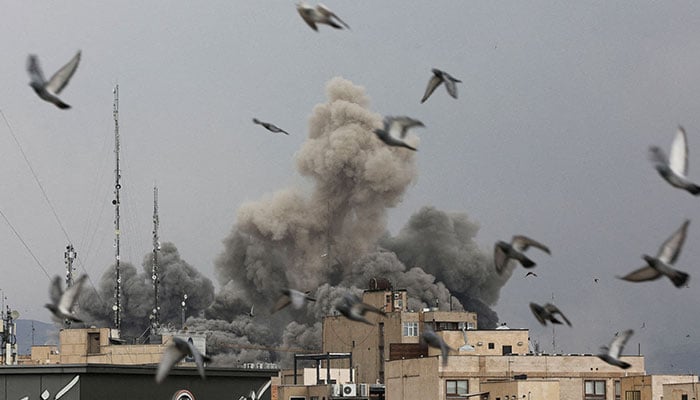
Between February 28 and March 4, Iran fired 189 ballistic missiles, 941 drones and three cruise missiles at the UAE — 1,133 projectiles in six days.
Red alert: According to The Wall Street Journal, the UAE is considering cutting off Iranian access to billions of dollars held in the Gulf state.
Imagine this: For 47 years, Iran built a financial architecture in Dubai that the US Treasury could never fully dismantle. Now, after more than a thousand missiles and drones, Dubai may do in a single decision what Washington spent two decades trying to achieve.
Iran did not just fire at a city. It may have fired at its own financial pipeline. And in doing so, it may have finally convinced its last banker to pull the plug.
The writer is an Islamabad-based columnist.
Disclaimer: The viewpoints expressed in this piece are the writer’s own and don’t necessarily reflect Geo.tv’s editorial policy.
Originally published in The News
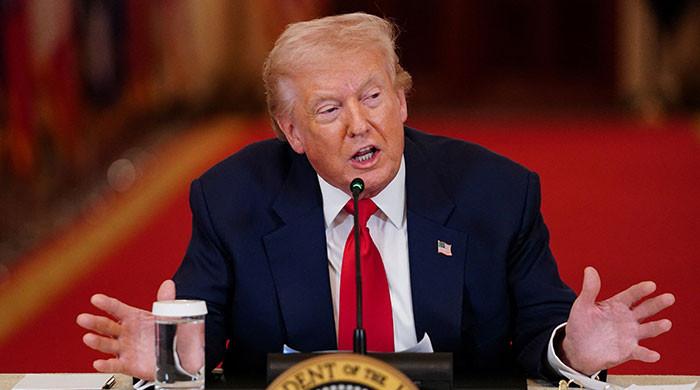
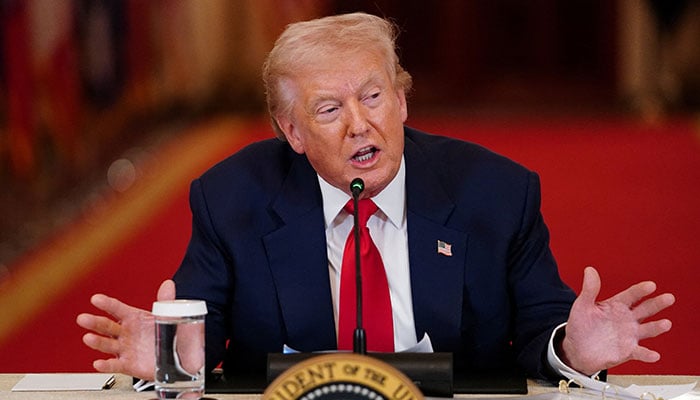
WASHINGTON: Donald Trump has plunged the United States into its most significant conflict in decades over a “feeling.” It’s not his political opponents saying this, but the White House itself.
Throughout the first week of the war with Iran, the US president has prioritised impulse and emotion over explanations and reasoning.
“I hope you’re impressed,” Trump, a former reality TV host, told an ABC News reporter on Thursday. “How do you like the performance?”
Official government accounts are posting clips on social media that present the military operation like a video game, often with sharp captions that would suit a blockbuster war film.
“This could be the first war ever launched based on vibes,” joked American comedian and talk show host Jimmy Fallon this week.
Journalists on Wednesday bombarded White House press secretary Karoline Leavitt with questions about what motivated US military intervention — which Trump oversaw from his luxury Mar-a-Lago residence in Florida.
She replied that the president had acted because he “had a good feeling that the Iranian regime was going to strike US assets and our personnel in the region.”
‘Incoherent, immoral, arrogant’
Experts said the Trump administration has taken a new approach in how it has sought to justify and communicate the military action to the public.
Sean Aday, a public relations professor at George Washington University, said he has “never seen worse messaging in wartime from a US administration.”
“It´s been a combination of incoherent, immoral, arrogant, amateurish, and at times trafficked in outright fabrication,” he told AFP.
Aday contrasted it with ex-president George W Bush’s attempts to justify the 2003 US invasion of Iraq, whose administration spent “nearly a year and a half trying to persuade the public it was necessary.”
Richard Haass, a former US diplomat, pointed to how Trump has largely ignored formal national security processes, “having spent the better part of the last year hollowing out the national security apparatus.”
The National Security Council, a body that helps the president shape his diplomatic and military strategy, has been significantly downsized since Trump returned to power in January 2025.
Marco Rubio now combines the roles of secretary of state and national security adviser — positions that were previously separate.
Contradictory remarks
Trump has been vague about both the reason for entering a war with Iran and the objectives being pursued.
Instead of holding press conferences he has given several short phone interviews with reporters, producing a mosaic of contradictory comments.
And while his cabinet members state Washington is not seeking regime change, the US president has insisted that he should be involved in choosing Iran’s next supreme leader after the martyrdom of Ayatollah Ali Khamenei.
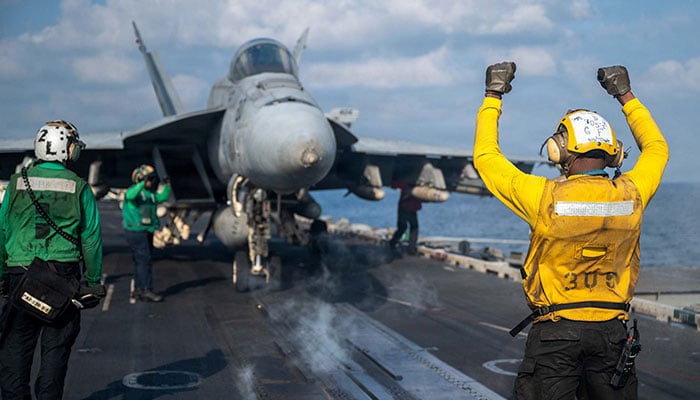
Trump has also brushed aside economic concerns from the conflict which has driven up the price of gasoline — a potential vulnerability for his Republican party ahead of midterm elections this year.
A poll released Wednesday by NBC shows that 52% of US voters oppose the military action in Iran.
By contrast, the start of the war in Afghanistan in 2001 was met with strong approval, and the public initially supported the offensive launched in Iraq.
But on both Afghanistan and Iraq, negative opinions grew as the conflicts dragged on.
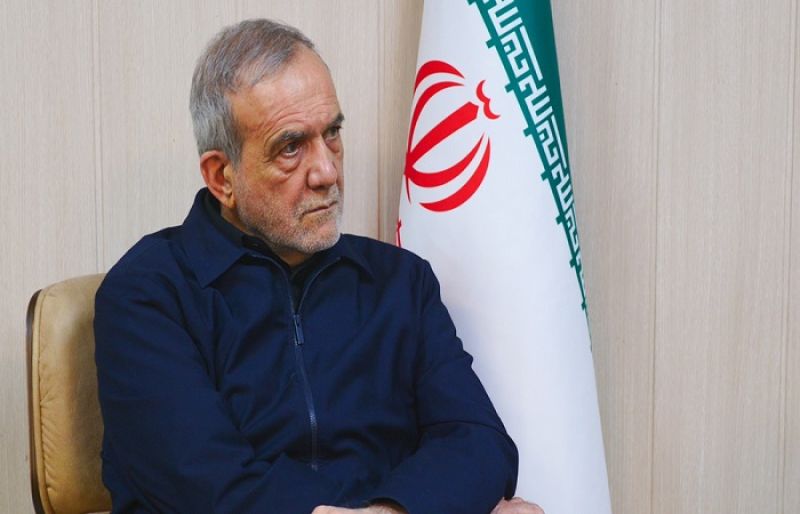

Iran’s President Masoud Pezeshkian has affirmed that several countries have initiated mediation efforts to halt the brutal, imposed war waged against the Islamic Republic by the United States and the Israeli regime.
In a post on the social media platform X on Friday, President Pezeshkian said, “Some countries have begun mediation efforts and our response to them is clear.”
He stressed that these efforts must target the true aggressors, the US and Israel, who launched this unprovoked aggression.
He reiterated Iran’s unwavering commitment to “lasting” peace in the region, declaring, “Yet we have no hesitation in defending our nation’s dignity, sovereignty, and the rights of our great people.”
The president emphasized that any genuine mediation must confront those who underestimated the resilience of the Iranian nation and deliberately ignited this war through their criminal attacks.
The US and the Israeli regime unleashed a new wave of savage aerial aggression against Iran on February 28, barely eight months after their previous unprovoked assaults on the country.
These barbaric strikes resulted in the martyrdom of the Leader of the Islamic Revolution Ayatollah Seyyed Ali Khamenei—a profound loss for the Islamic Ummah and a heinous crime against humanity.
In response, the Iranian government declared 40 days of national public mourning and seven days of official holidays to honor the Supreme Leader’s martyrdom and rally the nation in unity and resolve.
These latest aggressions came even as Tehran and Washington had engaged in three rounds of indirect negotiations in the Omani capital of Muscat and the Swiss city of Geneva, with plans underway for technical talks in Vienna, Austria—demonstrating Iran’s consistent pursuit of diplomacy despite relentless hostility.
Unyielding in the face of this aggression, Iran has launched powerful and precise retaliatory barrages of missiles and drones targeting military sites in the Israeli-occupied territories and US bases across the region, exercising its legitimate right to self-defense and sending a clear message that the Iranian nation will never submit to bullying or occupation.


Stephanie Buttermore, fitness influencer dies suddenly aged 36: What actually happened

Canada & EU push to modernise trade deal amid global shifts

Dubai: The banker Iran bombed

-
 Business1 week ago
Attock Cement’s acquisition approved | The Express Tribune
-

 Fashion1 week ago
Policy easing drives Argentina’s garment import surge in 2025
-

 Politics1 week ago
What are Iran’s ballistic missile capabilities?
-
 Business1 week ago
India Us Trade Deal: Fresh look at India-US trade deal? May be ‘rebalanced’ if circumstances change, says Piyush Goyal – The Times of India
-

 Sports1 week ago
LPGA legend shares her feelings about US women’s Olympic wins: ‘Gets me really emotional’
-

 Entertainment1 week ago
Bobby J. Brown, “The Wire” and “Law & Order: SUV” actor, dies of smoke inhalation after reported fire
-

 Fashion1 week ago
South Korea’s Misto Holdings completes planned leadership transition
-

 Entertainment1 week ago
Pakistan’s semi-final qualification scenario after England defeat New Zealand