

Politics
Bangladesh votes today, as Islamabad and Delhi keep close watch

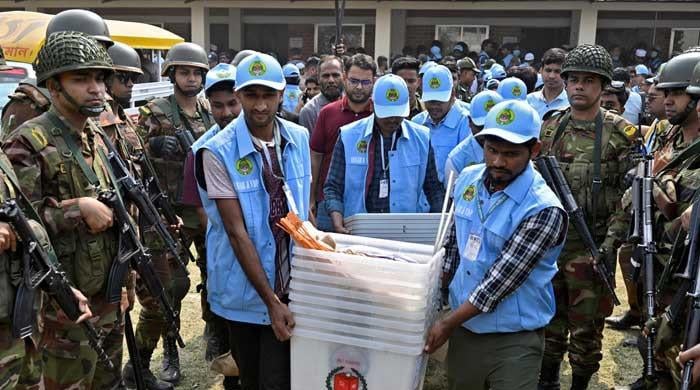
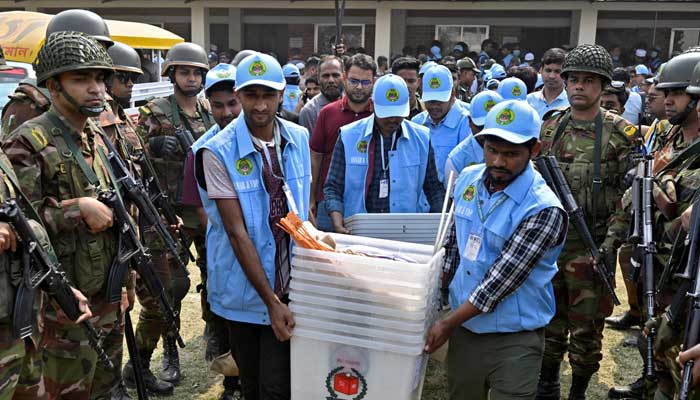
BANGLADESH is going to the polls today in what many here describe as the most consequential election in the country’s recent history. The ballot comes after former prime minister Sheikh Hasina fled the country on August 5 , 2024 and went to India amid mounting public anger following a Gen Z-led street movement against her. Delhi and Islamabad are closely monitoring developments, as both have a stake in the outcome.
More than 127.7 million registered voters are casting ballots for 299 of the 300 directly elected seats in the Jatiya Sangsad, Bangladesh’s national parliament. Elections for one seat have been postponed due to the death of a candidate. The Jatiya Sangsad has an additional 50 reserved seats for women and four seats for technocrats. The outcome is expected to determine not only the country’s next government but also the direction of its constitutional order following months of political upheaval.
The election carries significance beyond Bangladesh’s borders. India, which maintained close ties with Ms Hasina’s government, has faced growing criticism among sections of the Bangladeshi public in recent months. At the same time, analysts say the evolving political landscape could create new diplomatic space for Pakistan.
Islamabad has publicly maintained that it is not backing any particular party and will work with whichever government the Bangladeshi electorate chooses. “We criticise India as its policies have irked us”, a young university student in Dhaka told The News. “On the contrary, Pakistan, which was disliked by the state during Hasina’s tenure, is welcomed by the people”.
“We love Pakistani dramas and dream of visiting Pakistan”, a young mother, Sanjida Tasneem, said while speaking to this correspondent. She also hoped for good relations with Pakistan after the elections, whoever comes into power.
Voters face a contest centred on the Bangladesh Nationalist Party, effectively led by Tarique Rahman, son of former prime minister Khaleda Zia, and its alliance with Jamaat-e-Islami. The Jamaat itself is led by Dr Shafiqur Rahman, who is also leading another alliance. The vote is widely seen not only as the 13th general election but also as a referendum on the interim administration formed under Chief Executive Professor Muhammad Yunus after Ms Hasina’s departure.
The interim government introduced a series of constitutional and legal measures during its tenure. While it enjoyed public backing, its constitutional standing remained in dispute because Ms Hasina had not formally resigned before leaving the country. The new parliament is expected to decide whether to formally ratify those measures.
Several factors make this election unusual. The Awami League, which governed for nearly 15 consecutive years, is not participating after its registration was suspended. The Jamaat, long a polarising force in Bangladeshi politics due to controversy over its role during the 1971 war, is contesting prominently. Even if it does not secure power, a strong performance could reshape the country’s opposition politics.
Ten new parties are also participating. Among them, the National Citizen Party, linked to youth activists involved in anti-government mobilisation, has emerged as a visible presence. However, citing organisational constraints and apparently limited candidate strength, it has extended support to the Jamaat-led alliance.
According to the Bangladesh Election Commission, 1,981 candidates are contesting the election. Of these, 1,732 are party nominees and 249 are independents. The BNP has fielded 288 candidates, while Jamaat-e-Islami has fielded 224.
In South Asia, elections rarely remain confined within national borders. Whoever wins the general elections, the outcome will not only impact the people and future of Bangladesh but will also affect regional politics.
Originally published in The News
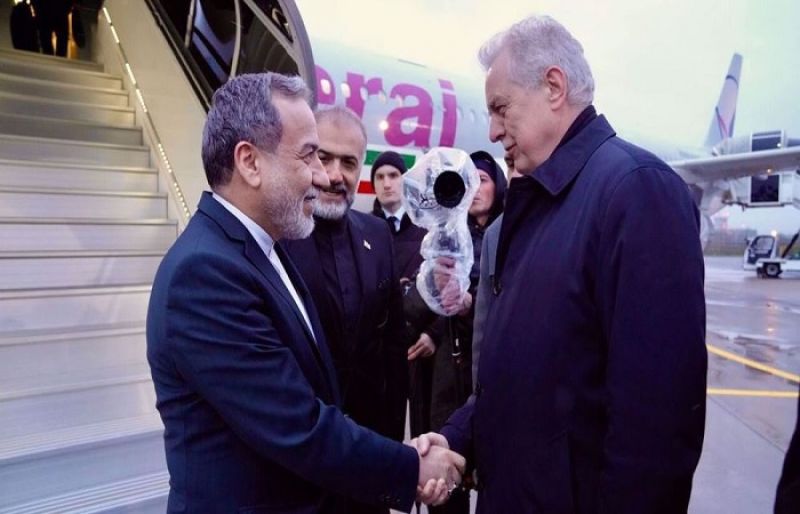
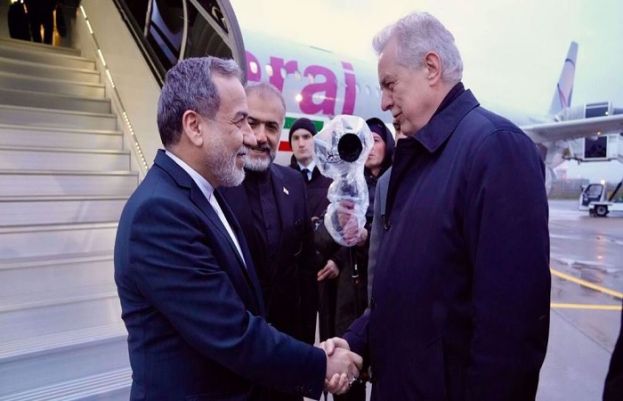
Iran’s Foreign Minister Abbas Araghchi has arrived in Russia to continue close consultations between Tehran and Moscow on regional and international issues, and to enhance bilateral relations.
Speaking upon arrival at Pulkovo International Airport in St. Petersburg on Monday, Araghchi noted that due to the recent US-Israeli aggression against the country, there had been a gap in meetings with Russian counterparts.
“We have tried to use the available opportunity, following our trips to Pakistan and Oman, to travel to Russia,” he said.
Araghchi added that Monday’s meeting would be a good opportunity to discuss developments in the war and review the latest situation, expressing confidence that consultations and coordination between the two countries would be of particular importance.
Constructive consultations held in Pakistan
Regarding his trips to Islamabad and Oman over the past three days, the foreign minister emphasized the bilateral nature of the visits.
Pointing to Pakistan’s role as a mediator in Iran-US negotiations, Araghchi said it was necessary to review the latest situation with Pakistani officials.
“Previous negotiations, despite some progress, did not achieve their goals due to American approaches, their excessive demands, and their wrong policies. Therefore, we needed to hold consultations with our friends in Pakistan to review the latest developments,” Araghchi explained.
He stressed that Iran’s position in the negotiations is very important.
“We must secure the rights of the Iranian people after 40 days of resistance and protect the country’s interests,” he added.
Iran-Oman expert-level consultations on Strait of Hormuz to continue
Referring to his meetings with senior Omani officials, Araghchi noted that Iran and Oman are both littoral states of the Strait of Hormuz, and it is necessary for them to consult each other, especially as safe passage through the strait has become a globally significant issue.
“It is natural that as two coastal countries of this strait, we must talk to each other to secure our common interests and coordinate any action taken in this regard, because the interests of Iran and Oman are directly involved in this matter,” Araghchi said.
He confirmed that there is a broad consensus between Iran and Oman, and it was agreed during the visit that consultations would continue at the expert level.
Iran closed the waterway to the enemies and their allies following the launch of the US-Israeli aggression against Iran on February 28, with the assassination of the Leader of the Islamic Revolution, Ayatollah Seyyed Ali Khamenei, and several top military commanders.
On April 8, forty days into the war, a temporary Pakistan-brokered ceasefire took effect. Talks ensued in Islamabad but stopped short of an agreement amid the United States’ maximalist demands and insistence on unreasonable positions.
Iran announced the reopening of the chokehold to commercial traffic following the announcement of a ceasefire by US President Donald Trump on April 7.
The country, however, imposed a total closure on the waterway on April 18 after Trump said the US was continuing an unlawful blockade it had imposed on Iran in continuation of unlawful aggression towards the country.
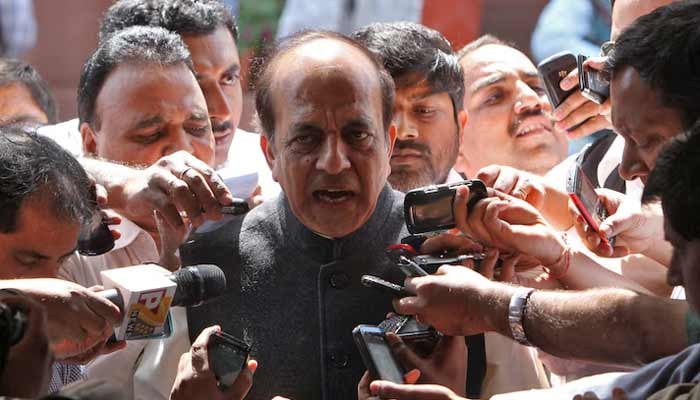
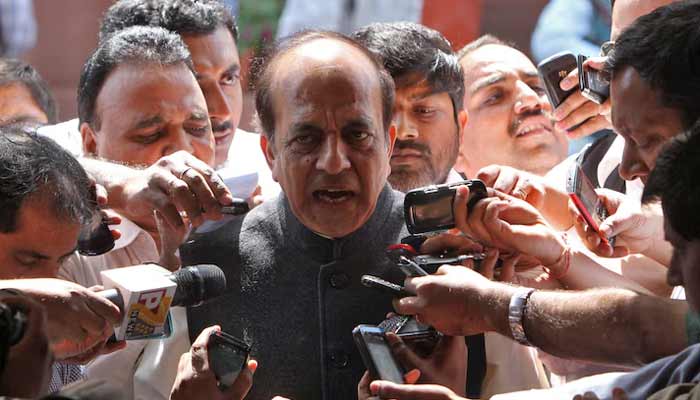
India named veteran politician Dinesh Trivedi as its next high commissioner to Bangladesh on Monday, in a rare appointment of a non–foreign service officer as New Delhi seeks to reset ties with its eastern neighbour.
Ties between the countries soured after a popular uprising forced Bangladesh’s long‑serving Prime Minister Sheikh Hasina to flee to New Delhi in 2024, where she remains. Trivedi’s appointment highlights India’s push to rebuild trust with Bangladesh as it faces stiff competition from China for influence and business.
Trivedi, 75, a former railways and health minister, joined Prime Minister Narendra Modi’s Bharatiya Janata Party in 2021 from a regional party in West Bengal, a border state that plays a key role in India’s ties with Bangladesh and where Modi has been seeking to expand his party’s influence in ongoing local elections.
“He is expected to take up the assignment shortly,” India’s Ministry of External Affairs said in a statement about Trivedi.
Relations between the two countries began improving only after an election in February brought Tarique Rahman of the Bangladesh Nationalist Party to power, replacing an interim government that had veered strongly towards China.
Bangladesh’s foreign minister visited Delhi this month seeking increased fuel and fertiliser supplies, closer energy cooperation and eased travel restrictions, but one of the biggest sticking points remains India’s refusal so far to extradite Hasina.
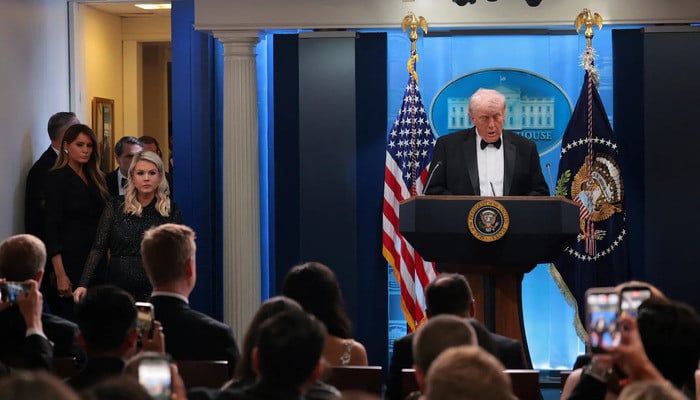
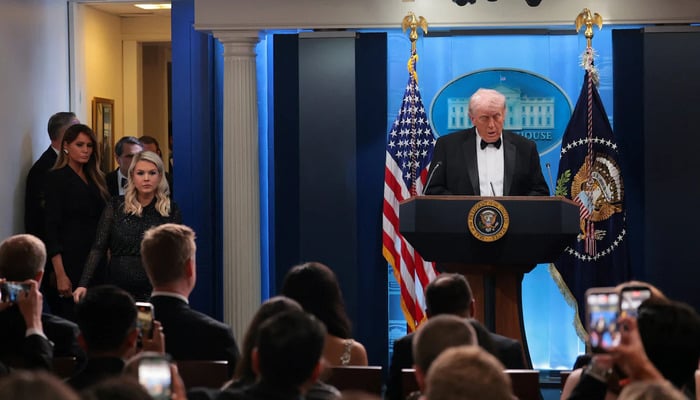
US President Donald Trump has said that the suspect accused of trying to attack administration officials at a black-tie gala on Saturday night was a “pretty sick guy” who had been flagged to law enforcement by family members.
Trump said in TV interviews on Sunday that the suspect, whom an official identified as 31-year-old Cole Tomas Allen, of Torrance, California, had posted what Trump described as an “anti-Christian” manifesto.
“He was a Christian, believer, and then he became an anti-Christian, and he had a lot of change,” Trump told CBS‘ “60 Minutes” programme. “He was probably a pretty sick guy.”
In the manifesto, Allen calls himself the “Friendly Federal Assassin” and said he planned to attack Trump administration officials, prioritising them from highest-ranking to lowest but excluding FBI Director Kash Patel, a law enforcement official told Reuters. Allen cited Christian theology as he said he was trying to protect those harmed by the administration’s policies.
“Turning the other cheek when ‘someone else’ is oppressed is not Christian behaviour; it is complicity in the oppressor’s crimes,” the manifesto read, according to the official.
The manifesto, which was sent to members of Allen’s family shortly before the attack, mocked the “insane” lack of security at the Washington Hilton, where the White House Correspondents’ Association dinner was held, the official added. Allen was arrested at the scene.
“Like, the one thing that I immediately noticed walking into the hotel is the sense of arrogance,” the manifesto’s author reportedly wrote. “I walk in with multiple weapons and not a single person there considers the possibility that I could be a threat.”
The chaotic events raised fresh questions about the security of top US officials, many of whom were gathered in the hotel’s expansive ballroom. Trump seized on the attention brought by the incident to promote his planned White House ballroom as a safer venue for such events.
“This event would never have happened with the Militarily Top Secret Ballroom currently under construction at the White House. It cannot be built fast enough!” Trump wrote on Truth Social.
The suspect travelled by Amtrak train from Los Angeles to Chicago and then to Washington, checking into the Hilton on Friday, acting US Attorney General Todd Blanche said on multiple Sunday talk shows, adding that Trump and top members of his administration were the likely targets. Train passengers in the United States are not required to pass through airport-style metal detectors.
Amtrak said it is cooperating with the investigation.
Political violence
Officials have said the suspect fired a shotgun at a Secret Service agent at a security checkpoint in the Washington Hilton hotel before being tackled and arrested.
Trump, first lady Melania Trump, Vice President JD Vance and Cabinet officials were rushed out as the incident unfolded. The Secret Service agent who was shot escaped serious injury because the bullet struck his protective vest, Trump said.
Trump, who had boycotted the media gala in the past, has requested that the dinner be rescheduled within 30 days. White House Correspondents’ Association President Weijia Jiang of CBS said the group’s board would determine their next steps.
The suspect will be charged in federal court on Monday with assault of a federal officer, discharging a firearm and attempting to kill a federal officer, Blanche said, adding he did not know if there was an Iran connection to the attack. Further federal indictments will be coming later, Blanche said.
Saturday’s incident was another reminder of a rising tide of political violence in the United States in recent years. Conservative political activist Charlie Kirk was shot dead at a rally last September, just months after the June 2025 slaying of Democratic Minnesota State Representative Melissa Hortman and her husband and the wounding of a Minnesota state senator.
A Reuters/Ipsos poll, opens new tab conducted in the days following Kirk’s murder found Americans believe increasingly harsh rhetoric surrounding politics is encouraging violence in the US.
A White House official said law enforcement officials who interviewed Allen’s sister were told he had a tendency to make radical statements, had attended an anti-Trump “No Kings” protest and referred to a plan to do “something” to fix issues with today’s world.
Trump suggested the protest might have spurred the suspect to action. “Part of the reason you have people like that is you have people doing No Kings,” he told CBS. “I’m not a king.”
Around the world, leaders condemned the attack and expressed relief that Trump and all present were safe.
A planned US visit by King Charles of Britain scheduled to start on Monday will proceed, Trump and British officials said.
Little was immediately known about the alleged shooter’s background, but social media posts indicated he had worked at C2 Education, a national private test preparation and tutoring service. C2 Education said in a statement that it was cooperating with law enforcement investigators.
Washington Interim Police Chief Jeffery Carroll said the suspect was armed with a shotgun, a handgun and multiple knives.
Allen had purchased two handguns and a shotgun and stored them at his parents’ home, the White House official said.
The suspect lived with his parents in a two-story house on a tree-lined street with picket fences and craftsman-style homes in the historic district of Torrance, a seaside town in the South Bay area of greater Los Angeles.
Neighbours in the middle-class neighbourhood on Sunday said they were only casually acquainted with him and his parents, with most saying they never spoke to him beyond a brief hello or waving to them as they gave Halloween candy to trick-or-treaters.


‘House of the Dragon’ unveils ‘more brutal’ season 3 trailer at CCXP Mexico

The Man Behind AlphaGo Thinks AI Is Taking the Wrong Path

This bank CEO let his AI clone handle an earnings call — now he’s signing an OpenAI deal

-

 Sports1 week ago
WWE WrestleMania 42 Night 2: Live match results and analysis
-

 Sports1 week ago
NCAA men’s gymnastics championship: All-time winners list
-

 Politics6 days ago
UK’s Starmer seeks to deflect blame over Mandelson appointment
-

 Fashion1 week ago
UK’s Sosandar returns to profitability amid robust FY26 performance
-
 Entertainment7 days ago
Lee Anderson, Zarah Sultana kicked out of UK Parliament for calling PM ‘liar’
-
 Business1 week ago
No fuel shortage: Govt assures 100% domestic LPG, PNG, CNG supply amid Hormuz energy crunch – The Times of India
-
 Business7 days ago
How Trump’s psychedelics executive order could unlock stalled cannabis reform
-
 Business1 week ago
Exercise to test response to offshore energy threat involving vessels and drones