

Business
Bank share prices tumble after calls for tax on profits


The share prices of leading UK banks have tumbled following calls for the government to introduce a new tax on banking profits.
Traders and investors have reacted to the Institute for Public Policy Research (IPPR) saying a windfall tax could raise up to £8bn a year for the government.
The think tank said the policy would compensate taxpayers for losses on the Bank of England’s cash printing drive.
While the Treasury has not commented on any policy, concerns led to NatWest, Lloyds and Barclays being the biggest fallers on the main index of the London Stock Exchange early on Friday.
NatWest and Lloyds share prices were down by more than 4%, and Barclays had dropped by more than 3% in early trading.
Charlie Nunn, the chief executive of Lloyds bank, has previously spoken out against any potential tax rises for banks in the Budget.
He said efforts to boost the UK economy and foster a strong financial services sector “wouldn’t be consistent with tax rises”.
The Treasury has been contacted for comment.
The IPPR, a left-leaning think tank, said a levy on the profits of banks was needed as the Bank of England’s quantitative easing (QE) drive was costing taxpayers £22bn a year.
The Bank of England buys bonds – essentially long term IOUs – from the UK government and corporations to increase bond prices and reduce longer term interest rates.
The Bank is selling off some of these bonds, and the IPPR said it is now making huge losses from both selling the government bonds below their purchase value and through interest rate losses.
The IPPR described those interest rate losses as “a government subsidy to commercial banks”, and highlighted commercial bank profits compared to before the pandemic were up by $22bn.
The tax suggestion comes as Chancellor Rachel Reeves faces the difficult task of maintaining her fiscal rules while finding room for spending promises in the upcoming autumn Budget.
Carsten Jung, associate director for economic policy at IPPR and former Bank of England economist, said the Bank and Treasury had “bungled the implementation of quantitative easing”.
“Public money is flowing straight into commercial banks’ coffers because of a flawed policy design,” he said.
“While families struggle with rising costs, the government is effectively writing multi-billion-pound cheques to bank shareholders.”
Speaking on BBC’s Today programme, Mr Jung said the £22bn taxpayer loss was roughly equivalent to “the entire budget of the Home Office every year”.
“So we’re suggesting to fix this leak of taxpayer money, and the first step would be a targeted levy on commercial banks that claws back some of these losses,” he said.
A tax targeting the windfall profits linked to QE would still leave the banks with “substantially higher profits”, the IPPR report said, while saving the government up to £8bn a year over the term of parliament.
But financial services body UK Finance said that a further tax on banks would make Britain less internationally competitive.
“Banks based here already pay both a corporation tax surcharge and a bank levy,” the trade association said.
The association said a new tax on banking would also “run counter to the government’s aim of supporting the financial services sector”.
Russ Mould, AJ Bell investment director, said the UK stock market had soured following the suggestion, with investors wondering “if the era of bumper profits, dividends and buybacks is now under threat”.
“The timing of the tax debate, fuelled by a report from think-tank IPPR, is unfortunate given it coincides with a new poll from Lloyds suggesting a rise in business confidence, despite cost pressures,” he said.
The Chancellor has worked hard since Labour won power to woo the City. In her Mansion House speech in November last year, Reeves said that banking regulation after the 2008 financial crisis had “gone too far”.
But she faces difficult fiscal decisions in the run-up to her budget, after the government watered down its planned welfare savings and largely reversed winter fuel allowance cuts – decisions which narrowed her budget headroom.
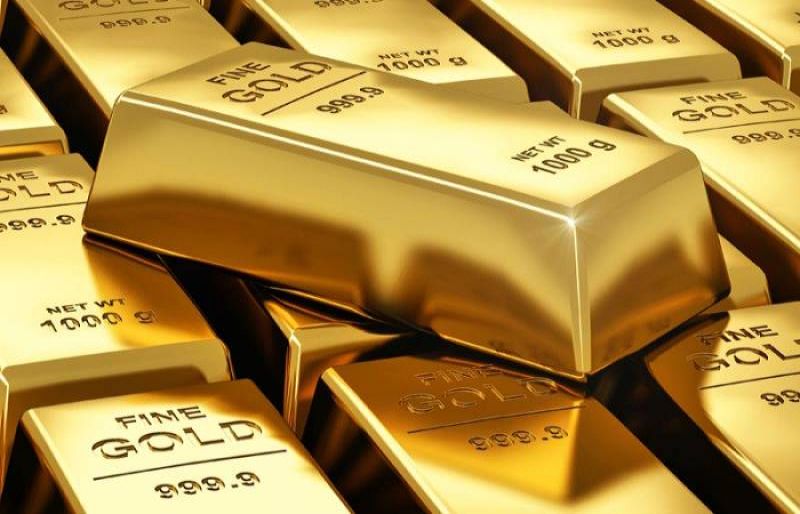
Gold prices in Pakistan have risen again at the start of the business week after several days of decline, according to the All Pakistan Bullion Market.
The price of gold per tola increased by Rs 800, reaching Rs 493,962.
Similarly, the price of 10 grams of gold rose by Rs 686 to Rs 423,492.
In the global market, gold also recorded an increase of $8 per ounce, reaching $4,716.
Experts say global economic uncertainty, currency fluctuations, and investor preference for safe-haven assets are driving the upward trend in gold prices.
They add that changes in international markets directly impact Pakistan’s local bullion rates, leading to continued fluctuations in domestic prices.

Now one of the biggest sportswear firms, Anta’s rise follows a playbook adopted by many Chinese giants.
Source link
Business
Gold price prediction today: Will gold prices continue to be volatile? Key levels to watch out for April 27, 2026 week – The Times of India

Gold price prediction today: Gold prices will closely track movements on the rate decisions by several central banks, including the US Federal Reserve, this week, says Manav Modi, Senior Analyst, Commodity Research at Motilal Oswal Financial Services Ltd.Gold is currently consolidating after sharp swings in a broad range, indicating a pause rather than a reversal. Price action shows a higher-high structure intact, but the recent sideways movement suggests indecision near the upper supply zone around 158,000–160,000. The formation resembles a short-term flag/triangle continuation pattern, where a breakout on either side will define the next directional move. Volume has tapered slightly, reinforcing the consolidation narrative.Gold prices recently moved from the upper band toward the mid-band (20 DMA), and are now attempting to stabilize. The bands have started to contract, signaling a potential volatility expansion ahead. Sustaining above the mid-band (~150,500–151,000 zone) keeps bullish bias intact, while a breakdown below this could trigger a deeper mean reversion toward the lower band.For the week, immediate support for gold prices is placed at around Rs 150,500, which is followed by stronger support near Rs 148,500. On the upside, the resistance stands at around Rs 155,500, and after that the key supply zone is at Rs 158,000. A decisive close for gold above Rs 158,000 levels can then resume the broader uptrend. However, a break in gold prices below levels of Rs 148,500 may shift the momentum to bearish in the near term.The economic docket is filled with data points and events this week as the focus will be on FED, BOJ, ECB and ECB policy meetings. US consumer confidence, GDP, inflation and durable goods orders data will also be in radar.(Disclaimer: Recommendations and views on the stock market, other asset classes or personal finance management tips given by experts are their own. These opinions do not represent the views of The Times of India)


SBP raises policy rate by 100bps to 11.5% as inflation risks mount

Finalise Bangladesh’s textile-RMG circular economy strategy: Experts
Gold prices rise rebound in Pakistan after recent decline – SUCH TV

-

 Sports1 week ago
WWE WrestleMania 42 Night 2: Live match results and analysis
-

 Sports1 week ago
NCAA men’s gymnastics championship: All-time winners list
-

 Fashion1 week ago
UK’s Sosandar returns to profitability amid robust FY26 performance
-

 Politics6 days ago
UK’s Starmer seeks to deflect blame over Mandelson appointment
-
 Business7 days ago
How Trump’s psychedelics executive order could unlock stalled cannabis reform
-

 Entertainment7 days ago
Lee Anderson, Zarah Sultana kicked out of UK Parliament for calling PM ‘liar’
-
 Business1 week ago
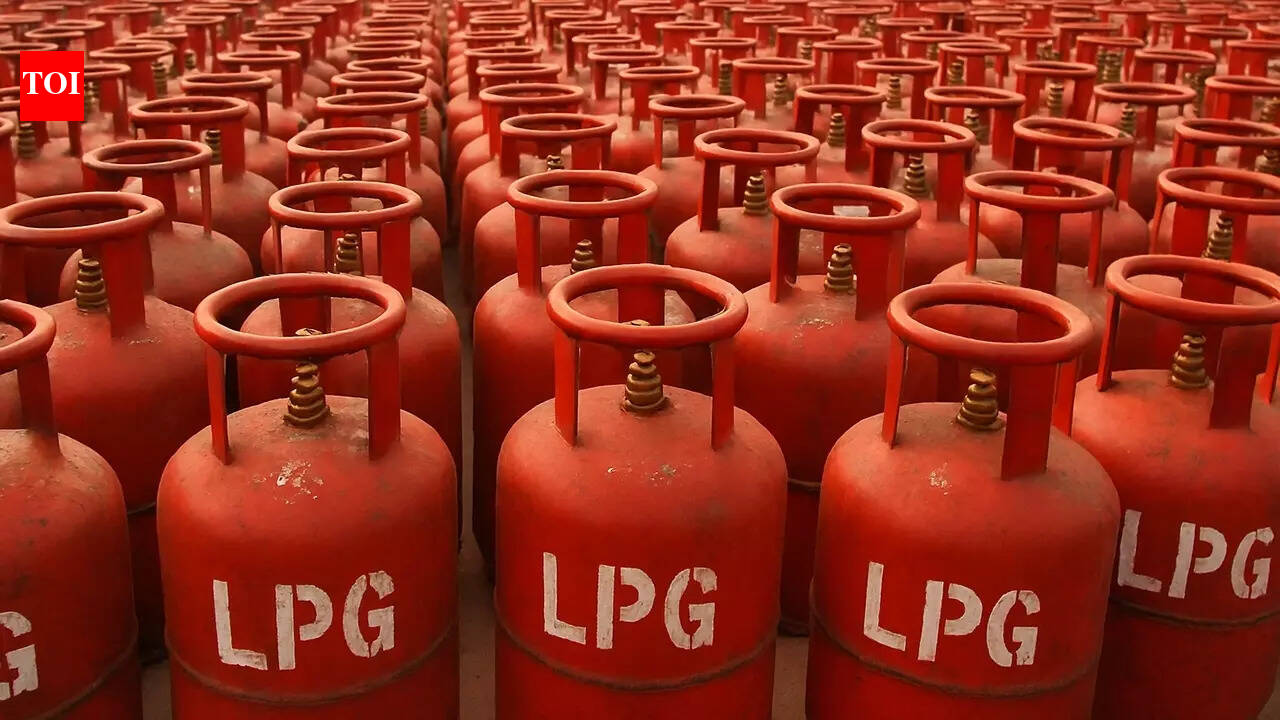
No fuel shortage: Govt assures 100% domestic LPG, PNG, CNG supply amid Hormuz energy crunch – The Times of India
-
 Business6 days ago
Us-India Trade Talks: US–India trade deal: Where do talks stand & what to expect – explained – The Times of India