

Sports
Barça in Miami: Why FIFA, UEFA let leagues play overseas

Villarreal‘s LaLiga game against Barcelona on Dec. 20 in Miami, and AC Milan‘s Serie A clash with Como in Perth, Australia, in February will make history. For the first time, regular-season games will be played on foreign soil, and it marks the culmination of a long political and legal struggle.
It’s a path that major U.S. sports have trod in the opposite direction for years now — the NFL, NBA and MLB have all played regular-season games overseas — and some see it as a shortcut to globalizing their league and marketing their product around the world. It’s also a contentious issue, one that was vehemently opposed by governing bodies from national associations to confederations right up to FIFA.
That began to change a after a long-running antitrust lawsuit brought by Relevent, a marketing and event promotion company founded by Miami Dolphins owner Stephen Ross, was settled with FIFA and, later, the U.S. Soccer Federation (USSF). The settlement effectively opens the door to sports leagues wishing to play abroad. One of the last hurdles to fall was UEFA, the governing body of football in Europe, where opposition is most strident.
So what’s the big deal? Other sports, such as the NFL, play regular-season games abroad …
This is different. When the NFL goes to São Paulo or Dublin or London, it’s not pushing its product on somebody else’s turf, for starters. Whatever organized football exists in those territories is light years away from what the NFL offers.
That’s not the case here. MLS and Australia’s A-League might not be on par with LaLiga or Serie A, but they are fully fledged, professional competitions. And unlike the NFL, there’s a single, pyramid-based ecosystem, governed by FIFA at the top. That’s why there were so many entities that have to sign off on this.
Like who?
The national associations (Spain‘s RFEF and the USSF, in one case, Football Australia and Italy‘s FIGC in the other), the regional confederations (UEFA, Concacaf and the Asian Football Confederation) and, of course, FIFA. Though, really, it was UEFA who, potentially, posed the biggest hurdle.
Why is that?
Well, the FAs of Spain and Italy were unlikely to object given it was their own national leagues that were wanting to play abroad. FIFA and the USSF — both of whom had strongly opposed anything other than exhibition matches being played in the U.S. — settled long-running antitrust lawsuits in 2024 and 2025 brought by event promoter Relevent Sports, who had tried to stage regular-season matches in the U.S. for years. That settlement effectively made it very difficult for them to object.
That left UEFA, who “reluctantly” greenlit the games on Monday, specifying that it was on an “exceptional basis”: A one-off that, in no way, should be seen as a precedent.
‘Reluctantly’? ‘Exceptional basis’? The UEFA makes it sound as if its arm was being twisted …
I don’t think the UEFA could have been any clearer. Its news release was titled “UEFA confirms its opposition to domestic league matches played abroad.” UEFA president Aleksander Čeferin said that “league matches should be played on home soil; anything else would disenfranchise loyal match-going fans and potentially introduce distortive elements in competitions.”
So why did the UEFA approve it?
Because it said the current “regulatory framework” — which FIFA was supposed to put together — isn’t “clear and detailed enough,” and so the UEFA had no choice. Essentially, there was the risk of more legal action.
Some might say the UEFA is passing the buck. FIFA isn’t giving it clear rules, so it has to approve this, however reluctantly, and as Čeferin underscored, the UEFA approved it on a one-off basis, without it representing any kind of precedent. That said, some folks are cynical about this.
How so?
Well, LaLiga boss Javier Tebas and Barcelona were the ones driving the Miami game and both are influential, especially in the context of the European game. UEFA are a governing body, but it’s also business partners with the European Football Clubs (EFC, the body that represents more than 800 of the continent’s clubs) in marketing and selling their tournaments, including their crown jewel, the men’s Champions League. And it just so happened that on Wednesday they jointly announced a new tender for broadcasting rights to their club competitions, with the goal of raising nearly half a billion dollars more per season.
Guess who’s going to sell those rights. Relevent, the folks who brought the original lawsuit.
They became UEFA’s commercial and marketing partners last March. They are responsible for monetizing the Champions League on behalf of UEFA and the EFC form 2027. So if you’re really cynical, you might connect all those dots. UEFA know there’s a ton of opposition to this, but a number of their business partners are either in favor of it or don’t really care. Throw in the fact that they could face a legal challenge and, in any case, FIFA haven’t yet provided them with a set of rules to follow and I guess they figured it wasn’t a hill worth dying on.
Why was there so much opposition to this? Real Madrid were among the first to complain …
… and they have a legitimate case. They’re Barcelona’s direct competitor in LaLiga year after year, and moving the game to Miami means one of Barça’s toughest away trips — against Villarreal — will instead be played in Lionel Messi‘s backyard. I think it’s a safe bet that the crowd will be overwhelmingly pro-Barça, so you can see why Madrid aren’t thrilled: A tricky away game becomes a de facto home match.
Moving Milan vs. Como to Australia is less contentious from a competitive perspective. Milan can’t play at San Siro due to the opening ceremony of the 2026 Winter Olympics, and they can’t move the fixture either because they share the ground with Inter Milan, who have a packed schedule.
Milan draw more than 70,000 fans per game and have more than 40,000 season ticket holders. The only other stadium in Italy that could accommodate that would be the Olympic Stadium in Rome, but they can’t play there either because AS Roma and Lazio share it, and there are no free dates. So really, they would have to go abroad anyway. Why not Australia?
That said, many fans and players are unhappy. Barcelona’s Frenkie de Jong said he “totally” understood why other clubs are unhappy that their away game becomes a match played on neutral ground, and he said the travel was going to be tough on the players. Milan’s Adrien Rabiot was even more direct, calling it “absurd” and how the decision was made over the player’s heads.
Politicians got involved, too. Glenn Micallef, the European Commissioner whose portfolio includes sports and culture, called it a “betrayal” of “local communities and fans.” He said “to our citizens, it is more than just a competition, it’s about community, friendship, family.”
He’s laying it on a bit thick, isn’t he?
Yes and no. When the Premier League floated the idea of a “39th game” — with each club playing an extra match abroad — back in 2008, there was widespread opposition. So much so that in August, Premier League chief executive Richard Masters said there were no plans to even consider it and that, in any case, his league didn’t need more publicity.
Throw in the legitimate complaints about distortion of the competition and player workload — players’ union FIFAPro weighed in on this recently, too — and folks are wondering whether it’s worth it.
So what’s in it for Barcelona and LaLiga?
Barcelona and Villarreal are reportedly splitting around $12 million, with Milan and Como clocking in at around $10 million. When you consider Barça estimate their revenue will comfortably pass the billion-dollar mark this season, we’re talking, what, just over half a percent? It’s more about raising the profile, gaining fans and possibly sponsors, though even that feels a bit dubious.
1:50
How will fans react to LaLiga’s first ever fixture abroad?
Craig Burley and Shaka Hislop discuss the announcement of Villarreal vs. Barcelona being played in Miami.
I mean, Barcelona and Milan are two legitimate heavyweight brands with supporters all over the world; I’m skeptical about how many non-fans they’re actually going to convert. People with even just a passing interest in the sport know who they are. And are Villarreal going to suddenly gain fans in Miami (or Como in Perth)? Even if they do, how are they going to monetize them?
It feels as if they’re trying to ape what the NFL did, with some success, when they started taking regular-season games abroad two decades ago. But again, that was different.
When the NFL started taking games to Europe, there was a whole promotional apparatus, with clinics and events to promote the league. And crucially, NFL fans from all over the continent would show up at stadiums such as Wembley, often wearing their team’s jersey even if their favorite team wasn’t playing. I somehow don’t think we’ll see too many Miami-based Real Madrid fans showing up.
Times have changed. Barça fans in the U.S. can already watch every minute of every game, and they can usually catch them in person in preseason. Casual fans will get their fill of Lamine Yamal & Co. next summer at the FIFA World Cup.
I’m not sure how much this moves the needle, or how much the sport actually needs this.
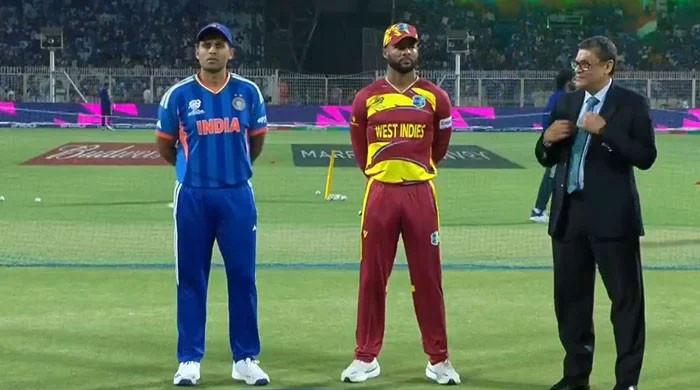
KOLKATA: India on Sunday won the toss and opted to bowl first against West Indies in the high-stakes ICC Men’s T20 World Cup 2026 Super Eights match here at the Eden Gardens on Sunday.
Squads
India: Suryakumar Yadav (c), Abhishek Sharma, Tilak Varma, Sanju Samson, Shivam Dube, Ishan Kishan, Hardik Pandya, Arshdeep Singh, Jasprit Bumrah, Mohammed Siraj, Varun Chakaravarthy, Kuldeep Yadav, Axar Patel, Washington Sundar and Rinku Singh.
West Indies: Shai Hope (c), Shimron Hetmyer, Johnson Charles, Roston Chase, Matthew Forde, Jason Holder, Akeal Hosein, Shamar Joseph, Brandon King, Gudakesh Motie, Rovman Powell, Sherfane Rutherford, Quentin Sampson, Jayden Seales and Romario Shepherd.
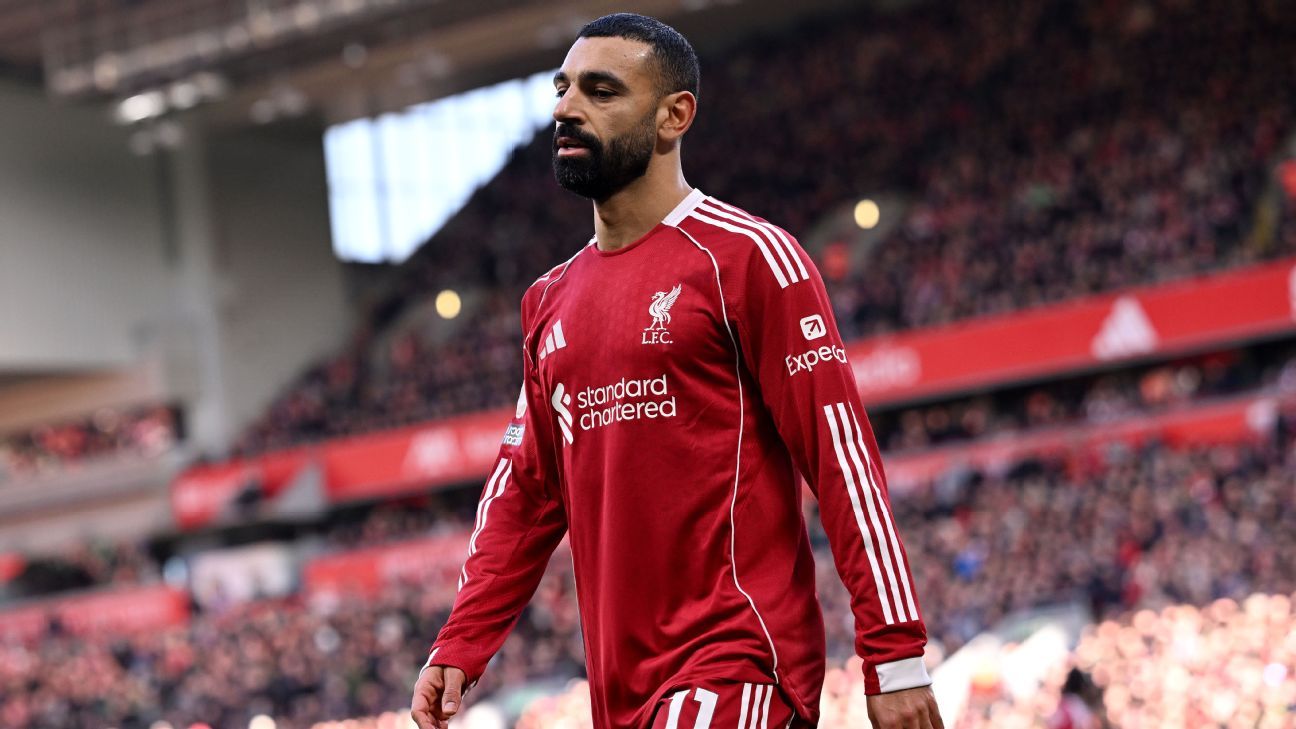
MLS and the Saudi Pro League are both “possible options” for Liverpool‘s Mohamed Salah this summer, while Manchester United are eyeing Nottingham Forest defender Murillo. Join us for the latest transfer news and rumors from around the globe.
Transfers home page | Men’s winter grades | Women’s grades
TRENDING RUMORS
– A summer departure for Liverpool forward Mohamed Salah is appearing “increasingly likely,” according to BBC Sport. The Egypt international signed a new two-year deal last year, but in December hinted that he could leave Liverpool midseason and suggested the club has “thrown him under the bus” as he was repeatedly dropped from the starting XI. Salah remained at Liverpool once the January transfer deadline had passed, and he has started every game since his return from the Africa Cup of Nations. Despite that, an exit could be on the cards this summer, with the BBC reporting that the Saudi Pro League and MLS are “possible options” for the 33-year-old. Salah has scored two goals in nine club appearances in 2026.
– Manchester United are showing keen interest in Nottingham Forest defender Murillo, according to TEAMtalk. The Red Devils have reportedly scouted the Brazilian “extensively,” making him an option for the summer. A transfer fee upwards of £60m has been quoted following some impressive performances for Forest. He is the third player from the City Ground that United have been linked with, in addition to England midfielders Elliot Anderson and Morgan Gibbs-White.
– Real Madrid are set to join Liverpool in the battle to sign Borussia Dortmund defender Nico Schlotterbeck, Mundo Deportivo reports. Los Blancos reportedly have the Germany centre-back down as a top target for the summer, when he enters his final year under contract with Dortmund. Liverpool have been linked with Schlotterbeck, with Ibrahima Konaté approaching the final few months of his contract at Anfield, while Virgil van Dijk‘s deal is due to expire at the end of next season. The Reds have already agreed a deal to sign Jérémy Jacquet from Stade Rennais to help strengthen the defensive department in the summer, but it’s unclear whether Schlotterbeck will join him at this stage.
– Atlético Madrid, Juventus and Newcastle United are all showing interest in signing Darwin Núñez this summer, according to Football Insider. The former Liverpool striker has been left out of Al Hilal‘s Saudi Pro League squad after they registered the signing of Karim Benzema, leading to talk of a possible exit. Atlético are reportedly the most likely to seal a deal out of the clubs named, with Núñez required to take a pay cut if he is to leave Al Hilal.
– AC Milan have added Chelsea loanee Nicolas Jackson to the top of their transfer wish list of strikers for the summer, according to Gazzetta dello Sport. The Senegal international is unlikely to remain at Bayern Munich, where he has received just 641 minutes of football so far in his loan spell this season, and will be available on another loan deal with a permanent option included. Milan have made him a target, while they have also shown interest in Borussia Dortmund’s Serhou Guirassy.
EXPERT TAKE
2:13
Is Lamine Yamal the best player in the world?
The ‘ESPN FC’ crew react to Lamine Yamal becoming the youngest player to score a LaLiga hat-trick this century as Barcelona beat Villarreal 4-1.
OTHER RUMORS
– Liverpool view Real Madrid star Rodrygo as an option to replace Mohamed Salah in the summer, with the Brazil international facing an uncertain future. Arsenal, Chelsea and Tottenham Hotspur are among those also linked (Ekrem Konur)
– Manchester City believe that they are leading the race to sign Elliot Anderson from Nottingham Forest this summer, ahead of their city rivals Manchester United (TEAMtalk)
– Arsenal, Liverpool and Manchester City are interested in Eintracht Frankfurt defender Nathaniel Brown. (Ekrem Konur)
– Manchester United are concerned about losing Harry Maguire as a free agent in the summer, when his contract expires, at the same time as losing another experienced player in Casemiro. (Daily Mail)
– Juventus are eyeing a possible reunion with Randal Kolo Muani if Tottenham Hotspur do not make his loan move from Paris Saint-Germain permanent. (Tuttosport)
– Sunderland and West Ham United are keen on AC Milan and Mexico striker Santiago Giménez as his future appears uncertain at the Italian club. (AS)
– Manchester City are interested in Juventus full-back Andrea Cambiaso, having previously missed out on landing the defender. (Football Insider)
– A Newcastle scout was in attendance to watch Parma vs. Cagliari in Serie A, keeping tabs on 20-year-old defender Marco Palestra, who is on loan at Cagliari from Atalanta. (Nicolo Schira)
– Jesse Lingard‘s move to Corinthians edges closer to completion, with he two parties agreeing on a one-year deal with an option of another year, subject to a medical (Fabrizio Romano)
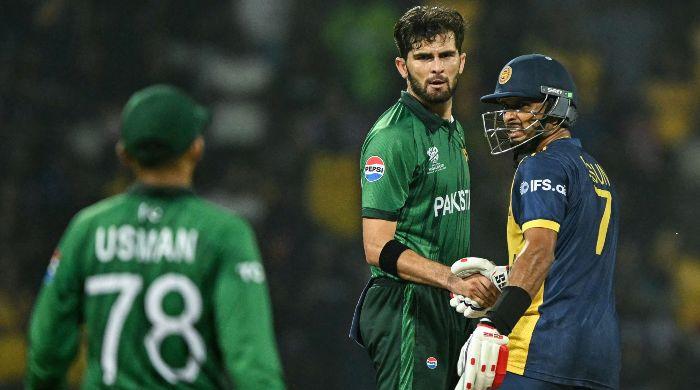
KANDY: Pakistan’s shortcomings were laid bare during their lacklustre T20 World Cup campaign which ended Saturday when the team failed to reach the semi-finals.
From the captain Salman Agha, who was criticised for not being a T20 player, to slow batting rates and the use of all-rounders not up to the job, Pakistan were shown to be behind the times in the rapid-fire format.
Former wicketkeeper-batsman Kamran Akmal believes there is a huge gulf in standard between Pakistan and the top sides such as India, West Indies, South Africa and England.
“Other teams have evolved to the demands of Twenty20 cricket, but neither our team nor our players meet those standards,” Akmal told AFP.
“It is like other teams are playing on the moon and we are on earth. We only beat smaller teams but lose to top teams.”
Pakistan had high hopes for the T20 World Cup after sweeping Australia 3-0 in a pre-tournament series.
They boasted a quintet of spinners that should have been suited to the turning pitches in Sri Lanka where they played all their matches.
But they received a rude awakening in their first match against the Netherlands when only they squeezed home by three wickets in the final over thanks to Faheem Ashraf’s 11-ball 29.
‘Failed to handle pressure’
Like most of his predecessors at World Cups, Agha blundered in the pressure-cooker match against India, which only went ahead after the Pakistan government U-turned on a boycott just days before the encounter.
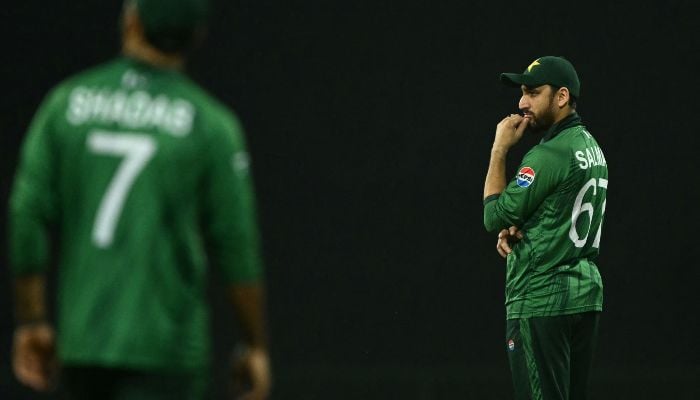
Agha won the toss and asked India to bat. The decision backfired badly as Pakistan conceded 175 and were hammered by 61 runs.
Agha inexplicably held back his mystery spinner and chief weapon Usman Tariq to the 11th over, by which time opener Ishan Kishan had scored his match-shaping 77 and India were well on their way to a winning total.
“How on earth did you bowl at a venue which was suited to batting first,” questioned former Pakistan player Basit Ali.
“After India scored 175 our batters failed to handle the pressure of a chase.”
Agha also held back Tariq’s second over against England, after he took a wicket in his first, allowing captain Harry Brook to build a sparkling match-winning century.
“It was weak captaincy from Agha,” said Akmal, who also took aim at the head coach Mike Hesson and the selectors.
“We were also not helped by head coach Mike Hesson, who has an obsession for bit-and-pieces all-rounders who were neither complete bowlers, nor good batters.”
Pakistan’s insistence in sticking with the out-of-sorts Babar Azam did nothing to help their shaky batting.
The star batsman’s slow scoring at number four interrupted the side’s rhythm.
He was dropped for the final match against Sri Lanka on Saturday where Pakistan finally posted a total in excess of 200, but it proved too little too late as New Zealand progressed on net run rate.
“We are all fans of Azam but he disappointed us by not adapting to the demands of T20 cricket,” said one Pakistan fan, Saud Baloch, who resigned from his job in the United Arab Emirates to go to the World Cup.
“The whole Pakistan fandom is not only disappointed but angry.
“But we know nothing will change and we will continue to mourn such defeats in future.”


T20 World Cup 2026: India win toss, opt to bowl against West Indies

This Backyard Smoker Delivers Results Even a Pitmaster Would Approve Of

Crude oil prices in focus: OPEC+ increases output by 206,000 bpd amid Middle East tensions – The Times of India

-
 Business1 week ago
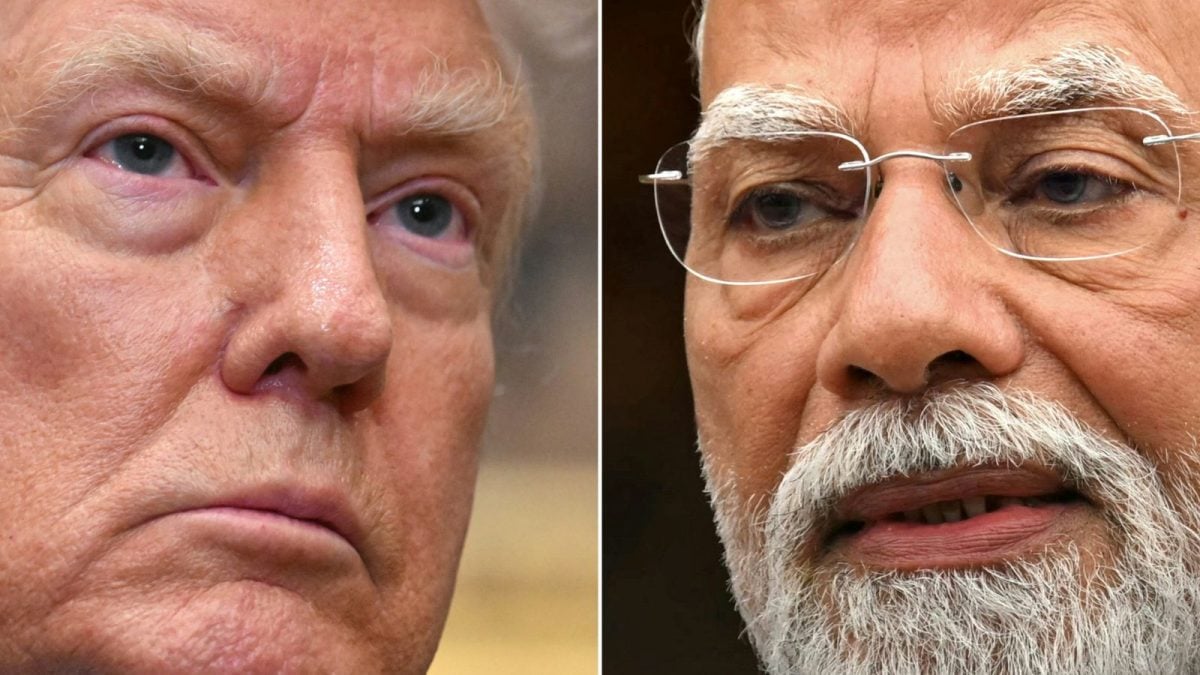
US Top Court Blocks Trump’s Tariff Orders: Does It Mean Zero Duties For Indian Goods?
-

 Fashion1 week ago
ICE cotton ticks higher on crude oil rally
-

 Entertainment1 week ago
The White Lotus” creator Mike White reflects on his time on “Survivor
-
 Business1 week ago
Eye-popping rise in one year: Betting on just gold and silver for long-term wealth creation? Think again! – The Times of India
-

 Politics1 week ago
Pakistan carries out precision strikes on seven militant hideouts in Afghanistan
-

 Sports1 week ago
Brett Favre blasts NFL for no longer appealing to ‘true’ fans: ‘There’s been a slight shift’
-
 Politics1 week ago
US Supreme Court strikes down Trump’s trade tariff measures
-

 Entertainment1 week ago
Saturday Sessions: Say She She performs "Under the Sun"