

Business
Bears dominate at stock market as KSE sheds over 1400 points | The Express Tribune

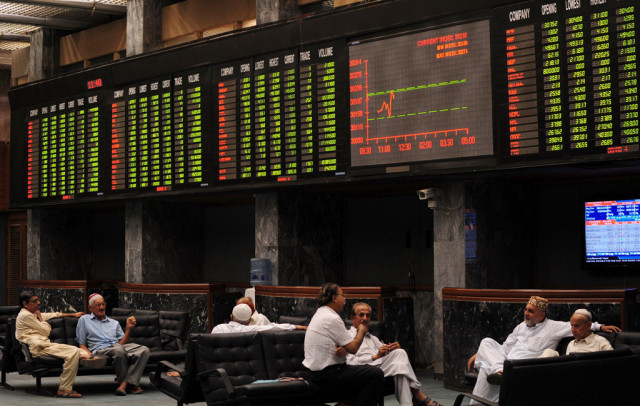
Analysts attribute continued decline to investors’ concerns over macroeconomics and absence of any positive triggers
KARACHI:
Pakistan Stock Exchange (PSX) extended its negative momentum on Tuesday, with the benchmark index closing lower amid persistent selling pressure and cautious investor sentiment.X
The market opened in the green and staged a brief early rally, pushing the benchmark to an intra-day high of 169,237.51 points. However, the positivity proved short-lived as sustained selling emerged across key sectors, dragging the index sharply into negative territory by mid-morning.
The index hit an intra-day low of 163,907.59 points before recovering some losses in late-session trading. Despite the partial rebound, the market closed on a weak note and settled at 166,258.55 points, down 1,432.54 points or 0.85%.
Analysts attributed the continued decline to prevailing negative sentiment, as investors remained wary due to persistent macroeconomic concerns and the absence of positive triggers in sight.
Topline Securities observed that investor sentiment remained fragile as the benchmark index continued to grapple with the aftermath of an 11% decline from its recent peak, keeping participants cautious and highly selective.
The session witnessed pronounced volatility, with the index staging a brief rebound to an intra-day high of 1,546 points before intensified selling pressure pushed it to a low of 3,783 points.
Despite the sharp swings, the market managed to recover part of its losses by the close, settling at 166,258, down 1,432 points (0.86%).
The see-saw movement reflected nervous positioning as investors balanced emerging valuation comfort against lingering uncertainty and a lack of near-term positive triggers.
Index-heavy constituents United Bank, Habib Bank, Faiji Fertiliser, Mari Energies, and Hub Power remained the principal laggards, collectively dragging the benchmark down by 949 points. On the other hand, Lucky Cement, Pakistan Oilfield, MCB Bank, Enro Fertiliser, and Attock Refinery provided partial support, adding 439 points to the index.
Overall trading volume jumped to 687.9million shares from Monday’s volume of 461. 2million. The value of traded shares were Rs38.4bilion. Shares of 487 companies were traded. Of these 139 stocks closed higher, 292 fell and 56 remained unchanged. K-Electric was the volume leader with trading in 64.9 million shares, falling Rs0.09 to close at Rs7.57.




The U.S. Internal Revenue Service (IRS) building stands after it was reported the IRS will lay off about 6,700 employees, a restructuring that could strain the tax-collecting agency’s resources during the critical tax-filing season, in Washington, D.C., Feb. 20, 2025.
Kent Nishimura | Reuters
A version of this article first appeared in CNBC’s Inside Wealth newsletter with Robert Frank, a weekly guide to the high-net-worth investor and consumer. Sign up to receive future editions, straight to your inbox.
For seven years, wealthy Americans faced a looming deadline to take advantage of tax provisions that were set to expire at the end of 2025. While the One Big Beautiful Bill Act alleviated much of the uncertainty by making most of the cuts permanent, lawyers and tax accountants say the ever-shifting tax code requires constant planning.
With this year’s Tax Day now behind us, here are five of the most important planning strategies wealthy investors and high earners are thinking about for next year and beyond.
1. Long-short tax-loss harvesting
Last year’s tax bill permanently raised the estate tax exemption to $15 million per person, up from $13.99 million. (It was initially set to be cut in half at the end of 2025.)
The higher threshold has prompted a shift in focus from minimizing federal estate taxes to lowering taxes on income and capital gains. Minimizing capital gains has become crucial after several years of strong market gains, according to Mitchell Drossman, head of national wealth strategies in Bank of America’s chief investment office. The S&P 500 has surged more than 75% since the beginning of 2023.
“The biggest tax story to me is a capital gains and investing story,” said Drossman. “You have lots of clients who are sitting on significant gains.”
Investors are increasingly turning to long-short tax-loss harvesting, an aggressive form of a popular strategy, in order to minimize capital gains, Drossman said. With traditional tax-loss harvesting, investors sell losing assets to offset realized gains on others. Long-short tax strategies, on the other hand, borrow against the portfolio to buy short positions expected to fall and maintain long positions expected to thrive.
“If there’s natural volatility in the markets, you have, now, a greater amount of an asset base to choose from in terms of harvesting losses,” he said. “But when you look at your overall portfolio, you’re still kind of neutral.”
2. Bonus depreciation
The 2025 tax bill renewed bonus depreciation, allowing businesses to deduct the full cost of qualifying assets like machinery, computers or vehicles the first year they are used.
Adam Ludman, head of tax strategy at J.P. Morgan Private Bank, said many clients with operating businesses are investing with bonus depreciation in mind, such as buying private jets.
Real estate developers and investors are trying to get the most bang for their buck by assessing which parts of their properties can be depreciated faster, according to Ludman. For instance, while a commercial building can take 39 years to depreciate, a parking lot can be depreciated over 15 years, allowing owners to recover costs faster.
3. Changing domiciles
A wave of blue states are considering new taxes on top earners and high-net-worth individuals in order to cover cuts in federal aid. California’s one-time billionaire tax proposal may end up on the November ballot, while Maine and Washington have recently passed millionaire taxes.
Jane Ditelberg, chief tax strategist for Northern Trust Wealth Management, said a growing number of clients are asking how to change their tax status as these proposals gain traction. Depending on their state, residents can avoid state-level taxes by creating trusts in states with favorable trust income laws like Delaware.
The most straightforward way to avoid local taxes is to change your domicile, which is easier said than done, according to Jere Doyle of BNY Wealth. The senior estate planning strategist based in Massachusetts, which imposes a millionaire tax, said he has had clients move to New Hampshire and establish residency before selling their businesses.
But clients are often loath to take the steps necessary to establish intent not to return, Doyle said. For instance, moving to Florida may not be enough to avoid Massachusetts taxes if you refuse to sell your Martha’s Vineyard home, he said.
“Everyone thinks that if they spend 183 days in another state, you’re domiciled in that state. That’s not necessarily true. Each state’s a little bit different,” he said. “You [have] got to change where you vote, where your car is registered, even where your doctors are, what clubs you belong to, golf clubs, country clubs, things like that.”
4. Bunching charitable gifts
One notable drawback of last year’s tax bill was a reduction in the tax benefits of charitable giving for top earners.
The bill limits top-earning donors in two ways. First, starting this year, donors who itemize will only be able to deduct charitable contributions in excess of 0.5% of their adjusted gross income, or AGI.
Second, taxpayers in the 37% tax bracket will have their itemized deductions reduced by 2/37th of the value. This ceiling reduces the effective tax benefit from 37% to 35%.
Ditelberg said many clients accelerated their charitable giving last year before these new rules took effect. She said she anticipates clients will continue to “bunch” their donations, by giving a larger sum in one year rather than spreading it over multiple years, so they only trigger the 0.5% haircut once, either through their foundations or donor-advised funds.
5. Opportunity zones
The tax bill also offered an incentive for business owners and real estate owners to postpone selling their assets. The bill made permanent the qualified opportunity zone program, which allows investors to defer capital gains by rolling them over into a fund that invests in a low-income community.
The opportunity zone funds created under the first Trump administration still exist, but you can only defer the taxes until the end of the year. The new opportunity zones, which have yet to be designated, come with enhanced benefits, especially for investors in rural communities. For instance, if you hold your investment in a qualified rural opportunity fund for five years, your capital gains are reduced by 30% for tax purposes.
But you only have 180 days to roll over your gains, and the new opportunity zone rules don’t take effect until 2027, Ditelberg noted.
“If you’re thinking of incurring a major gain, you may want to defer it until August or September, instead of doing it in May or June, if you think you would like to take advantage of the opportunity zone deferral,” she said. “I think we’re going to see people who are incurring gains in the second half of this year.”
That said, investors are waiting to see what the new funds entail. Drossman said some clients are reluctant to invest in opportunity zones again after their previous investments underperformed.
“It’s a classic example of not letting the tax-tail wag the dog because these need to be sound investments,” he said. “Like with all investments, there is an element of risk and return.”

Illuminated logo for Pepsi on a soda fountain in Walnut Creek, California, March 4, 2026.
Smith Collection | Gado | Archive Photos | Getty Images
PepsiCo on Thursday reported quarterly earnings and revenue that topped analysts’ expectations as its struggling North American food business reported a return to volume growth.
Here’s what the company reported compared with what Wall Street was expecting, based on a survey of analysts by LSEG:
- Earnings per share: $1.61 adjusted vs. $1.55 expected
- Revenue: $19.44 billion vs. $18.94 billion expected
Pepsi reported first-quarter net income attributable to the company of $2.32 billion, or $1.70 per share, up from $1.83 billion, or $1.33 per share, a year earlier.
Excluding items, the company earned $1.61 per share.
Net sales rose 8.5% to $19.44 billion.
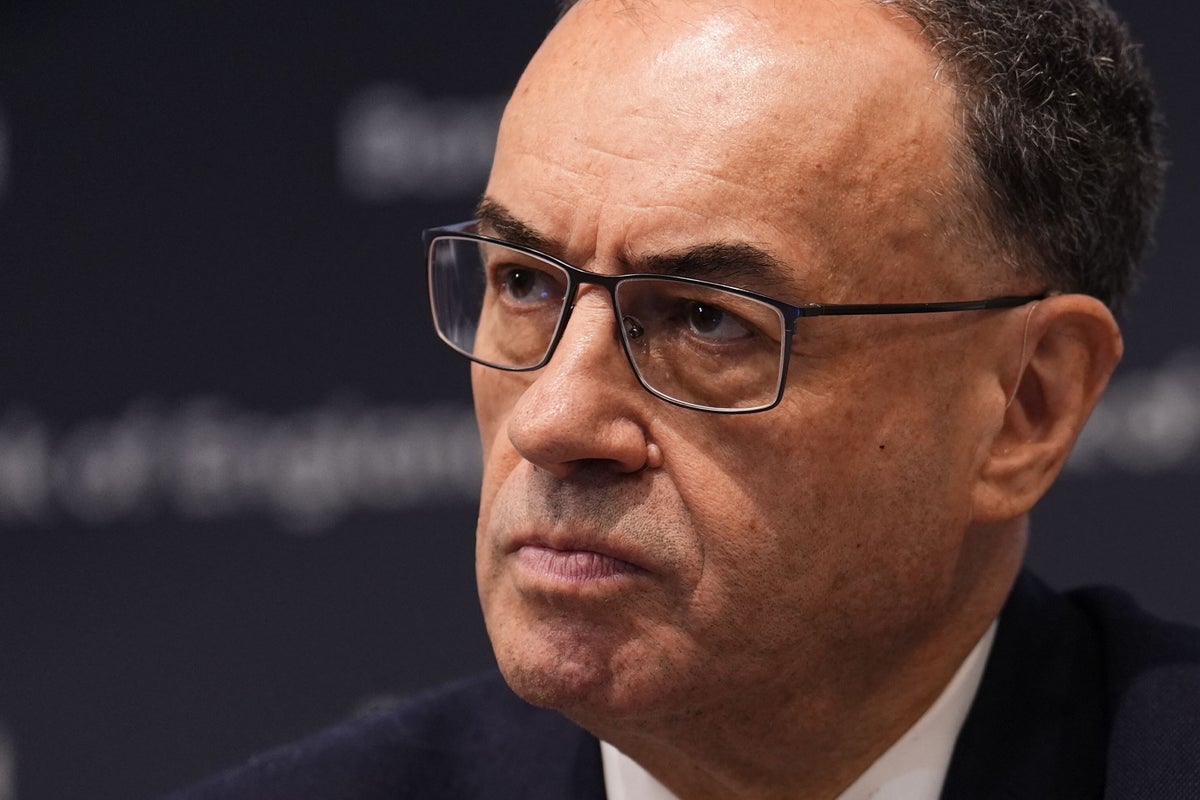
Bank of England governor Andrew Bailey has warned the global economy is set for a “very big energy shock” that will lead to surging inflation, but said policymakers would not rush to hike interest rates.
Speaking at the International Monetary Fund (IMF) spring meeting in Washington DC, Mr Bailey told the BBC the Bank is facing a “very, very difficult” decision on rates at its meeting on April 30.
The Middle East conflict has sent oil prices surging by around 60% since the start of the year, at one stage hitting nearly 120 US dollars a barrel, which is pushing up fuel and energy costs.
This is expected to feed through to wider prices, with forecasts for UK inflation to jump higher in the coming months and Britain’s growth outlook sharply downgraded.
But official figures on Thursday, which were released after Mr Bailey’s comments, showed the UK economy was far stronger than expected at the start of the year, with growth of 0.5% in February following upwardly revised expansion of 0.1% in January.
Experts said while welcome, UK activity is still set to slow sharply as higher energy prices weigh on spending and hamper growth.
Mr Bailey told the BBC: “There’s really difficult judgments to be made.
“We’re not going to rush to judgments on those things, because there are a lot of uncertainties around this, not just how it’s going to play out, but also how it’s going to pass through into the UK economy.”
The IMF’s economic outlook report earlier this week showed the UK facing the biggest downgrade to growth among the G7 group of countries, with 0.8% forecast for 2026, down sharply from the 1.3% predicted in January.
The influential financial body said the spike in energy prices caused by the war will help push UK inflation towards 4% – double the Bank of England’s target.
But the IMF cautioned central banks about making hasty decisions on interest rates.
The Bank of England had previously been expected to cut rates further this year, down from 3.75% currently, but the predicted inflation surge caused by the Iran war has led to forecasts that hikes could be on the way.
Mr Bailey said the Bank is taking the IMF’s “serious advice” into account.
On fears over supply shortages caused by the Iran war disruption and blockage of the crucial Strait of Hormuz shipping route, Mr Bailey said there is “a certain amount of resilience in the system” but that will only last so long.
He added: “The faster there is a resolution to this situation – I particularly mean in terms of the supply of energy coming out of the Gulf – the easier and better the outcome will be.
“That’s really critical at this moment.”

How the wealthy are planning to cut their 2026 tax bills

Uniqlo to expand India presence; open stores in Pune, Bengaluru

Australian consumer confidence drops in April on rising living costs

-

 Entertainment1 week ago
Queen Elizabeth II emotional message for Archie, Lilibet sparks speculation
-

 Tech1 week ago
Azure customers up in arms over ‘full’ UK South region | Computer Weekly
-

 Tech1 week ago
As the Strait of Hormuz Reopens, Global Shipping Will Take Months to Recover
-

 Fashion1 week ago
CII submits 20-pt agenda to Indian govt to back firms hit by Iran war
-

 Tech1 week ago
This AI Button Wearable From Ex-Apple Engineers Looks Like an iPod Shuffle
-

 Politics6 days ago
Indian airlines hit hardest after Dubai limits foreign flights until May 31
-

 Fashion1 week ago
ICE cotton hits 11-month high on drought concerns, demand boost
-

 Politics6 days ago
Chinese, Taiwanese will unite, Xi tells Taiwan opposition leader