

Fashion
Benetton Group rejigs corporate structure to kick off label’s relaunch


Translated by
Nicola Mira
Published
October 9, 2025
Italian fashion group Benetton continues its corporate reorganisation process designed to optimise its relaunch, having completed a first restructuring phase. According to Italian financial daily MF-Milano Finanza, which was able to glean some of Benetton’s internal documents, the group based in Ponzano Veneto “has created seven newcos (all based at Benetton’s corporate hub in Castrette) among which, following a complex partial double demerger and spin-off operation, various assets and corporate functions have been divided up.”
Seven new companies, which will become operational next January, have been created following the group’s internal reorganisation. Benetton Group has become the coordinating holding company and will always have the final say on financial, legal and auditing decisions. In July, Benetton indicated that the group’s corporate structure would be revised, with some units turning into separate companies, though they would still remain under the group’s direct control.
The current reorganisation has brought to an end the first phase of Benetton’s relaunch plan under new CEO Claudio Sforza, who replaced Massimo Renon in June 2024. Sforza has jettisoned a vertically integrated business model, deciding to close the production sites Benetton had in Tunisia, Serbia and Croatia, while in Italy, the workers formerly based at the Ponzano Veneto headquarters were moved to the nearby Castrette di Villorba factory. At the same time, several hundred employees voluntarily left the group, encouraged also by the incentives offered. By the end of 2025, the group expects to have approximately 700 employees, as opposed to 1,100 in summer 2024. Benetton is also ditching unprofitable stores around the world. Approximately 500 of them are being closed down, bringing the number of stores operated by the group to nearly 3,000.
Benetton’s goal is to further reduce its losses, which in 2024 amounted to €100 million (more than 57% lower than in 2023) and to become profitable again some time in 2026 or 2027. The group doesn’t have much to be cheerful about in 2025, coincidentally the year in which it celebrates its 60th anniversary, having been founded in 1965 by Luciano, Gilberto, Giuliana and Carlo Benetton.
MF-Milano Finanza reported that Benetton is open to the use of third-party suppliers, and is willing to consider both corporate spin-offs and industrial collaborations with select entities.

A partial demerger from Benetton Group resulted in the creation of the Retail Omnia Network (RON) and Property 347 companies. RON incorporates all of Benetton’s directly owned Italian stores (currently part of Retail Italia Network) and the stores run by the group’s foreign subsidiaries. Benetton Group still retains direct control of its retail business in Turkey, India, Korea, and Japan.
Property 347 will take over Villa Minelli, the group’s former headquarters, Benetton Fabrica, and other properties and land between Ponzano Veneto and Villorba, regarded as heritage assets to be preserved rather than destined to operational use. As a result of the partial demerger, RON and Property 347 will remain, as Benetton Group, under the direct control of Schema Eta, formerly Benetton S.r.l., whose board comprised, until April 2024, several members of the Benetton family, including founder Luciano Benetton.
As a result of the demerger and spin-off operation, Benetton Group now controls five other new companies: Green 347, Benetton Operations, Benetton Distribution, Benetton Logistics and Benetton E-commerce.
Benetton Operations, under CEO Vincenzo Meles, will take charge of the group’s operational activities, including design, product development, marketing and communications. Benetton Distribution, under CEO Nicola Capone, will oversee the retail distribution business, including Benetton’s franchised stores, while Benetton E-commerce and Benetton Logistics (the latter led by Matteo Miele) will take care of e-tail and warehousing and logistics respectively.

CEO Sforza has ambitious plans for Benetton E-commerce, since he reportedly regards the group’s online sales as too low at 13% of total revenue, compared to a global benchmark that is close to 35%. Benetton is keen to accelerate e-tail growth, and is aiming for online sales to account for 20%-25% of total revenue, as the group stated last April in a communiqué gleaned by FashionNetwork.com.
Finally, the Green 347 company, named after the colour and corresponding Pantone code of the group’s original logo, directly overseen by Sforza like Benetton E-commerce and Benetton Logistics, will manage the group’s trademarks, Benetton, Sisley, Playlife and Killer Loop.
Copyright © 2025 FashionNetwork.com All rights reserved.










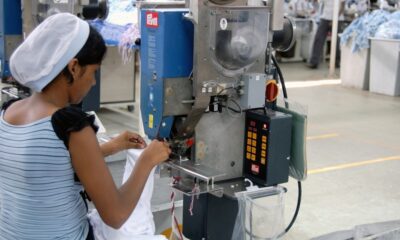


While exporters are now allowed to import raw materials from abroad on an FOC basis under a recent policy change, such a provision does not exist for sourcing the same materials locally, industry leaders said.
Bangladesh RMG players have urged the government to remove restrictions on sourcing raw materials free of cost (FOC) from local suppliers.
Industry leaders said allowing FOC sourcing from domestic suppliers would boost local sales, strengthen backward linkage industries and raise overall value addition in the export-oriented sector.
Many local suppliers can provide inputs now against global orders.
They feel allowing FOC sourcing from domestic suppliers would boost local sales, strengthen backward linkage industries and raise overall value addition in the export-oriented RMG sector.
In a letter sent recently to the National Board of Revenue (NBR), the Bangladesh Knitwear Manufacturers and Exporters Association (BKMEA) called for removing policy barriers and providing clarity on the issue, according to a domestic media outlet.
Many local suppliers are now capable of providing inputs against international buyers’ orders. In some cases, foreign buyers or their nominated agents are willing to supply materials free of cost through local vendors for use in export production.
However, the absence of clear policy guidelines on whether such transactions qualify as ‘deemed exports’ has created uncertainty, preventing manufacturers from using locally sourced FOC inputs.
Allowing exporters to use locally-sourced inputs under a cutting, making and trimming (CMT) model would further streamline production, BKMEA said.
Fibre2Fashion News Desk (DS)


Such countries include fragile and conflict-affected states and small developing states, especially where debt and financing pressures are mounting, he noted in his statement.
The IMF will continue to support countries in their efforts to promote stability and growth, including through sound macroeconomic policies, domestic resource mobilisation and better governance.
The chair of its International Monetary and Financial Committee said this support will include specific attention to low-income and vulnerable countries.
The committee called for enhanced debt transparency.
“We remain committed to further improving debt restructuring processes, including under the Common Framework, building on the progress already achieved, and advancing the work at the Global Sovereign Debt Roundtable (GSDR) to ensure debt restructurings are delivered in a predictable, timely, orderly and coordinated manner,” he said.
The committee called for enhanced debt transparency from all stakeholders, including private creditors.
“We will advance structural reforms to enable private sector-led investment, increase productivity, safeguard energy security, and elevate medium-term growth prospects,” added Aljadaan.
Fibre2Fashion News Desk (DS)


Transfer rumors, news: Arsenal ramp up interest in Williams

Bangladesh RMG units call for allowing local FOC raw material sourcing
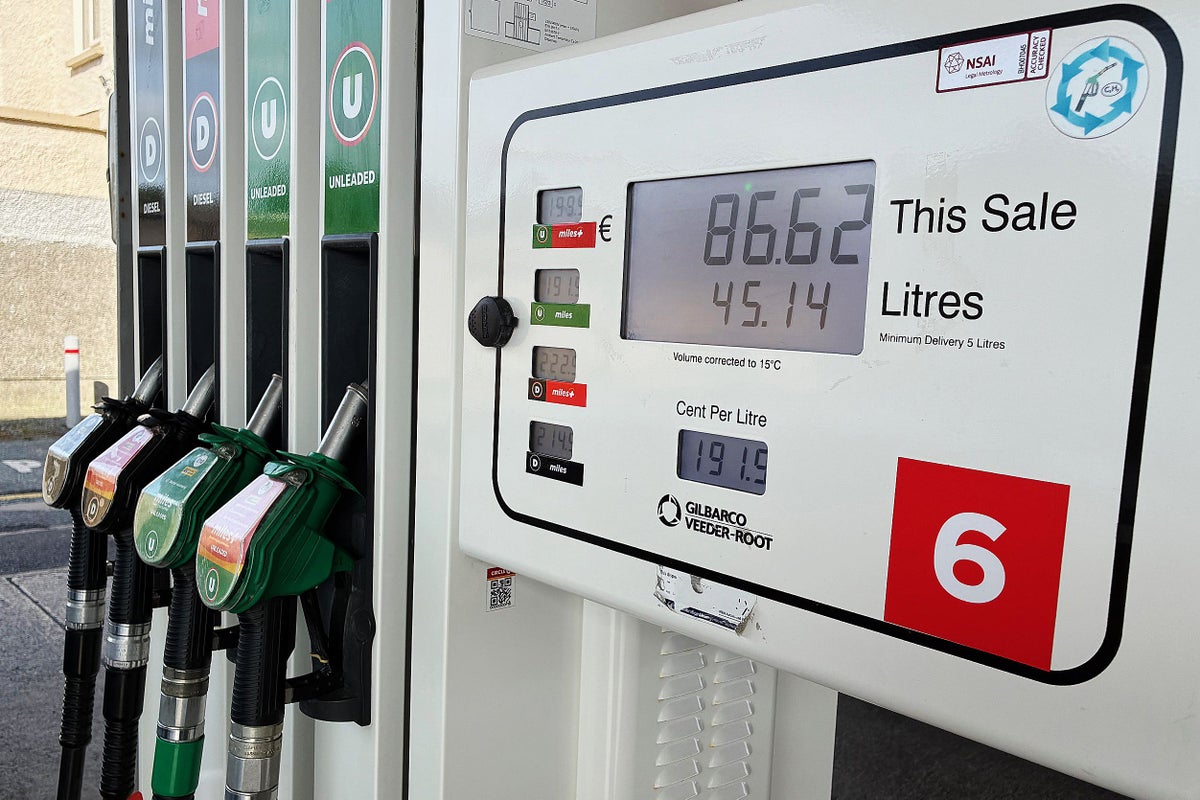
UK inflation accelerates after Iran war drives sharp rise in fuel prices

-

 Fashion6 days ago
France’s LVMH Q1 revenue falls 6%, shows resilience amid Iran war
-

 Sports1 week ago
The case for Man United’s Fernandes as Premier League’s best
-
 Business1 week ago
UK could adopt EU single market rules under new legislation
-

 Entertainment7 days ago
Is Claude down? Here’s why users are seeing errors
-

 Fashion1 week ago
Energy emerges as biggest cost driver in textile margins
-
 Business1 week ago
Delta Air Lines unveils first new Delta One suite in premium cabin arms race
-

 Fashion1 week ago
Asia claims largest share of markets on Kearney FDI Confidence Index
-

 Sports7 days ago
PSL 11: Peshawar Zalmi win toss, opt to field first against Quetta Gladiators