

Business
Betfred says all its shops may close if Reeves hikes gambling tax

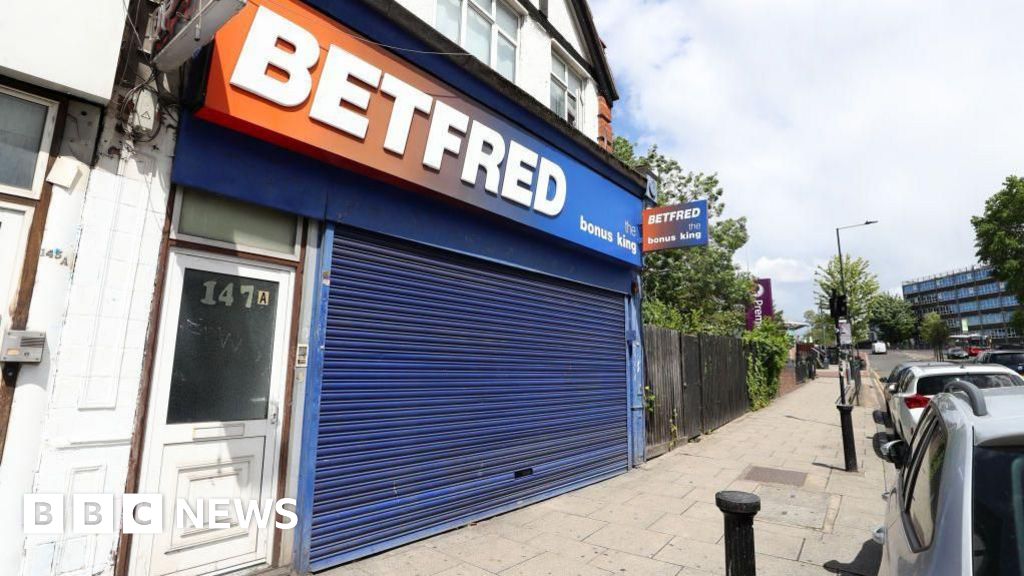
All 1,287 Betfred shops could disappear from the UK High Street if Chancellor Rachel Reeves hikes taxes on gambling firms, the company’s co-founder and chairman has told the BBC.
Fred Done, who set up Betfred in 1967 with his brother, said a closure of that size would put 7,500 jobs at risk.
The billionaire businessman said tax rises were the “biggest threat” to the industry in his 57 years. It echoes similar warnings from other gambling brands.
Increasing taxes on betting firms in the Budget has been suggested to the chancellor. She recently told ITV: “I do think there is a case for gambling firms paying more… they should pay their fair share of taxes and we will make sure that happens.”
Reeves has been encouraged by former Prime Minister Gordon Brown to increase taxes on the gambling sector and use the revenue from that to reduce child poverty.
The Institute for Public Policy Research (IPPR) think tank estimated over the summer that additional taxes on the industry, as high as 50%, could raise £3.2bn.
At the time the Betting and Gaming Council, which represents gambling companies, called Brown’s plan “economically reckless”, saying it would push gamblers into the black market.
Betting companies have resisted calls for taxes to rise. Up to 200 William Hill retail outlets could close if the industry faces higher taxes, its owner Evoke said earlier this month.
Betfred’s Mr Done said that if taxes on UK gambling companies increased he would also feel compelled to close his High Street shops.
“It [tax] doesn’t even need to go up to 50%. If it went up to anywhere like 40% or even 35% there is no profit in the business. We would have to close it down. I’m talking job losses. We’re talking probably 7,500,” he said.
He said 300 of his shops were “currently losing money” and claimed a 5% increase on gambling taxes would raise that number to 430.
“Once the [UK] industry is closed down, it’s gone. People will still bet, but they’ll bet offshore with it. There’s plenty of bookmakers offshore who happen to take the bets, who don’t pay anything to this country,” he said.
Punters’ winnings from gambling are not taxed in the UK, nor is VAT charged on bets. However, the gambling industry pays extra taxes, including:
- a tax of 21% on online casino gaming stakes
- duty of 20% on slots and gaming machines
- general betting duty on sports fixtures of 15%
- general betting duty on horseracing of 15%
Mr Done said recent increases in employer National Insurance Contributions (NICs) and the minimum wage had already added £20m to his company’s costs.
He agreed that, like with banking or buying clothes, customers are increasingly going online, making it inevitable to close betting shops.
Rival firm Paddy Power on Thursday said it would close 57 shops across the UK and Republic of Ireland, citing increasing cost pressures and challenging market conditions.
“Slowly it will go online, but we’re talking, without tax increases, we’ve still got probably 20 years of life on the High Street,” said Mr Done.
“And you know, the UK High Street is being decimated with closures.”
In its most recent annual results, Betfred took in nearly £1bn of revenue, but made an operating profit of just £500,000 after a series of writedowns on its assets.
The family-owned company has bases in the UK, Gibraltar, the US and South Africa, with investment in both online gambling and High Street sports betting.
Critics point to the social and financial harm caused by gambling. Office for Health Improvement and Disparities research from 2023 estimated the excess costs of harmful gambling to be between £1bn and £1.77bn.
Prof Ashwin Kumar, director of research and policy at the IPPR, said higher taxes were needed on the industry, particularly for online betting, to reflect the negative consequences gambling has on some people.
“We know that most of the profits made by gambling companies come from a very small number of gamblers, many of whom are at risk of serious harm. And so we think that the duties should be higher, just like tobacco and alcohol.”
Charity GambleAware, which supports people with gambling addiction, said “further regulation” was needed on advertising to help protect children and young people, as well as to raise awareness about the risks.
But Mr Done argues that UK-based, High Street betting shops provide better safeguards for people with gambling problems, as well as tax revenues, than online and offshore rivals.
As to whether he thinks his appeal to keep taxes as they are will win over the chancellor, Mr Done said “we’re 10 to one against”, which suggests it’s odds on that many betting shops will close.
A HM Treasury spokesperson said: “We do not comment on speculation around future changes to tax policy.”
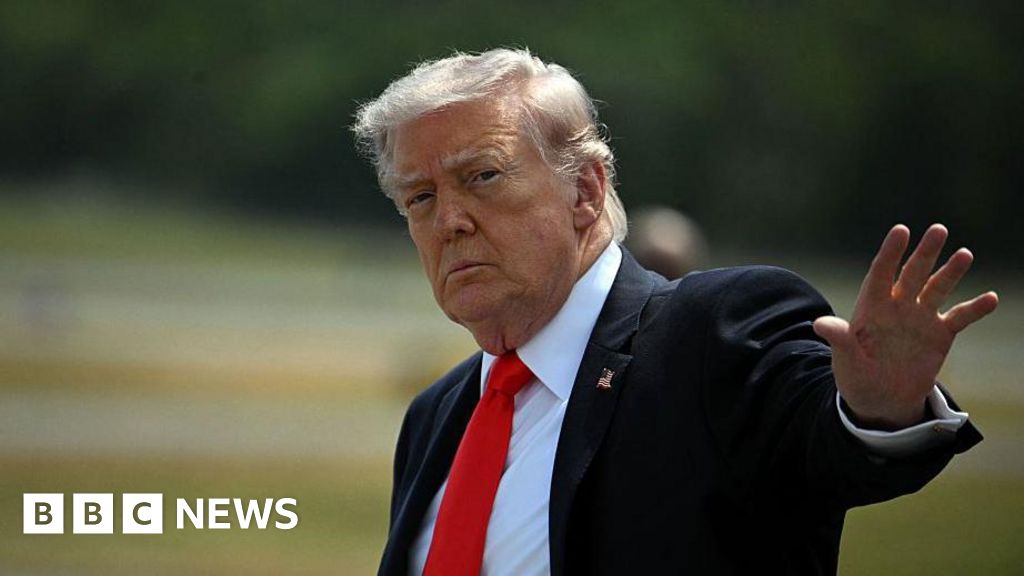
It comes as the US said on Monday it will begin to help “guide” vessels out of the Strait of Hormuz.
Source link
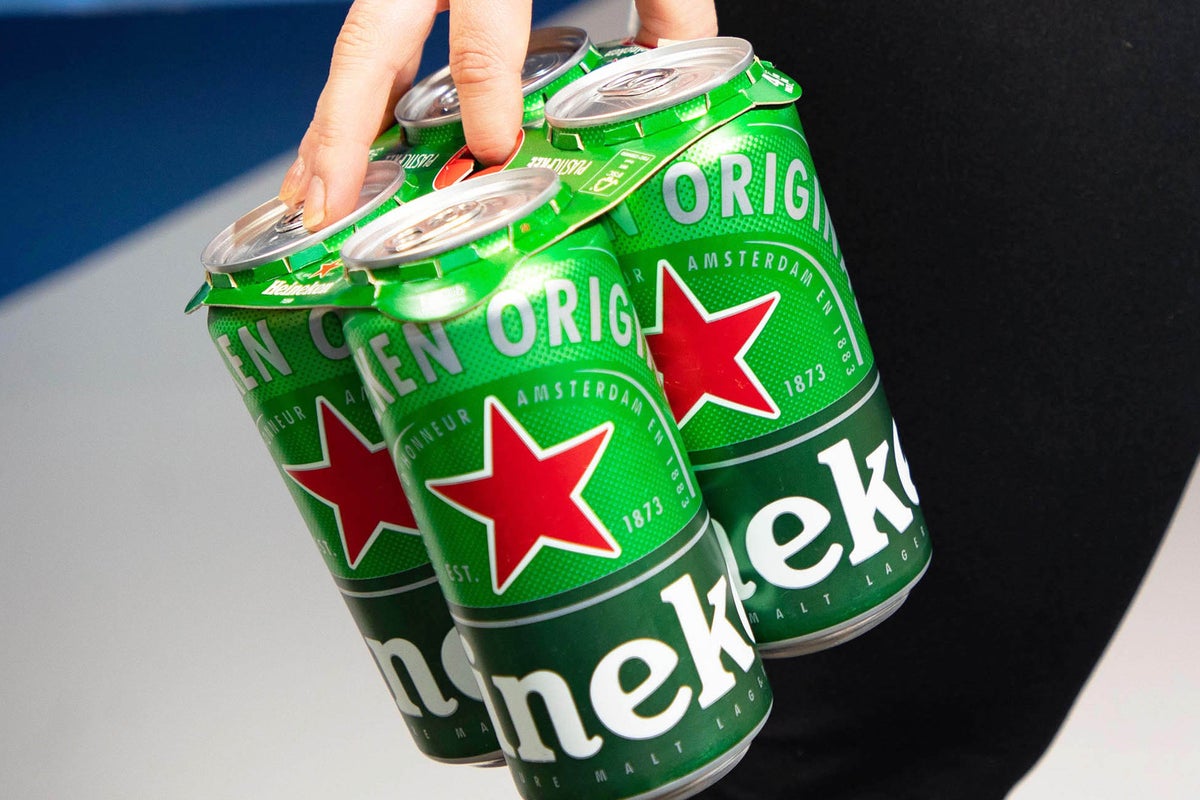
Heineken has revealed plans to invest more than £44 million into improvements for hundreds of its UK pubs.
The Dutch brewing giant said the cash injection into its Star Pubs operation, which runs 2,350 sites across the UK, will create around 850 jobs.
The major investment plan comes despite a challenging backdrop for the pub sector.
Pubs have come under pressure from rising labour costs and increases to national insurance contributions over the past year, while consumer spending has also come under pressure with concerns over inflation and rising unemployment.
However, pubs received additional business rates support from the Government from last month to help ease their cost pressures.
Lawson Mountstevens, Star Pubs’ managing director, said the company’s investment plan is partly aimed at boosting revenues to help the group cope with the recent “sustained increases in running costs”.
The plans will see the business invest £44.5 million this year into upgrades for 647 of its pubs.
It said 108 of its venues will see particularly significant cash injections, with these all set for transformations costing at least £145,000.
Heineken said the majority of pubs are owned by the group but independently operated by locals, with sports-focused venues an emphasis for investment in the run-up to the 2026 football World Cup.
The pub firm and brewer said it has pumped £328 million into British pubs since 2018.
It has already started work in 52 locations, including eight projects where it is reopening boarded-up pubs which have suffered from lengthy closures.
Mr Mountstevens urged the Government to reduce the tax burden on pubs to help ease the cost burden and support more job creation in the industry.
He said: “We can only do so much; the root-and-branch reform of business rates that the industry has been calling for over many years is urgently required, as well as a lowering of the burden of taxation on pubs, including VAT and beer duty.
“We are calling on the Government to support us in bringing out the best in the Great British pub.”
A company law appeals court on Monday rejected a challenge by mining billionaire Anil Agarwal’s Vedanta Ltd to the winning bid by Gautam Adani’s group for bankrupt real estate firm Jaiprakash Associates Ltd (JAL), whose assets include India’s only Formula One circuit. The National Company Law Appellate Tribunal (NCLAT) did not find merit in the issues raised by Vedanta and dismissed its two petitions. A Bench comprising Chairperson Justice (retired) Ashok Bhushan and Technical Member Barun Mitra held that the Committee of Creditors (CoC) were right in preferring Adani Group’s Rs 14,535 crore bid over Vedanta’s resolution plan for JAL. That decision was approved by the National Company Law Tribunal (NCLT), against which Vedanta went into an appeal in NCLAT. “No grounds have been made out by the appellant (Vedanta) to interfere with the decision of the adjudicating Authority (NCLT),” NCLAT order said. “There is no merit in the appeal. Both appeals are dismissed. There shall be no orders to pass.” NCLAT said the decision of the Committee of Creditors was based on “overall consideration of the respective resolution plan and was taken in its commercial wisdom,” said the appellate tribunal. JAL was admitted for insolvency proceedings in June 2024 after it failed to pay bank dues exceeding Rs 57,000 crore. The resolution process drew 28 expressions of interest, with six final bidders including Vedanta, Adani Enterprises and others. Adani and Vedanta emerged as frontrunners, with Adani’s proposal scoring higher on upfront recovery and overall value. The CoC approved Adani’s plan in November 2025 with a 93.81 per cent vote. Vedanta later submitted a revised offer, valued at Rs 16,070 crore, but creditors declined to consider it, citing rules barring post-deadline changes. Vedanta argued the process lacked transparency and that its revised bid offered superior value. Creditors countered that the revised proposal was submitted only after Vedanta became aware it was trailing the winning bid. The appellate tribunal had earlier declined to stay implementation of Adani’s plan, a decision subsequently upheld by the Supreme Court, which directed an expedited hearing while requiring key implementation decisions to receive tribunal approval. Monday’s ruling clears the way for Adani’s takeover of JAL unless Vedanta challenges it in the Supreme Court. In its order, NCLAT also said there has been “no material irregularity committed by Resolution Professional while conducting the plan resolution process.” NCLAT also dismissed Vedanta’s plea, where it had questioned the evaluation metrics adopted and had said its bid was Rs 3,400 crore higher in gross value terms and roughly Rs 500 crore more in net present value compared to the Adani Group’s bid. Rejecting this, NCLAT said “decision of CoC not approving the resolution plan of the appellant with a higher plan value of Rs 3,400 crores and NPV of Rs 500 crore as compared to plan of respondent No 3 (Adani) cannot be said to be arbitrary or perverse.” On March 17, the NCLT, Allahabad bench, approved Adani Enterprises Ltd’s Rs 14,535-crore bid to acquire JAL through the insolvency process. This was challenged by Vedanta before the appellate tribunal NCLAT. On April 23, the insolvency appellate tribunal had concluded its hearing after hearing the petitioner Vedanta and respondents, including the Resolution Professional, Committee of Creditors (CoC) and Adani Enterprises. Vedanta has questioned the evaluation metrics adopted by lenders of JAL, which had selected the lower bid of Rs 3,400 crore from Adani Enterprises for the debt-ridden company and questioned the commercial wisdom of CoC. Earlier, on March 24, NCLAT declined any interim stay over the Vedanta Group’s plea against the order passed by the NCLT approving Rs 14,535-crore bid by the Adani Group for acquiring JAL. However, it had also said the plan would be subject to the outcome of the appeals filed by the Anil Agarwal-led Vedanta Group. This interim order by NCLAT was challenged before the Supreme Court, which also declined to grant a stay. However, the apex court had directed that if the monitoring committee planned to take any major policy decision, it should first obtain the Tribunal’s sanction. Adani Enterprises had outbid Vedanta and Dalmia Bharat to win the bid for JAL. Adani got the maximum 89 per cent votes from creditors, followed by Dalmia Cement (Bharat), and Vedanta Group. The CoC defended its decision, saying the process complied with all Insolvency and Bankruptcy Code (IBC) rules. They maintained that no bidder has a guaranteed right to win, even if it offers the highest value. They said plans were evaluated on multiple factors, including upfront cash, feasibility, and execution, not just headline value. JAL, which has high-quality assets and business interests spanning real estate, cement manufacturing, hospitality, power and engineering & construction, was admitted to the CIRP in June 2024 after it defaulted on payments of loans aggregating Rs 57,185 crore. JAL has major real estate projects like Jaypee Greens in Greater Noida, a part of Jaypee Greens Wishtown in Noida (both on the outskirts of the national capital), and the Jaypee International Sports City, located near the upcoming Jewar International Airport. It also has three commercial/industrial office spaces in Delhi-NCR, while its hotel division has five properties in Delhi-NCR, Mussoorie, and Agra. JAL has four cement plants in Madhya Pradesh and Uttar Pradesh, and a few leased limestone mines in Madhya Pradesh. It also has investments in subsidiaries, including Jaiprakash Power Ventures Ltd, Yamuna Expressway Tolling Ltd, Jaypee Infrastructure Development Ltd, and several other companies.

US denies Iranian report warship was struck by missiles

Crew of US-seized Iranian vessel transferred to Pakistan for repatriation: Report

Yankees radio icon John Sterling dead at 87

-

 Tech7 days ago
A Brain Implant for Depression Is About to Be Tested in Humans
-

 Tech1 week ago
Almost 90% of women leave tech industry within 10 years | Computer Weekly
-
 Business7 days ago
‘I had £20,000 stolen and had to fight a 13-month fraud reporting rule to get it back’
-
 Business1 week ago
Pakistan’s oil market is fuelling the crisis | The Express Tribune
-

 Sports6 days ago
Pro wrestling star Steph De Lander reveals how colleague’s advice helped lead her to title triumph at ACW
-

 Entertainment7 days ago
Melania Trump says ABC should ‘take a stand’ on late-night host Kimmel
-

 Tech6 days ago
This Ambitious Laptop Doesn’t Leave Much Room for Your Hands
-

 Entertainment7 days ago
Norway joins Type 26 Frigate Programme to boost NATO naval power