

Business
Beyonce, Sydney Sweeney and a fight for relevance: How American Eagle, Gap and Levi sparked a new ‘denim war’


Levi Strauss CEO Michelle Gass was out for a run in San Francisco last March when she first heard the song “Levii’s Jeans” from Beyonce’s latest album, “Cowboy Carter.”
“Literally, I got chills,” Gass recounted to CNBC, adding the name-check represented a “once in a lifetime” marketing opportunity she couldn’t afford to squander. “She is one of the most celebrated and influential artists of our time. … We asked the question, ‘Could there be something more?'”
Six months later, Levi announced Beyonce would star in a new global marketing campaign. Then, a pattern that’s repeated itself since Levi invented blue jeans more than 150 years ago happened again: competitors raced to catch up.
Gap and American Eagle launched their own star-studded campaigns the following summer in a bid to sell more jeans. Gap partnered with girl group Katseye in its viral made-for-TikTok “Milkshake” ad, while American Eagle chose actress Sydney Sweeney for its controversial “good jeans” campaign. Just before Thanksgiving, American Eagle launched another celebrity campaign with a different type of star: Martha Stewart.
Some smaller brands that can’t pay for a name like Beyonce have gotten free marketing just from celebrities wearing their denim. In late August, Kylie Jenner posted a picture of herself in True Religion jeans, leading to a spike in sales, CEO Michael Buckley told CNBC. He called it the “ultimate compliment.”
Industrywide, brands aired nearly 70% more denim TV spots this year compared with last, as the global jeans market swelled to $101 billion, up 28% since 2020, according to data from TV outcomes company EDO and market research company Euromonitor International.
Behind the big campaigns were hints about each retailer’s strategies and challenges. American Eagle is trying to win over more men. Levi’s wants to court more women. Gap is working to find relevance among a new generation of shoppers.
But taken together, the marketing shows the lengths companies are going to dominate a growing denim category that is still up for grabs — even if Levi may have created it. In an economy where many shoppers are thinking twice before shelling out for a new pair of jeans, retailers are scrapping harder than ever to win every dollar they can.
“There definitely is a denim war. There’s a war for people’s attention. There’s a war for people’s spend,” said Neil Saunders, retail analyst and GlobalData managing director. “Who has the most comfortable denim? Who has the softest feel? Who has the best cuts? What fits me well? There’s much more consideration in the customer buying process than for some other products, so it does make it much more of a battle between the retailers.”
Why retailers are betting on denim now
Like all things in fashion, denim goes through cycles. It’s a stalwart garment in any closet, but sometimes it’s in fashion, and sometimes it’s not.
The last time denim was this big was during the 2000s when brands like True Religion and Joe’s Jeans were a favorite among A-listers before athleisure became more popular and transformed casual dressing.
“When we came out of Covid, I think to me this is really when it started, when we started to see consumers basically say, ‘Look, I want to feel like I am not sitting in my house anymore, I want to feel like I am getting dressed up to go out,'” said Janine Stichter, a retail analyst and managing director at financial services firm BTIG. “That kind of started to bring about the denim cycle that we’re in right now.”
In past denim booms, certain cuts dominated, like skinny jeans in the 2000s and bell bottoms and flares in the 1970s. This time around, any cut goes, and consumers are moving beyond jeans to a wider variety of denim garments, creating a bigger market opportunity.
“Now we’re seeing everything from wide leg to barrel leg to bootcut. It all kind of has a place,” said Stichter. “That’s a reason why companies might want to invest behind it, because there’s just so many styles that consumers are accepting right now.”
Denim has been a bright spot for retailers in a sluggish apparel market, but they’ve had to fight harder for consumer attention as more rivals invest in the space. Younger shoppers are prioritizing value over brand loyalty, cash-strapped consumers are pulling back on new clothes and the category has grown increasingly competitive, analysts said.
A woman walks next to a poster of Beyonce’s Levi Jeans campaign on Wednesday, Oct. 23, 2024 in Los Angeles, CA.
Michael Blackshire | Los Angeles Times | Getty Images
Major apparel players like Levi, Gap and American Eagle aren’t just competing with one another. They’re also vying against emerging brands, fast-fashion retailers and thrift stores, where many Gen Z consumers might opt for a vintage pair of jeans instead of buying new.
To cut through all of the noise, companies needed to go big with their marketing campaigns, said Saunders.
“The whole world and his wife are on denim at the moment. Everyone’s pushing and talking about it, so they just needed to do something that was a little bit more edgy,” Saunders said. “They didn’t want to play it safe, because that’s not really going to make noise in the market.”
For Gap and American Eagle, both legacy mall players with fading relevance, the denim play goes deeper than just driving revenue. In a way, they’re reintroducing themselves to a new generation of customers as they work to reclaim their standing in fashion and culture.
“Leaning into denim and having these big campaigns around denim is part of a wider push to reinvigorate the brands, and I think that’s why they’ve gone all out on it, because they see denim almost as a halo that can shine light on the rest of the brand and the things that they’re doing,” said Saunders. “It’s the relevance play because … American Eagle had become a little bit stale and was struggling with the results, Gap is in the midst of a reinvention to really try to make the brand much more relevant, especially to younger consumers.”
In an interview with CNBC, Gap CEO Richard Dickson said the Katseye campaign allowed the company to reach a wide set of consumers in a strategic way.
“It has absolutely resonated with Gen Z, who is still in the discovery phase of the Gap brand,” he said. “But what it also did is, it reinforced loyalty with our core consumer. So again, we’re bridging the generation gap by appealing to multiple audiences.”
Gap Inc. Katseye
Source: Gap Inc.
While the market has been flooded with denim advertisements, the content of the ads is having a big impact on engagement, EDO said. The effectiveness of jeans ads, measured by consumer engagement like searches and site visits, improved 9% year over year from January through August, suggesting the creative messaging behind the spots matters more than frequency, EDO said.
Levi’s denim ads were 304% more effective than the average clothing ad, even after it cut back on airings by nearly a third, said EDO.
How did big denim ads perform?
Retailers don’t disclose how much they spend on individual advertising campaigns, but those investments are part of a company’s selling, general and administrative costs, which they disclose in filings.
In Levi’s fiscal year ended Dec. 1, 2024, which covers the debut of its Beyonce campaign, the company’s SG&A expenses were nearly $200 million higher than the previous year, more than half of which was spent in the quarter the campaign debuted. The company previously acknowledged the Beyonce ads contributed to the higher costs, and Gass told CNBC it was a bet worth taking.
“The Beyonce campaign had a great return for us,” said Gass. “When we look at our business results, our sales are growing, but our profits are growing as well overall, so we feel good about the investment.”
Since Gass took over, winning over more female shoppers has been at the core of her strategy, and the company’s Beyonce campaign is helping it achieve that goal. Last October, days after the campaign launched, Levi said its women’s business represented about 35% of overall revenue. A year later, it’s about 38%.
“It’s driving a lot of our growth. That should be half of our business,” said Gass. “Based on the momentum we’re seeing, there’s no reason why we can’t achieve that.”
True Religion, which is privately held and doesn’t disclose its financials, told CNBC denim sales rose 38% between Aug. 20 and Aug. 22, the time period in which social media influencer Alix Earle and Jenner made organic posts about the company’s jeans.
“When Kylie posted, not only did she put us in a story, but she put us in a carousel as a hard post on her wall. She probably charges $500,000 to a million dollars for that,” said Kristen D’Arcy, True Religions’ chief marketing officer and head of digital growth. “The results of those posts, especially on women’s denim sales, was pretty incredible.”
Since American Eagle’s and Gap’s campaigns are newer, it’s too early to say how they have affected long-term sales. But they’ve already made their mark in culture and on Wall Street.
An American Eagle advertisement featuring actress Sydney Sweeney on a billboard in Times Square in New York, US, on Thursday, Aug. 7, 2025.
Michael Nagle | Bloomberg | Getty Images
When American Eagle announced its campaign with Sweeney, the company became a meme stock sensation, only to see those gains erased after it faced criticism over the ad’s tone and messaging. Later, President Donald Trump weighed in and called it the “hottest ad out there,” leading the stock to soar once again.
“It was billions of impressions. I mean, it was amazing what happened. It struck a new conversation,” Jennifer Foyle, president and executive creative director for AE & Aerie, told CNBC in an interview. “When we launched that campaign, we knew it was going to be exciting but it really took off.”
Some news reports suggested foot traffic at the company’s stores fell in the aftermath of the ad. However, the company later said traffic across channels had been “consistently positive throughout August,” the month after the campaign launched.
Following the Sweeney ad and another campaign with Kansas City Chiefs tight end Travis Kelce, the company said in early September it had seen “meaningful improvement in the business,” with growth in comparable sales and the acquisition of 700,000 new customers.
“It definitely helped our traffic. We definitely gained new customers,” said Foyle. “Keep in mind, those new customers don’t always come right back and shop, right? So, definitely there’ll be a halo effect for sure as we head into Q4 and future seasons.”
Following the controversy over the campaign, American Eagle apparently removed one of the ads from most of its social pages – the one where Sweeney discusses genes being passed down from parent to offspring that incited the most blowback and comparisons to eugenics. The spot is now only visible on American Eagle’s Facebook page. A company spokesperson denied the retailer took the ad down, saying “once content is released, it’s out for the world to see.”
American Eagle declined further comment on the Sweeney controversy. About a week after the ads came out, it posted a statement on its Instagram page saying the campaign “is and always was about the jeans.”
When American Eagle issued fiscal third-quarter results on Tuesday, it was the first time investors got to see a full quarter of impact from the Sweeney and Kelce campaigns. While the company said that the campaigns are “attracting more customers” and creating more attention around the brand, the results showed they’re not yet a major revenue driver.
At American Eagle’s namesake banner, where the campaigns were focused, comparable sales grew just 1% in the three months ended Nov. 1, worse than the 2.1% analysts had expected, according to StreetAccount.
Meanwhile, SG&A expenses were up by about $35 million year over year, due in large part to its campaigns with Sweeney and Kelce. The increase in costs didn’t have a major impact on American Eagle’s operating margin, which came in higher than expected.
Last month, Gap said comparable sales at its namesake banner surged 7% in the quarter after the Katseye ad came out — more than double what analysts had expected, according to StreetAccount.
“The brand saw growth in [average unit retail], consideration, organic impressions, new customers, so generating significant traffic,” Dickson told CNBC. “Double-digit growth in denim, 8 billion impressions, so we’re very pleased and excited about the long-term proposition and the continued progress the brand is making.”
Meanwhile, the campaign has been a viral sensation, racking up 50 million views on YouTube alone in the last three months. That’s five times the 10 million views American Eagle’s Sweeney ad saw on the platform in four months. Still, both of the ads combined don’t come close to the engagement Levi’s Beyonce campaign has seen on YouTube. The four “chapters” of the campaign, which were released between last September and August, have garnered a staggering 85 million views combined.
“Levi’s is definitely winning the war overall. I mean, this is Levi’s home turf, you’re playing in the home stadium, so they have an inbuilt advantage,” said Saunders. “They have been very savvy about creating the culture around denim. They’ve got arguably the biggest celebrity on their team, and they’ve widened the lifestyle aesthetic, so they’ve really led this.”



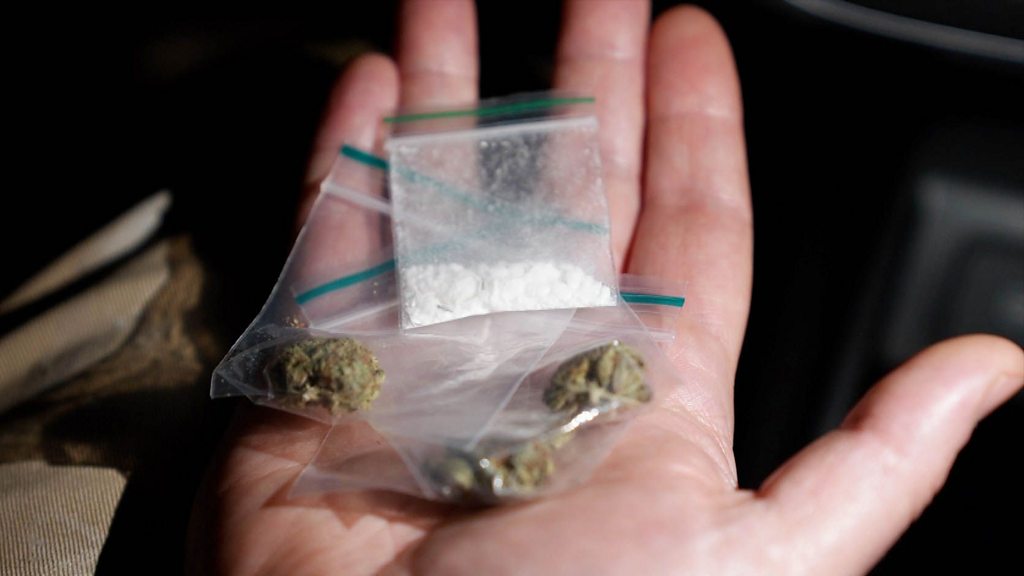
Across the UK, shopfronts are being exploited by criminal gangs pushing illegal drugs, experts say.
Source link

At around 8.25 am, the benchmark US oil contract, West Texas Intermediate (WTI) climbed 4.06% to US$96.73 per barrel.
International oil benchmark Brent North Sea crude rose 3.62% to US$105.63. Both eased back in the following minutes.
Oil prices have soared since Israel and the US attacked Iran on Feb 28, and they have kept inching up due to the uncertainty over whether war will resume.
As the clock ticked for a return to the war that has engulfed the region, US President Donald Trump had said Tuesday he would maintain the truce to allow more time for Pakistani-brokered peace talks.
Iran said it welcomed the efforts by Pakistan but made no other comment on Trump’s announcement.
Wall Street stocks gained ground following President Trump’s unilateral ceasefire extension in the Iran war.
All three major US stock indexes advanced, with tech shares helping to put the Nasdaq out front, while gold advanced and the dollar edged higher.
The S&P 500 and the Nasdaq reached record closing highs.
“Despite the energy shock and headlines that have inundated investors, the macroeconomy, corporate fundamentals, and consumer spending remain strong,” said Bill Merz, head of capital markets research at US Bank Wealth Management in Minneapolis.
“Investors are taking the stance that the Strait of Hormuz will open before too much damage is inflicted on the global economy.”
Iran’s Revolutionary Guards seized two vessels for maritime violations just hours after Trump agreed to extend the ceasefire until negotiations are concluded.
About a fifth of the world’s oil and liquefied natural gas (LNG) supplies normally pass through the strait.
US stocks, initially battered by the war, have since made a full recovery, with the S&P 500 and the Nasdaq having reached all-time closing highs in recent sessions.
But geopolitical uncertainty lingers, and a prolonged period of elevated oil prices remains a threat.
About two-thirds of the S&P 500 companies that have reported quarterly earnings since the beginning of April have voiced concerns about energy prices in their analyst conference calls, according to a Reuters review of transcripts.
“Anytime there’s a global event like the conflict in the Middle East, and it grabs so many headlines and captures attention, it will crop up in earnings commentary,” Merz added. “But we’re not seeing it significantly impact behaviour yet.”
First-quarter earnings season is well underway amid lofty expectations. Analysts currently estimate year-on-year S&P 500 earnings growth of 14.4% for the January-March period, according to the most recent LSEG data.
The Dow Jones Industrial Average rose 341.27 points, or 0.69%, to 49,490.52, the S&P 500 +gained 73.90 points, or 1.05%, to 7,137.91, and the Nasdaq Composite was up 397.60 points, or 1.64%, to 24,657.57.
European shares ended lower for the third straight session as the Middle East strife continued to weigh on markets and investors assessed a raft of corporate earnings.
Dozens of international firms have withdrawn guidance or signalled price hikes since the war began.
MSCI’s gauge of stocks across the globe rose 4.52 points, or 0.42%, to 1,070.98.
The pan-European STOXX 600 index fell 0.35%, while Europe’s broad FTSEurofirst 300 index fell 8.58 points, or 0.35%.
Emerging market stocks fell 9.41 points, or 0.58%, to 1,606.07. MSCI’s broadest index of Asia-Pacific shares outside Japan closed lower by 0.6%, to 822.27, while Japan’s Nikkei .N225 rose 236.69 points, or 0.40%, to 59,585.86.
The dollar rose amid lingering geopolitical worries.
The dollar index, which measures the greenback against a basket of currencies including the yen and the euro, rose 0.26% to 98.63, with the euro down 0.32% at $1.1704.
Against the Japanese yen, the dollar strengthened 0.12% to 159.56.
In cryptocurrencies, Bitcoin gained 4.13% to $78,866.74. Ethereum rose 3.48% to $2,398.37.
US Treasury yields increased, rangebound amid choppy trading.
The yield on benchmark US 10-year notes rose 1.2 basis points to 4.304%, from 4.292% late on Tuesday.
The 30-year bond yield rose 1.1 basis points to 4.9091% from 4.898% late on Tuesday.
The 2-year note yield, which typically moves in step with interest rate expectations for the Federal Reserve, rose 2.1 basis points to 3.8%, from 3.779% late on Tuesday.

Jenny Lennick’s colourful hair clips are sold across the US and around the world.
Source link


Canada forms new advisory committee to strengthen US trade relations
High street drug dealer sells cannabis to undercover reporter

Clearing Hormuz Strait mines could take six months: report

-

 Fashion1 week ago
France’s LVMH Q1 revenue falls 6%, shows resilience amid Iran war
-

 Entertainment1 week ago
Is Claude down? Here’s why users are seeing errors
-

 Tech1 week ago
The Deepfake Nudes Crisis in Schools Is Much Worse Than You Thought
-

 Sports1 week ago
PSL 11: Peshawar Zalmi win toss, opt to field first against Quetta Gladiators
-

 Tech1 week ago
Human-machine teaming dives underwater
-
 Business1 week ago
BP sees ‘exceptional’ oil trading result as Iran war sends crude costs soaring
-

 Fashion1 week ago
What no one is saying about the 2026 apparel slowdown
-
 Business1 week ago
Standard Life buys rival in £2b deal to create savings giant