

Entertainment
Bob Ross paintings to be auctioned to raise money for public TV stations after funding cuts


Thirty paintings created by the bushy-haired, soft-spoken Bob Ross will soon be up for auction to defray the costs of programming for small and rural public television stations suffering under cuts in federal funding.
Ross, a public television stalwart in the 1980s and ’90s, “dedicated his life to making art accessible to everyone,” said Joan Kowalski, president of Bob Ross Inc. “This auction ensures his legacy continues to support the very medium that brought his joy and creativity into American homes for decades.”
The 30 paintings to be auctioned span his career. Most were created on-air during single episodes of Ross’ show, “The Joy of Painting.” Ross was known for his calm demeanor. During the show, he often spoke about painting happy little clouds and trees, and making no mistakes, only “happy accidents.” He died of cancer complications in 1995.
Bonhams in Los Angeles will auction three of Ross’ paintings on Nov. 11. Other auctions will follow in London, New York, Boston and online. Bonhams sold two early 1990s mountain-and-lake scenes of Ross in August for $114,800 and $95,750.
YouTube
The auctions of the 30 paintings soon to be sold have an estimated total value of $850,000 to $1.4 million, Bonhams said. All profits are pledged to stations that use content from distributor American Public Television.
The idea is to help stations in need with licensing fees that allow them to show popular programs that include “The Best of Joy of Painting,” based on Ross’ show, “America’s Test Kitchen,” “Julia Child’s French Chef Classics” and “This Old House.”
As desired by President Donald Trump, Congress has eliminated $1.1 billion allocated to public broadcasting, leaving about 330 PBS and 246 NPR stations to find alternative funding sources.
Many stations launched emergency fund drives. Some stations have received more help than they expected, CBS News previously reported. North Carolina public radio station WQHR raised more than $200,000 in just three days, surpassing the $174,000 they needed to fill. Hawaii Public Radio lost $525,000, but donations raised $650,000.
NPR has also encouraged donors in wealthier areas to support stations in regions that are in greater need. PBS and NPR have also worked to reduce the annual dues stations pay for programming and other services to lower their costs. Some stations are working on collaborations to see if they can share services and reduce costs.
Still, the federal cuts have had an impact. Not all stations have seen an outpouring of donors. PBS slashed its budget by 21% and laid off about 100 employees in September. Stations have also had to lay off staff and reduce programming, CBS News previously reported. No stations have shut down yet, but operators are worried about what happens if donor money dries up.
“I am a realist,” PBS president Paula Kerger said in September. “I have to believe that there are some vulnerable stations that are not going to make it.”
National Public Radio president and CEO Katherine Maher told CBS News in July that defunding public media services “is a real risk to the public safety of the country.”
“Public media, public radio, public television, are a critical part of the emergency response plans of nearly half of the states in this nation,” Maher said in an interview with CBS News. “If these types of emergency alerting go away, you will have fewer outlets to be able to respond in real time” to future natural disasters.







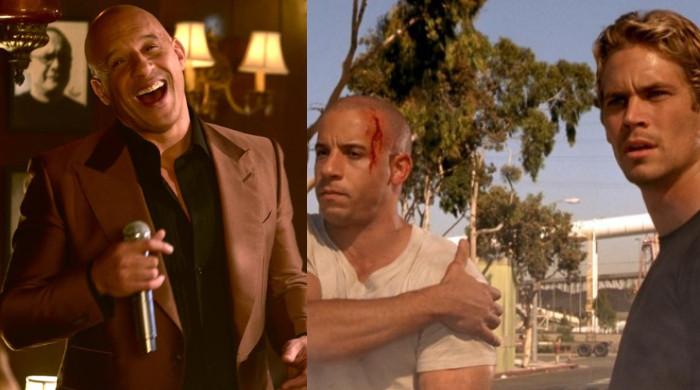
Vin Diesel has made an interesting announcement as he celebrates 25 years of the Fast and Furious franchise.
Taking it to Instagram, the 58-year-old star dropped a video featuring him and late Paul Walker’s daughter Meadow. He shared a glimpse of their “Sunday family dinner.”
In the clip, the XXX actor revealed that the Fast franchise has turned 25 in 2026 and he is looking forward to celebrating anniversary in a special way.
Vin opened, “Obviously, we always share old stories, nostalgic stories. Especially since it’s the 25th anniversary.”
The American actor and filmmaker teased that some classic cars used in the Fast Saga will be displayed at the Peterson Car Museum.
Diesel continued, “Meadow and I were incredibly excited, for some reason, about the fact that our cars from Fast and Furious are going to be featured, premiered, shown? On display? At the Peterson Car Museum.”
World’s highest-grossing actor further shared that along with the cars display, Paul Walker Foundation merchandise will also be available at the museum.
While referring to Meadow, Vin asked, “And when are we cutting the ribbon? On the 12th of this month. 12th of this month, March. Sending all love.”
The first Fast film, directed by Rob Cohen, was released in 2001. It featured Diesel, Walker, Michelle Rodriguez, and Jordana Brewster.
The film series is still running strong as 11th sequel titled Fast Forever is set to release in 2028.

- Democrats criticise Trump for waging “war of choice”.
- Three US troops killed, more wounded so far.
- Trump calls for Iranians to “take back” their country.
Trump administration officials acknowledged in closed-door briefings with congressional staff on Sunday that there was no intelligence suggesting Iran planned to attack US forces first, two people familiar with the matter said.
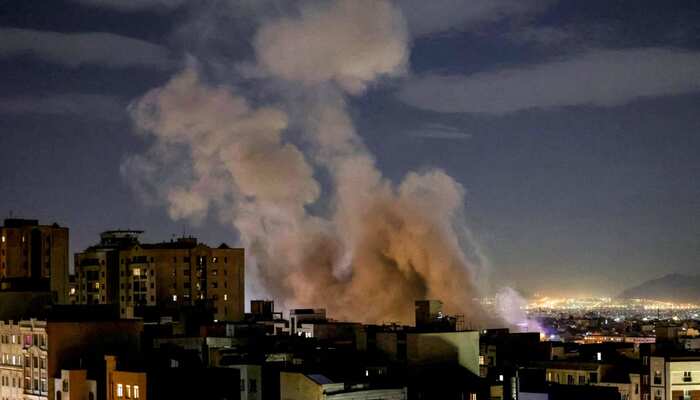
The United States and Israel launched their most ambitious attacks on Iran in decades on Saturday, martyring Supreme Leader Ayatollah Ali Khamenei, sinking Iranian warships and hitting more than 1,000 targets so far, officials say.
But Sunday’s remarks to Congress appeared to undercut one of the key arguments for the war made by senior administration officials.
They told reporters the day before that President Donald Trump decided to launch the attacks in part because of indicators that Iranians might strike US forces in the Middle East “perhaps preemptively.”
Trump, one of the officials said, was not going to “sit back and allow American forces in the region to absorb attacks.”
Pentagon briefings lasted over 90 minutes
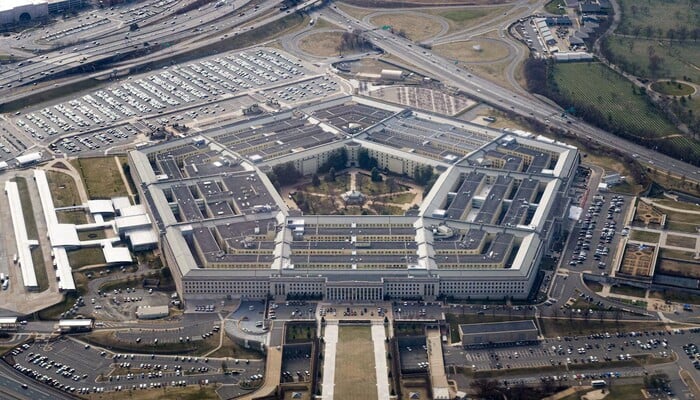
Pentagon officials briefed Democratic and Republican staff of several national security committees in both the Senate and the House of Representatives for more than 90 minutes on the unfolding US attack in Iran, White House spokesperson Dylan Johnson said earlier.
In the briefings, administration officials emphasised that Iran’s ballistic missiles and proxy forces in the region posed an imminent threat to US interests, but there was no intelligence about Tehran attacking US forces first, the two sources, speaking on condition of anonymity, told Reuters.
Trump said the attack, which is expected to run for weeks, aimed to ensure Iran could not have a nuclear weapon, contain its missile program and eliminate threats to the United States and its allies.
He has urged Iranians to rise up and topple the government.
Democrats criticise ‘war of choice’
Still, Democrats have accused Trump of waging a war of choice and have taken aim at his arguments for abandoning peace talks that mediator Oman said still held promise.
Trump has argued, without presenting evidence, that Iran was on track to soon secure the ability to strike the United States with a ballistic missile.
His missile claim was not backed by US intelligence reports, and appeared to be exaggerated, sources familiar with the reports have told Reuters.
Questions about the justification for the war come as the US military revealed on Sunday the first American casualties of the conflict.
Scepticism on regime change
Following the martyrdom of Iran’s Supreme Leader Khamenei, many senior US officials remain sceptical that the US and Israeli military operation against the Islamic Republic will lead to regime change in the near term.
Before and after the start of the attack, US officials, including US President Trump, had suggested that toppling the nation’s repressive governing system was one of several US goals, in addition to crippling Iran’s ballistic missile and nuclear programs.
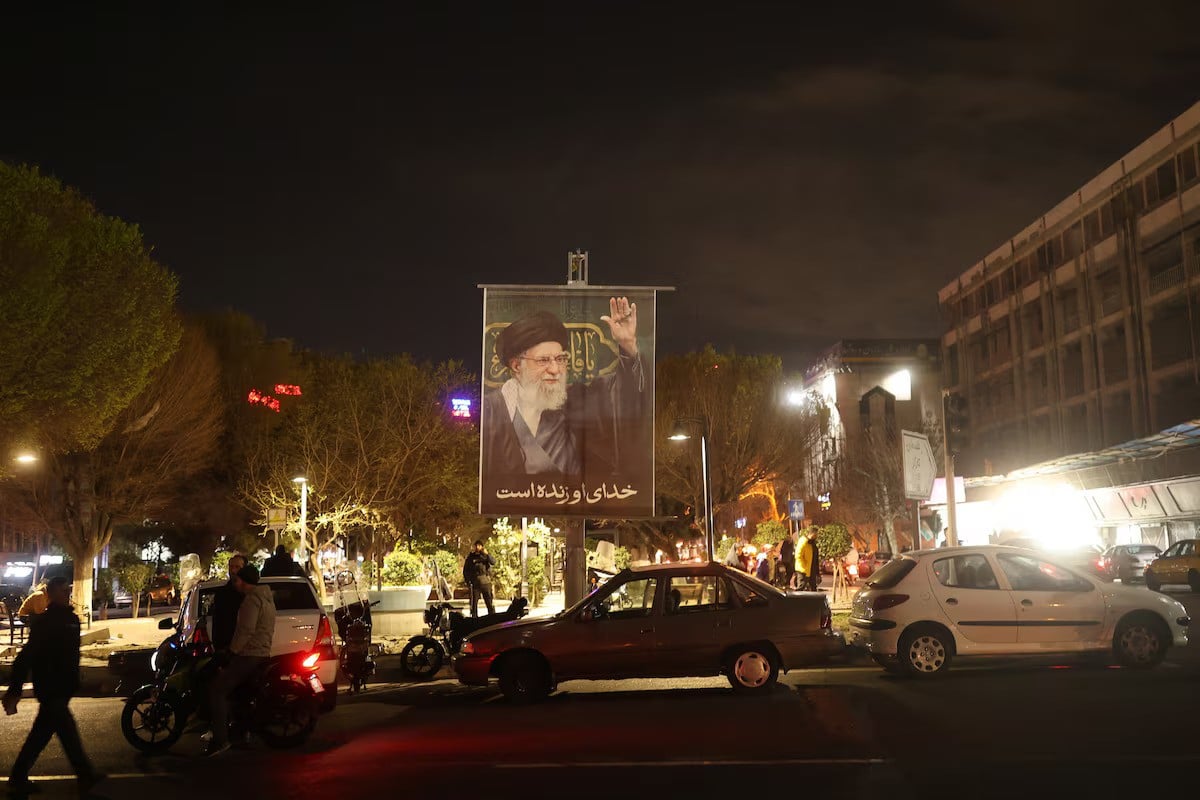
“I call upon all Iranian patriots who yearn for freedom to seize this moment … and take back your country,” Trump said on Sunday in a video posted on Truth Social.
But three US officials familiar with US intelligence said there is serious scepticism that Iran’s battered opposition can topple the theocratic, authoritarian governing system that has been in place since 1979.
No officials consulted by Reuters completely ruled out the possibility of the fall of Iran’s government, which currently is buffeted by key personnel losses from ongoing US and Israeli air strikes and is deeply unpopular following a January round of extraordinarily violent repression.
But it is far from likely or even probable in the near term, they said.
Reuters reported earlier that Central Intelligence Agency assessments presented to the White House in the weeks before the Iran attack concluded that if Khamenei was killed, he could be replaced by hard-line figures from the Islamic Revolutionary Guard Corps or equally hard-line clerics, two sources said.
One US official with knowledge of internal White House deliberations said IRGC officials are unlikely to voluntarily capitulate in part because they have benefited from a vast patronage network designed to maintain internal loyalty.
The CIA assessments followed at least one report from a separate US intelligence agency which noted that there had been no IRGC defections during a massive round of anti-government protests in January that was met with brutal force by Iranian security forces.
Such defections would likely be a precondition of any successful revolution, according to three additional sources. Those sources requested that the specific intelligence agency not be named.
All of the sources Reuters spoke with for this story requested anonymity to discuss intelligence assessments.
Trump himself said on Sunday he planned to reopen communications with Iran, suggesting Washington does not see the government going anywhere, at least in the immediate term.
The White House did not immediately respond to a request for comment, while the CIA declined to comment.
Lots of debate, less consensus
On Sunday, Iranian President Masoud Pezeshkian said a leadership council composed of himself, the judiciary head and a member of the powerful Guardian Council had temporarily assumed the duties of Supreme Leader.
Security chief Ali Larijani accused the United States and Israel of trying to plunder and disintegrate Iran and warned “secessionist groups” of a harsh response if they attempted any action, state television said on Sunday, after the two countries launched a wave of air attacks on Iran that included the bombing of a girls’ primary school. Reuters could not independently confirm the reports from the state media.
The US intelligence discussions about the implications of a possible Khamenei assassination have not been limited to whether it might lead to a change in government leadership.
Two of the US officials said that, since January, there has been significant debate – but no consensus – among officials of various agencies about the extent to which Khamenei’s assasination would lead to a significant shift in the way Iran approached negotiations with the US regarding its nuclear program.
US officials have also debated the extent to which Khamenei’s death or ouster would deter the country from rebuilding its missile or nuclear facilities and capacities, said those officials, who requested anonymity to discuss sensitive internal conversations.
Following the January protests, Steve Witkoff, Trump’s special envoy and a key ally, spoke several times with Iranian opposition figure Reza Pahlavi, the exiled son of Iran’s last shah, raising questions about the extent to which the administration would support his installment should Iran’s government fall, two officials said.
But in recent weeks, senior US officials have become increasingly pessimistic that any opposition figure backed by Washington would realistically be able to control the country, those officials added.
“At the end of the day, once US and Israeli strikes stop, if the Iranian people come out, their success in promoting the end of the regime will depend on the rank and file standing aside or aligning with them,” said Jonathan Panikoff, a former high-ranking US intelligence official who is now at the Atlantic Council think tank in Washington.
“Otherwise, the remnants of the regime, those with the weapons, are likely to use them to keep power.”
Three US troops killed
Three US troops were killed and five seriously wounded, US Central Command said on Sunday, adding that several other US troops suffered minor shrapnel injuries and concussions.
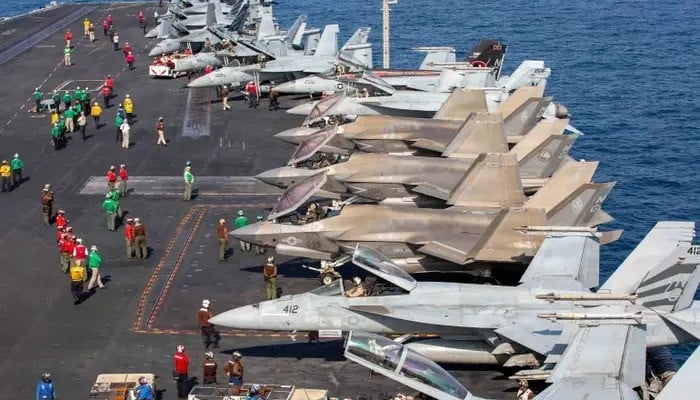
US aircraft and warships have struck more than 1,000 Iranian targets since Trump ordered the start of major combat operations, the military said.
The strikes include B-2 stealth bombers dropping 2,000-lb (900-kg) bombs on hardened, underground Iranian missile facilities.
A Reuters/Ipsos poll on Sunday showed 27% of Americans approved of the strikes, while 43% disapproved and 29% were not sure.

Katie Price has sparked concern among fans after appearing at a glitzy awards show in a revealing outfit.
Some said the 47-year-old former glamour model seemed to be exhausted and tipsy as she walked the red carpet.
Fans were quick to share their worries, with one of her 2.7 million followers writing: ‘Something is not right here.’
Another commented: ‘Hope you are okay price you look space out, jet lagged.’
For those unaware, Katie flew to see her new husband, Lee Andrews, in Dubai several times in recent days.
However, some fans disagreed with the criticism, with one writing: ‘She is looking a lot healthier.’
A fourth fans posted: ‘She is ADHD which means she will suffer from anxiety and struggle with speaking and processing info on the spot.’
It comes after Katie attended the Gossies in Dublin- the annual awards show celebrating some of Ireland’s brightest stars awarded across 19 categories – after keeping her promise to appear. Her Husband, Lee Andrews, remains in missile-hit Dubai.
Speaking at the event, Katie who looked stunning in a bold two piece was asked about new love, Lee, and replied:’ ‘I’m smitten, I’m ecstatic and I’m in love. There was no stress [with the wedding] I like stress, but it all went so good.’
She added: ‘But look at my belly, do I look pregnant? No.’
Other stars in attendance included Demi and Frankie Sims, Irish Dancing with the Stars judges Oti Mabuse, Arthur Gourounlian and Brian Dowling, plus plenty of Love Islanders.
The OnlyFans star previously shocked fans by tying the knot for the fourth time in Dubai with the controversial businessman Lee Andrews just a week after meeting her.
The couple reportedly registered their marriage on February 17.


Netherlands manufacturing prices fall 1.9% in January

One in five UK grocery trips involves at least one missing item – report

USA 2-0 Argentina (Mar 1, 2026) Game Analysis – ESPN

Pakistan carries out precision strikes on seven militant hideouts in Afghanistan

Eye-popping rise in one year: Betting on just gold and silver for long-term wealth creation? Think again! – The Times of India

These Cheap Noise-Cancelling Sony Headphones Are Even Cheaper Right Now

-
Business1 week ago
Eye-popping rise in one year: Betting on just gold and silver for long-term wealth creation? Think again! – The Times of India
-
 Politics1 week ago
Pakistan carries out precision strikes on seven militant hideouts in Afghanistan
-
 Tech1 week ago
These Cheap Noise-Cancelling Sony Headphones Are Even Cheaper Right Now
-

 Sports1 week ago
Kansas’ Darryn Peterson misses most of 2nd half with cramping
-

 Sports1 week ago
How James Milner broke Premier League’s appearances record
-

 Entertainment1 week ago
Viral monkey Punch makes IKEA toy global sensation: Here’s what it costs
-
Sports1 week ago
Mike Eruzione and the ‘Miracle on Ice’ team are looking for some company
-

 Entertainment1 week ago
Saturday Sessions: Say She She performs "Under the Sun"