

Entertainment
Bob Ross paintings to be auctioned to raise money for public TV stations after funding cuts


Thirty paintings created by the bushy-haired, soft-spoken Bob Ross will soon be up for auction to defray the costs of programming for small and rural public television stations suffering under cuts in federal funding.
Ross, a public television stalwart in the 1980s and ’90s, “dedicated his life to making art accessible to everyone,” said Joan Kowalski, president of Bob Ross Inc. “This auction ensures his legacy continues to support the very medium that brought his joy and creativity into American homes for decades.”
The 30 paintings to be auctioned span his career. Most were created on-air during single episodes of Ross’ show, “The Joy of Painting.” Ross was known for his calm demeanor. During the show, he often spoke about painting happy little clouds and trees, and making no mistakes, only “happy accidents.” He died of cancer complications in 1995.
Bonhams in Los Angeles will auction three of Ross’ paintings on Nov. 11. Other auctions will follow in London, New York, Boston and online. Bonhams sold two early 1990s mountain-and-lake scenes of Ross in August for $114,800 and $95,750.
YouTube
The auctions of the 30 paintings soon to be sold have an estimated total value of $850,000 to $1.4 million, Bonhams said. All profits are pledged to stations that use content from distributor American Public Television.
The idea is to help stations in need with licensing fees that allow them to show popular programs that include “The Best of Joy of Painting,” based on Ross’ show, “America’s Test Kitchen,” “Julia Child’s French Chef Classics” and “This Old House.”
As desired by President Donald Trump, Congress has eliminated $1.1 billion allocated to public broadcasting, leaving about 330 PBS and 246 NPR stations to find alternative funding sources.
Many stations launched emergency fund drives. Some stations have received more help than they expected, CBS News previously reported. North Carolina public radio station WQHR raised more than $200,000 in just three days, surpassing the $174,000 they needed to fill. Hawaii Public Radio lost $525,000, but donations raised $650,000.
NPR has also encouraged donors in wealthier areas to support stations in regions that are in greater need. PBS and NPR have also worked to reduce the annual dues stations pay for programming and other services to lower their costs. Some stations are working on collaborations to see if they can share services and reduce costs.
Still, the federal cuts have had an impact. Not all stations have seen an outpouring of donors. PBS slashed its budget by 21% and laid off about 100 employees in September. Stations have also had to lay off staff and reduce programming, CBS News previously reported. No stations have shut down yet, but operators are worried about what happens if donor money dries up.
“I am a realist,” PBS president Paula Kerger said in September. “I have to believe that there are some vulnerable stations that are not going to make it.”
National Public Radio president and CEO Katherine Maher told CBS News in July that defunding public media services “is a real risk to the public safety of the country.”
“Public media, public radio, public television, are a critical part of the emergency response plans of nearly half of the states in this nation,” Maher said in an interview with CBS News. “If these types of emergency alerting go away, you will have fewer outlets to be able to respond in real time” to future natural disasters.










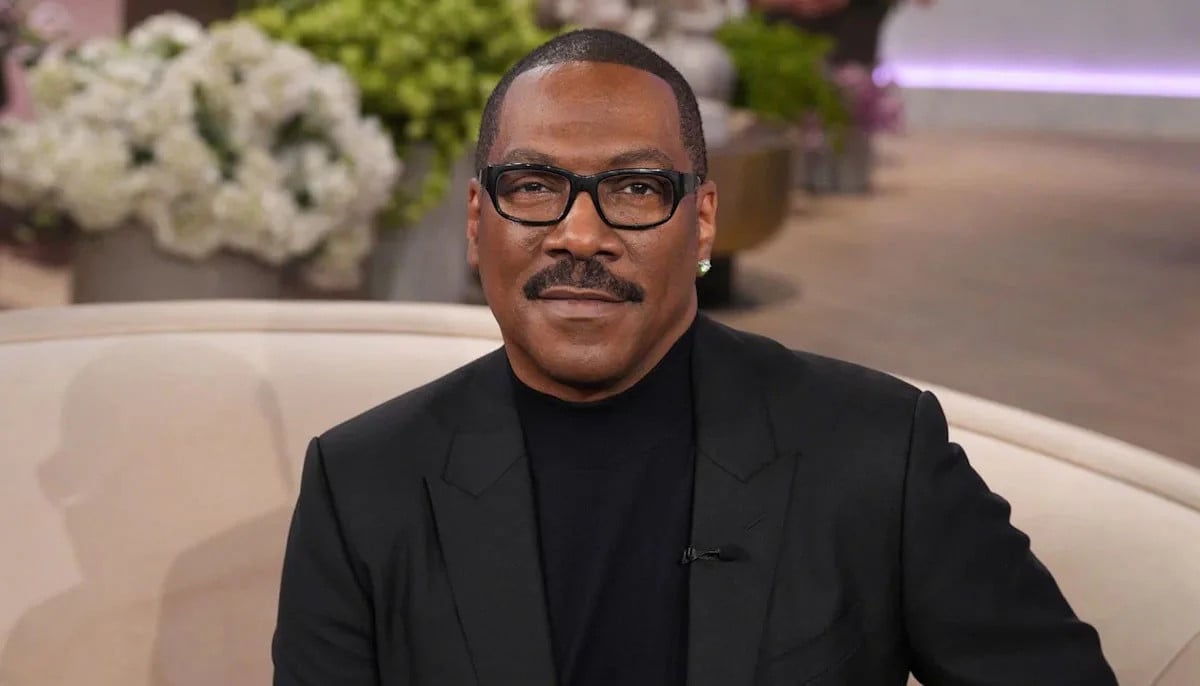
Eddie Murphy is having quite the year for new arrivals.
The comedy legend has revealed he has welcomed not one but two grandchildren in the space of a fortnight, a grandson and a granddaughter, and he could not be happier about it.
Speaking to Entertainment Tonight at the American Film Institute Achievement Award Ceremony on Saturday, 18 April, Murphy, 65, shared the news with characteristic warmth.
“I just had my first grandson two months ago,” he said, referring to the baby boy born to his daughter Bria, 36, and her husband Michael Xavier, who married in July 2022.
Bria had offered a glimpse of her pregnancy at the November premiere of her father’s documentary Being Eddie.
He also confirmed the birth of his third granddaughter, just two weeks ago, to his son Eric and Jasmin Lawrence, daughter of comedian Martin Lawrence.
The couple married last May and announced they were expecting in February. Murphy revealed the baby girl’s name to E! News: Ari Skye.
“So all this stuff is happening,” Murphy said, grinning. “I’m like it’s raining blessings on me. Raining blessings.”
When asked whether he had been dispensing parenting wisdom to the new arrivals, Murphy was direct.
“Oh, you don’t give advice like that. You know, your kids don’t go by your advice. Your kids go by the example you set. They watch you. The stuff you be saying, they don’t even pay that s— no mind. They watch and see what you do. So, I don’t give a lot of advice.”
Murphy is father to ten children across several relationships, including sons Eric, 36, Christian, 35, Myles, 33, and Max, 7, and daughters Bria, Shayne, 31, Zola, 26, Bella, 24, Angel, 19, and Izzy, 9.
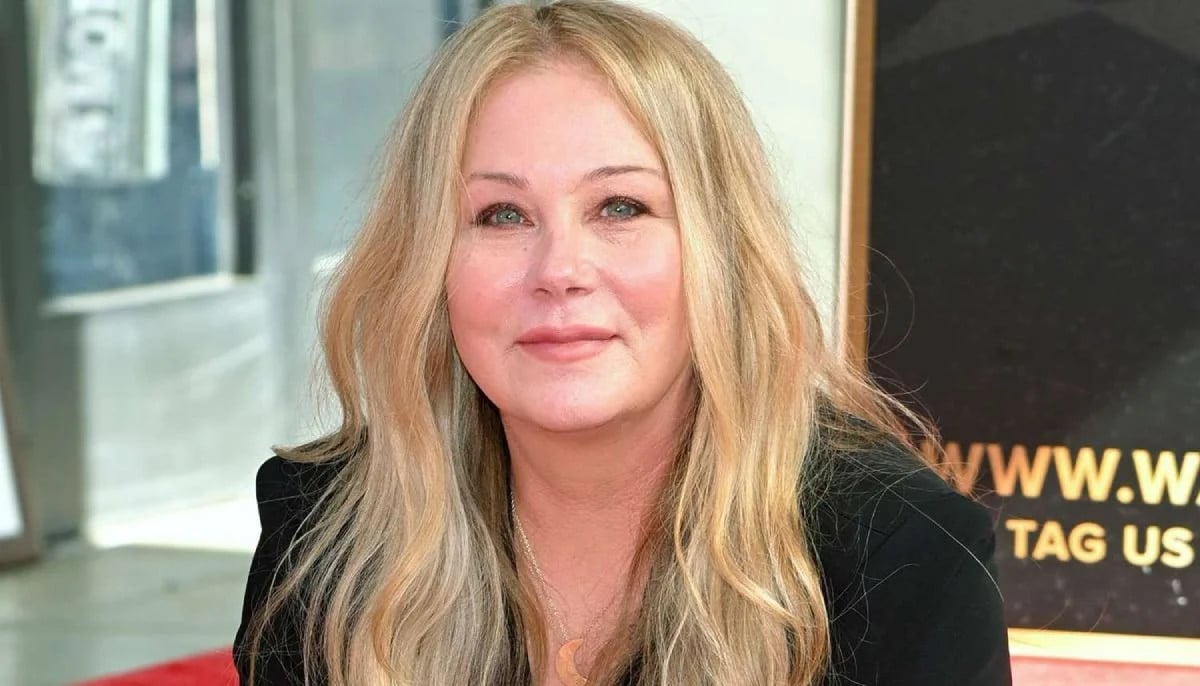
Christina Applegate has broken her silence following reports of a recent hospitalisation, reassuring fans that she is on the mend and determined as ever.
“Thank you for the outpouring of love and well wishes,” the actress wrote on Instagram on Monday.
“Health issues are a constant for me, but I’m a strong chick and I’m getting stronger and better every day. I’m taking a moment to focus on my health, but I’ll be back with more to say soon enough.”
The post comes after reports began circulating that Applegate had been hospitalised in late March, with outlets reporting that those close to her had been deeply concerned.
The 54-year-old did not specify the nature of the latest health episode, but her MS diagnosis, which she made public in August 2021, has been an ongoing part of her life in the years since.
Applegate has been notably open about her journey with multiple sclerosis, both through her 2026 memoir You with the Sad Eyes and the podcast she co-hosts with Jamie-Lynn Sigler, who also has MS.
Her final acting role was in the comedic thriller series Dead to Me, a job she finished while her diagnosis was still new territory.
Season three was already in production when she found out, and she has spoken candidly about how difficult that period was.
She used a wheelchair to get to set, was “sleeping all the time,” and had to call the cast and crew to tell them what she was dealing with.
“I had to call everybody and be like, ‘I have multiple sclerosis guys. Like, what the fuck!'” she told Variety in 2022.
Best known for her long-running role in Married… with Children, which ran on Fox for 11 seasons from 1987 to 1997, Applegate has since retired from acting.
Her message on Monday was short but carried the same directness that has defined how she has handled her illness throughout, no sugarcoating, and no backing down either.


Global energy growth slows to 1.3% in 2025: Report

UK’s Starmer seeks to deflect blame over Mandelson appointment

PSL 11: Lahore Qalandars win toss, opt to bat first against Quetta Gladiators

-

 Fashion5 days ago
France’s LVMH Q1 revenue falls 6%, shows resilience amid Iran war
-

 Sports1 week ago
The case for Man United’s Fernandes as Premier League’s best
-

 Entertainment1 week ago
Palace left in shock as Prince William cancels grand ceremony
-
 Business1 week ago
UK could adopt EU single market rules under new legislation
-

 Entertainment6 days ago
Is Claude down? Here’s why users are seeing errors
-

 Fashion1 week ago
Energy emerges as biggest cost driver in textile margins
-
 Business1 week ago
Delta Air Lines unveils first new Delta One suite in premium cabin arms race
-

 Tech1 week ago
A Lot of Shops Won’t Fix Electric Bikes. Here’s Why