

Politics
Bondi shooters conducted ‘tactical’ training in countryside: police

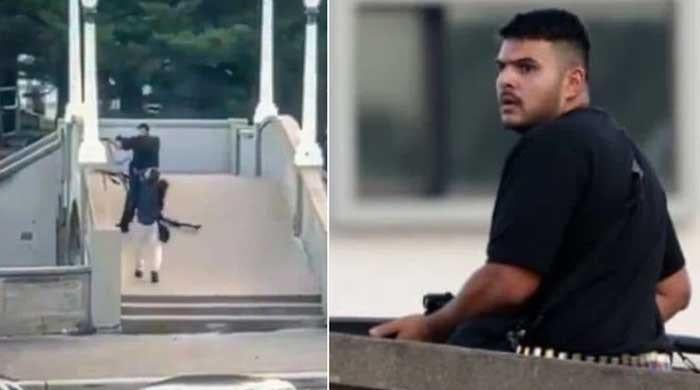
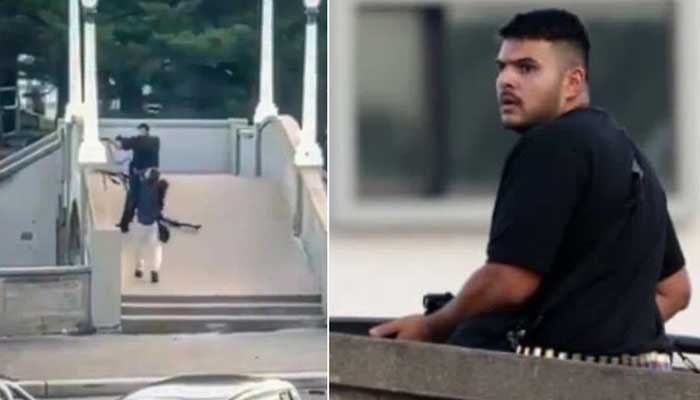
- Shooters recorded video detailing motivations for attack: police.
- Attackers made made nighttime “reconnaissance” trip to beach.
- Firearms training conducted in New South Wales countryside.
SYDNEY: Two suspects in last week’s deadly mass shooting at Australia’s Bondi Beach trained for the attack in the countryside, police alleged in court documents Monday, as Prime Minister Anthony Albanese vowed tougher laws against hate speech and extremism.
Father and son Sajid Akram and Naveed are accused of targeting a Hanukkah event on Bondi Beach, killing 15 people in the nation’s deadliest mass shooting in almost three decades.
Police documents released Monday said the two had carried out “firearms training” in what was believed to be the New South Wales countryside before the shooting.
Pictures were released showing the accused firing shotguns and moving in what authorities described as a “tactical manner”.
The pair also recorded a video in October railing against “Zionists” while sitting in front of a Daesh flag and detailing their motivations for the attack, police said.
And they made a nighttime “reconnaissance” trip to Bondi Beach just days before the killings, documents showed.
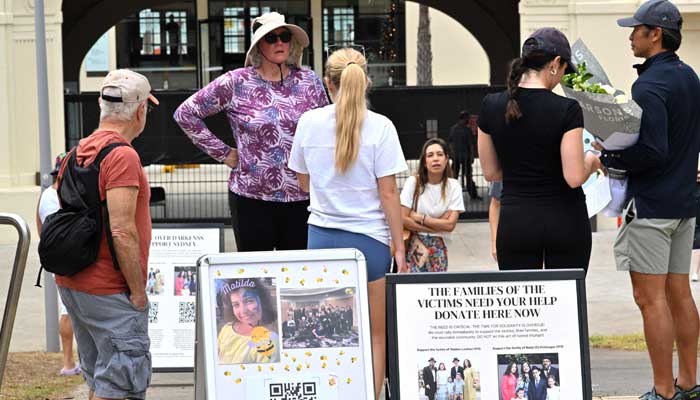
Australia observed a minute’s silence at 6:47pm (0747 GMT) on Sunday — exactly a week since the first reports of gunfire.
On Monday, Albanese said he would push for tough new laws creating “an aggravated offence for hate preaching”.
“We’re not going to let the Daesh-inspired terrorists win. We won’t let them divide our society, and we’ll get through this together,” Albanese told reporters.
“As PM, I feel the weight of responsibility for an atrocity that happened whilst I’m the PM, and I’m sorry for what the Jewish community and our nation as a whole has experienced,” he said.
“The government will work every day to protect Jewish Australians, to protect the fundamental right as Australians that they have to be proud of who they are, to practice their faith, to educate their children and to engage in Australian society in the fullest way possible,” he added.
Crackdown on guns, ‘terrorist symbols’
Australia’s federal government has flagged a suite of reforms to gun ownership and hate speech laws, as well as a review of police and intelligence services.
Albanese also announced last week a sweeping buyback scheme to “get guns off our streets”.
It is the largest gun buyback since 1996, when Australia cracked down on firearms in the wake of a mass shooting that killed 35 people at Port Arthur.
And the government of New South Wales — where the shooting took place — recalled its parliament for two days on Monday to introduce what it called the “toughest firearm reforms in the country”.
“We can’t pretend that the world is the same as it was before that terrorist incident on Sunday,” New South Wales Premier Chris Minns told reporters.
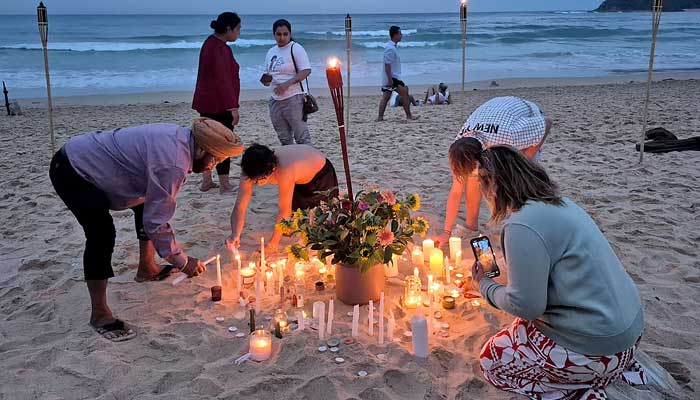
“I’d give anything to go back a week, a month, two years, to ensure that didn’t happen, but we need to make sure that we take steps so that it never happens again.”
The new rules will cap the number of guns an individual can own to four, or ten for exempted individuals like farmers.
There are more than 1.1 million firearms in the state, officials said.
The legislation would also ban the display of “terrorist symbols”, including the flag of Daesh, which was found in a car linked to one of the alleged shooters.
Authorities will also be able to prohibit protests for up to three months following a terrorism incident.
One of the alleged gunmen, Sajid Akram, 50, was shot and killed by police during the attack. An Indian national, he entered Australia on a visa in 1998.
His 24-year-old son Naveed, an Australian-born citizen, was moved from hospital to jail on Monday, police said.
Minns said Monday he would also look into stricter hate speech legislation next year, including restrictions on the phrase “globalise the intifada”.
- Trump says great progress made towards deal with Iran.
- Rubio says operations in Strait of Hormuz are defensive.
- Iran denies attacking United Arab Emirates in recent days.
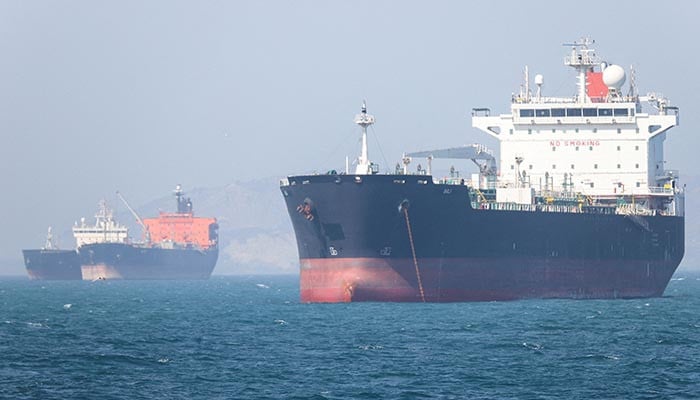
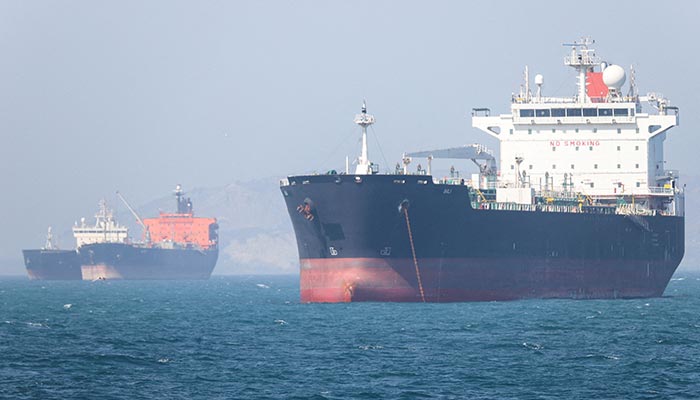
US President Donald Trump said on Tuesday he would briefly pause an operation, labelled as “Project Freedom”, to help escort ships through the Strait of Hormuz after a request from Pakistan and other countries, while citing “great progress” toward a comprehensive agreement with Iran.
Hours earlier, US Secretary of State Marco Rubio had outlined the effort that began on Monday to escort stranded tankers out of the Gulf. The strait has been virtually shut since the conflict began, blocking some 20% of world oil supplies and igniting a global energy crisis.
“We have mutually agreed that, while the Blockade will remain in full force and effect, Project Freedom … will be paused for a short period of time to see whether or not the Agreement can be finalised and signed,” Trump wrote on social media.
There was no immediate reaction from Tehran, where it was early on Wednesday morning.
Following the announcement, Prime Minister Shehbaz Sharif expressed gratitude to US President Trump for his “courageous leadership and timely announcement” regarding the pause in Project Freedom in the Strait of Hormuz.
“President Trump’s gracious response to the request made by Pakistan and other brotherly countries, particularly the Kingdom of Saudi Arabia and my dear brother Crown Prince and Prime Minister of Saudi Arabia Prince Mohammed bin Salman, will go a long way towards advancing regional peace, stability and reconciliation during this sensitive period,” he wrote on X.
PM Shehbaz noted that Pakistan remains firmly committed to supporting all efforts that promote restraint and a peaceful resolution of conflicts through dialogue and diplomacy.
“We are very hopeful that the current momentum will lead to a lasting agreement that secures durable peace and stability for the region and beyond,” he added.
Shortly after Trump’s post, US crude oil futures fell $2.30 and broke below $100 per barrel, a much-watched threshold since the conflict sent energy prices soaring two months ago.
The White House did not immediately reply to a request for comment on what progress had been made, or how long the pause would last.
Rubio and other senior administration officials said earlier on Tuesday that Iran could not be allowed to control traffic through the strait.
Iran has effectively sealed off the strait by threatening to deploy mines, drones, missiles and fast-attack craft. The United States has countered by blockading Iranian ports and mounting escorted transits for commercial vessels.
The US military said on Monday it had destroyed several Iranian small boats, as well as cruise missiles and drones.
Rubio says main operation is over
Rubio told reporters at the White House that the United States had achieved its objectives in its military campaign, which was launched on February 28 alongside Israel.
“Operation Epic Fury is concluded,” Rubio said. “We’re not cheering for an additional situation to occur.”
One of Trump’s central objectives in launching military strikes against Iran was to ensure Tehran does not develop a nuclear weapon, something Tehran has denied seeking. However, Iran has not handed over more than 900 pounds of highly enriched uranium.
While Rubio was speaking, Britain’s Maritime Trade Operations agency reported that a cargo vessel had been struck by a projectile in the strait. Further details of the incident were not immediately available.
US Defense Secretary Pete Hegseth said earlier on Tuesday that the US had successfully secured a path through the waterway and that hundreds of commercial ships were lining up to pass through. The four-week-old truce with Iran was not over, he added.
“Right now the ceasefire certainly holds, but we’re going to be watching very, very closely,” he said.
General Dan Caine, chairman of the US Joint Chiefs of Staff, said Iranian attacks against US forces fell “below the threshold of restarting major combat operations at this point”.
Asked what Iran would need to do to violate the ceasefire, Trump said: “They know what not to do.”
Pakistan’s mediation efforts continue
Pakistan has emerged as a key intermediary in efforts to revive dialogue, hosting high-level engagements between the two sides in Islamabad last month, though a second round of talks has yet to materialise.
The war has killed thousands as it has spread beyond Iran to Lebanon and the Gulf, and roiled the global economy. The head of the International Monetary Fund said on Tuesday that even if the conflict ended immediately, it would take three to four months to deal with the consequences.
Rubio said 10 civilian sailors were among those who had died in the conflict, adding that crew on vessels stranded in the waterway were “starving” and “isolated.”
Trump told reporters in the Oval Office that Iran’s military had been reduced to firing “peashooters” and Tehran wanted peace, despite public sabre-rattling.
The conflict is also pressuring Trump’s administration ahead of crucial midterm elections in November, as rising gas prices hit voters’ pockets.
Trump has said the US-Israeli attacks aimed to eliminate what he called imminent threats from Iran, citing its nuclear and ballistic missile programs and its support for Hamas and Hezbollah.
Iran has called the attacks a violation of its sovereignty and said that it has the right to develop nuclear technology for peaceful purposes, including enrichment, as a party to the Nuclear Non-Proliferation Treaty.
Diplomatic efforts to end the conflict have yet to yield results. US and Iranian officials have held one round of face-to-face peace talks, but attempts to set up further meetings have failed.
Iranian Foreign Minister Abbas Araqchi has said that peace talks were still progressing with Pakistan’s mediation.
He arrived in Beijing on Wednesday morning for talks with his Chinese counterpart on bilateral ties and regional and international developments, Iranian media reported. Trump is also due to visit China this month.
- US, Gulf allies drafted UNSC resolution over Iran laying of mines.
- Rubio calls Hormuz resolution test for UN, urges against vetoes.
- US says ready to unleash “devastating” response to any new attacks.
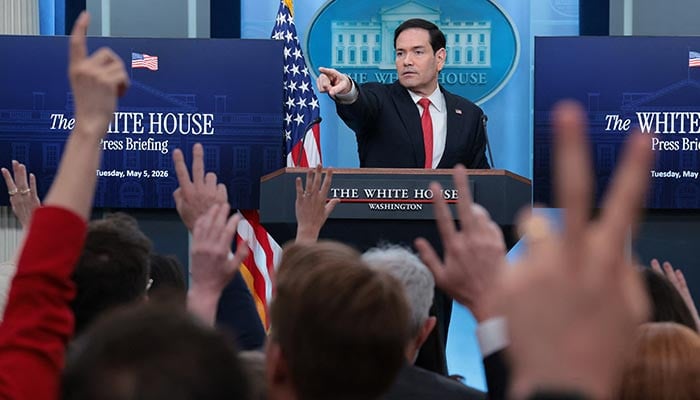
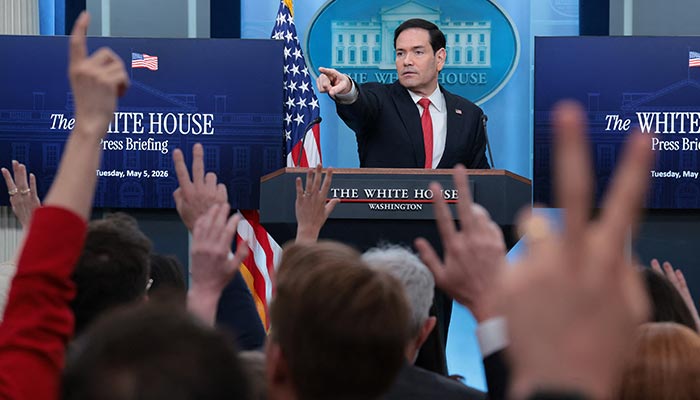
The United States has completed its offensive operations against Iran, Secretary of State Marco Rubio said Tuesday, even as Washington warned it was ready to unleash a “devastating” response to any new attacks on shipping in the Strait of Hormuz.
Rubio’s remarks came after Washington’s top military officer said American forces remain ready to resume combat operations if ordered, as clashes in the vital waterway threatened to unravel a fragile ceasefire.
Iran’s Revolutionary Guards navy warned of a “firm response” if ships deviated from its approved route through the strait, as the country’s chief negotiator said Tehran “had not even started yet,” following a spate of attacks in the crucial trade route.
The United Arab Emirates announced it was intercepting a barrage of missiles and drones from Iran for a second day — a claim Tehran “categorically” denied.
“The armed forces…did not launch any missile or drone operation,” Iran’s Khatam al-Anbiya command said.
Iran fired missiles and drones at US forces on Monday, while Washington said it struck six Iranian boats it accused of threatening commercial shipping, in the sharpest escalation since a month-long truce.
US Central Command remains “ready to resume major combat operations…if ordered,” General Dan Caine told reporters.
“No adversary should mistake our current restraint with a lack of resolve.”
President Donald Trump urged Iran to “do the smart thing” and make a deal, saying he did not want to kill more Iranians even as the ceasefire teetered.
He earlier dismissed the conflict as “a little skirmish,” adding: “Iran has no chance.”
Pentagon chief Pete Hegseth had said the United States was “not looking for a fight” but warned attacks would face “overwhelming and devastating” force.
‘Malign presence’
Iran’s parliament speaker Mohammad Bagher Ghalibaf said the status quo was “intolerable,” warning the US “malign presence will diminish” as Tehran vowed to retain control of Hormuz.
Monday’s exchange of fire came as the rivals enforced dueling maritime blockades following Trump’s plan to guide ships out of the Gulf.
The war, sparked more than two months ago by US-Israeli strikes, has battered the global economy despite a weeks-long ceasefire.
Israel’s air force chief Omer Tischler said the military was ready to “deploy the entire air force eastward if required.”
Military chief Eyal Zamir added that the army remained on “high alert” and ready to respond to threats in the Gulf.
Iran denied any naval losses but accused Washington of killing five civilians aboard boats.
Despite tensions, Danish freight giant Maersk said one of its ships had transited Hormuz under US escort.
The UAE called the attacks “a dangerous escalation,” while Saudi Arabia urged efforts toward a political solution.
Rubio accused Iran of “holding the world’s economy hostage” through threats to shipping and the laying of sea mines, and said Washington and Gulf allies had drafted a UN Security Council resolution demanding Tehran halt attacks and disclose the location of mines.
The proposed measure would also require Iran to end efforts to charge tolls in the strait and support a humanitarian corridor, with a vote expected in the coming days, Rubio said.
European and US stocks advanced Tuesday while fears that the ceasefire could fall apart weighed on Asian equities.
Talks remain deadlocked, with only one round of direct negotiations so far.
Iran’s President Masoud Pezeshkian said Tehran remained open to dialogue, but rejected US “maximum pressure” demands as “impossible.”
Rising energy costs are adding to economic strain and creating a political headache for Trump ahead of midterm elections.
European allies warned prolonged disruption would hit their economies.
“These attacks are unacceptable,” EU chief Ursula von der Leyen said on X, warning that Gulf security has “direct consequences for Europe.”
German Chancellor Friedrich Merz urged Iran to return to talks, echoing calls from French President Emmanuel Macron and British Prime Minister Keir Starmer.
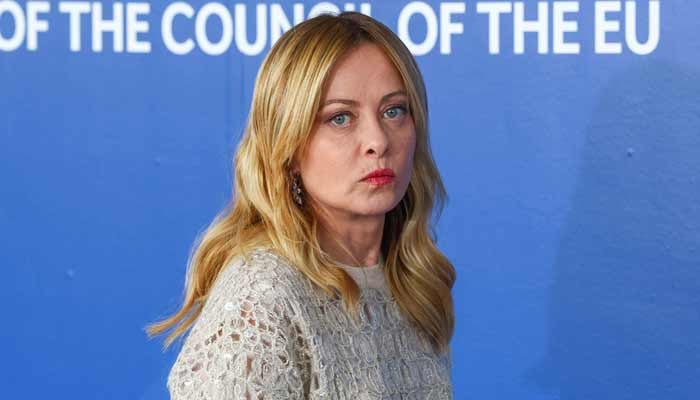
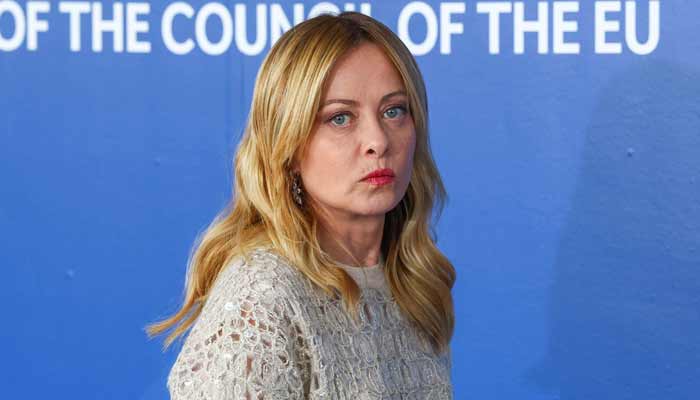
Italian Prime Minister Giorgia Meloni said on Tuesday that fake images of her generated by artificial intelligence were circulating online, warning that such false photos could deceive the public and target people unable to defend themselves.
Meloni said in a statement that several fake photos of her had been created with AI and passed off as real by political opponents.
She posted one such image appearing to show her sitting on a bed wearing underwear. The original post included an outraged comment that the photo was shameful and unworthy of an Italian prime minister.
“I must admit that whoever created them, at least in the attached case, has also improved me quite a bit,” Meloni said, adding that the episode showed how “anything at all” was now being used to attack people and spread falsehoods.
“The point, however, goes beyond me,” she said. “Deepfakes are a dangerous tool because they can deceive, manipulate, and strike anyone. I can defend myself. Many others cannot.”
Meloni urged people to check the authenticity of online content before accepting or sharing it.
“One rule should always apply: verify before believing, and think before sharing,” she said.
Meloni launched a libel suit two years ago against a man from Sardinia who is accused of making deepfake pornographic images using her face and posting them online. The case continues.


Cambodia cuts 2026 growth forecast to 4.2% amid Middle East turmoil

Trump pauses effort to escort ships in Hormuz at ‘Pakistan, others’ request’
[CinePlex360] Please moderate: “How investment

A Brain Implant for Depression Is About to Be Tested in Humans

Pro wrestling star Steph De Lander reveals how colleague’s advice helped lead her to title triumph at ACW

‘I had £20,000 stolen and had to fight a 13-month fraud reporting rule to get it back’

-
 Tech1 week ago
A Brain Implant for Depression Is About to Be Tested in Humans
-
 Sports1 week ago
Pro wrestling star Steph De Lander reveals how colleague’s advice helped lead her to title triumph at ACW
-
Business1 week ago
‘I had £20,000 stolen and had to fight a 13-month fraud reporting rule to get it back’
-

 Entertainment1 week ago
Norway joins Type 26 Frigate Programme to boost NATO naval power
-

 Entertainment1 week ago
Melania Trump says ABC should ‘take a stand’ on late-night host Kimmel
-

 Tech1 week ago
Are tech leaders risking a cyber resourcing crisis? | Computer Weekly
-
 Business6 days ago
PSX plunges over 4,800 points | The Express Tribune
-
 Business1 week ago
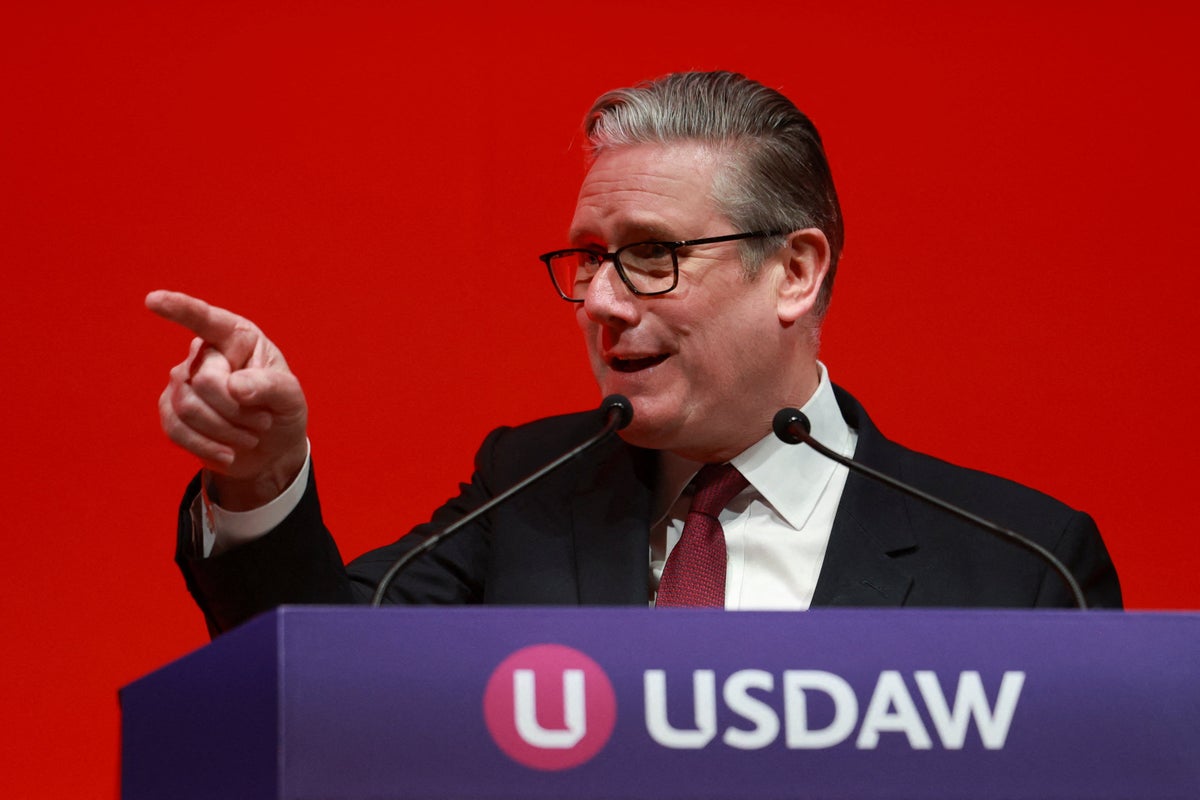
Starmer says ‘tide could be turning’ on shoplifting epidemic