

Entertainment
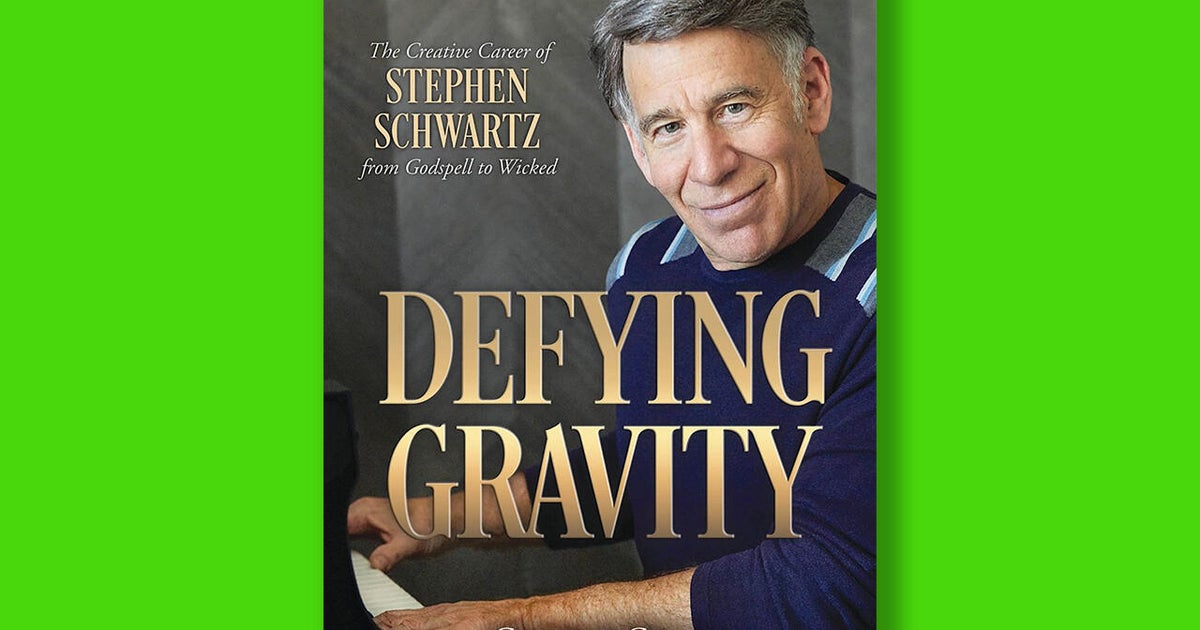
Book excerpt: “Defying Gravity,” a biography of “Wicked” composer Stephen Schwartz

Applause Books
We may receive an affiliate commission from anything you buy from this article.
In “Defying Gravity: The Creative Career of Stephen Schwartz, from Godspell to Wicked“ (published by Applause Books), biographer Carol de Giere explores the life and work of the Grammy- and Oscar-winning composer of treasured Broadway and movie hits.
Read an excerpt below, in which Schwartz finds the inspiration of what will become his most successful musical production to date, when he discovers Gregory Maguire’s prequel to L. Frank Baum’s “The Wonderful Wizard of Oz” – the genesis of the long-running Broadway musical “Wicked.”
And don’t miss Mo Rocca’s interview with Stephen Schwartz on “CBS Sunday Morning” November 16!
“Defying Gravity” by Carol de Giere
Landing in Oz
“It’s time to trust my instincts, close my eyes and leap!” —Wicked
At the start of 1996, Stephen Schwartz never imagined he would end the year envisioning his next Broadway musical, Wicked. Movie songwriting seemed to be his future, especially after one eventful evening in March. He donned his newly-purchased black tuxedo and white silk dress shirt, strode across the red carpet, and met up with his Pocahontas writing partner Alan Menken at Los Angeles’ Dorothy Chandler Pavilion. For forty-eight-year-old Schwartz, being nominated for an Academy Award was a welcome twist on his childhood dream of writing musicals for the stage. With his parents and wife in the audience, he waited for the announcement.
“And the Oscar for Best Original Musical or Comedy Score goes to…” An expectant silence settled in the hall while presenter Quincy Jones opened the envelope.
“Alan Menken, musical and orchestral score, and Stephen Schwartz, lyrics, for Pocahontas.” Applause burst out while the pair made their way to the stage. As Menken thanked their Pocahontas music team, Schwartz clutched his golden statuette and smiled, looking down at Mel Gibson in the front row making funny faces at him and soaking in the acknowledgment from Hollywood. That evening he and Menken also stepped up to accept the award for Best Original Song, “Colors of the Wind.”
Back home in Connecticut, he placed his gold-plated statuettes beside his Grammy gramophones in a trophy case converted from an aquarium that his kids no longer used.
The rest of the year was a busy one, with the premiere of The Hunchback of Notre Dame and early work on The Prince of Egypt involving meetings with the DreamWorks team and the writing and demo-ing of songs. He was also working on an early production of a revue musical Snapshots in Seattle, confident that when finally finished, the show would go direct to stock and amateur licensing rather than to a commercial production. The one thing he was emphatically not doing was planning anything new for Broadway.
Then towards the end of the year, a phone call came that would change everything. He was in Los Angeles finishing some work on The Prince of Egypt when his long-time buddy, songwriter John Bucchino, called him from the island of Maui in Hawaii. Singer-songwriter Holly Near had hired Bucchino as a piano accompanist for her performances at a conference at the tropical getaway. Once on Maui, Bucchino decided it was too good not to share. His room included an extra bed, and he had a car and free food. “If you can cash in some frequent flyer miles and come for the weekend, you’ll have a free vacation in Hawaii,” Bucchino offered.
“Why not?” thought Schwartz. He had the weekend free, and after all, it was Hawaii. “I am so there,” came Schwartz’s answer from LA, and by December 16th, he was.
When Bucchino and Near had a block of time away from the stage, they organized a snorkeling adventure with Schwartz and Near’s friend, Pat Hunt. A small boat sped them over to Molikini, a mostly submerged volcanic crater popular for its rainbow spread of sea creatures that delight snorkelers.
On the trip back, Holly casually mentioned to Stephen, “I’m reading this really interesting book called Wicked, by Gregory Maguire.”
The novel’s title sounded intriguing. “I think I’ve heard of it. What’s it about?” he inquired.
“It’s the Oz story from the Wicked Witch of the West’s point of view.”
In an instant, Schwartz’s imagination flashed through the implications of a backstory for The Wizard of Oz told from the perspective of the unpopular witch. His reaction was visceral: “All the hairs on my arms stood on end,” he recalls. “I thought it was the best idea for a musical I had ever heard.”
As soon as he returned to his LA apartment, he called his attorney in New York, inquiring about Maguire’s 1995 novel Wicked: The Life and Times of the Wicked Witch of the West. “Okay, this book has been out for a while, so somebody has the rights. I need you to find out who has them. Meanwhile, I’m going to get the book and read it, because I think I have to do this.”
There was no way around it. This was a Broadway concept not suited to a small-budget theater company. And he knew it was a highly theatrical idea, not one meant for film or television. Although he had firmly decided, indeed pledged, never to work on Broadway again, his instincts didn’t leave him a choice.
HarperCollins 
But with such a popular novel, surely someone in Hollywood was converting it to the silver screen. Schwartz would have to stop them, and somehow inspire the rights holders to consider instead the risky, expensive, and time-consuming venture of producing a musical in New York City.
While his attorney, Nancy Rose, followed clues on the rights trail, Wicked‘s prospective composer-lyricist read the novel and confirmed that his hunch had been right: musicalizing the Wicked Witch’s story seemed “quintessentially an idea for me,” meaningful enough to be worth the potential struggle.
For one thing, he loved looking at traditional stories from a new angle. When he was in college he saw Rosencrantz and Guildenstern Are Dead, Tom Stoppard’s play in which two minor characters in Shakespeare’s Hamlet are made the central characters. “It was a revelation to me,” he recalls. “From that point on, the idea of looking at familiar material from an unfamiliar point of view became a goal for my own work.” Godspell had approached the New Testament in a fresh way, Children of Eden reworked Genesis for a new take on family life, and The Prince of Egypt explored the Exodus story from the standpoint of the brother relationship between Moses and Ramses. But Gregory Maguire’s twist on The Wizard of Oz was a chance to do something more directly like the Rosencrantz and Guildenstern concept. “I recognized immediately that this was a genius idea and that it was an idea for me: the way it took a familiar subject and spun it,” Schwartz recalls.
Wicked also felt inherently musical to him. “Elphaba is a very musical character with big emotions. She is fantastical. The world is fantastical. Glinda is very musical.” To him it was clear that the world of musical theater was where the story belonged.
And then there was the character Maguire’s vision had moved to the center of the story: Elphaba, the quirky and misunderstood green girl who becomes the Wicked Witch of the West. Maguire named her after L. Frank Baum, who penned The Wonderful Wizard of Oz, when he pondered the sound of the author’s initials “eL” “Fa” “Ba.” Elphaba’s story seemed close to Schwartz’s own emotional experience. He knew what it felt like to be “green” and what inner resources are needed to carry on with life. “The idea of the story created a sympathetic resonance in me,” Schwartz affirms, “and I know that I’m not alone. Anyone who is an artist in our society is going to identify with Elphaba. Anyone who is of an ethnic minority, who is black or Jewish or gay, or a woman feeling she grew up in a man’s world, or anyone who grew up feeling a dissonance between who they are inside and the world around them, will identify with Elphaba. Since that’s so many of us, I think there will be a lot of people who will.”
“There were things that I knew right away. I knew how it was going to begin, I knew how it was going to end, I knew who Elphaba was, and I knew why— on some strange level—this was autobiographical even though it was about a green girl in Oz.” —Stephen Schwartz
Schwartz bought a spiral notebook in which he would capture all his story and lyric ideas—snatches of inspiration, research notes, lists of rhyming words, first drafts of lyric lines, and later drafts. On the black cover, the manufacturer’s slogan, “Five Star—In a Class By Itself,” hinted at what would become of the musical that began as penciled scrawls on the lined pages.
Maguire had created, as the author himself described it, a dense, almost nineteenth-century-type novel that takes place over thirty-eight years and has thirty-eight speaking parts. Could any group of musical collaborators successfully distill these ingredients into a viable evening of theater?
From “Defying Gravity: The Creative Career of Stephen Schwartz, from Godspell to Wicked (second edition)” by Carol de Giere. © 2018 by Carol de Giere. Published by Applause Books. Reprinted by permission.
Get the book here:
“Defying Gravity” by Carol de Giere
Buy locally from Bookshop.org
For more info:









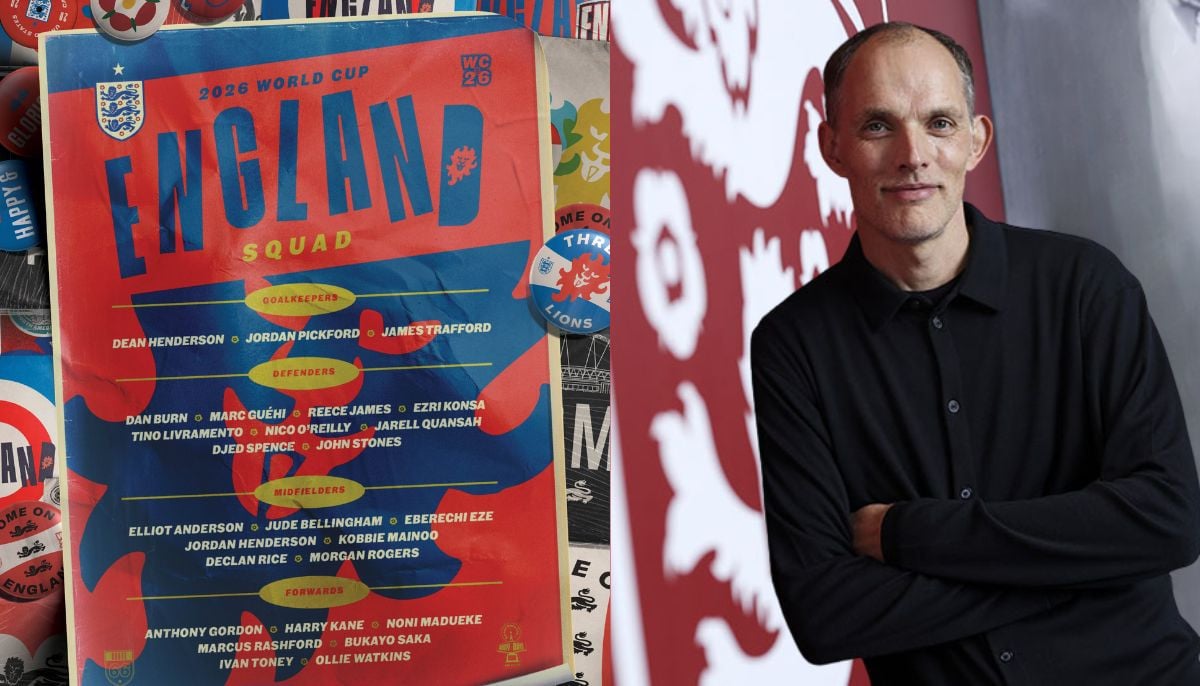
Three Lions have finalized their 26-man squad for the buzzing summer World Cup run.
The England manager Thomas Tuchel made the announcement for the final squad on Friday, May 22, 2026.
Let’s first drop some light on the surprises who have made it to the squad.
Among them are Djed Spence and Ivan Toney, who stunned the Britons. While Maguire, Cole Palmer, and Phil Foden are those who couldn’t make it to the World Cup squad.
Among the major omissions was Morgan Gibbs-White, despite his strong performance for Nottingham Forest.
Eberechi Eze and Noni Madueke were a must for the 26-man squad, who helped Arsenal clinch the Premier League Championship.
Defensively, Harry Maguire goes unnoticed despite hoping to make a third World Cup, with Djed Spence a fascinating call-up to cover both full-back positions.
For the center-back positions, Jarell Quansah offers depth while both John Stones and Reece James look set to play key roles despite questions regarding their fitness.
England manager Touchel has explained his selection for the World Cup in a news conference on May 22, 2026.
Tuchel said, “I think from day one we were clear in trying to select the best possible team.
“Which is not necessarily to collect the 26 best individual players. Teams win championships.”
Here’s the official 26-man FIFA World Cup squad:
Goalkeepers: Jordan Pickford, Dean Henderson, James Traffford
Defenders: Reece James, Jarell Quansah, Ezri Konsa, John Stones, Marc Guehi, Nico O’Reilly, Dan Burn, Tino Livramento, Djed Spence.
Midfielders: Declan Rice, Elliot Anderson, Kobbie Mainoo, Jordan Henderson, Morgan Rogers, Eberechi Ezi, Jude Bellingham
Forwards: Bukayo Saka, Noni Madueke, Marcus Rashford, Anthonmy Gordon, Harry Kane (c), Ollie Watkins, Ivan Toney
The Three Lions will kick off their campaign’s first match against Croatia in Group L on June 17, 20526.
Following Ghana (June 23) and the last group match against Panama (June 27).
The biggest sporting event in the world, the FIFA World Cup 2026, is being held across the United States, Canada and Mexico starting on June 11, 2026.
For the last six decades, England has not been able to win any major tournament in North America, but this World Cup offers a golden opportunity to break the drought.
Entertainment
CBS News Radio signs off Friday night after nearly 100 years of broadcasting: “An American institution”
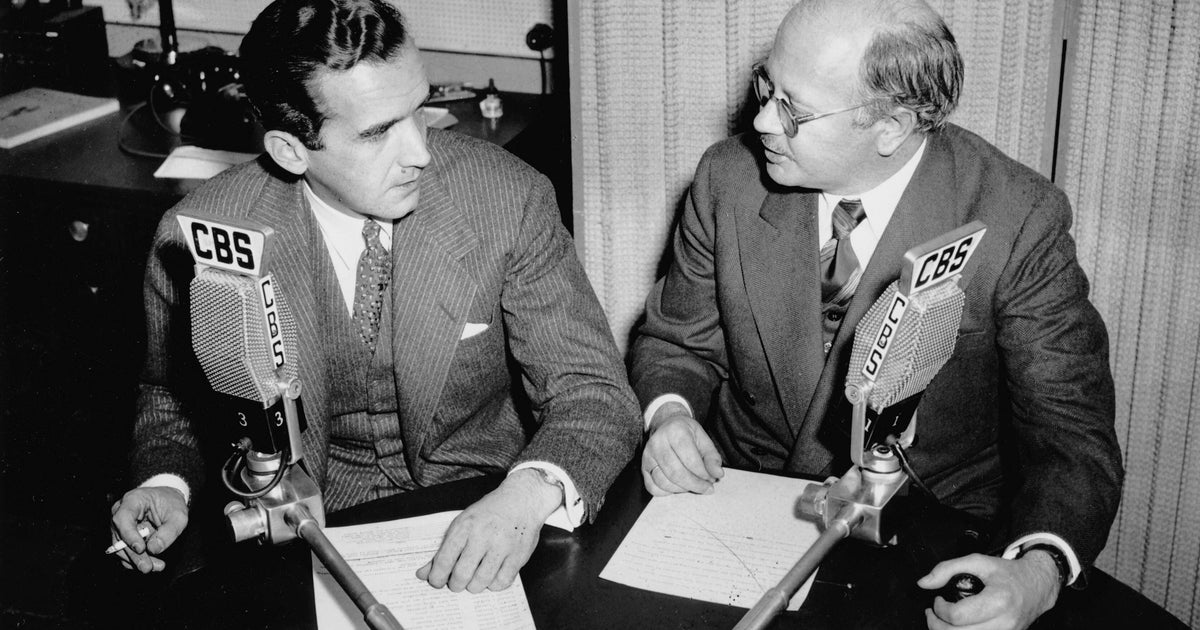
CBS News Radio, which provides news programming to an estimated 700 stations spanning the United States, will sign off the air Friday night after nearly a century of broadcasting.
The storied service, launched in September 1927, was home to broadcast legends Edward R. Murrow, Robert Trout, Douglas Edwards, Charles Osgood, Dan Rather and many other familiar and trusted voices over its decades in operation.
“It’s been around for a long time. Really, an American institution is what we’re losing here,” said Steve Kathan, the longtime anchor of the CBS World News Roundup.
“CBS Radio should be remembered for becoming a national institution very important to the development of news other than newspapers,” Rather recently told “CBS Sunday Morning.” “It, for many, many years, was a part, and I would argue not a small part, of what held the country together.”
The decision to shutter the radio news service was announced in March, with the company citing “challenging economic realities.”
In a statement at the time, CBS News President Tom Cibrowski and Editor-in-Chief Bari Weiss paid tribute to the historic role of CBS News Radio in covering major events worldwide since the dawn of the broadcasting era.
“For nearly 100 years, CBS News Radio has delivered original reporting to the nation — from Edward R. Murrow’s World War II reports in London to today’s daily White House updates,” they said. “Our signature broadcast, ‘World News Roundup,’ remains the longest-running newscast in the country. CBS News Radio served as the foundation for everything we have built since 1927.”
CBS News Radio first hit the airwaves just seven years after what’s been widely recognized as the first commercial radio broadcast.
The first broadcast of baseball’s World Series could be heard on CBS News Radio in 1938, and in 1939 it aired an interview with Babe Ruth.
CBS News Radio brought millions of Americans coverage of major events including the attack on Pearl Harbor and the D-Day invasion, Queen Elizabeth II’s coronation, the 1962 Cuban missile crisis, the New York City blackout of 1977, the Gulf War, the 9/11 terrorist attacks, and the 2003 Space Shuttle Columbia disaster.
Murrow’s voice was first heard on air in 1938. As “CBS Sunday Morning” recently recounted, he was in Europe to recruit voices for radio, but after observing how dangerous Hitler was, he sent back a broadcast.
“This is Edward Murrow speaking from Vienna. It’s now nearly 2:30 in the morning, and Herr Hitler has not yet arrived. No one seems to know just when he will get here. But most people expect him sometime after 10 o’clock tomorrow morning,” Murrow said in that report.
He later provided rooftop reports in London during the Blitz and from the Buchenwald concentration camp after the Germans had fled.
“I’m not searching for adjectives to make this sound dramatic,” he said in one wartime report. “I’m just telling you what I’ve seen.”
The legendary broadcaster was inducted into the Radio Hall of Fame in 1988.
CBS program host and correspondent Allison Keyes covered the news from Lower Manhattan on 9/11.
“People needed to know what was going on that day,” Keyes said, “in real time, no filter, no politics. Here’s what’s happening.”
As the final days of CBS News Radio approached, she and her coleagues reflected on its legacy.
“It leaves a huge gap in the field of news,” Keys said. “I want the listeners to know how proud and honored I am to have worked for this amazing place, with these amazing people.”
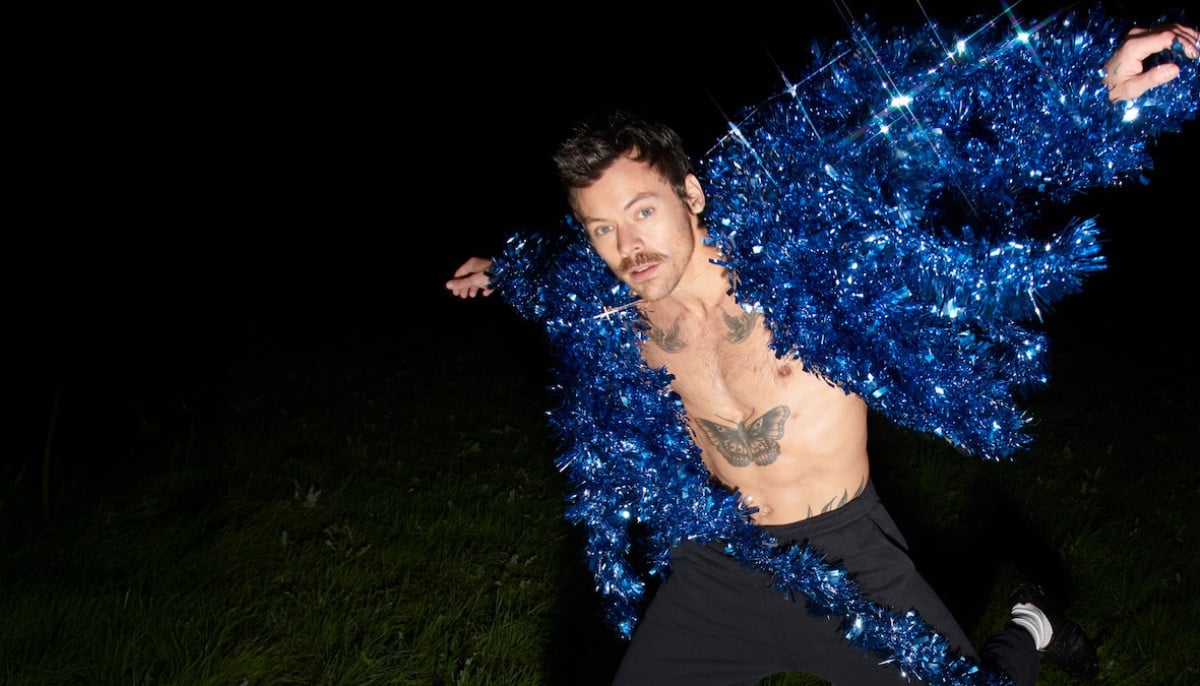
Harry Styles just turned a serious awards speech into something… nobody saw coming.
At the Ivor Novello Awards in London on May 21, the 32-year-old singer was there to honour Radiohead frontman Thom Yorke – but somehow ended up casually rewriting internet history in real time.
While praising Radiohead’s impact on his music, the As It Was crooner got unexpectedly personal.
“I cannot overstate how his work has influenced my belief in the purpose of the arts in our world today. And I cannot overstate how much his work continues to influence me,” he said.
Then things took a sharp left turn.
“I lost my virginity to ‘Talk Show Host,’” Harry said — before immediately clarifying, “I lost my virginity to the intro of ‘Talk Show Host.’”
Yes, the intro. About 10 seconds of it. No further details were offered… thankfully.
He also quipped that Radiohead’s “Exit Music (for a Film)” basically helped shape his own track Watermelon Sugar, adding, “Imagine that: a world without that song.”
The singer did not stop there. He credited seeing Radiohead perform in Berlin with convincing him to go back on tour – meaning, technically, they might be responsible for his current global run too.
And speaking of tours, Harry’s ongoing Together, Together stadium run is already stirring drama online, with fans complaining about restricted views and stage setups that occasionally block sightlines entirely.
One viral post read: “im sorry but wtf is this??? im at the barricade and i can’t even see the main stage anymore?????”
Another added: “we got harry close for 2% of the show.”
A rep for the tour defended the design, saying the floor setup was meant to be “free-flowing,” while also confirming some areas are being reviewed after complaints.
So yes – one night: Radiohead praise, virginity confession, and a stadium tour debate. Only Harry Styles could pack all that into one week.


FTA with GCC to remove estimated $779 mn in duties a year: UK govt

This Monitor-on-Wheels Concept Is Kind of Genius

Pets at Home hoping for boost under new boss despite consumer pressure

-

 Fashion1 week ago
Italy’s Zegna Group’s Q1 growth boosted by strong organic performance
-

 Entertainment6 days ago
Where Pete Davidson, Elsie Hewitt stand after breakup: Details revealed
-

 Entertainment1 week ago
Emilia Clarke recalls near-death incident while filming ‘Game of Thrones’
-
 Business1 week ago
Jersey Election 2026: Cost of living concern in St Helier Central
-

 Politics6 days ago
Rising diesel costs from Iran war strain US school budgets
-

 Fashion1 week ago
Global cotton production, stocks to fall; consumption to rise: WASDE
-

 Entertainment7 days ago
Drake drops highly anticipated "Iceman" album, plus two surprise albums
-

 Politics1 week ago
UK’s Starmer faces survival battle as potential rivals circle