

Fashion
Brazzoli’s eco-smart machines redefine global dyeing standards

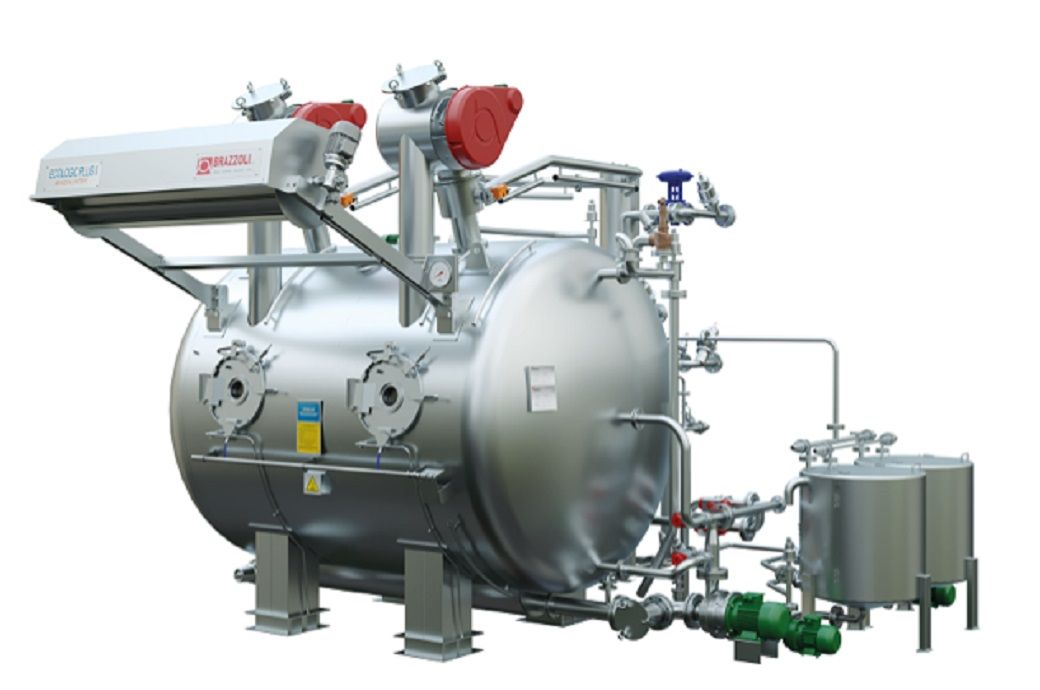
Founded more than 60 years ago, Brazzoli has grown from a local manufacturer into an internationally recognized brand. Its headquarters is in Senago, not only the production facility but also the company’s commercial, R&D, post-sales, and technical assistance departments. This integrated structure ensures that innovation and customer support go hand in hand.
For over six decades, Italy’s Brazzoli has set benchmarks in textile dyeing through innovation, precision, and sustainability.
Its advanced machines like Ecologic Plus II and Eco-Aero blend performance with eco-efficiency.
Technologies such as Twin System and the octopus-style collector exemplify its engineering prowess.
Backed by global reach, Brazzoli continues shaping the future of textile machinery.
Brazzoli’s reach extends far beyond Italy, with a network of specialized agencies across the globe trained to support and promote its cutting-edge technologies. This global presence is anchored by a philosophy of continuous dialogue with users, allowing the company to tailor its machines to real-world needs and anticipate future trends.
Innovation in Every Thread
Brazzoli’s product line is a testament to its commitment to sustainability and performance. Machines like the Ecologic Plus II, Eco-Aero, Aquarius, and Ecosynthetic are designed to optimize dyeing processes while minimizing environmental impact. These systems reflect the company’s dedication to eco-conscious engineering—an increasingly vital priority in today’s textile industry.
Looking Ahead
As the textile industry faces new challenges—from sustainability to digital transformation—Brazzoli S.r.l. is poised to lead the charge. With its blend of heritage and forward-thinking design, the company continues to redefine what’s possible in textile machinery.
Brazzoli’s Product Portfolio: Precision Meets Sustainability
Brazzoli S.r.l. has carved out a reputation for producing some of the most advanced textile dyeing machines in the world. Specializing in equipment for fabrics in rope form, the company’s machines are engineered to deliver high performance, energy efficiency, and exceptional dyeing quality.
Flagship Machines
|
Machine |
Key Features |
|---|---|
|
Ecologic Plus II |
High-efficiency dyeing with reduced water and energy consumption. |
|
Eco-Aero |
Airflow dyeing system designed for delicate fabrics and minimal environmental impact. |
|
Aquarius |
Sampling machine ideal for small batches and laboratory testing. |
|
Ecosynthetic |
Tailored for synthetic fibers, offering precision dyeing and low resource usage. |
These machines are not just tools—they’re technological benchmarks. Brazzoli’s commitment to innovation is evident in its integration of automation, digital controls, and eco-friendly processes across its product line.
Twin Technology
One of Brazzoli’s most notable innovations is its Twin Technology, which allows multiple ropes to be dyed simultaneously in the same chamber. This boosts productivity without compromising fabric quality, even for light and body-size materials. The system prevents entanglements and tension, ensuring smooth operation and consistent results.
Innovative Plaiter
J-Box is the part in the machine that fabric stays long time. Fabric stacking makes big difference final quality of fabric. Stacking should be done without tension, relax and avoiding any jam in J-Box. Instead of spinning plaiter system, Brazzoli Eco-Logic Plus-II uses free flow to stack fabric. Every corner of J-Box is filled with fabric without tension. Fabric flows in J-Box smoothly. Result is better shrinkage value and eliminated yarn deformation. Even sensitive viscose fabrics are suitable for Brazzoli Eco-Logic Plus-II.
Effective Rinsing
Good rinsing is important, but water consumption is important too. In order to get good washing result, fabric and water should be contacted effective way. However, to keep fabric in machine during long washing cycles is costly. Because reduces productivity and increases water consumption. Brazzoli Eco-Logic Plus-II has a clever solution. When rinsing cycle arrives, bath is drained down tomin level and fresh water is fed to nozzles directly. Fabric gets in touch with fresh water instead of contaminated water from dyeing bath. Rinsing time and total amount of water are reduced but, on the side, fabric is washed in effective way.
Unique Collector
Water pressure and flow should be equal between chambers. Brazzoli Eco-Logic Plus-II has an octopus style collector instead of a single pipe and many branches, which is used by conventional dyeing machines. Each nozzle on chambers can be fed perfectly equal water flow to eliminate any colour difference between chambers. Conventional dyeing machines has to spend longer dyeing time to reduce difference and increase equalisation, however for Brazzoli Eco-Logic Plus-II, it is not a problem. Always delivers perfect result without any precaution.
Designed for the Future
Brazzoli’s machines are developed in close collaboration with textile producers, ensuring that each product meets real-world demands. Whether it’s reducing cycle times, optimizing chemical usage, or enhancing fabric feel, every detail is engineered for excellence.
Note: The headline, insights, and image of this press release may have been refined by the Fibre2Fashion staff; the rest of the content remains unchanged.
Fibre2Fashion News Desk (SG)










Wholesale revenue dropped 12.8 per cent on a currency-adjusted basis to €4.9 billion, while direct-to-consumer (DTC) sales increased 3.4 per cent, lifting the DTC share to 32.4 per cent from 28.9 per cent.
Regionally, sales fell 6.9 per cent in Europe, Middle East and Africa (EMEA), 7.4 per cent in Asia-Pacific and 10 per cent in the Americas, with North America driving much of the decline.
Puma has reported sales of €7.3 billion (~$8.61 billion) in FY25, with currency-adjusted revenue down 8.1 per cent amid strategic reset actions.
Wholesale declined while DTC share increased.
Margins contracted and EBIT turned negative, leading to a net loss.
Q4 saw sharper declines across regions and categories.
Puma expects further sales softness and negative EBIT in FY26.
By product segment, footwear sales decreased 7.1 per cent, apparel declined 9.7 per cent and accessories fell 8.5 per cent, although selective growth was observed in running, training and premium sport style lines, Puma said in a press release.
Profitability weakened significantly during the year. Gross margin contracted 260 basis points to 45.0 per cent, impacted by promotional activity, inventory reserves, unfavourable mix and currency effects. Adjusted EBIT turned negative at €165.6 million, while reported EBIT declined to -€357.2 million after €191.6 million in one-off costs related mainly to the cost efficiency programme and goodwill impairments.
Loss from continuing operations widened to -€643.6 million, translating to earnings per share of -€4.37 versus €1.88 in the prior year.
From a balance sheet perspective, inventories rose 2.3 per cent to €2.06 billion as inventory takebacks from wholesale partners supported distribution clean-up. Working capital increased 20.2 per cent, while trade receivables and payables declined sharply in line with reduced sales and purchasing activity. Puma ended the year with additional financing capacity, including €1,202.2 million in unutilised credit lines.
Fourth quarter (Q4) performance reflected the peak impact of the strategic reset. Currency-adjusted sales declined 20.7 per cent to €1,564.9 million, with reported revenue down 27.2 per cent due to currency headwinds. The decline was driven by deliberate reductions in wholesale exposure, inventory clearance actions and lower promotional intensity.
Wholesale sales fell 27.7 per cent in Q4, while DTC revenue decreased 8.0 per cent, although DTC share increased to 41.1 per cent from 35.5 per cent. Regionally, sales dropped 12.6 per cent in Asia-Pacific, 22.2 per cent in the Americas and 24.3 per cent in EMEA.
Across product divisions, footwear sales declined 25.4 per cent, apparel fell 13.7 per cent and accessories dropped 18.2 per cent, with selective resilience in training and performance running categories.
Profitability deteriorated sharply. Gross margin declined to 40.2 per cent from 47.7 per cent due to promotions, inventory provisions and currency effects. Adjusted EBIT fell to -€228.8 million, while reported EBIT reached -€307.7 million following one-off costs linked to restructuring and impairment charges. The quarter ended with a loss from continuing operations of -€335 million.
Arthur Hoeld, CEO of Puma, said: “2025 was a reset year for us. We want to establish Puma as a top 3 sports brand globally, return to above-industry growth and generate healthy profits in the medium term. It is crucial to make the Puma brand less commercial and ensure we once again excite our consumers with attractive products, compelling storytelling and distribution in the right channels. I am satisfied with the progress we have made so far. We cleaned up most of our distribution by reducing promotions in our own channels and cutting our exposure to those wholesale channels that damage our brand’s desirability. To better position our product icons and our performance offering and tell more engaging product stories, we created the right structures inside our company. We also addressed operational inefficiencies and further optimised our cost base.”
Looking ahead, Puma expects currency-adjusted sales in fiscal 2026 to decline in the low- to mid-single-digit percentage range, with EBIT projected between -€50 million and -€150 million. Capital expenditure of around €200 million is planned as the company continues investments in brand repositioning and digital capabilities, added the release.
Fibre2Fashion News Desk (SG)
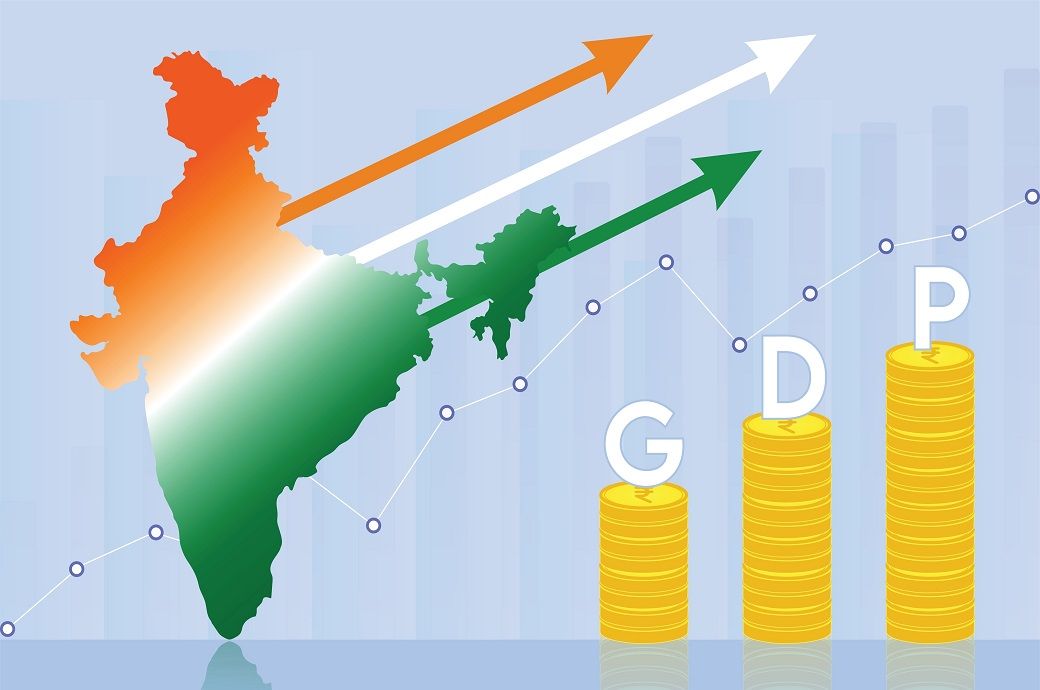
Nominal GDP, or GDP at current prices, is estimated to grow at 8.6 per cent to reach ₹345.47 trillion in FY26 against ₹318.07 trillion in 2024-25.
India’s real GDP is estimated to grow at 7.6 per cent to ₹322.58 trillion (~$3.54 billion) in FY26 compared to the first revised GDP estimate of ₹299.89 trillion for FY25 (7.1 per cent growth).
It released the new series of annual and quarterly national accounts estimates with FY23 base.
Real GVA is projected to grow at 7.7 per cent to reach ₹294.40 trillion in FY26 against ₹273.36 trillion in FY25.
Real gross value added (GVA) is projected to grow at 7.7 per cent to reach ₹294.40 trillion in FY26 against ₹273.36 trillion in FY25 (a 7.3-per cent growth rate).
Nominal GVA is estimated to grow at 8.7 per cent to hit ₹313.61 trillion during FY26, against ₹288.54 lakh crore in 2024-25.
Robust economic performance in FY26 is primarily on account of robust real growth observed in the second quarter (8.4 per cent) and third quarter (7.8 per cent).
The manufacturing sector has been the major driver of resilient performance of the economy the consecutive three fiscals after rebasing, a release from the ministry said.
Both private final consumption expenditure and grossed fixed capital formation exhibited more than 7-per cent growth rate in FY26.
Fibre2Fashion News Desk (DS)


Ranking MLB’s best at every position for 2026: Olney’s top 10s

Orlando vs. Miami (Mar 1, 2026) Live Score – ESPN

Labour parliamentarians urge UK Government to oppose Rosebank oil field

Pakistan carries out precision strikes on seven militant hideouts in Afghanistan

Eye-popping rise in one year: Betting on just gold and silver for long-term wealth creation? Think again! – The Times of India

These Cheap Noise-Cancelling Sony Headphones Are Even Cheaper Right Now

-
 Politics1 week ago
Pakistan carries out precision strikes on seven militant hideouts in Afghanistan
-
Business1 week ago
Eye-popping rise in one year: Betting on just gold and silver for long-term wealth creation? Think again! – The Times of India
-

 Sports1 week ago
Kansas’ Darryn Peterson misses most of 2nd half with cramping
-
 Tech1 week ago
These Cheap Noise-Cancelling Sony Headphones Are Even Cheaper Right Now
-

 Entertainment1 week ago
Saturday Sessions: Say She She performs "Under the Sun"
-

 Sports1 week ago
How James Milner broke Premier League’s appearances record
-

 Entertainment1 week ago
Viral monkey Punch makes IKEA toy global sensation: Here’s what it costs
-

 Sports1 week ago
Floyd Mayweather to come out of retirement again