

Business
Britain’s biggest company AstraZeneca pauses £200m investment into Cambridge site

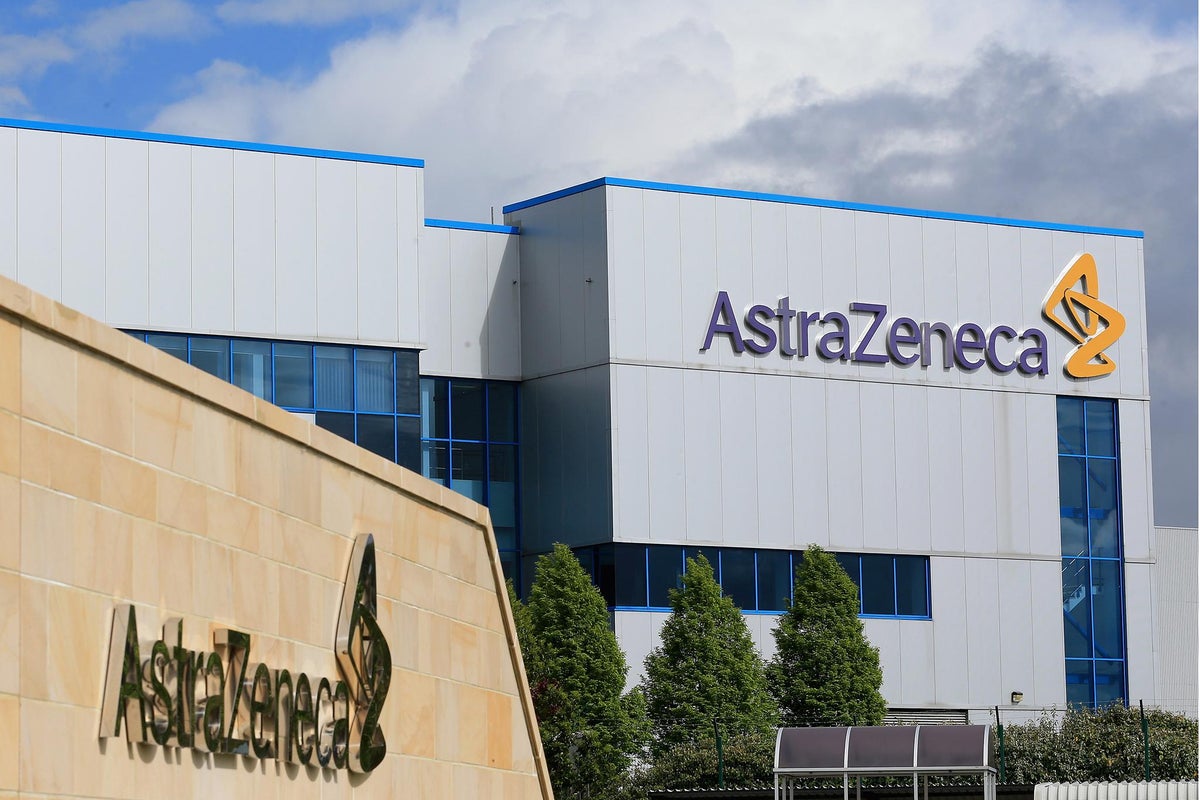
Britain’s biggest company AstraZeneca has paused a planned 200 million pound ($271.26 million) investment in its Cambridge research site, a spokesperson said.
The decision on the investment, which had been set to create 1,000 jobs, means none of AstraZeneca’s planned new funding – originally announced in March 2024 – is currently proceeding.
In January, the company scrapped plans to invest 450 million pounds in its vaccine manufacturing plant in northern England, citing a cut in British government support.
It has become the latest drugmaker to retreat from Britain.
U.S. drugmaker Merck & Co also said this week that it was abandoning a new research centre in London, citing the UK’s challenging business environment.
Asked about speculation over its pharmaceutical investments following the Merck announcement, a spokesperson for AstraZeneca, which has the biggest market capitalisation on the FTSE 100, confirmed is would pause its investment plans in Cambridge, where it has one of Britain’s leading life sciences hubs.
“We constantly reassess the investment needs of our company and can confirm our expansion in Cambridge is paused. We have no further comment to make,” an AstraZeneca spokesperson said.
The news will come as a blow to Prime Minister Keir Starmer’s government, days before U.S. President Donald Trump arrives in Britain for a state visit.
AstraZeneca, which has the biggest market capitalisation on the FTSE 100, in July said it would spend $50 billion to expand its U.S. manufacturing and research by 2030 – one of many such reactions to Trump’s tariff policy by drugmakers.
Trump has criticised Britain and Europe for not paying high enough prices for drugs, and several pharmaceutical firms have also criticised Britain for what they say is long-term undervaluation of medicines and innovation.
After AstraZeneca dropped its vaccine plant investment plan, Chief Executive Pascal Soriot urged Britain to improve the environment for businesses in order to drive investment.
The Association of the British Pharmaceutical Industry (ABPI) this week said Britain was “increasingly being ruled out of consideration as a viable location for pharmaceutical investment”, as talks between drugmakers and the government on how much revenue should be returned to Britain’s health service have stalled.
Britain hopes to dodge the worse of Trump’s forthcoming pharma tariffs.
The two countries agreed in May to seek “significantly preferential treatment outcomes on pharmaceuticals”, with a commitment that Britain try to improve the overall environment for pharma firms operating in the country.
Drugmakers have encouraged foreign governments to pay more for their medicines – a direct response to Trump’s calls for lower drug prices in the U.S. and price hikes overseas.
Last month Eli Lilly and Co announced it would hike the price in the UK of its weight loss drug Mounjaro by 170%

Virgin Media O2 recorded its highest-ever broadband traffic spike as millions across the UK tuned in to watch Arsenal‘s Uefa Champions League semi-final victory over Atletico Madrid.
Peak downstream traffic on the network surged by 17 per cent compared to an average Tuesday evening, marking an unprecedented event in Virgin Media’s broadband history.
This figure was 4.2 per cent higher than the previous record, established during Liverpool’s Champions League match against Real Madrid last November.
Jeanie York, chief technology officer at Virgin Media O2, commented on the phenomenon: “Live sport is one of the biggest drivers of broadband traffic in the UK and last night’s Champions League semi-final set a record on our network.
“As more people stream the biggest sporting moments from home, reliable, high-capacity connectivity has never been more important.”
Bukayo Saka delivered the decisive goal at the Emirates Stadium on Tuesday night as Arsenal secured a 2-1 aggregate triumph over Atletico Madrid to reach the Champions League final in Budapest on May 30 – their first on Europe’s grandest stage for 20 years.
And although Arsenal have received an official allocation of just 16,824 tickets from UEFA for the final at the 67,000-capacity Puskas Arena, Declan Rice wants the Hungarian capital to be a sea of red for the fixture against either Bayern Munich or Paris St Germain.
He said: “Bring it on, bring it on, I’ll be ready. I want every Arsenal fan out there, 200,000 of you, come out. Let’s try and do it because we’re going to need all the support, all the energy and let’s make it special.”
Mikel Arteta, meanwhile, hailed his “incredible” players for “making history” after securing the win.
Arteta said: “It was an incredible night. We made history again together and I cannot be happier and prouder for everybody that’s involved in this football club.
“The supporters were with us for every ball. They made it special and unique, and I have never felt it like that in this stadium.
“We knew how much it meant to everybody, we put everything on the line, the boys did an incredible job and after 20 years, and the second time in our history, we are back in the Champions League final.”
Business
Airlines spent 56.4% more on jet fuel in month after Iran war started, U.S. government says

A technician prepares to refuel a Delta Airlines aircraft at the Austin-Bergrstrom International Airport on April 10, 2026 in Austin, Texas.
Brandon Bell | Getty Images
U.S. airlines spent 56.4% more on jet fuel in March, the month after the U.S.-Israel strikes on Iran began, than they did in February, U.S. government data released Wednesday shows.
U.S. carriers spent $5.06 billion on fuel in March, up from $3.23 billion in February. It was 30% more than what they paid in March 2025, according to the Department of Transportation.
Airlines have lowered or scrapped their 2026 forecasts altogether because of the spike in fuel, their biggest expense after labor. Some carriers have scaled back growth plans to cut costs and avoid having too much expensive capacity in the markets.
The spike in jet fuel was even sharper and topped $4 a gallon in some markets in April as the war continued and the Strait of Hormuz was effectively closed.
Spirit Airlines collapsed over the weekend, and the carrier said the surge in jet fuel costs foiled its plans to emerge from bankruptcy midyear.
Other major carriers told Wall Street as they reported earnings last month that they expect customers to cover the higher jet fuel costs by early 2027, if not the end of this year.
So far, booking trends show consumers are still traveling, In March, travel agency ticket sales rose 12% from a year ago to $10.4 billion, with the number of domestic trips up 5% and international up 1%, according to the Airlines Reporting Corp.
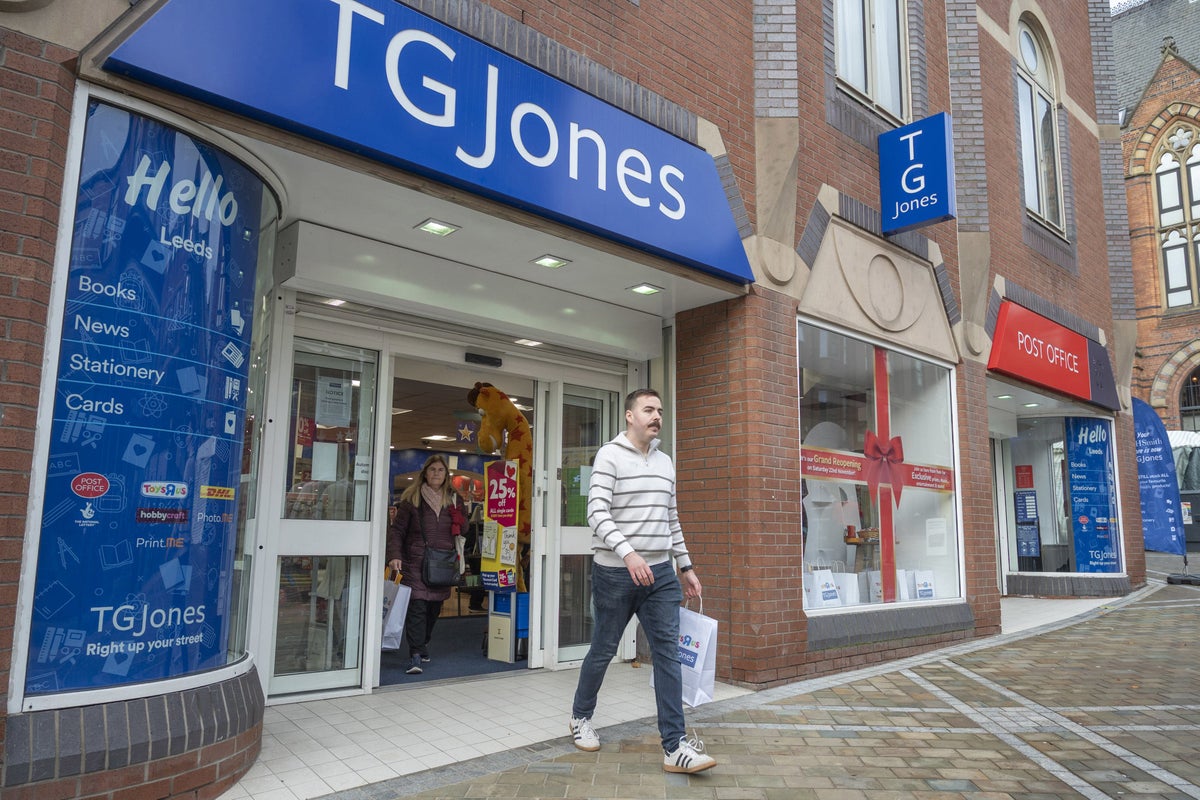
Up to 150 high street stores previously part of the WH Smith business face closure, with hundreds of jobs understood to be at risk.
TGJones attributed the significant restructuring to the “direct result of government policy and recent geopolitical events”.
The firm stated that the planned closures are a necessary measure after 12 months of “highly challenging trading conditions”.
These outlets were rebranded as TGJones following Modella Capital’s acquisition of 480 WH Smith stores last year.
In a statement provided to the Press Association on Wednesday, a spokesperson for the business emphasised that the decision to restructure “had not been taken lightly”.
In a statement provided to the Press Association on Wednesday, a spokesperson for the business said the decision to restructure the company “had not been taken lightly”.
The statement said: “While we continue to believe in the strength of the core business, TGJones has experienced highly challenging trading conditions over the past year, along with many other brick-and-mortar retailers.
“Weak consumer spending and cost-of-living pressures, combined with rising operating costs as a direct result of government policy and recent geopolitical events, have meant that the company as a whole has remained loss-making.
“The forced name change from WH Smith has also negatively impacted consumer awareness, despite the fact that the proposition has improved.”
The statement continued: “The survival of this iconic 234-year-old business is our imperative. No decisions have yet been taken on how this will impact roles, but we will aim to preserve as many jobs as possible.
“Any potential store closures or role reductions will be subject to appropriate consultation, and we are committed to engaging openly and constructively with colleagues and their representatives.
“We want to be clear, however, that the plan may result in the closure of some stores and the loss of some roles.
“We recognise the impact this uncertainty will have on colleagues, their families and the communities we serve.”


Gary Player, 90, takes on Bryson DeChambeau in White House push-up contest as Trump watches

Pentagon to release first batch of UFO, alien files ‘very soon’

Trump’s Team Wants Him to Accept an Iran Deal He’s Already Rejected

-

 Sports1 week ago
Pro wrestling star Steph De Lander reveals how colleague’s advice helped lead her to title triumph at ACW
-
 Business1 week ago
‘I had £20,000 stolen and had to fight a 13-month fraud reporting rule to get it back’
-
 Business7 days ago
PSX plunges over 4,800 points | The Express Tribune
-
 Tech1 week ago
This Ambitious Laptop Doesn’t Leave Much Room for Your Hands
-

 Tech6 days ago
Almost half of UK businesses hit by cyber attacks | Computer Weekly
-

 Tech6 days ago
Musk v. Altman Kicks Off, DOJ Guts Voting Rights Unit, and Is the AI Job Apocalypse Overhyped?
-
 Business1 week ago
BP profits more than double as oil trading booms amid Iran war
-
Uncategorized1 week ago
[CinePlex360] Some plugins have failed to updat