

Business
SBP to hold rate as floods fuel inflation | The Express Tribune

KARACHI:
Pakistan’s central bank is expected to keep its key rate steady on Monday, a Reuters poll showed, as floods that ravaged farmland and threaten fresh food inflation prompt policymakers to extend their pause on monetary easing.
Thirteen of 14 analysts surveyed forecast the State Bank of Pakistan (SBP) will hold its policy rate at 11%, while one projected a 50 basis-point cut.
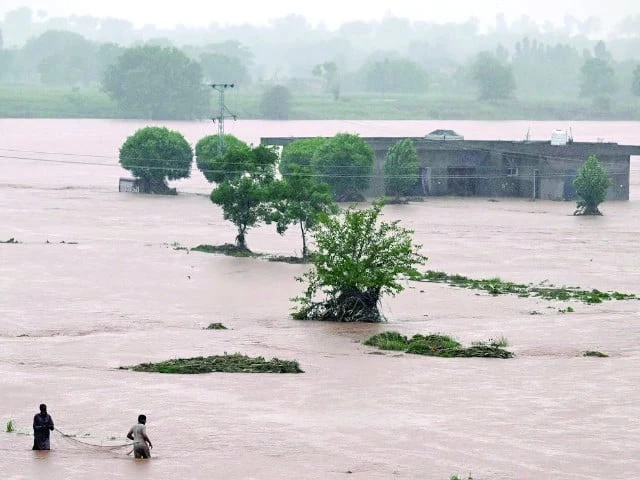
Since late June, floods have swamped Punjab’s farmland, disrupting supply chains and stoking inflation fears, with nearly 950 people killed, 6,500 livestock lost, 8,200 houses destroyed and 4.5 million displaced as waters move south.
“Given the uncertainty, we expect the central bank may pause in September, though our base case allows for a 50100 bps cut by year-end,” said Waqas Ghani, Head of Research at JS Global Capital.
Analysts flag GDP hit, food price shocks
Sana Tawfik, Head of Research at Arif Habib Limited, said agricultural losses could shave around 0.2% off gross domestic product (GDP) growth, though reconstruction may provide some offset.
Analysts said flood-driven supply shocks, especially in wheat, rice and vegetables, could keep inflation above the central bank’s 57% target.
Saad Hanif of Ismail Iqbal Securities said food inflation could face “temporary shocks”, with wheat prices up about 50% in a month.
Inflation eased to 3% in August from 4.1% in July, but the finance ministry, which projected 4% to 5%, warned crop losses and extreme weather could soon push prices higher.
“Manufacturers have also raised selling prices, citing higher fuel and transport costs and delays in input deliveries caused by flooding,” said Ahmad Mobeen, Senior Economist at S&P Global Market Intelligence.
The SBP has cut rates by 1,100 basis points since June 2024, when they stood at a record 22% after inflation peaked near 40% in 2023. It last cut rates by 100 bps in May, after a March pause, and held steady in June amid oil price pressures from Middle East tensions.
Still, some see room for cuts
“Real interest rates are still high enough to allow for a cut, especially with the Fed turning dovish, but the floods are inflationary, particularly for food,” said Ammar Habib, an independent analyst.
ADB warns to insure against floods
Meanwhile, an Asian Development Bank (ADB) expert urged Pakistan, and other countries in Asia and the Pacific, to integrate insurance into urban planning to limit flood losses and speed recovery.
Arup Kumar Chatterjee, Principal Financial Sector Specialist at ADB, said on Friday that cities like Lahore in Pakistan and Gurugram, India, face severe flooding risks but remain financially exposed due to poor planning. Streets turn into rivers and homes into ruins, leaving cities in financial peril. “These issues are not random; they are the result of poor planning,” he noted.
“In 2023, natural hazards in Asia and the Pacific caused $65 billion in losses, with 91% of that amount uninsured. In 2024, global insured losses reached $135 billion, showing a huge protection gap of nearly 90%,” wrote Chatterjee.
The ADB official pointed out that ancient cities managed risks better. Mohenjo-Daro in Pakistan and the aqueducts in Rome were designed to withstand floods.
“Today’s approach to disaster management has changed. Governments often focus more on post-disaster relief than on flood prevention. This often leads to different government departments working in isolation and ignoring risk management,” he said.
The cost of neglecting insurance is clear. He pointed out that Bangkok’s 2011 floods caused $47 billion in damage, with only a third insured. Chennai’s 2015 floods brought $3.5 billion in losses, with just 34% covered. Recent storms in Dubai also exposed major gaps.
In contrast, cities that adopt insurance fare better. During Valencia’s 2024 floods, a third of $10 billion in damages was insured. Auckland’s 2023 floods had 40% coverage, allowing 112,000 claims to be processed quickly.
“We have the tools to manage flood risks better, including satellite technology and real-time data analysis. If we can predict floods, we should also be able to finance protection in advance,” stressed Chatterjee.
He urged that insurance be treated as infrastructure. Quick payouts based on rainfall data can help communities recover faster. He urged Pakistan and other governments to make coverage accessible, including for renters and low-income families.
“No major project should proceed without a risk financing plan,” he said, adding that, “Floods are inevitable; the question is whether we can respond quickly enough to prevent despair. Every uninsured project is a risk to taxpayers, costing them in both money and stress. Cities need to embrace insurance as a foundational element of their planning, not as an afterthought.”
The cost of being unprepared, he warned, far outweighs the cost of insurance.
REUTERS WITH ADDITIONAL INPUT FROM OUR CORRESPONDENT





Business
Airlines spent 56.4% more on jet fuel in month after Iran war started, U.S. government says

A technician prepares to refuel a Delta Airlines aircraft at the Austin-Bergrstrom International Airport on April 10, 2026 in Austin, Texas.
Brandon Bell | Getty Images
U.S. airlines spent 56.4% more on jet fuel in March, the month after the U.S.-Israel strikes on Iran began, than they did in February, U.S. government data released Wednesday shows.
U.S. carriers spent $5.06 billion on fuel in March, up from $3.23 billion in February. It was 30% more than what they paid in March 2025, according to the Department of Transportation.
Airlines have lowered or scrapped their 2026 forecasts altogether because of the spike in fuel, their biggest expense after labor. Some carriers have scaled back growth plans to cut costs and avoid having too much expensive capacity in the markets.
The spike in jet fuel was even sharper and topped $4 a gallon in some markets in April as the war continued and the Strait of Hormuz was effectively closed.
Spirit Airlines collapsed over the weekend, and the carrier said the surge in jet fuel costs foiled its plans to emerge from bankruptcy midyear.
Other major carriers told Wall Street as they reported earnings last month that they expect customers to cover the higher jet fuel costs by early 2027, if not the end of this year.
So far, booking trends show consumers are still traveling, In March, travel agency ticket sales rose 12% from a year ago to $10.4 billion, with the number of domestic trips up 5% and international up 1%, according to the Airlines Reporting Corp.

Novo Nordisk is looking for deals more than ever before, the CEO of the Danish drugmaker said in an interview with CNBC on Wednesday.
“If our ambition is to help hundreds of millions of patients out there, then we need not just the best, but the broadest pipeline in the world,” said Novo Nordisk CEO Mike Doustdar. “So let’s go and see who else basically has assets that are complementary to what we have. And we are quite active with those [business development] talks and acquisitions, and you’ll see more of those as well going forward.”
Novo created the market for GLP-1 weight loss drugs with its weekly shots Ozempic and Wegovy. More recently, the company has faced concerns from analysts about whether Novo’s pipeline is robust enough for it to remain a leader in the increasingly competitive obesity drug space.
Mike Doustdar, chief executive officer of Novo Nordisk A/S, during an interview in New York, US, on Wednesday, Feb. 11, 2026.
Michael Nagle | Bloomberg | Getty Images
Rival Eli Lilly has already overtaken Novo in market share for weekly GLP-1 shots, though Novo has taken an early lead in the new category of GLP-1 pills for weight loss.
Doustdar said he disagrees with the concerns about Novo’s upcoming treatments, arguing the drugmaker has “one of the best pipelines in the industry.” He pointed to Novo’s CagriSema, a drug candidate that targets GLP-1 and amylin, that Novo hopes will be approved at the end of this year, and an experimental amylin-targeting drug called zenagamtide that Novo has accelerated development of, among other assets.
“Of course, there’s a lot of things in my pipeline that right now I have the privy to look into and get excited (about) but not have shared it yet with the world,” he said. “So I am incredibly excited about our pipeline, and I would just say to the investors who are a little bit skeptical, wait and see.”
Doustdar spoke to CNBC after the company said its Wegovy pill performed better than expected in the first quarter, and it raised its full-year profit guidance.
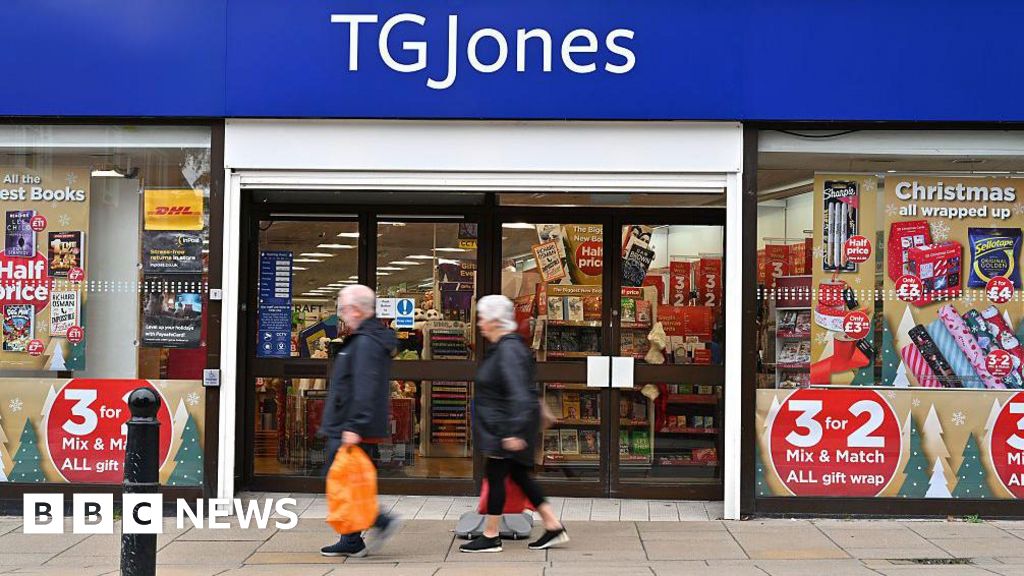
The stores were purchased by Modella Capital last year, and then rebranded under the name TGJones.
Source link


Trump’s Team Wants Him to Accept an Iran Deal He’s Already Rejected

Kyle Loftis, founder of 1320Video, defining voice in street car culture, dies
Airlines spent 56.4% more on jet fuel in month after Iran war started, U.S. government says

-

 Sports1 week ago
Pro wrestling star Steph De Lander reveals how colleague’s advice helped lead her to title triumph at ACW
-
 Business1 week ago
‘I had £20,000 stolen and had to fight a 13-month fraud reporting rule to get it back’
-
 Business7 days ago
PSX plunges over 4,800 points | The Express Tribune
-

 Tech1 week ago
This Ambitious Laptop Doesn’t Leave Much Room for Your Hands
-

 Tech6 days ago
Almost half of UK businesses hit by cyber attacks | Computer Weekly
-
 Business1 week ago
BP profits more than double as oil trading booms amid Iran war
-

 Sports1 week ago
Match officials announced for HBL PSL 11 qualifier – SUCH TV
-

 Tech5 days ago
This Indigenous Language Survived Russian Occupation. Can It Survive YouTube?