

Politics
British MP Tulip Siddiq handed two-year prison sentence in Bangladesh graft case



- Ex-Bangladesh PM Sheikh Hasina, sister Rehana also sentenced.
- Case relates to illegal allocation of a plot of land: local media.
- Prosecutors highlight political influence, collusion abuse of power.
DHAKA: A Bangladesh court sentenced British parliamentarian and former minister Tulip Siddiq to two years in jail in a corruption case involving the alleged illegal allocation of a plot of land, local media reported.
The verdict was delivered in absentia as Siddiq, her aunt and former Bangladesh Prime Minister Sheikh Hasina, and Hasina’s sister Sheikh Rehana — all co-accused in the case — were not present in court.
Hasina was sentenced to five years in jail and Rehana to seven, the local media reports said.
Hasina, who fled to neighbouring India in August 2024 at the height of an uprising against her government, was sentenced to death last month over her government’s violent crackdown on demonstrators during the protests.
Last week, she was handed a combined 21-year prison sentence in other corruption cases.
Prosecutors said that the land was unlawfully allocated through political influence and collusion with senior officials, accusing the three powerful defendants of abusing their authority to secure the plot, measuring roughly 13,610 square feet, during Hasina’s tenure as prime minister.
Most of the 17 accused were absent when the judgement was pronounced.
Siddiq, who resigned in January as the UK’s minister responsible for financial services and anti-corruption efforts following scrutiny over her financial ties to Hasina, has previously dismissed the allegations as a “politically motivated smear”.
Britain does not currently have an extradition treaty with Bangladesh.
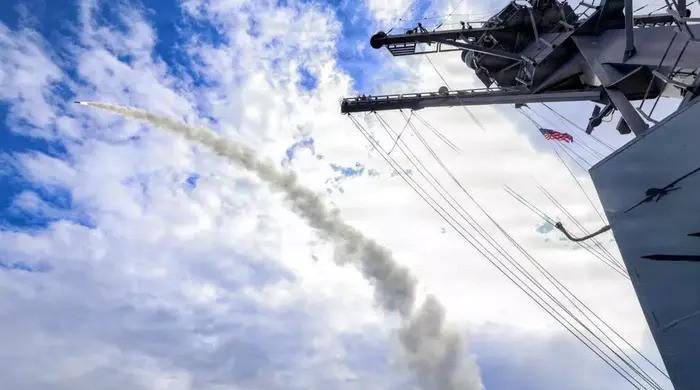
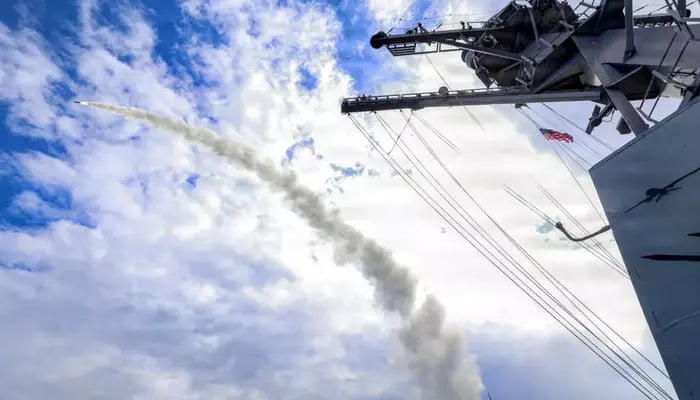
US forces have shot down hundreds of Iranian ballistic missiles in recent days, raising questions about how long American air defence interceptor stocks will last in a war that could continue for weeks or more.
Iran responded to the massive US-Israeli air campaign launched over the weekend with barrages of hundreds of missiles and drones against countries in the Middle East that host American forces and bases.
Since the start of the war, the United States has “intercepted hundreds of ballistic missiles targeting US forces, our partners and regional stability,” General Dan Caine, the top US military officer, said Monday.
Those intercepts are a success — they prevented the missiles from striking their targets — but they also come at the cost of pricey, high-tech interceptors that are in short supply.
“There is a risk the United States and its partners could run out of interceptors before Iran runs out of missiles, though it is far from certain,” said Kelly Grieco, a senior fellow at the Stimson Center think-tank.
At the beginning of the conflict, Israel estimated Iran had some 2,500 ballistic missiles — “almost certainly more than the combined ballistic missile interceptor totals of Israel and the United States,” Grieco said.
However, the United States and Israel are hunting for launchers and storage sites, so “the race is, in short, between Iranian launchers and American and Israeli strikes on the sources of those launches,” she said.
Demand outpacing production
Caine said Iranian drones also pose a threat but did not provide a figure for the number that had been shot down, only saying that “our systems have proven effective in countering these platforms, engaging targets rapidly.”
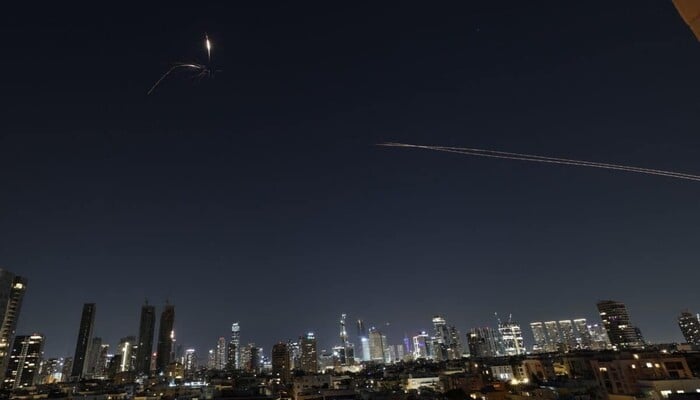
Grieco said that while interceptors are being expended on drones, it is not to the same degree as for missiles, and “the most acute shortage is with the ballistic interceptors.”
The length of the conflict is a factor affecting how many interceptors will be needed, and it is currently unclear how long it will last.
US officials including Donald Trump have referred to a multi-week war, though the president said Monday that “we’re already substantially ahead of our time projections.”
“From the beginning, we projected four to five weeks, but we have the capability to go far longer than that,” Trump said.
Pentagon chief Pete Hegseth had earlier given various possible timelines for the conflict: “Four weeks, two weeks, six weeks, it could move up. It could move back.”
Joe Costa, director of the Atlantic Council’s defence program, said that “sustained conflict with Iran could severely strain US stocks of critical air defence interceptors for China and other global priorities.”
“It depends on how effective the US and Israel will be in neutralising Iran’s launch capability of missiles and drones,” he said.
Grieco said that when it comes to interceptors, “production simply cannot keep pace with demand.”
“Every theatre, from Europe and the Indo-Pacific to the Middle East, has an acute need [for] more missile defence launchers and interceptors, and the United States is simply consuming them faster than it can replace them.”
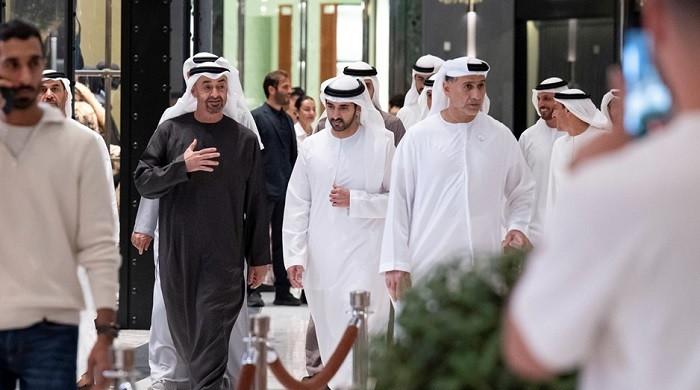

DUBAI: The President of the United Arab Emirates, Sheikh Mohammed bin Zayed Al Nahyan, observed iftar at Dubai Mall alongside senior members of the leadership, including the Crown Prince of Dubai, Sheikh Hamdan bin Mohammed bin Rashid Al Maktoum.
The iftar took place within the mall premises with members of the UAE leadership present, underscoring a message of unity, stability and resilience.
The gathering came amid regional tensions, with officials repeatedly stating that the country remains safe and secure.
Video circulating on social media showed the leaders moving through the venue, where shoppers gathered and waved as they passed.
Many visitors appeared surprised to see the UAE leadership at the location.
In one widely shared moment, a visitor from Ghana expressed excitement after meeting the President, describing the encounter as memorable. The President exchanged brief words with him and wished him an enjoyable stay.
The public presence drew attention inside the busy shopping destination, often described as one of the world’s largest malls.


The Iranian armed forces have started a new wave of extensive drone and missile attacks on targets in the Israeli-occupied territories and US assets in regional countries.
A late Monday statement from the Islamic Revolution Guards Corps (IRGC) said that the 11th wave of offensive attacks under Operation True Promise 4 had been launched by the naval and aerospace units of the elite force.
The statement said the “extensive and high-density operation” had targeted American intelligence centers and military support warehouses in the Persian Gulf region, the Israeli communications industries complex in the occupied city of Beersheba, as well as 20 locations in the occupied regions of Tel Aviv, West al-Quds, and Galilee.
It said the “brave sons of Iran’s armed forces” had used more than 700 drones and hundreds of missiles to hit 60 strategic targets and 500 military locations linked to the United States and the Israeli regime since the start of the US-Israeli aggression on Iran on Saturday.
The statement said the number of missiles and drones and the success rate of the attacks had far outpaced records seen during the 12-day war with Israel and the US in June 2025.
The IRGC said recent “brutal and terrorist” attacks on Iran that targeted citizens in hospitals, schools, and offices of the national media service (IRIB) had further strengthened their resolve and determination to pursue an all-out war against the enemies.
The IRGC has been carrying out retaliatory attacks on US military assets across the region and on targets in the Israeli-occupied territories since Saturday, when the US and Israel started the unprovoked war of aggression against Iran and assassinated Leader of the Islamic Revolution Ayatollah Seyyed Ali Khamenei.


Retech to showcase precision godet technology at Techtextil 2026

Football is life! ‘Dani Rojas’ from Ted Lasso is on trial at a USL club

Inflation Climbs to 16-Month High at 7% in February – SUCH TV

-

 Politics5 days ago
What are Iran’s ballistic missile capabilities?
-
 Business6 days ago
Households set for lower energy bills amid price cap shake-up
-

 Sports5 days ago
Sri Lanka’s Shanaka says constant criticism has affected players’ mental health
-
 Business6 days ago
Lucid widely misses earnings expectations, forecasts continued EV growth in 2026
-

 Fashion4 days ago
Policy easing drives Argentina’s garment import surge in 2025
-

 Sports1 week ago
South Africa thrash India by 76 runs in T20 World Cup Super 8 – SUCH TV
-
 Business1 week ago
Govt to return unclaimed EPFO deposits, expand scholarships for unorganised workers’ children – The Times of India
-
 Business1 week ago
Haryana Govt bars IDFC First Bank, AU Small Finance Bank over alleged Rs 590 crore fraud