

Entertainment
British playwright Tom Stoppard, known for “Shakespeare in Love” screenplay, dies at 88

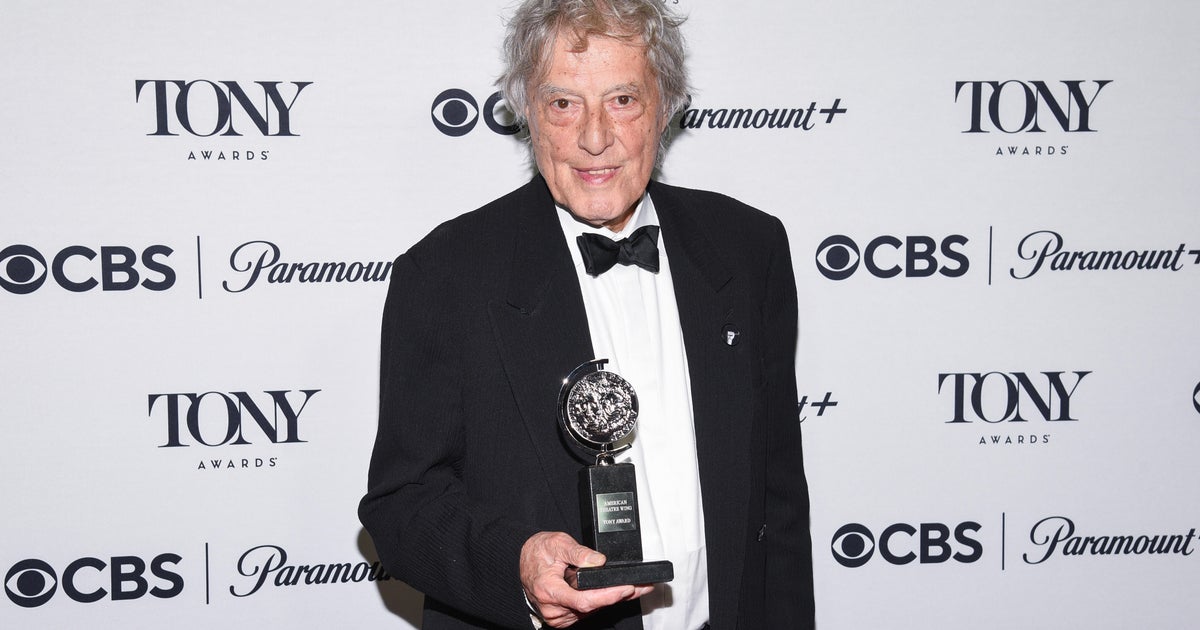
British playwright Tom Stoppard, who won an Academy Award for the screenplay for 1998’s “Shakespeare In Love,” has died. He was 88.
United Agents said in a statement Saturday that Stoppard died “peacefully” at his home in Dorset in southern England, surrounded by his family.
“He will be remembered for his works, for their brilliance and humanity, and for his wit, his irreverence, his generosity of spirit and his profound love of the English language. It was an honour to work with Tom and to know him,” the statement said.
Steve Eichner/WWD via Getty Images
Stoppard was born in the Czech Republic in 1937. His family fled to Singapore after Nazi Germany’s invasion in 1939. He, his brother and their mother fled again when Japanese forces closed in on the city in 1941. His father died trying to leave the city. His mother married an English officer in 1946, and the family moved to postwar Britain. The 8-year-old Tom “put on Englishness like a coat,” he later said, growing up to be a quintessential Englishman who loved cricket and Shakespeare.
Stoppard first worked as a journalist before turning to theater in the 1960s. Stoppard was often hailed as the greatest British playwright of his generation and was garlanded with honors, including a shelf full of theater gongs.
His brain-teasing plays ranged across Shakespeare, science, philosophy and the historic tragedies of the 20th century. Five of them won Tony Awards for best play: “Rosencrantz and Guildenstern Are Dead” in 1968; “Travesties” in 1976; “The Real Thing” in 1984; “The Coast of Utopia” in 2007; and “Leopoldstadt” in 2023.
He wrote plays for radio and television including “A Walk on the Water,” televised in 1963, and made his stage breakthrough with “Rosencrantz and Guildenstern Are Dead,” which reimagined Shakespeare’s “Hamlet” from the viewpoint of two hapless minor characters.
Stoppard was a strong champion of free speech who worked with organizations including PEN and Index on Censorship. He claimed not to have strong political views otherwise, writing in 1968: “I burn with no causes. I cannot say that I write with any social objective. One writes because one loves writing, really.”
That was especially true of his late play “Leopoldstadt,” which drew on his own family’s story for the tale of a Jewish Viennese family over the first half of the 20th century. Stoppard said he began thinking of his personal link to the Holocaust quite late in life, only discovering after his mother’s death in 1996 that many members of his family, including all four grandparents, had died in concentration camps.
“Leopoldstadt” premiered in London at the start of 2020 to rave reviews; weeks later all theaters were shut by the COVID-19 pandemic. It eventually opened on Broadway in late 2022, going on to win four Tonys.
Dizzyingly prolific, Stoppard also wrote many radio plays, a novel, television series including “Parade’s End” (2013) and many film screenplays. These included dystopian Terry Gilliam comedy “Brazil” (1985), Steven Spielberg-directed war drama “Empire of the Sun” (1987), Elizabethan romcom “Shakespeare in Love” (1998) — for which he and Marc Norman shared a best adapted screenplay Oscar — code breaking thriller “Enigma” (2001) and Russian epic “Anna Karenina” (2012).
He was knighted by Queen Elizabeth II in 1997 for his services to literature.
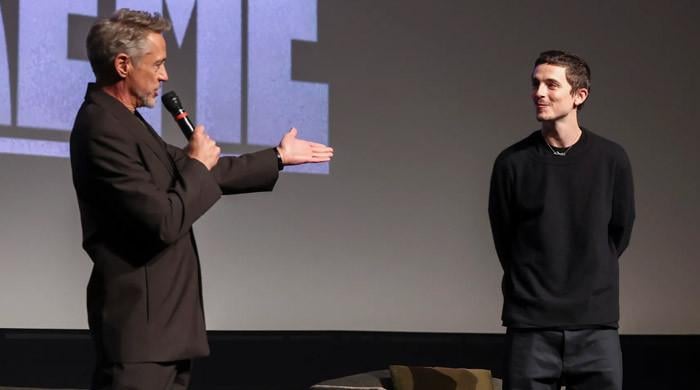
Robert Downey Jr. gave Timothée Chalamet validation that he has reached the level of excellence he’s been striving for.
The Dune star has long spoken openly about his “pursuit of greatness” and now, he’s gotten a major seal of approval from the legend.
During a recent Q&A for Marty Supreme, the Avengers: Doomsday star didn’t hold back, calling the newly minted Golden Globes Best Actor winner “one of the greats.”
“You’ve talked a lot lately about this,” Downey, 60, said about Chalamet’s great ambitions. “I am literally twice your age. When I was 30, I was making a movie with Norman Jewison.”
He recalled, “It was called Only You. Me and Marisa Tomei. We were on the Amalfi coast somewhere and I just go to Norman Jewison, you know Moonstruck and all these great movies, I go, ‘Norman, I think I am one of the greats.'”
“I want you to tell me if you agree with that.” the Iron Man lead continued. “He looked at me like I was nuts. He said, ‘Well, Mr. Downey, that remains to be seen.'”
“And I want to say in front of God and everyone in this audience here with you that as of Marty Supreme, it no longer remains to be seen. Let’s hear it for, Timothée Chalamet,” he added.
For the unversed, the 30-year-old French-American actor openly told the industry about wanting to be a great actor during his acceptance speech at the 2025 SAG Awards.
“I can’t downplay the significance of this award, because it means the most to me,” Chalamet said in his acceptance speech after he won best actor for playing Bob Dylan in A Complete Unknown.
“I know we’re in a subjective business, but the truth is, I’m really in pursuit of greatness. I know people don’t usually talk like that, but I want to be one of the greats. I am inspired by the greats,” he added.
It is pertinent to note that Marty Supreme has shattered one record after another since opening over the holidays.
Its latest box office milestone came Tuesday when passing up Leonardo DiCaprio’s rival Oscar contender One Battle After Another to end the day with an estimated cume of $72.27 million, according to A24.
The newly released film Marty Supreme earned Chalamet his first Critics’ Choice and Golden Globe awards, making him a frontrunner for a Best Actor Oscar at the upcoming 98th Academy Awards.
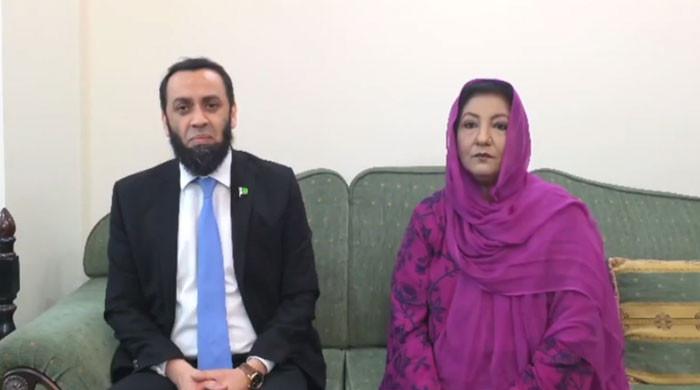
Information Minister Atta Tarar has announced the return of veteran broadcaster Ishrat Fatima to Pakistan Television, where she will serve as a mentor to aspiring newscasters and broadcasters.
The announcement was made during a media interaction at her residence in Islamabad, where the minister appeared alongside the veteran broadcaster. The development comes after Fatima’s retirement, marking the end of her 45-year-long association with Radio Pakistan.
Tarar expressed his gratitude to Fatima for accepting his request to rejoin Pakistan Television as an expert and mentor. He noted that her expertise would be invaluable in training newcomers in the art of news reading and broadcasting under various circumstances.
“She is a seasoned newscaster with an illustrious career,” the minister remarked and added, “Every Pakistani identified her voice as she brings over four and a half decades of experience and service to the nation.”
“Following her retirement from Radio Pakistan, I personally requested her to join PTV to train the next generation and promote the Urdu language. Her return will encourage us all and strengthen PTV as an institution. Throughout her career, she maintained professional integrity without any political associations.”
The minister said there would be a surprise upon her formal return, noting that Pakistan Television is all set to welcome her back.
Speaking to the media, the veteran broadcaster described news reading as her lifelong passion and thanked the minister for honoring her with this responsibility.
Fatima said that she looks forward to teaching the younger generation and contributing to the betterment of the institution. She also urged the government to continue encouraging competent individuals in every field.

The equity market rose on Friday as investors bought the dip pointing to US–Iran de-escalation and a dovish tilt in rate expectations, lifting risk appetite early in the session.
The Pakistan Stock Exchange’s benchmark KSE-100 Index climbed to an intraday high of 184,645.65, gaining 3,189.32 points, 1.76%, from the previous close of 181,456.33, and reached a low of 182,559.69, up 1,103.36 points, or 0.61%.
“The market witnessed a sharp recovery after the latest news flows suggest the de-escalation between the US and Iran,” said Huzaifa Riaz, Director, Mayari Securities (Pvt) Limited.
“Additionally, sentiment around the next monetary policy remains dovish as the latest auction suggests a 50 bps cut, which could further improve a risk-on sentiment,” he added.
Ahsan Mehanti, Managing Director and CEO of Arif Habib Commodities, echoed the sentiments, saying: “Bullish activity witnessed in early session at PSX amid reports of US-Iran de-escalation,” adding: “Speculations over further SBP policy easing amid falling government bond yields played a catalyst role in bullish activity at PSX.”
A Topline Research survey ahead of the State Bank of Pakistan (SBP) Monetary Policy Committee meeting on January 26, 2026, showed 80% of participants expect a rate cut.
Of those, 56.4% see 50 bps, 15.4% expect 100 bps, 5% look for 25 bps, and 3% foresee 75 bps, while 20% expect no change. In the previous decision on December 15, 2025, the SBP cut 50 bps.
SBP reserves rose $16 million to $16.072 billion in the week ended January 9, taking total liquid reserves to $21.248 billion (commercial banks $5.177 billion, up $40 million).
The SBP noted ongoing foreign exchange purchases amid a steadier current account supported by remittances; from June 2024 to September 2025, net market purchases totalled $9.7 billion.
The central bank projects the FY26 current account deficit at 0–1% of GDP and sees reserves at $17.8 billion by June 2026 with planned official inflows.
On Thursday, the KSE-100 Index fell 1,113.48 points (0.61%) to 181,456.34 from 182,569.82, after trading between 183,717.54 and 180,783.63.

Budget 2026: Who Delivered The Longest Budget Speech In India?

Saks bonds worth just 1 cent hand hedge funds a painful lesson

Represent names former Adidas Yeezy boss as its North America president

-

 Politics1 week ago
UK says provided assistance in US-led tanker seizure
-

 Entertainment1 week ago
Does new US food pyramid put too much steak on your plate?
-
 Entertainment1 week ago
Why did Nick Reiner’s lawyer Alan Jackson withdraw from case?
-

 Sports5 days ago
Clock is ticking for Frank at Spurs, with dwindling evidence he deserves extra time
-
 Business1 week ago
Trump moves to ban home purchases by institutional investors
-
 Sports1 week ago
PGA of America CEO steps down after one year to take care of mother and mother-in-law
-

 Tech4 days ago
New Proposed Legislation Would Let Self-Driving Cars Operate in New York State
-
 Business1 week ago
Bulls dominate as KSE-100 breaks past 186,000 mark – SUCH TV