

Sports
Broadcast industry CEO says consolidation is ‘essential’ to compete for NFL soaring media rights prices

NEWYou can now listen to Fox News articles!
The evolution of live sports programming has become a battleground between traditional broadcast companies and streaming platforms, vying for the right to air the best games possible year after year.
The NFL is the cream of the crop, generating roughly $10 billion per year on its current media rights deal. And the league is likely to renegotiate that deal by the end of this year, with reports indicating that they want it done before kickoff in Week 1 of the 2026 season in September.
With additional media partners potentially entering the fold in this new deal, where do the incumbents like FOX, CBS and NBC lie in the pie chart that is the NFL schedule?
CLICK HERE FOR MORE SPORTS COVERAGE ON FOXNEWS.COM
The Fox broadcast team, from left to right, Tom Brady, Tom Rinaldi, Kevin Burkhardt, Erin Andrews, and Dean Blandino pose for photo prior to an NFL football game between the Chicago Bears and the Dallas Cowboys at Solider Field on Sept. 21, 2025 in Chicago, Illinois. (Todd Rosenberg/Getty Images)
Curtis LeGeyt, the CEO of the National Association of Broadcasters, which lobbies federal agencies and lawmakers alike on behalf of the broadcast industry, spoke with John Ourand on “The Varsity” podcast, where he suggested the broadcast industry must consolidate if it wants to continue competing with streaming platforms for live sports rights.
EX-NFL STAR SHAWNE MERRIMAN ADVOCATING FOR PLAYERS TO GET PAID MORE WHEN TV RIGHTS DEALS EXPLODE
“I think, for better or worse, (consolidation) is an essential thing right now,” he explained. “And I’m looking at this purely through the lens of broadcast. If we’re going to compete for those NFL sports rights, if we’re going to compete locally to ensure that teams feel like they have a local distribution option that is freely available through local broadcasts as opposed to the cable regional sports networks or even streaming, broadcasters need some scale in order to complete for that. The only way to gain that scale is through some level of consolidation.”
We’re already seeing key mergers across broadcast television, including Paramount and Warner Bros. Discovery, which is awaiting approval that will likely go through. Also, the NFL and ESPN reached a landmark deal where the sports giant acquired NFL Network, NFL RedZone and NFL Fantasy. In exchange, the league received a 10% equity stake in ESPN, which was valued at around $3 billion.
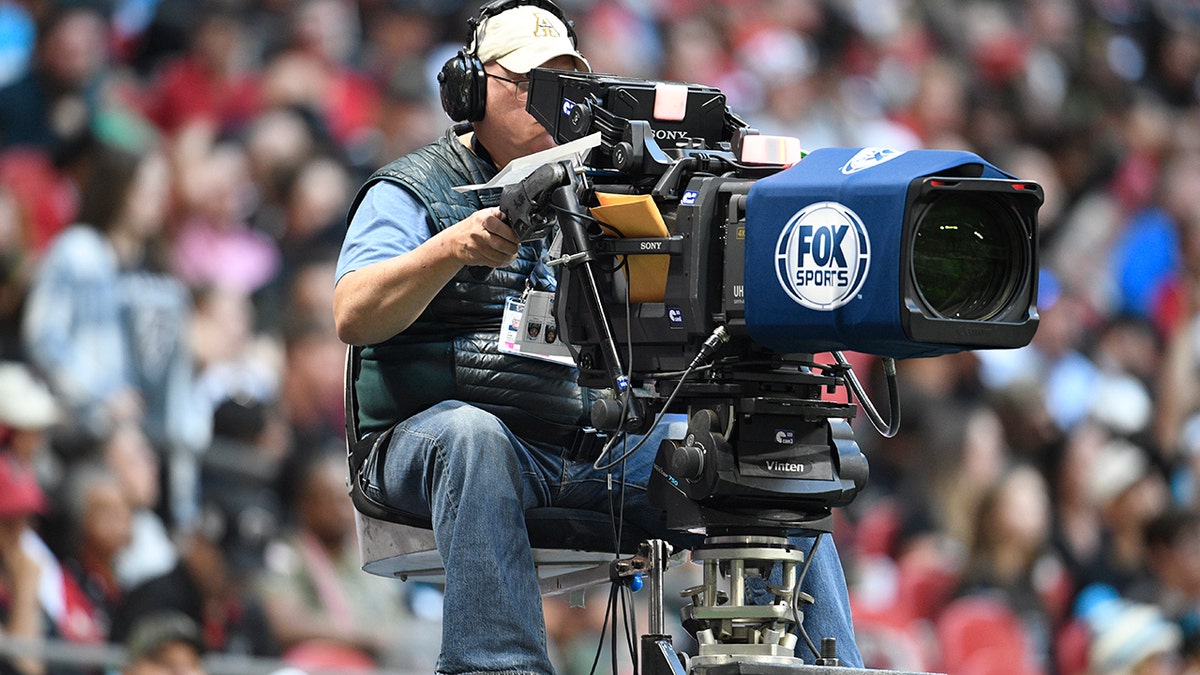
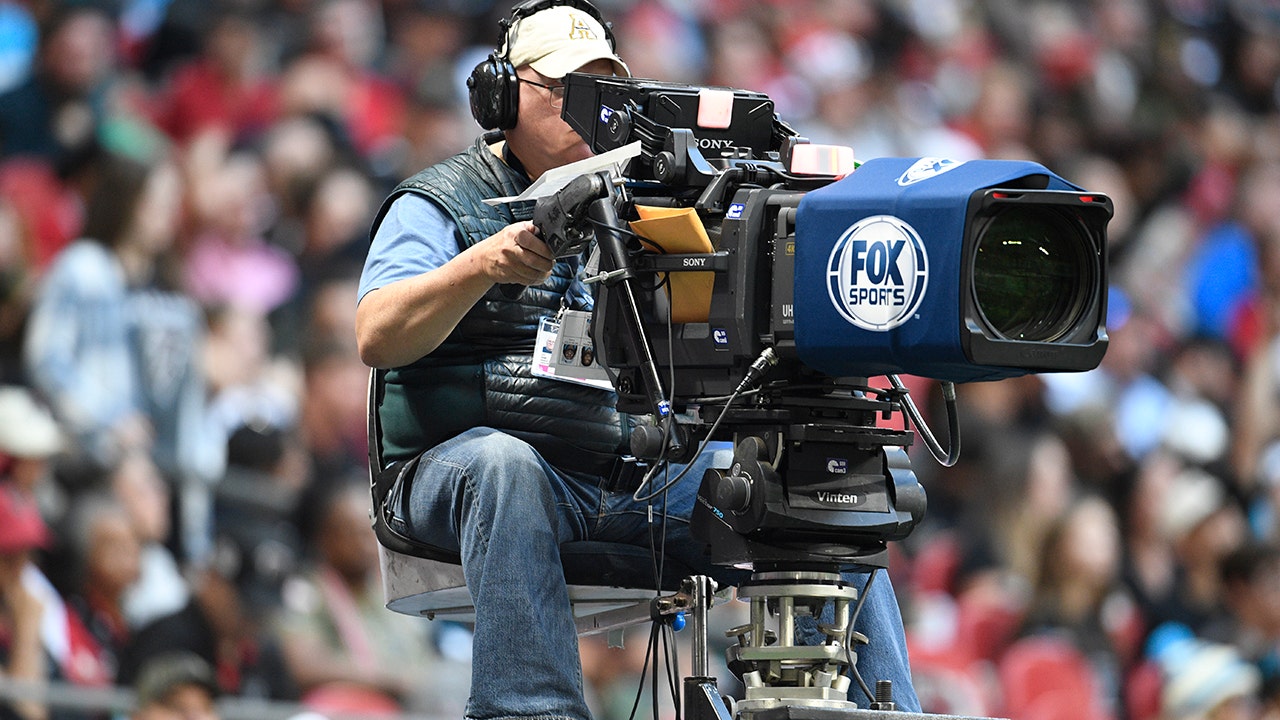
A close-up view of a person operating a broadcast camera with a cover with the FOX Sports logo during the NFL game between the Carolina Panthers and the Atlanta Falcons on Nov. 16, 2025 at Mercedes-Benz Stadium in Atlanta, Georgia. (Erica Denhoff/Icon Sportswire)
Merging these broadcasters together can help compete against the likes of Amazon, Netflix, and perhaps others will join the fray if and when negotiations ensue for a new media rights deal. With JC Tretter elected as the NFL Players’ Association’s new executive director, those negotiations could be coming sooner than later.
Now, where does the NFL fan come into play here? The price of simply watching the NFL schedule is quite expensive, with fans having to pay at least $575 to watch every game if they wished in 2025. The need for ESPN, Peacock, Amazon Prime Video, Netflix and NFL+ subscriptions, among others, only points upward as media rights prices for the league continues to grow.
Fans would like it if they could access their favorite sports if its free-to-air broadcasts doing so.
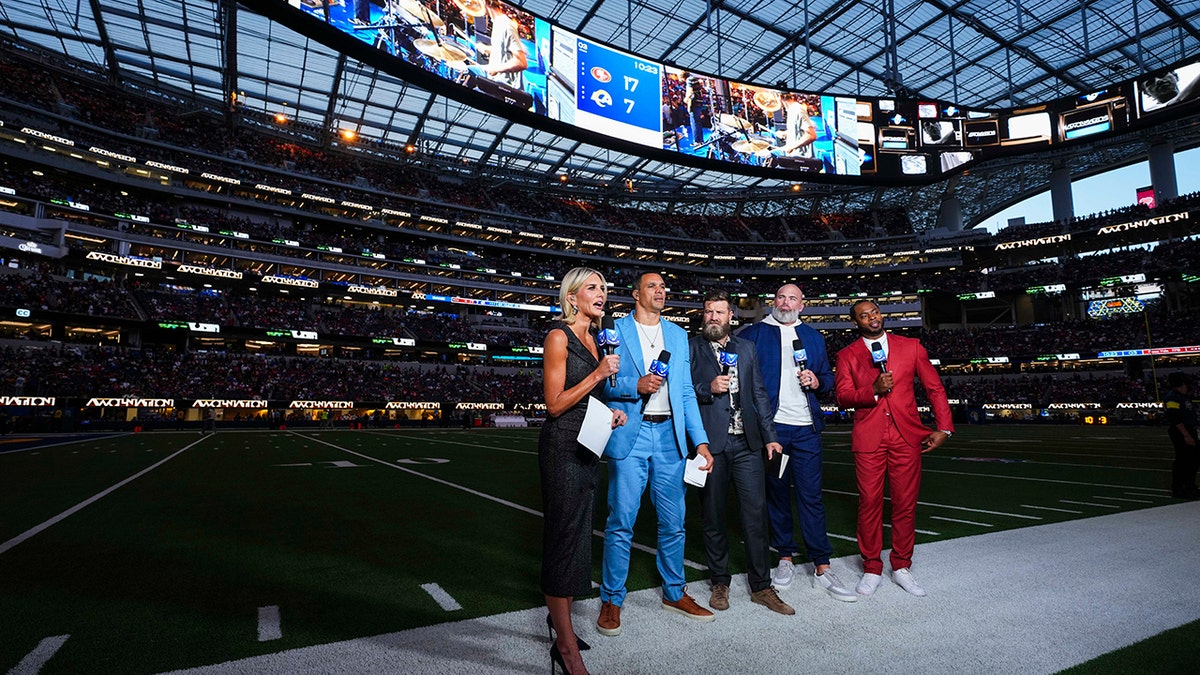
A general view of the Amazon “Thursday Night Football” broadcast set with Charissa Thompson, Tony Gonzalez, Ryan Fitzpatrick, Andrew Whitworth and Richard Sherman during the TNF on Prime halftime show during an NFL football game between the San Francisco 49ers and the Los Angeles Rams at SoFi Stadium on Oct. 2, 2025 in Inglewood, California. (Cooper Neill/Getty Images)
CLICK HERE TO GET THE FOX NEWS APP
The FCC said last month it would seek public comment about the ongoing shift of live sports from broadcast channels to streaming services, which includes the other major sports leagues in the country like the NBA, MLB and more.
Follow Fox News Digital’s sports coverage on X and subscribe to the Fox News Sports Huddle newsletter.









-
Myron Medcalf
Close
Myron Medcalf
ESPN Staff Writer
- Covers college basketball
- Joined ESPN.com in 2011
- Graduate of Minnesota State University, Mankato
Multiple Authors
The 2026 men’s Final Four is set!
UConn will open the national semifinal action against Illinois after mounting a successful comeback against Duke in the Elite Eight, followed by a battle of No. 1 seeds Arizona and Michigan in Indianapolis on Saturday. Who do ESPN’s college basketball experts see advancing to the national championship on April 6?
Jeff Borzello and Myron Medcalf break down how each team reached the final weekend of the NCAA tournament — and their keys to advancing to the title game. Find their predictions below.

FINAL FOUR PREVIEW
8:49 p.m. ET, Saturday
What to know about Arizona
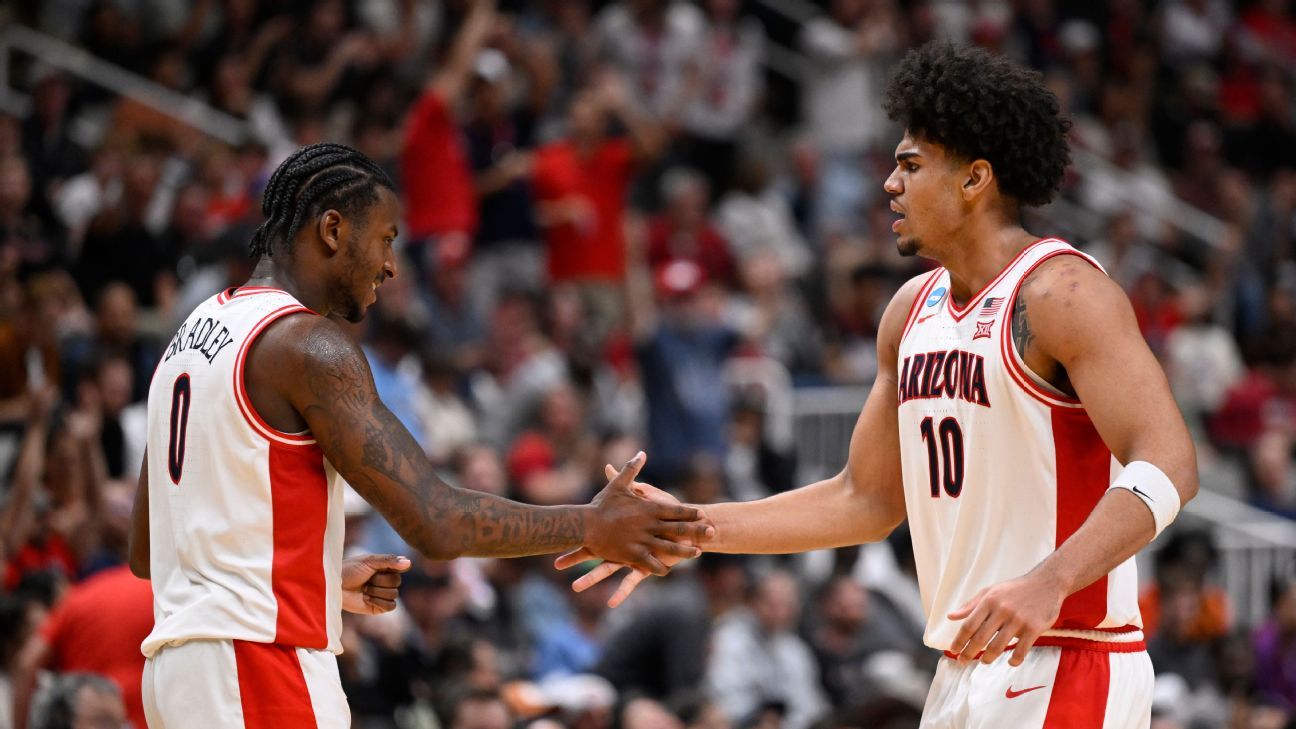
No. 1 factor that helped Arizona reach the Final Four: The Wildcats’ relentlessness in the paint has been unparalleled, and it carried them when it mattered in the NCAA tournament.
For the season, Arizona ranked fifth in the country in paint points, averaging more than 42. It also led the nation in free throw attempts with nearly 20 points per game at the line. Against another dominant paint team in Arkansas in the Sweet 16, Arizona had perhaps the most efficient interior performance ever seen in March: The Wildcats had 60 paint points and 30 points from the free throw line, the most combined points in an NCAA tournament game in the past 20 years. Then, after Purdue matched them down low in the first half of their Elite Eight showdown, the Wildcats played with an increased urgency and imposed their will in the second half. The Wildcats finished with 40 paint points and 20 points from the free throw line, outscoring the Boilermakers by a combined 28 points in those areas.
It’s not just the post scoring from Koa Peat or Motiejus Krivas, or the offensive rebounding from Tobe Awaka — it’s also the relentless attacking from Jaden Bradley, Brayden Burries and Ivan Kharchenkov. Coach Tommy Lloyd preaches paint points, and it’s reflected in every part of his team’s offense. — Borzello
0:20
Brayden Burries’ hustle play punctuates Arizona’s Elite Eight win
Brayden Burries dives on the floor and gets the ball to Ivan Kharchenkov for a layup to help send the Wildcats to the Final Four.
Arizona’s keys against Michigan: This will be the ultimate strength on strength battle in the paint, but Arizona is more reliant — and better — at dominating the glass and finishing at the rim. That’s the key here. The Wildcats are top five nationally in paint points per game and offensive rebound percentage, and lead the nation in free throw attempts per game. Michigan, meanwhile, is top five in 2-point defense, block rate and average 2-point attempt distance defensively. The Wolverines also limit their fouling. Can Arizona continue to control the paint against a team that can match them from a size and physicality perspective?
It’s the same situation at the other end of the court. Michigan shoots better than 61% inside the arc and ranks in the top 20 in paint points and second-chance points per game. Arizona will have to win the interior battle on both ends. — Borzello
What to know about Michigan
No. 1 factor that helped Michigan reach the Final Four: The Wolverines can quickly shift gears and reach a level few teams are able to match. Their Elite Eight win over Tennessee was arguably the most complete game we’ve seen by any team in the NCAA tournament. They outscored the Vols 48-26 in the first half and held them to just 85 points per 100 possessions — nearly 23 fewer points than the scoring clip of the Brooklyn Nets, the worst offensive team in America. With 10:52 to play in the first half, Tennessee had a 16-15 lead over Michigan, then the Wolverines launched a 33-10 rally to end the half. Rick Barnes had his head in his hands; what can anyone do when Michigan plays like that?
The Wolverines are big, have stars, play great defense, and when it’s time to stand its ground and battle, no team is better. That’s why they’re going to Indianapolis. — Medcalf
0:25
Yaxel Lendeborg gets sweet and-1 to fall for Michigan
Yaxel Lendeborg drives and gets a smooth reverse and-1 layup to fall for Michigan vs. Tennessee.
Michigan’s keys against Arizona: The Wolverines will have to force the Wildcats to take shots outside the paint and neutralize all paths to the rim. Arizona is a really difficult team to compete against when it can get downhill, penetrate and attack teams in the lane. The Wildcats are top-10 nationally in drawing fouls and getting to the free-throw line — that’s been their bread-and-butter, and they’re better at that tactic than any team in Indianapolis.
On offense, Michigan has to extend Arizona’s defense by shooting well from the 3-point line. The Wildcats’ four NCAA tournament opponents struggled from beyond the arc but the Wolverines have made 40% of their 3-point shots since March 1. If Arizona is forced to focus on what Michigan is doing on the perimeter, it will just create more room for Yaxel Lendeborg, Aday Mara and Morez Johnson Jr. to operate in the lane.
Still, against this strong of an Arizona team, Michigan may need Lendeborg to be a hero with a monster performance comparable to the 27-point effort he had against Tennessee in the Elite Eight. — Medcalf
Arizona vs. Michigan Predictions
Borzello’s prediction: Arizona, 82-80
Medcalf’s prediction: Michigan, 78-76
6:09 p.m. ET, Saturday
What to know about UConn
No. 1 factor that helped UConn reach the Final Four: Tarris Reed Jr. and the experience to maintain the type of patience the Huskies needed to deal with a Duke team that had a 19-point lead in the first half has gotten them here. Three players in the starting rotation have been in Dan Hurley’s system for at least two years, a rarity in the current landscape. Illinois will be the only team in Indianapolis that can match that.
Hurley is as great at recruiting as he is at retention. Freshman Braylon Mullins has had an up-and-down season, seemingly never hitting his stride consistently, but he was a five-star recruit for a reason. When Hurley turned to Mullins, he hit the biggest 3-pointer of his life with 0.4 seconds left on the clock to send UConn back to the Final Four.
The Huskies also held Duke to a 100 points per 100 possessions clip in the second half after the Blue Devils had scored at a 147 points per 100 possessions clip in the first half. The difference in their Elite Eight win was that UConn kept fighting and won. — Medcalf
UConn’s keys against Illinois: Illinois has been the best offensive team in the country, but it also played elite defense against Houston in the Sweet 16 and Iowa in the Elite Eight. UConn will have to solve that. The Huskies have size that allows them to play a restrictive zone that has stifled their opponents. Houston and Iowa both made less than 40% of their shots inside the arc against Illinois, so UConn’s gameplan has to begin with Tarris Reed Jr., who has scored at least 20 points in three of his last four games. The Huskies big man was dominant against Duke and will have to be great against Illinois in the post so the Illini can’t get comfortable in that zone. The Huskies will also have to exploit the pockets in that Illinois defense; Reed’s production will be the key to achieving that.
On defense, it all starts with guarding Keaton Wagler. The Huskies have multiple guards they can throw at the 6-foot-5 projected NBA draft lottery pick. They can’t allow him to put up big numbers against them.
Protecting the rim against one of the biggest teams in Indianapolis will matter, too. — Medcalf
0:19
Keaton Wagler loses the defender then splashes a 3 for Illinois
Keaton Wagler loses the defender then splashes an open 3-pointer for Illinois.
What to know about Illinois
No. 1 factor that helped Illinois reach the Final Four: The Illini’s offense is one of the most efficient in KenPom history, but it was their defense that sparked this run to Indianapolis. They held VCU to 55 points and 0.83 points per possession in the round of 32, Houston to 55 points and 0.94 points per possession in the Sweet 16 and then Iowa to 59 points and 1.08 points per possession in the Elite Eight. They have protected the rim and the paint at an incredibly high level, limiting all three of the aforementioned opponents to below 48% inside the arc. Iowa had just seven 2-pointers Saturday.
It’s a dramatic improvement from their defensive performance late in the regular season, when the Illini allowed six of their last nine opponents to score at least 1.17 points per possession, suffering five of their eight losses over that stretch. Their offense hasn’t missed a beat, but their defense suddenly looking like a top-10 unit has been a season-changing development for Brad Underwood’s team. — Borzello
Illinois’ keys against UConn: The biggest key will be to limit Tarris Reed Jr. — or get him into foul trouble. Reed has been one of the most dominant big men of this NCAA tournament, and his ability to score at the rim in single coverage has bailed out the Huskies’ inconsistent perimeter shooting. But with Eric Reibe not nearly as effective as he was earlier in the season, UConn takes a massive hit at both ends of the floor when Reed isn’t on it.
The other key will be the 3-point battle. The Huskies have made double-digit 3s once since Feb. 18, but they haven’t allowed double-digit made 3s over that same span. Illinois attempts 3s at a higher rate than almost any team in the country, while UConn’s shotmakers — Alex Karaban, Solo Ball and Braylon Mullins — have been inconsistent. The Illini could outshoot the Huskies. — Borzello
UConn vs. Illinois Predictions
Borzello’s prediction: UConn, 74-72
Medcalf’s prediction: UConn, 77-73
Sports
UConn’s Braylon Mullins hits game-winning 3-pointer to shock Duke, advance to men’s Final Four
NEWYou can now listen to Fox News articles!
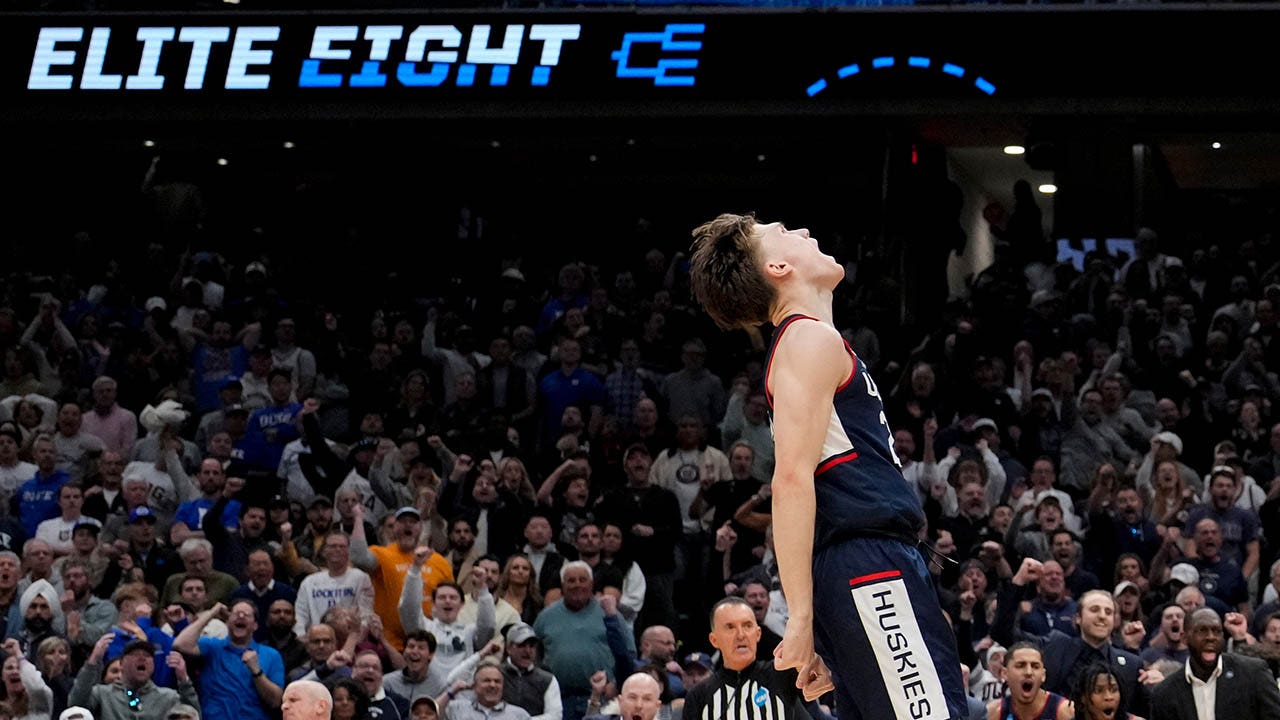
The UConn Huskies needed to dig themselves out of a hole in the second half against the Duke Blue Devils, and behind Braylon Mullins’ clutch 3-pointer and Tarris Reed Jr.’s high-percentage scoring, they were able to pull off an incredible comeback victory to advance to the Final Four.
The Huskies were able to effectively pressure the Blue Devils into a turnover with less than seven seconds left. Caden Boozer had his pass deflected and the ball got into Mullins’ hands.
CLICK HERE FOR MORE SPORTS COVERAGE ON FOXNEWS.COM
UConn guard Braylon Mullins (24) celebrates after a basket against Duke during the second half in the Elite Eight of the NCAA college basketball tournament, Sunday, March 29, 2026, in Washington. (AP Photo/Stephanie Scarbrough)
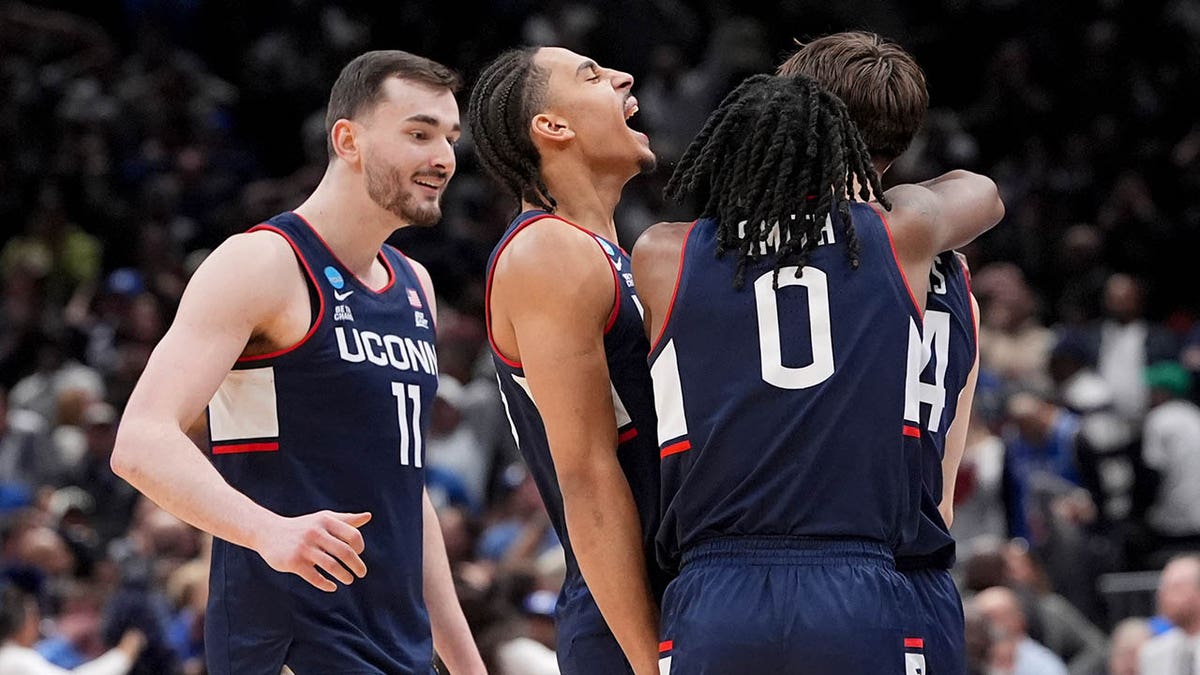
UConn guard Braylon Mullins, right, celebrates his game winning basket with guard Malachi Smith (0) during the second half in the Elite Eight of the NCAA college basketball tournament against Duke, Sunday, March 29, 2026, in Washington. (AP Photo/Stephanie Scarbrough)
The freshman was well beyond the 3-point line when he chucked up the ball. His prayer was answered as the ball went through the back of the net. UConn’s 19-point comeback was complete as the Huskies’ bench jumped in jubilation.
UConn was able to get the ball into Reed many times over the course of the game and for nearly half of the second half, the Huskies were in the bonus. Reed finished with 26 points on 10-of-16 from the field with nine rebounds. He was 6-of-9 from the free-throw line.
MICHIGAN ROUTS TENNESSEE TO WIN REGIONAL FINAL, ENTER NCAA MEN’S FINAL FOUR
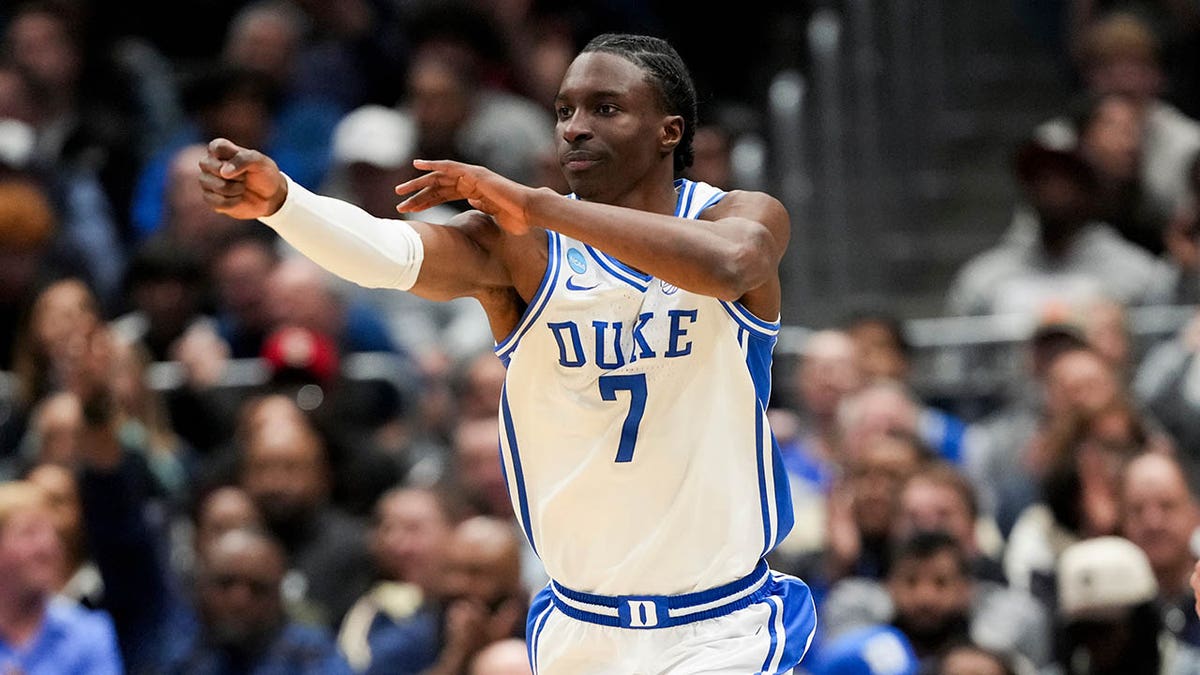
Duke guard Dame Sarr celebrates a basket against UConn during the first half in the Elite Eight of the NCAA college basketball tournament, Sunday, March 29, 2026, in Washington. (AP Photo/Stephanie Scarbrough)
Duke was up three points with 28 seconds to go. UConn guard Silas Demary Jr. was fouled and went to the free-throw line for two shots. He missed the first and made the second. The second free throw enabled UConn to set up its press defense and force the turnover in the end.
The Huskies outscored the Blue Devils 44-28 in the second half after being down 44-29 in the first half.
Cameron Boozer led Duke with 27 points and grabbed eight rebounds.
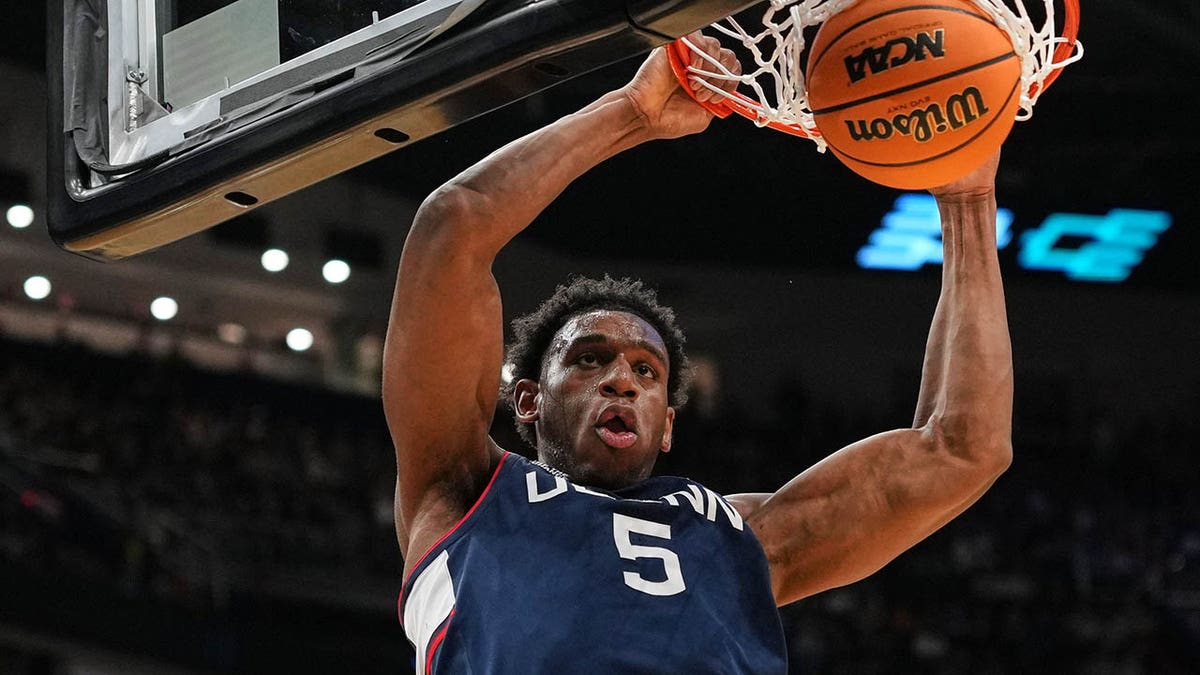
UConn forward Tarris Reed Jr. (5) dunks during the second half against Duke in the Elite Eight of the NCAA college basketball tournament, Sunday, March 29, 2026, in Washington. (AP Photo/Abbie Parr)
CLICK HERE TO DOWNLOAD THE FOX NEWS APP
UConn is back in the Final Four for the third time in three years. The Huskies will be looking to get back to the national championship after winning two titles in the last three years. UConn will take on Illinois and Michigan will go up against Arizona in the Final Four.
Follow Fox News Digital’s sports coverage on X and subscribe to the Fox News Sports Huddle newsletter.
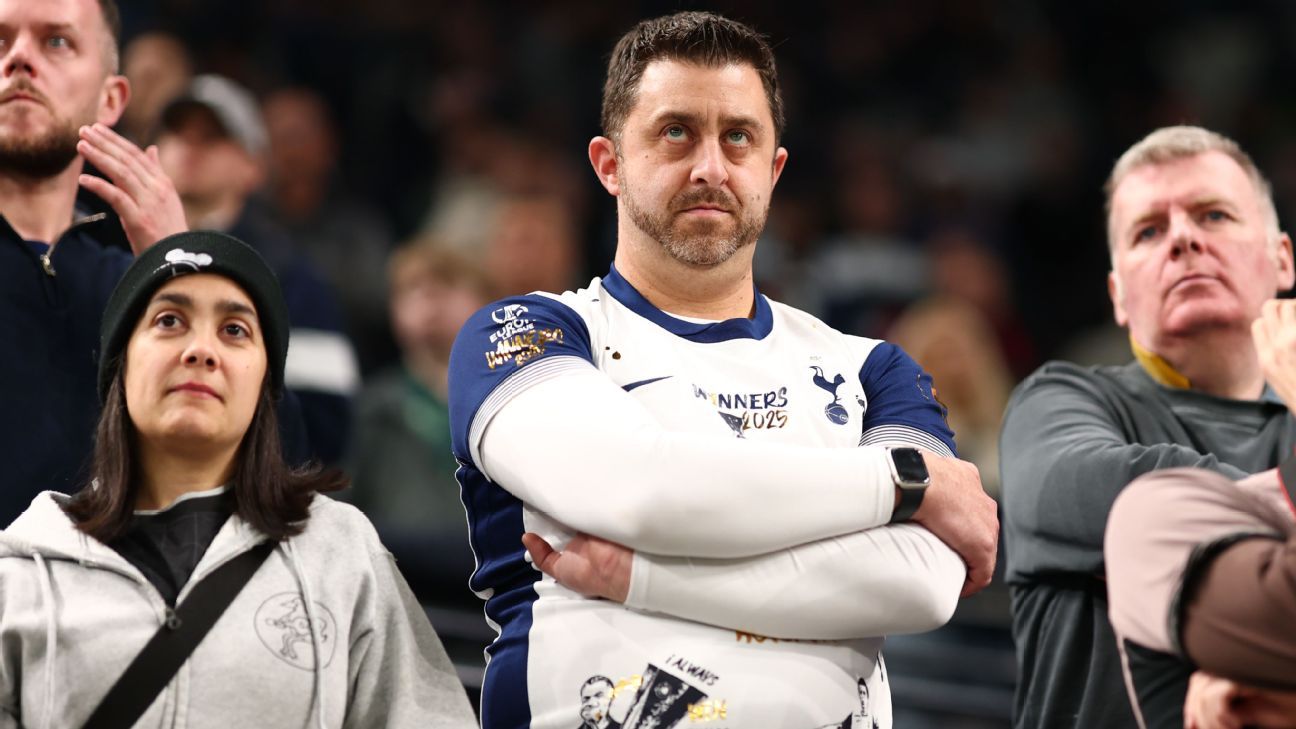
This article was first published on March 20 and has been updated now that Igor Tudor has left by mutual consent.
LONDON — The Champions League anthem was played at the Tottenham Hotspur Stadium on March 18. Atletico Madrid were in town, and Spurs were playing in football’s premier club competition with the prize of a quarterfinal against Barcelona at stake.
Despite a 3-2 second-leg victory, Spurs suffered a 7-5 aggregate defeat that ended their Champions League dream. But now they’re faced with a relegation battle to save their Premier League status.
Who knows when the Champions League anthem will next ring out around Tottenham’s £1 billion stadium? Right now, it seems like it could be an eternity.
Spurs lost 3-0 at home to Nottingham Forest last Sunday — Spurs (17th) are a point above the relegation zone, while Forest (16th) are three points clear now — and next season’s fixture list will be more likely to include Championship games against Preston North End and Lincoln City than Champions League nights against Europe’s elite.
Spurs last suffered relegation in 1977. They bounced back after just one season, but in those pre-Premier League days, there was no financial hammer blow to dropping down a division. Clubs could ride it out, often keeping their team together and barely feeling the pain, but in the modern game, relegation can mean an instant £100 million hit and a player exodus. For a club the size of Spurs, the implications would be enormous.
But how has it come to this? Spurs were Champions League finalists under Mauricio Pochettino in 2019, they won the Europa League with Ange Postecoglou less than 12 months ago and their status as one of the Premier League’s ‘Big Six’ — alongside Arsenal, Chelsea, Liverpool, Manchester City and Manchester United — should make them too big and too wealthy to ever have to worry about relegation.
However, they are not too good to go down. Spurs haven’t won a Premier League game in 2026 — their last league win was a 1-0 victory at Crystal Palace on Dec. 28 — and since the start of last season, they have lost twice as many league games (37) as they won (18). Igor Tudor, appointed as head coach until the end of the season last month, was the club’s sixth appointment since Pochettino’s exit in November of 2019, and the club will now require a seventh after he failed to win a single game.
There has been turmoil off the field too, with Daniel Levy’s 24-year reign as chairman coming to an abrupt end last September. Sporting director Fabio Paratici followed Levy out the door in January.
All of the ingredients of a club in turmoil are there. Bad results, underperforming players, managerial change, instability in the boardroom and supporter unrest. But still: could Spurs really go down?
Where did it all go wrong?
The consensus among many connected with Spurs is that the 2019 Champions League final defeat against Liverpool in Madrid was the fork in the road, with the club ultimately picking the wrong direction.
Pochettino’s team included Harry Kane, Christian Eriksen, Son Heung-min, Hugo Lloris and emerging talent Dele Alli. The coach wanted to take Spurs to the next level, turn them into winners rather than challengers, but the summer transfer window saw potential, rather than proven, talent arrive in the shape of Jack Clarke, Tanguy Ndombele, Giovani Lo Celso and Ryan Sessegnon. By November, Pochettino was out and in came Jose Mourinho, a change that triggered the downward spiral.
“By the time Mauricio left, it was clear he had to go,” a boardroom source told ESPN. “He and Daniel [Levy] just weren’t getting along, I think they were both worn out by each other.
“But Daniel was listening to too many people, wrong people, and I think he was seduced by the idea of having Jose as his manager. Jose is a great manager, but he inherited a squad built for Pochettino — young players who need encouragement and development — and he is just too volatile and aggressive for a young squad. Spurs needed another Pochettino type after Mauricio left, but they went in another direction and it’s never been the same since.”
Ricky Sacks, who hosts the “Last Word on Spurs” podcast, echoes that perspective, saying that the failure to develop Pochettino’s team was the root cause of the problems the club’s now attempting to deal with.
“The club has gone round and round in circles since 2019,” Sacks told ESPN. “There has been no clear idea or identity, nobody knows what they want to do, because they have gone from one style of coach to another.
“They sacked Mourinho four days before the 2021 Carabao Cup final against Man City, failed to back Antonio Conte, and then went from Ange [Postecoglou] to Thomas Frank who, although he seems a good guy, was just never equipped to upscale from Brentford to a club like Spurs. It’s just been a mess.”
Alongside the managerial churn, Spurs have consistently failed to compete at the top end of the transfer market. Tottenham’s biggest-ever signing — forward Dominic Solanke arrived from Bournemouth for a £65 million fee in August, 2024 — is by far the smallest record-transfer among the ‘Big Six’, who have all spent in excess of £100 million for a player with the exception of United, whose record signing is the £89.3 million deal for Paul Pogba from Juventus in August 2016.
Spurs have also earned a reputation for being frugal on player wages. In their most recently published accounts, for the 2023-24 season, Tottenham’s wage bill stood at £222 million — almost half of the £413 million paid by City in the same period — but that figure meant they paid just 42% of their revenue on wages. By comparison, Aston Villa‘s most recent wages to revenue ratio was 71%, while Newcastle United‘s figure was 68%, so Spurs are also falling behind clubs outside of the ‘Big Six’ when it comes to competing for new signings.
Spurs’ owners, ENIC, which is run by the Lewis Family Trust, injected £100 million of new capital into the club last October, but ongoing speculation of a potential sale has not gone away despite ENIC’s denials that they are looking to sell what is, off the pitch at least, a major football club.
It is the magnificent 62,000-capacity stadium, the club’s century-old history and their huge fanbase, both in London and globally, that earns Spurs their place in the ‘Big Six’, but former manager Postecoglou recently questioned whether they deserve to described as a “big” club.
“Obviously, they’ve [Spurs] built an unbelievable stadium, unbelievable training facilities,” Postecoglou told “The Overlap,” a popular podcast. “But when you look at the expenditure, particularly in the wage structure, they’re not a big club.
“I saw that when we were trying to sign players, because we weren’t in the market for those players. I was looking at Pedro Neto, [Bryan] Mbeumo and [Antoine] Semenyo and Marc Guéhi, because if we’re going to go from fifth to there [challenging for trophies], that’s what the other big clubs would do in that moment.”
Instead, Spurs went for Archie Gray, Wilson Odobert and Lucas Bergvall — players for tomorrow rather than today, just like Ndombele, Sessegnon and Lo Celso were in 2019.
Despite the poor recruitment and managerial changes, former Spurs goalkeeper Robinson believes that Levy has been unfairly labelled as the major reason behind the club’s fall from grace.
“Daniel gets a lot of stick and came under a lot of pressure, but when things are right on the pitch, the eyes don’t turn towards the director’s box,” Robinson said. “Spurs have a great stadium and training ground — and Daniel Levy was part of that — but the fans are sick to death of hearing about it because the football side of things has been neglected.
“I think Daniel was badly advised at times, maybe listening to a lot of people as the club grew, but to his credit, he listened to the fans when they were clamoring for trophies and employed two ‘win-now’ managers in Mourinho and Conte. He just didn’t back them enough with win-now players to get them where they wanted.
“You can’t deny that recruitment has been really poor in recent years, but Spurs have also waved goodbye to their top scorers — Kane, Son and Brennan Johnson — from each of the last three seasons.”
0:41
Tudor: Tottenham’s win vs. Atletico Madrid important for morale
Igor Tudor reflects on Tottenham’s Champions League exit after their 7-5 aggregate loss against Atletico Madrid.
Tottenham’s failure to sign the players wanted by the manager at the time proved to be an issue right until the end of Levy’s time at the helm. Last summer, Frank wanted Crystal Palace forward Eberechi Eze, Forest midfielder Morgan Gibbs-White and his former Brentford striker Bryan Mbeumo, but the club missed out on all of them. They also tried and failed to Antoine Semenyo in January, with the Bournemouth forward opting instead to move to City.
One source told ESPN that a talent drain of senior figures within the hierarchy has also hurt the club — “they’ve never been good at retaining people,” the source said — with Victoria Hawksley (LIV Golf), Michael Edwards (Liverpool), Paul Barber (Brighton), Damien Comolli (Juventus) and former chief scout and technical director Steve Hitchen all cited as staff who have been allowed to leave Spurs during the Levy era.
But with Levy gone and CEO Vinai Venkatesham — who joined from Arsenal less than a year ago — telling Tottenham’s Fan Advisory Board earlier this month that “significant change” is needed after criticizing Levy’s running of the club, more upheaval is likely in the months ahead, no matter what division Spurs find themselves in.
Can Spurs really go down?
Despite Spurs being regarded as a sensible, well-run, but cautious, club — something for which Levy has been praised and criticized in equal measure — the financial catastrophe of relegation cannot be overstated.
According to UEFA’s 2025 European Club Finance report published last month, Spurs recorded the third-largest pre-tax loss (at £129 million) in Europe last year, after Chelsea and Lyon, despite generating a club record turnover of £580 million. Revenue was the ninth-highest in Europe due to the stadium’s commercial activity, including NFL fixtures and concerts, and competing in European football. The club’s net debt, due to borrowings for the new stadium, stood at £772.5 million, while reserves dropped from £198 million to £79 million.
Tottenham’s losses led CEO Venkatesham to warn the fan advisory board of a need to monitor the club’s compliance with Financial Fair Play regulations, so there is no question that relegation would create severe difficulties for the club.
Last season, Spurs earned £127.8 million in Premier League prize money despite finishing 17th. Relegation would be cushioned by three years of parachute payments, but they would drop from £48.95 million in year one to just £17.8 million in year three; at the same time, they would be earning just £5.7 million-per-year from the EFL’s broadcasting deal. Villa, Sunderland and Leeds United were forced to close full sections of the stadium after relegation due to the cost of maintaining them without fans to fill the seats.
Could the same happen at Spurs?
They would be the biggest club to go down since Leeds in 2003-04 and relegation led to a financial meltdown at Elland Road and the mass exodus of players. It took the club 16 years to return to the top flight.
“I think it would be more alarming and an even bigger story than Leeds if Spurs go down,” said Paul Robinson, who was part of the 2004 Leeds team. “Spurs have been a regular European team, they reached the Champions League final seven years and won the Europa League last year, so it would be much bigger.
“When a team is going down, players know they will be leaving. At Leeds, you would turn up for training not knowing whether somebody would still be there or if the club had moved them on for the finances. That’s what relegation brings — the initial destruction, and then the fight to come back. It’s not easy to do that.”
2:17
Gibbs: Tottenham draw Liverpool’s ‘story of the season’
Kieran Gibbs explains what’s going wrong at Liverpool this season following their late draw vs. Tottenham in the Premier League.
The threat of relegation has, however, led to unity among the Spurs fan base. Plans for a protest against the owners ahead of the Forest game were abandoned in favor of a wholehearted attempt to create an atmosphere of support and positivity, with supporters welcoming the team bus with flares and huge crowds. But it didn’t work.
The worst-case scenario of rivals Arsenal winning the league and being relegated by Chelsea in the penultimate game of the season at Stamford Bridge is keeping Spurs fans awake at night, as is the prospect of next season’s derby being against League One promotion-chasing Stevenage.
Richarlison‘s equalizer at Anfield, and Xavi Simons‘ match-winning performance against Atletico, had given Spurs hope before the Forest capitulation, so maybe the season isn’t headed for disaster. But this is Spurs, and their fans have become accustomed to expecting the worst and being proved right.


Riyadh opens rail freight route linking eastern ports to Jordan border

LPG crisis eases: Operations back to normal in many factories as commercial LPG supplies improve; workers return – The Times of India

Iran deal may be finalized ‘soon’, says Trump

-

 Politics6 days ago
Afghanistan announces release of detained US citizen
-

 Tech6 days ago
Can a Home Appliance Fix the Problem of Soft-Plastic Waste?
-
 Business6 days ago
Property Play: Home flippers see smallest profits since the Great Recession, real estate data firm says
-

 Sports1 week ago
Men’s March Madness live tracker: Updates on Saturday’s games
-

 Entertainment6 days ago
UN warns migratory freshwater fish numbers are spiralling
-
 Sports1 week ago
Arne Slot: Liverpool’s defeat to Brighton ‘hurts a lot’
-
 Business6 days ago
Gold prices soar in Pakistan – SUCH TV
-
 Business6 days ago
Centre plans to cut broken rice share in PDS, boost ethanol feedstock supply – The Times of India