

Business
Budget 2026: CII pitches demand-led disinvestment plan; proposes four-step privatisation roadmap – The Times of India


The Confederation of Indian Industry (CII) suggested a four-fold privatisation process in their recommendations on the Union Budget 2026-27. They called for faster and more predictable disinvestment. The industry body claimed that a calibrated privatisation approach would help sustain capital expenditure and fund development priorities, particularly in sectors where private participation can improve efficiency, technology adoption, and competitiveness. CII Director General Chandrajit Banerjee highlighted the role of private enterprise in India’s growth. “A forward-looking privatisation policy, aligned with the vision of Viksit Bharat, will enable the government to focus on its core functions while empowering the private sector to accelerate industrial transformation and job creation,” he said, as quoted by ANI. To accelerate the government’s exit from non-strategic Public Sector Enterprises (PSEs), CII outlined a four-pronged strategy. First, CII recommended adopting a demand-led approach for selecting PSEs for privatisation. Contrary to short-listing entities and then checking the appetite for them, it was proposed that government needs to start by measuring market interest for a larger list of entities and short-list those with better interest and valuation. Second, the industry body called for announcing a rolling three-year privatisation pipeline in advance. According to CII, greater visibility would give investors time to plan, deepen participation, and improve price discovery. Third, CII proposed setting up a dedicated institutional mechanism to oversee privatisation. This would include a ministerial board for strategic direction, an advisory panel of industry and legal experts, and a professional execution team to handle due diligence, market engagement, and regulatory coordination. Fourth, acknowledging that complete privatisation is complex and time-consuming, CII suggested a calibrated disinvestment route as an interim measure. The government could initially reduce its stake in listed PSEs to 51 per cent, retaining management control, and later bring it down further to between 33 per cent and 26 per cent. CII estimated that lowering government ownership to 51 per cent in 78 listed PSEs could unlock nearly Rs 10 lakh crore. In the first two years, disinvestment in 55 PSEs could raise about Rs 4.6 lakh crore, followed by Rs 5.4 lakh crore from 23 additional enterprises. “A calibrated reduction of government stake balances strategic control with value creation,” Banerjee said, adding that the proceeds could fund healthcare, education, green infrastructure, and fiscal consolidation while maintaining control in strategic sectors. The Union Budget for 2026–27 will be presented on February 1.




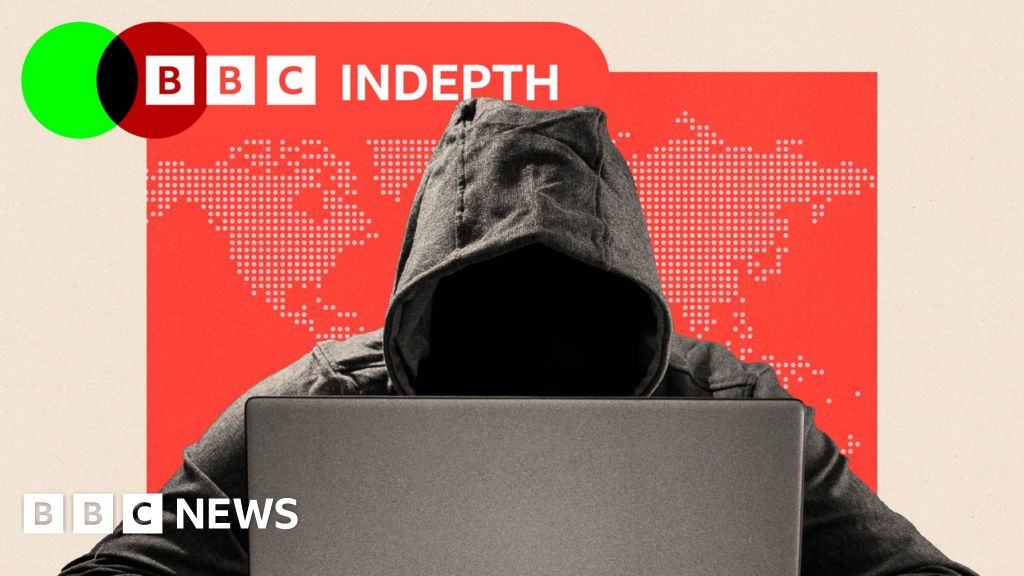
As governments across the world restricted the movements of their citizens during Covid lockdowns from 2020, people spent more time online. We bought more online and socialised more online, and this brought us closer to the people who want to scam us. At the same time, realistic video impersonations, voices, websites, and texts became more commonplace, and scammers increased their use of social media including WhatsApp.

The conflict in the Middle East has caused rapid price rises for both petrol and diesel.
Source link
Business
NaBFID signs pact with PDCOR to expand advisory support for state projects – The Times of India
The National Bank for Financing Infrastructure and Development (NaBFID) has signed a Memorandum of Agreement with Projects Development Company of Rajasthan Limited (PDCOR) to strengthen advisory services for state and city-level infrastructure projects.The agreement will also allow both institutions to jointly explore financing and transaction advisory opportunities, including transaction structuring, commercial and technical due diligence, and support for financial closure of projects undertaken by state governments and urban local bodies across India, according to PTI.“This collaboration seeks to enhance access to long-term institutional finance for State Governments and Urban Local Bodies, while strengthening the infrastructure advisory and financing ecosystem,” Rajkiran Rai G., Managing Director of NaBFID, said.He added that the partnership would help both institutions jointly pursue project advisory opportunities, develop replicable financing frameworks, accelerate financial closures and mobilise capital across the infrastructure value chain.Monika Kalia, DMD-CFO, NaBFID, said the tie-up would leverage the strengths of both organisations to provide much-needed advisory support to states and urban local bodies for impactful urban infrastructure projects.Dileep Chingapurath, Chief Executive Officer, PDCOR, said the agreement would address the long-felt need for end-to-end professional support to structure and mobilise sustainable financing solutions, particularly for state governments and their agencies.“Through this collaboration, both institutions aim to enhance the quality of project preparation, mobilise institutional capital more effectively and accelerate the implementation of sustainable infrastructure projects across states and municipalities,” he said.NaBFID is a Development Financial Institution focused on long-term infrastructure financing, while PDCOR is an undertaking of the Government of Rajasthan.


UAE-Jordan Railway Company formed to build freight railway

Iran’s speaker says US negotiations have progressed but far from final deal

Germany’s Puma appoints James Carnes to new creative leadership role

-

 Politics1 week ago
Indian airlines hit hardest after Dubai limits foreign flights until May 31
-

 Entertainment6 days ago
Palace left in shock as Prince William cancels grand ceremony
-

 Sports6 days ago
The case for Man United’s Fernandes as Premier League’s best
-

 Politics1 week ago
Chinese, Taiwanese will unite, Xi tells Taiwan opposition leader
-
 Business1 week ago
100% road tax waiver for electric cars, new rules for 2, 3 and 4 wheelers – what Delhi govt’s draft EV policy says – The Times of India
-
 Business6 days ago
UK could adopt EU single market rules under new legislation
-

 Entertainment1 week ago
Dua Lipa hits major career high ahead of wedding with Callum Turner
-
 Business1 week ago
The FAA wants gamers to apply for air traffic control jobs